Counterculture · 1974–present · Sub-Saharan Africa
Afrobeat Sleeve Art
Also known as Lemi style, Afro Pop Art, Fela Kuti album art
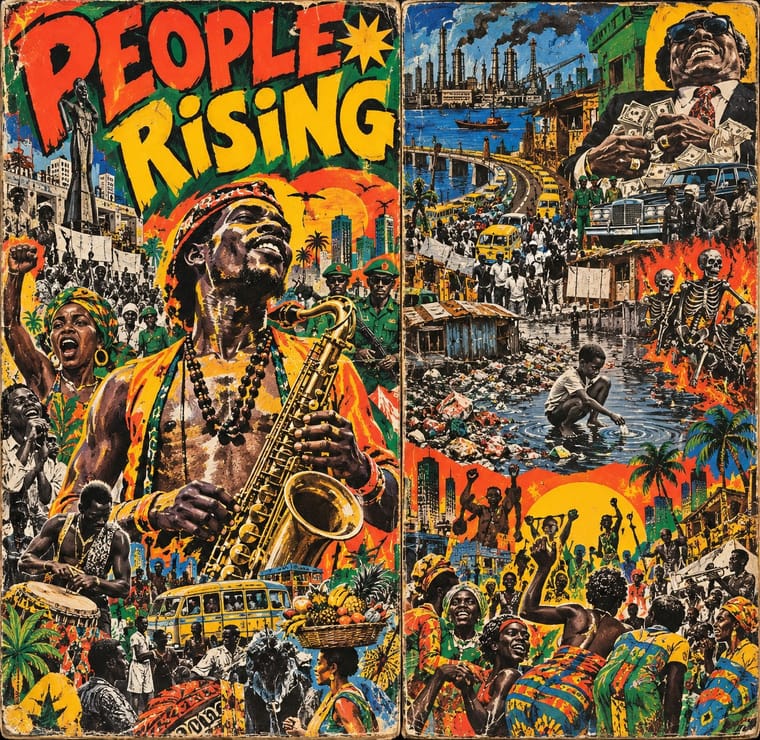
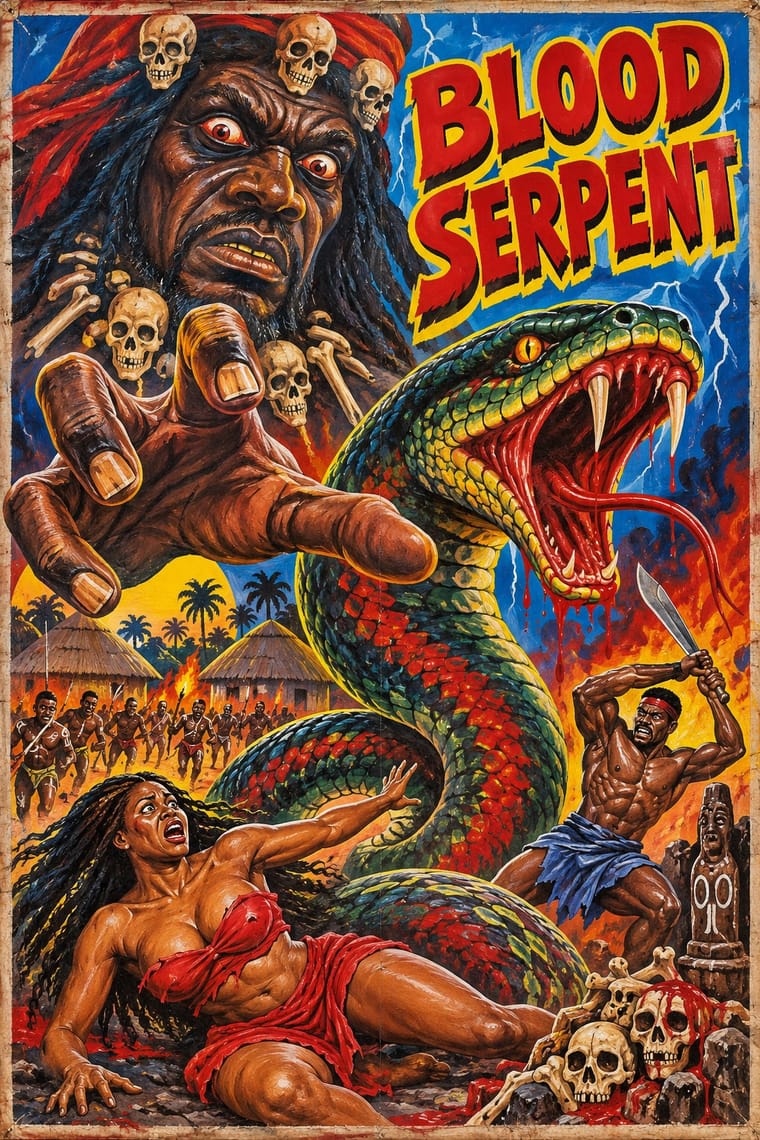
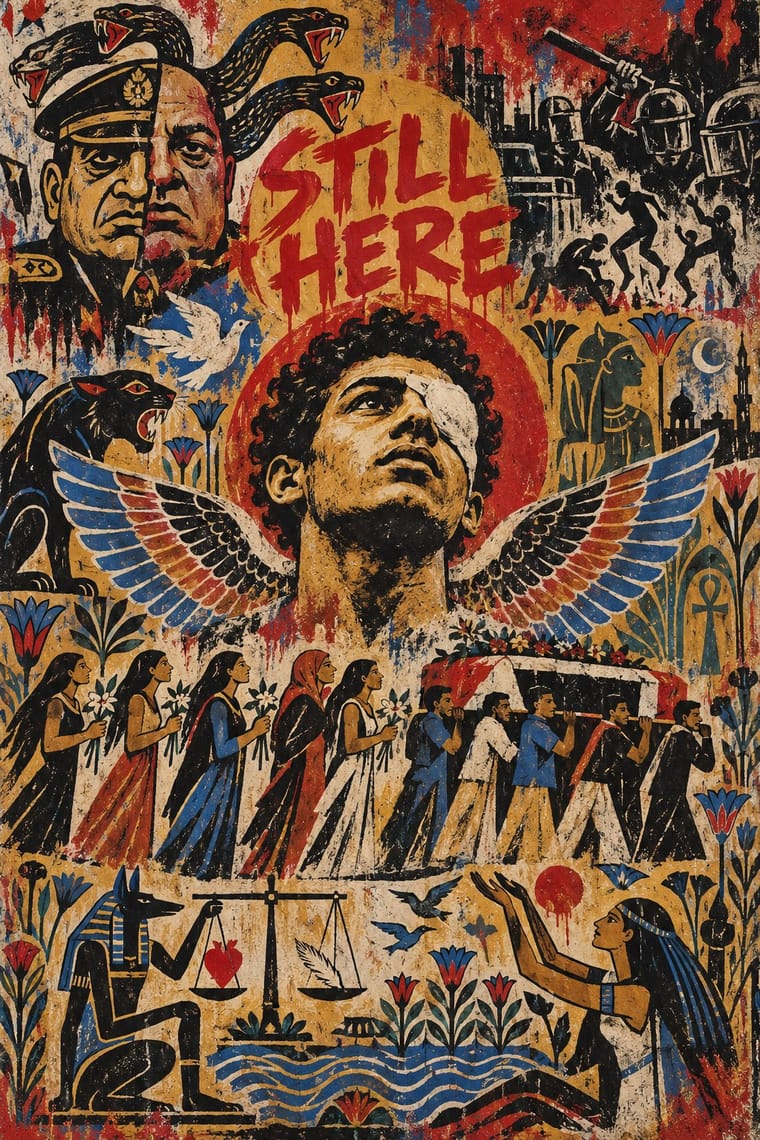
The painted and collaged record covers of Nigerian Afrobeat, defined by Lemi Ghariokwu's sleeves for Fela Kuti from Alagbon Close (1974) onward. Each cover is a political cartoon that illustrates the album's lyrics, packing oil paint, cut-out photographs, speech balloons and caricatured soldiers and world leaders into a crowded, saturated 12-inch frame under a newly drawn title.
Make something in this styleGet advice in this styleMix it with another style
01
How it works
- Illustrate the album's lyrics literally, as scenes, so the sleeve states the record's argument before it is played.
- Fill the whole sleeve, front and back, to the edges with figures, crowds, symbols and captions; leave no empty background.
- Mix paint and photography: paste cut-out photographs of the musician into painted settings, or paint over photographs.
- Caricature the powerful as fanged beasts and soldiers as zombies, and use speech balloons and short comic strips to make the satire explicit.
- Draw a new, legible display title for every album instead of using a fixed logotype or typeface.
Lagos, Nigeria: Fela Kuti's Kalakuta Republic and Afrika Shrine circle
02
Its design choices
From Stylogeny’s vocabulary of design choices: defining choices make the style, characteristic ones are usual, occasional ones turn up now and then.
- Layout & composition
- Space & hierarchy
- Typography
- Form & shape
- Surface & texture
- Medium & production
- Tone & intent
- Avoids
- Generous white space, Modular grid, Typography only, Pastel, Ironic & self-aware, Calm & contemplative, Ornament-free
Palette
#e8401c#f4c20d#1f7a3a#2a5caa#7b4a2a#141414
Typefaces
Lemi Ghariokwu's hand-drawn album titles, redrawn for each record
Collaged lettering built from cut-out photographs
Comic-strip hand lettering in speech balloons
Known for
Lemi Ghariokwu, Fela Kuti & Africa 70, Alagbon Close
1974
Lemi Ghariokwu, Fela Kuti & Africa 70, Zombie
1977; back-cover comic strip
Lemi Ghariokwu, Fela Kuti, Fear Not for Man
1977; title lettered with cut-out faces
Lemi Ghariokwu, Fela Kuti & Egypt 80, Beasts of No Nation
1989
Lemi Ghariokwu covers for Sunny Adé, Osita Osadebe, Miriam Makeba and Lucky Dube
Lemi Ghariokwu, Anoda Sistem
2002, Museum of Modern Art
03
Make something in this style
Say what you need, and Stylogeny’s image studio draws it from Afrobeat Sleeve Art’s design choices and checks it against them. It takes about a minute, and you get a link to share.
04
Where it comes from, and what it’s close to
Before it
The style it grew out of, and the styles it borrowed from.

After it
The styles that grew out of it.
No later style in the atlas grew out of it yet.
Alike in its design choices
Styles that make many of the same choices, related or not, besides those above.
05
Real works
Artefacts in museums, libraries and archives that show the style, linked at their source.
- Zombie, Fela and Afrika 70 (LP sleeve, front and back)Ghariokwu Lemi (design, back-cover comic and liner notes); photography by Tunde Kuboye · 1977 · Discogs release database (crowd-sourced; release 1816011, Coconut PMLP 1003; no holding institution)
- Fear Not for Man, Fẹlá and Afrika 70 (LP sleeve, front)Ghariokwu Lemi (artwork, cover concept and design); photography by Tunde Kuboye · 1977 · Discogs release database (crowd-sourced; release 4951479, Afrodisia DWAPS 2035; no holding institution)
- Yellow Fever, Fela Anikulapo Kuti and Afrika 70 (LP sleeve, front)Ghariokwu Lemi (design; signed on the cover); photography by Bankole Osunle · 1976 · Discogs release database (crowd-sourced; release 1490191, Afrodisia DWAPS 2004; no holding institution)
- Alagbon Close, Fela Ransome Kuti and Africa 70 (LP sleeve, front)Ghariokwu Lemi (front cover, credited as 'S. E. Lemy'); Remi Olowookere (graphics, art direction) · 1974 · Discogs release database (crowd-sourced; release 5083900, Jofabro JILP 1002; no holding institution)
- Anoda SistemGhariokwu Lemi · 2002 · The Museum of Modern Art, New York
06
Sources
- https://www.lambiek.net/artists/g/ghariokwu_lemi.htm
- https://www.thevinylfactory.com/features/lemi-ghariokwu-fela-kuti-record-sleeves
- https://www.okayafrica.com/fela-kuti-album-covers-lemi-ghariokwu/
- https://en.wikipedia.org/wiki/Lemi_Ghariokwu
How Stylogeny researches and checks a style: where the facts come from.