Traditions & vernacular · 1816–present · East Asia
Hanafuda Card Design ( Japanese Flower Cards )
Also known as Hanafuda, Hana-awase cards, Hwatu (Korean variant), Nintendo hanafuda
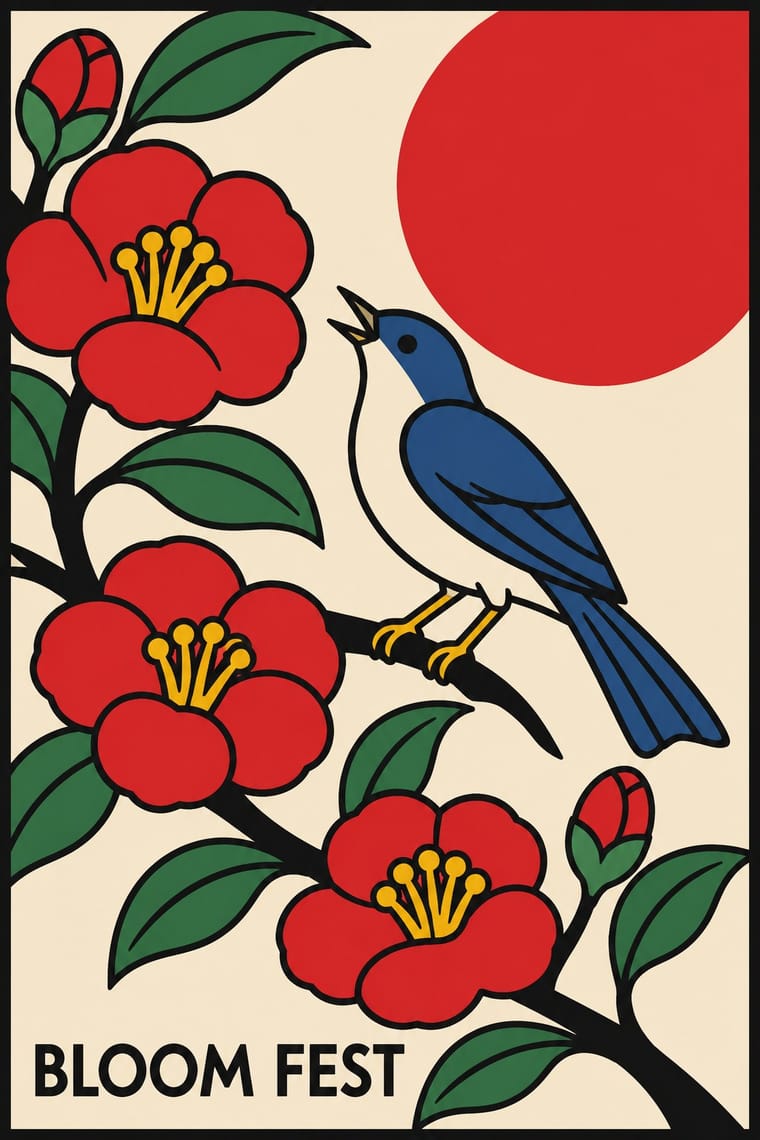
A 48-card Japanese deck of twelve suits, one per month, each tied to a plant such as pine, plum, cherry, peony, maple or willow. Japanese cards carry no numbers or letters (Korean hwatu mark Bright cards with the character 光): flat, outlined flora, animals, ribbons and objects tell bright, animal, ribbon and chaff cards apart by picture alone, on a plain red or black back.
Make something in this style Get advice in this style Mix it with another style
01
Its picture in other colours
Change a colour and every picture on this page follows. It happens in your browser, from the same pictures: nothing new is made or saved.
Choose a colour to change it
-
#d7282f -
#111111 -
#f2e8cf -
#2f7d4f -
#e8b923 -
#2b4c8c
A faded colour isn’t in these pictures, so changing it changes nothing.
Light and dark stay where they are; greys hardly move.
More colours: any style’s, or your own
The pictures show the style’s own colours.
02
Make something in this style
Say what you need, and Stylogeny’s image studio draws it from Hanafuda Card Design (Japanese Flower Cards)’s design choices and checks it against them. It takes about a minute, and you get a link to share.
03
How it works
Palette
-
#d7282faccent · 27% -
#111111ink · 9% -
#f2e8cfground · 29% -
#2f7d4faccent · 11% -
#e8b923not in its pictures -
#2b4c8caccent · 4%
Shares measured from its picture. The ground is what the pictures sit on (of the colours covering most, the most neutral), the ink stands out from it most, the rest are accents.
Typefaces
-
Calligraphic poem strips (tanzaku) in kana and kanji
-
Maker marks and brand names in Japanese brush lettering
- Assign each of twelve suits to one season-bound plant and show it on all four cards.
- Leave out numerals, letters and indices in Japanese decks; let the picture and its position carry the card's rank (Korean hwatu are the exception, marking most Bright cards with 光).
- Draw each motif as a flat, outlined shape filled with a few saturated colours, with no shading.
- Separate the four card classes (bright, animal, ribbon, chaff) by what is pictured, such as a crane, a moon or a poem strip.
- Keep the back plain, in red or black, so that identical backs hide the hand.
- Keep human figures rare: one card shows a person, and in 1886 the publisher Maeda Kihei changed it to the calligrapher Ono no Michikaze.
Where and when Japan.
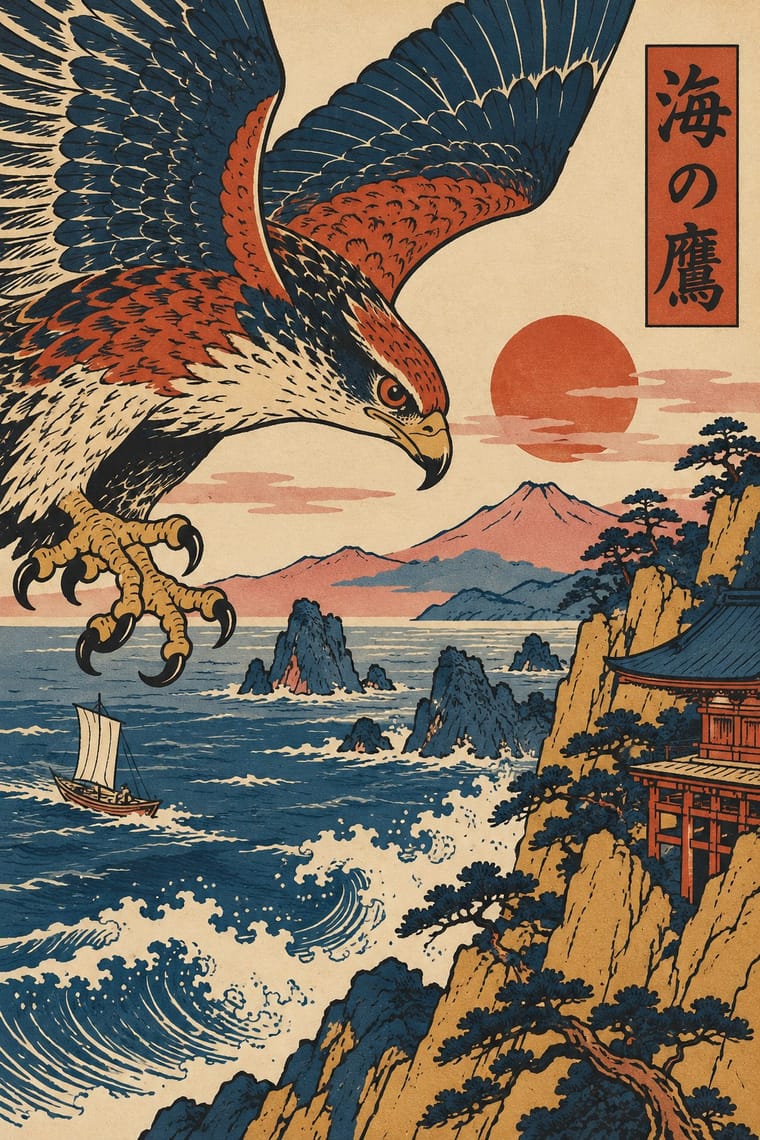
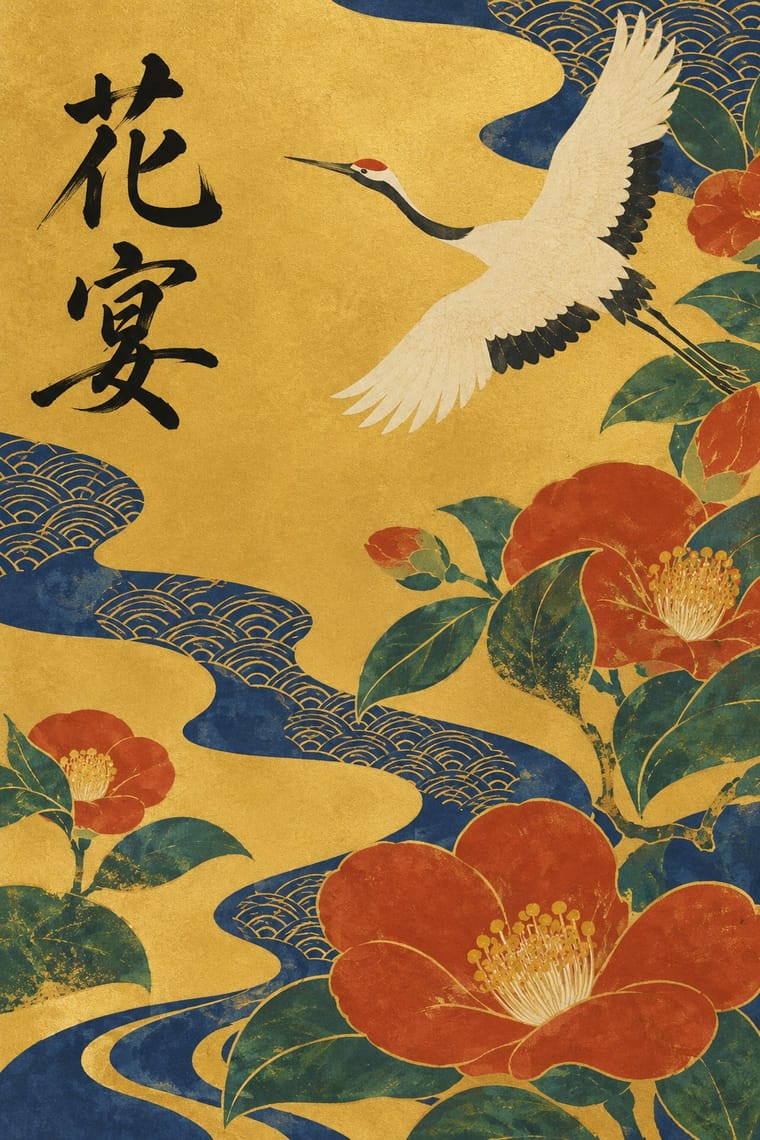
Japan. Portuguese cards arrived in the mid-16th century and Japanese-made Tenshō karuta date to 1573 to 1592; the shogunate banned them in 1648 and playing cards again in 1791, and gamblers moved to abstract regional decks. The earliest known reference to hana awase, a predecessor of hanafuda, is from 1816. Fusajiro Yamauchi founded Nintendo in 1889 to make hand-crafted hanafuda. Korean hwatu and Hawaiian Sakura decks are later variants. The format descends mainly from the Western card lineage (Portuguese cards and Tenshō karuta); the flora draw on kachō-e flower-and-bird prints and rinpa. Nintendo is cited as a maker of the cards, not as a stylistic owner.
Change it with an idea. Any of the 73 moves that make a design say something can go on this style.
04
Its design choices
From Stylogeny’s vocabulary of design choices: defining choices make the style, characteristic ones are usual, occasional ones turn up now and then.
- Layout & composition
- Space & hierarchy
- Typography
- Colour
- Surface & texture
- Medium & production
- Tone & intent
- Avoids
- Ornamented display, Straight photography, Skeuomorphic material, Horror vacui, Naturalistic depiction, Central symmetry
How its pictures are made Drawn & painted, Systematic
Kind of picture: Drawn & painted · Systematic
Known for
-
Nintendo hanafuda
from 1889
-
The November bright card with Ono no Michikaze
redesigned 1886
-
Korean hwatu
plastic, used for Go-Stop
-
Nintendo themed hanafuda sets
Mario, Pokémon, Kirby
05
Where it comes from, and what it’s close to
Grew out of
Borrowed from
Hanafuda Card Design (Japanese Flower Cards) 1816–present
No later style in the atlas grew out of it yet.
Alike in its design choices

06
Combine it with
Styles Hanafuda Card Design (Japanese Flower Cards) pairs well with or plays against, from the research. Each is worked out as a combination: which style gives the type, the colours and the forms.
- Ukiyo-e Woodblock Prints Pairs well · Both use flat colour and outline; hanafuda turns the print's flower-and-bird subjects into a repeatable game system.
- Lotería Card Imagery (Mexican Lotería) Contrasts · Lotería gives each card a number and a printed name; hanafuda uses pictures only.
- Tarot de Marseille Woodcut Cards Contrasts · A card deck built on allegory and numbered arcana, against hanafuda's seasonal plant logic with no numerals.
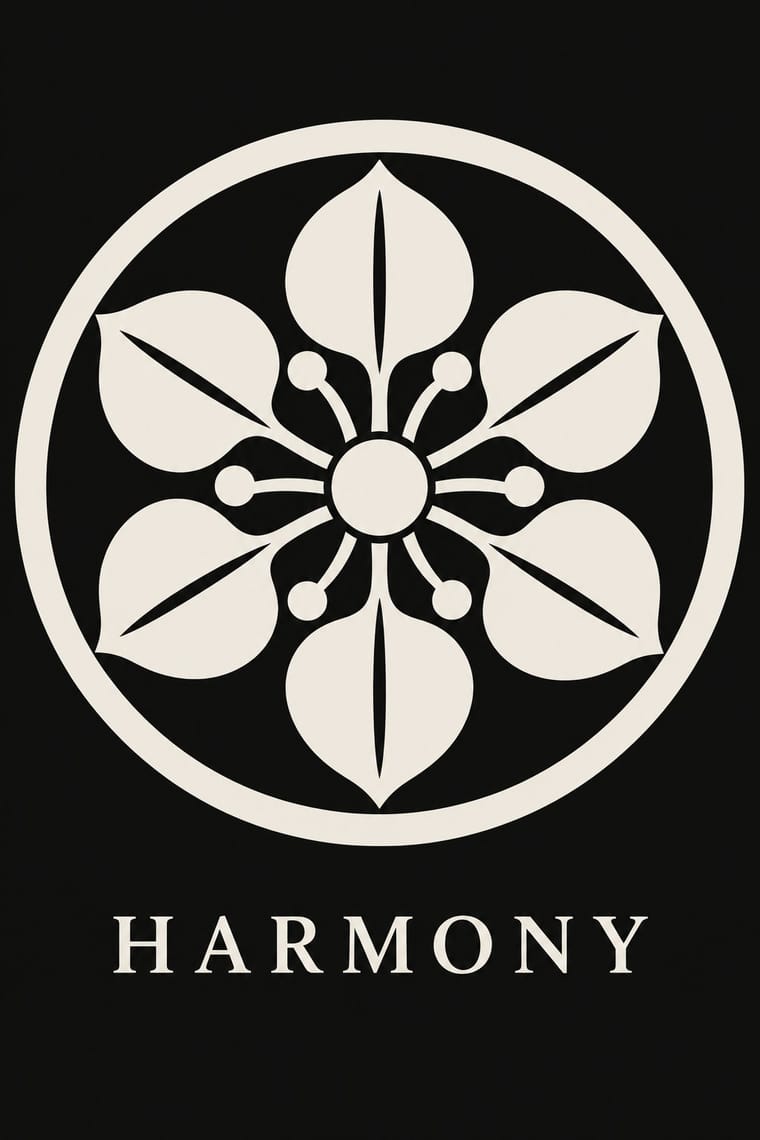
- Kamon (Japanese Family Crests) Pairs well · Plant motifs reduced to compact, emblem-like shapes that read at small size.
- Mamluk Playing-Card Design (Mulūk wa-Nuwwāb) Pairs well · Another non-European card system where emblem, rank and seasonal or suit identity are carried by flat painted signs.
07
Often taken for
Hanafuda Card Design has no real works recorded yet, so these are its nearest styles by its choices alone, with the choices that tell them apart.
-
Ukiyo-e Woodblock Prints
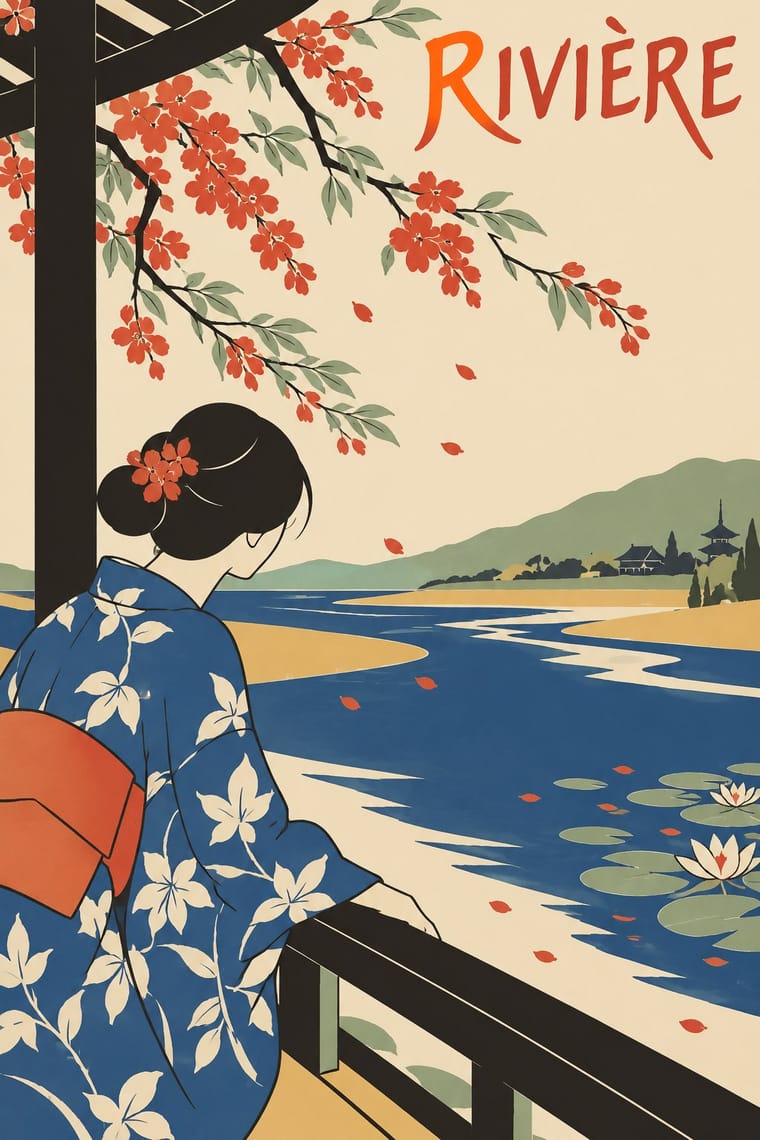
Ukiyo-e Woodblock Prints is one of Hanafuda Card Design’s nearest styles by choices; no real work of either fits the other better.
Choices that tell Hanafuda Card Design and Ukiyo-e Woodblock Prints apart Choice Hanafuda Card Design Ukiyo-e Woodblock Prints Repetition & rhythm defining — Diagonal axis — defining Floral & vegetal defining occasional Naturalistic depiction avoids occasional Limited spot colours characteristic — Hanafuda Card Design descends from Ukiyo-e Woodblock Prints: a shared line, so the likeness is inherited.
-
Japonisme
Japonisme is one of Hanafuda Card Design’s nearest styles by choices; no real work of either fits the other better.
Choices that tell Hanafuda Card Design and Japonisme apart Choice Hanafuda Card Design Japonisme Repetition & rhythm defining — Analogous harmony — characteristic Full polychrome characteristic — Earth & mineral — characteristic Pictogram characteristic — Both descend from Ukiyo-e Woodblock Prints in the family tree.
-
Lebanese October Uprising Graphics (Thawra 2019)
Lebanese October Uprising Graphics is one of Hanafuda Card Design’s nearest styles by choices; no real work of either fits the other better.
Choices that tell Hanafuda Card Design and Lebanese October Uprising Graphics apart Choice Hanafuda Card Design Lebanese October Uprising Graphics Floral & vegetal defining — Hand-lettering — defining Repetition & rhythm defining occasional Brush & pen calligraphy occasional defining Dynamic asymmetry characteristic — No shared descent in the atlas: they reached these choices separately.
-
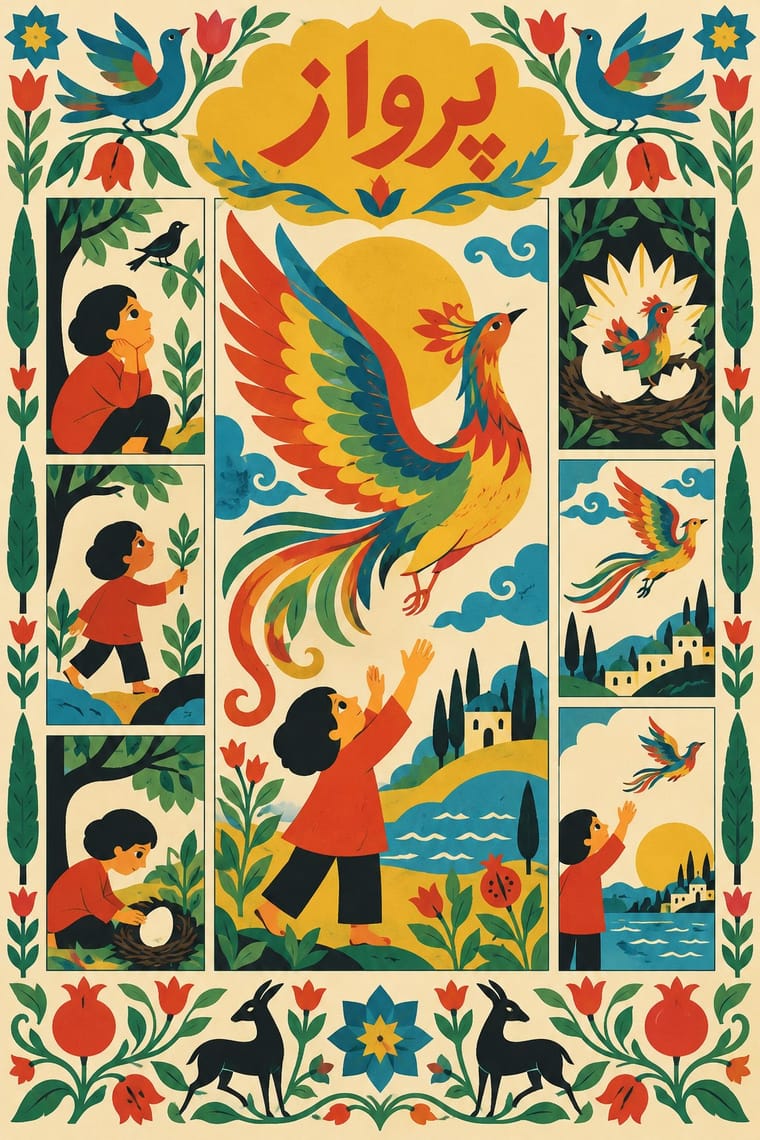
Kanoon Children's Book Illustration (Iran, 1965 to 1979)
Kanoon Children's Book Illustration is one of Hanafuda Card Design’s nearest styles by choices; no real work of either fits the other better.
Choices that tell Hanafuda Card Design and Kanoon Children's Book Illustration apart Choice Hanafuda Card Design Kanoon Children's Book Illustration Floral & vegetal defining occasional Folk & sacred symbols — defining Repetition & rhythm defining occasional Sequential narrative — defining Limited spot colours characteristic — No shared descent in the atlas: they reached these choices separately.
— means the choice isn’t among the style’s recorded choices. Critics recorded each work’s choices with the styles’ descriptions in view, so this shows whether the descriptions hold together, not proof that they are right.
08
Sources
- https://en.wikipedia.org/wiki/Hanafuda
- https://www.nintendo.co.jp/corporate/en/history/index.html
- https://en.wikipedia.org/wiki/Ono_no_Michikaze
1 more source
How Stylogeny researches and checks a style: where the facts come from.