Rational modernism · 1999–present · Northern Europe, Global / networked
Wordless Flat-Pack Assembly Instructions
Also known as IKEA assembly instructions, IKEA manual style, Wordless instructions, Flat-pack instruction drawings
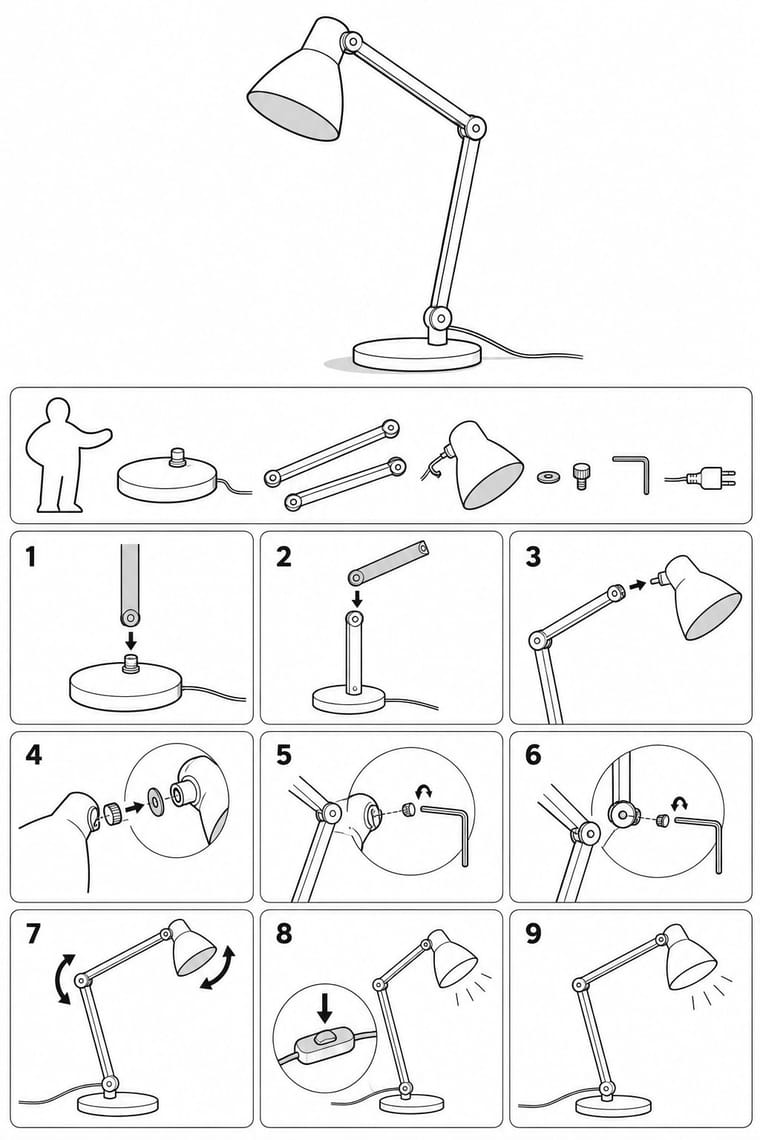
The wordless flat-pack booklet as IKEA drew it up after 1999, which replaced the exploded view of older instruction manuals with step-by-step pictures: the product is drawn in black outline on white as it looks at each stage of building, with grey only to pick out the part being fitted. The work is broken into many simple steps with few points of focus each, hardware and tools carry their article numbers, and a cartoon 'assembly figure', now drawn without gender, gives tips. With no words, one booklet serves every market.
Make something in this style Get advice in this style Mix it with another style
Use it with care
IKEA’s name, logo and assembly figure belong to IKEA: work in the manner (black line on white, one simple step per picture, no words) without using them, without copying a real IKEA booklet or product, and without presenting the result as IKEA’s or implying a link with IKEA.
01
How it works
- Say everything with drawings: leave out written words so that one booklet serves every country and language.
- Draw the product in black outline on white as it looks at this stage of assembly, and use grey only to pick out the part that matters in the step.
- Give each step its own drawing with few points of focus, and add pages rather than crowd small pictures together.
- Build the product up step by step in the order of work instead of showing every part at once in an exploded view.
- Draw each screw, dowel and tool with its article number, and include a checklist of the tools needed.
- Let a plain cartoon figure, drawn without gender, give tips at the start of the booklet, such as what surface to assemble on or whether a second person is needed.
Älmhult, Sweden. The 1953 IKEA catalogue introduced DELFI, RIGA and KÖKSA, tables for customers to put together at home, an idea Ingvar Kamprad took from the supplier Ovendals in Hultsfred. The instructions that came with flat-packs from then on were a precursor, not yet this style: hand-drawn leaflets handed out in stores (when the first appeared is not recorded), often drawn as an exploded view such as the 1960s booklet for the ROBIN armchair, and in the 1970s and 1980s often hard to follow. In the 1990s IKEA filmed focus groups using them, and a 1999 study found the booklets overloaded with information, with small pictures and too many points of focus. The form defined here was drawn up after that study: instead of the exploded view common in instruction manuals, the product is built up one simple step at a time over more pages, told in pictures with no words, and a cartoon 'assembly figure' was introduced to give tips at the start. In 2005 Norway's prime minister, Kjell Magne Bondevik, criticised IKEA because no women were shown putting furniture together in its instructions, and IKEA promised an equal distribution; by 2018 the figure was drawn without gender. The booklets are now drawn digitally, packed with each product and also available online, and are made by an in-house team of about 13 'informative communicators' in Älmhult (around 400 new instructions and 900 revisions a year, as reported in 2018), who test every set before the product is approved for production.
02
Its design choices
From Stylogeny’s vocabulary of design choices: defining choices make the style, characteristic ones are usual, occasional ones turn up now and then.
- Layout & composition
- Space & hierarchy
- Typography
- Form & shape
- Surface & texture
- Ornament
- Imagery
- Medium & production
- Tone & intent
- Avoids
- Straight photography, Typography only, Full polychrome, Gradients, Horror vacui, Abundant decoration, Ornamented display, Type as image, Collage & layering, Halftone & Ben-Day dots, Painterly illustration
Palette
-
#ffffff -
#1a1a1a -
#6e6e6e -
#a8a8a8 -
#dcdcdc
Typefaces
-
Almost no type
what there is (the product name on the cover, the booklet code such as AA-54679-2, step numbers and part article numbers such as 100001) is set as plain sans-serif figures and capitals
-
On covers and brand material only
IKEA's corporate typefaces, which carry the brand name across its print: Futura until 2009, Verdana from 2009 and Noto IKEA, a customised Noto Sans, from 2019
Known for
-
IKEA IVAR cabinet assembly instructions, booklet AA-54679-2, in which hexagon key 100001 drives screw 100214
as described by Justin Zhuang, 2018
-
IKEA HEMNES day bed assembly instructions, using screw 106569 with the same hexagon key 100001
as described by Justin Zhuang, 2018
-
IKEA instructions after the 1999 customer study, broken into more and simpler steps over more pages instead of small pictures with too many points of focus (as described by Justin Zhuang, 2018)
-
1960s IKEA instructions for the ROBIN armchair, drawn as an exploded view, the earlier approach that the step-by-step sequence replaced
as described by Justin Zhuang, 2018
-
The 'assembly figure', the cartoon character in IKEA booklets that gives tips on where to assemble and when extra help is needed, criticised in 2005 for showing no women and described as genderless by 2018
03
Make something in this style
Say what you need, and Stylogeny’s image studio draws it from Wordless Flat-Pack Assembly Instructions’s design choices and checks it against them. It takes about a minute, and you get a link to share.
04
Where it comes from, and what it’s close to
Before it
The style it grew out of, and the styles it borrowed from.
After it
The styles that grew out of it.
No later style in the atlas grew out of it yet.
Alike in its design choices
Styles that make many of the same choices, related or not, besides those above.
-
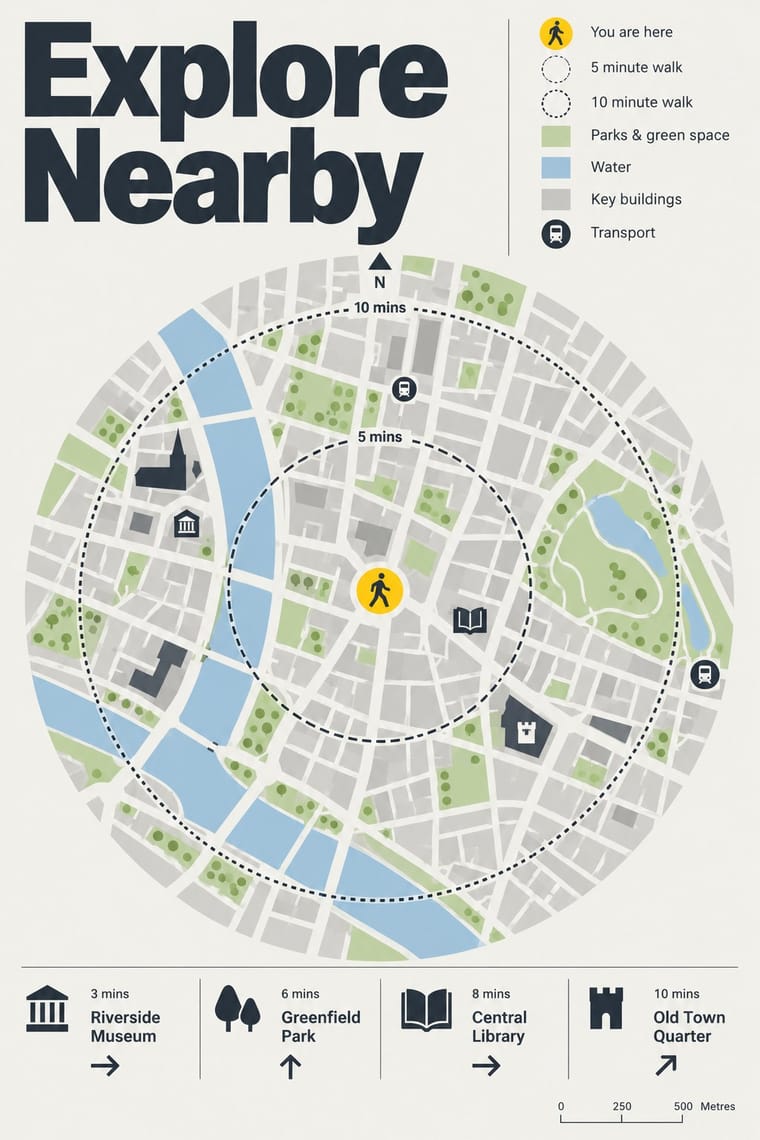
- Bossa Nova Sleeve Modernism (César Villela and Elenco) 57% alike
-
-
-
-
05
Often taken for
Wordless Flat-Pack Assembly Instructions has no real works recorded yet, so these are its nearest styles by its choices alone, with the choices that tell them apart.
-
Legible City Wayfinding (Heads-Up Pedestrian Maps)
Legible City Wayfinding is one of Wordless Flat-Pack Assembly Instructions’s nearest styles by choices; no real work of either fits the other better.
Choices that tell Wordless Flat-Pack Assembly Instructions and Legible City Wayfinding apart Choice Wordless Flat-Pack Assembly Instructions Legible City Wayfinding Monochrome defining — Flat fields — defining Line illustration defining — Layered information occasional defining Sequential narrative defining — No shared descent in the atlas: they reached these choices separately.
-
Bossa Nova Sleeve Modernism (César Villela and Elenco)
Bossa Nova Sleeve Modernism is one of Wordless Flat-Pack Assembly Instructions’s nearest styles by choices; no real work of either fits the other better.
Choices that tell Wordless Flat-Pack Assembly Instructions and Bossa Nova Sleeve Modernism apart Choice Wordless Flat-Pack Assembly Instructions Bossa Nova Sleeve Modernism Diagram & data defining — Type as image avoids characteristic Illusion of depth defining — Limited spot colours — defining Sequential narrative defining — Both descend from Bauhaus in the family tree.
-
HfG Ulm Systematic Design
HfG Ulm Systematic Design is one of Wordless Flat-Pack Assembly Instructions’s nearest styles by choices; no real work of either fits the other better.
Choices that tell Wordless Flat-Pack Assembly Instructions and HfG Ulm Systematic Design apart Choice Wordless Flat-Pack Assembly Instructions HfG Ulm Systematic Design Line illustration defining — Straight photography avoids characteristic Illusion of depth defining — Limited spot colours — defining Sequential narrative defining — Both descend from Bauhaus in the family tree.
-
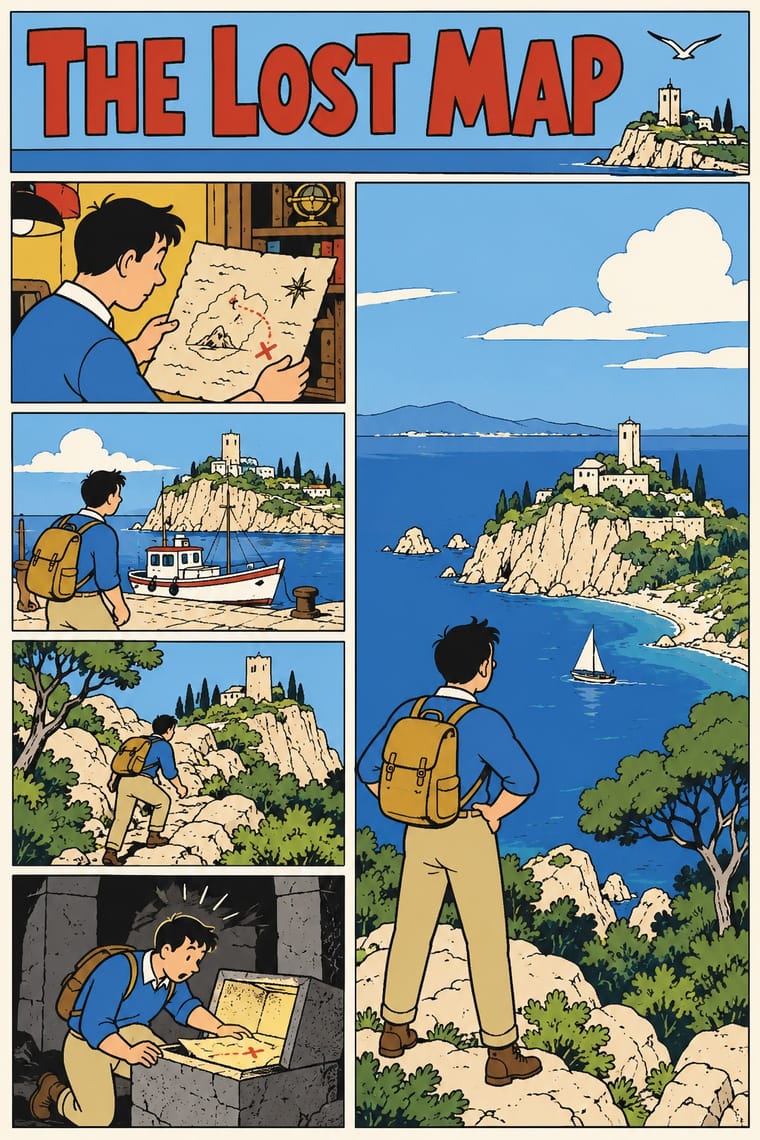
Ligne Claire (Franco-Belgian Clear Line)
Ligne Claire is one of Wordless Flat-Pack Assembly Instructions’s nearest styles by choices; no real work of either fits the other better.
Choices that tell Wordless Flat-Pack Assembly Instructions and Ligne Claire apart Choice Wordless Flat-Pack Assembly Instructions Ligne Claire Monochrome defining — Full polychrome avoids characteristic Diagram & data defining — Flat fields — defining Generous white space defining — No shared descent in the atlas: they reached these choices separately.
— means the choice isn’t among the style’s recorded choices. Critics recorded each work’s choices with the styles’ descriptions in view, so this shows whether the descriptions hold together, not proof that they are right.
06
Combine it with
Styles Wordless Flat-Pack Assembly Instructions pairs well with or plays against, from the research. Each is worked out as a combination: which style gives the type, the colours and the forms.
- Ligne Claire (Franco-Belgian Clear Line) Pairs well · The clear line of comics shares its even outline and sequence of panels; borrow its colour for a friendlier how-to.
- Isotype Pictorial Statistics Pairs well · Both explain without words; add Isotype's counted pictograms for a parts list and keep the outline drawing for the steps.
- Memphis Design Contrasts · Memphis colour, pattern and squiggles are everything the booklet refuses; one patterned part on a grey outline page makes a pointed contrast.
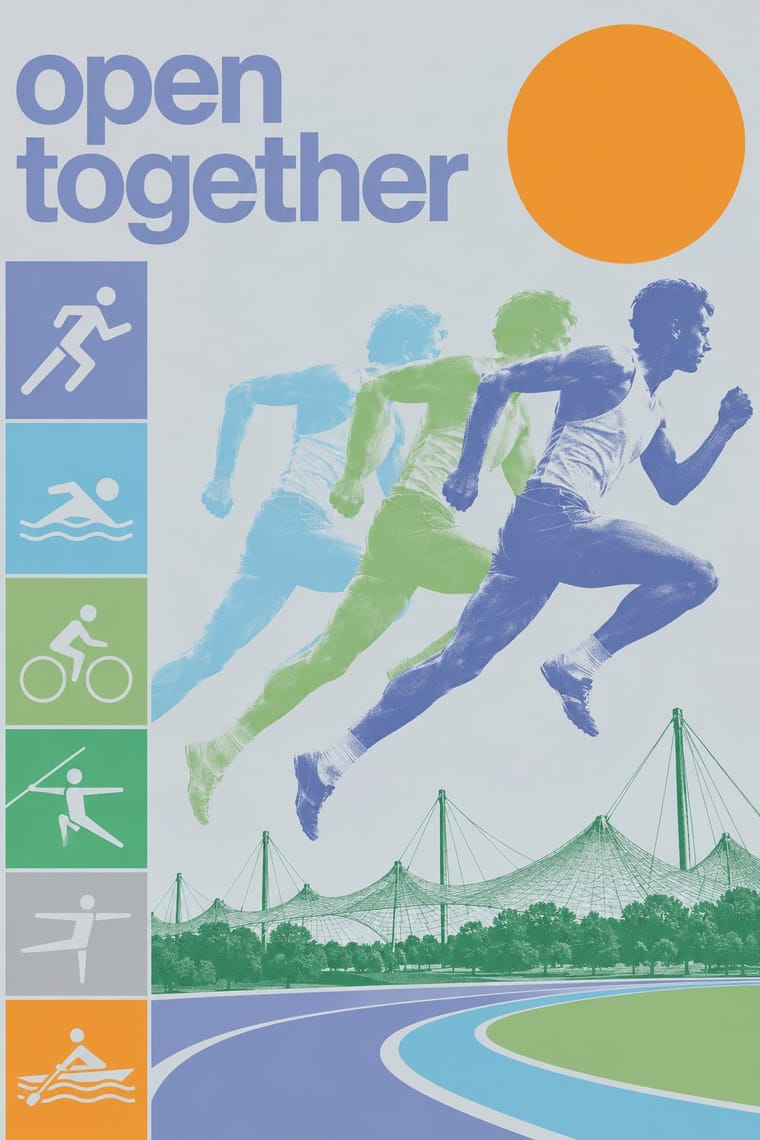
- Munich 1972 Olympic Design (Otl Aicher) Pairs well · Aicher's pictogram system gives the tool and warning signs a stricter grid while the drawings stay in outline.
07
Sources
- Justin Zhuang, 'Wordless Instructions', 16 January 2018, adapted from an essay for Works That Work magazine (the 1999 study, the step-by-step approach replacing the exploded view, the assembly figure's tips on surfaces and extra help): https://justinzhuang.com/posts/wordless-instructions/
- IKEA Museum, 'Flatpacks': https://ikeamuseum.com/en/explore/the-story-of-ikea/flatpacks/
- IKEA Museum, 'Going nuts': https://ikeamuseum.com/en/explore/the-story-of-ikea/going-nuts/
- Wikipedia, 'Verdana' (IKEA's change from Futura to Verdana in 2009 and to Noto IKEA in 2019): https://en.wikipedia.org/wiki/Verdana
- Language Log, 'IKEA: linguistics, esthetics, engineering', 8 March 2025 (a booklet with no words, all drawings): https://languagelog.ldc.upenn.edu/nll/?p=68526
- The Local, 'Norwegian prime minister slams IKEA', 10 March 2005 (Bondevik on the absence of women in the instructions; IKEA promises an equal distribution): https://www.thelocal.com/20050310/1085-2/
How Stylogeny researches and checks a style: where the facts come from.