World region
Graphic-design styles from Latin America and the Caribbean
Styles that took shape in Latin America and the Caribbean, alone or together with other regions. Stylogeny describes 40 of them. The earliest began in c. 600, the latest in 2019. Of these, 20 are still in use.
The 40 styles
Oldest first. Each has its own page: its design choices, where it comes from, and real works.
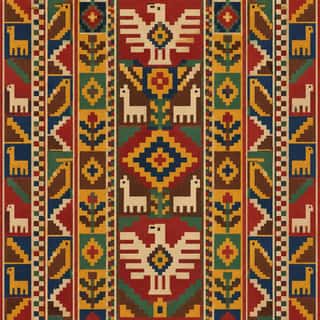
Andean Woven Graphic SystemsThe graphic systems of Andean cloth, the region's most prestigious medium, in which every motif is built on the warp-and-weft grid.
Mixteca-Puebla Codex PaintingThe painted screenfold books of Postclassic southern and central Mexico (not the Maya codices): long strips of gesso-coated deerskin, folded like a screen and painted on both sides.
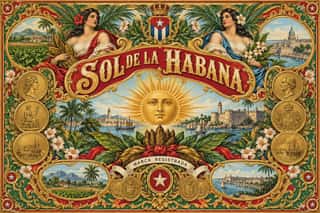
Cuban Tobacco Lithography (Habilitaciones & Marquillas)The chromolithographed dress of Havana tobacco.
- Mexican Popular Graphics (Posada)Cheap broadsheets, chapbooks and gazettes sold on the streets of Porfirian Mexico City by the publisher Antonio Vanegas Arroyo and illustrated by Manuel Manilla and José Guadalupe Posada.
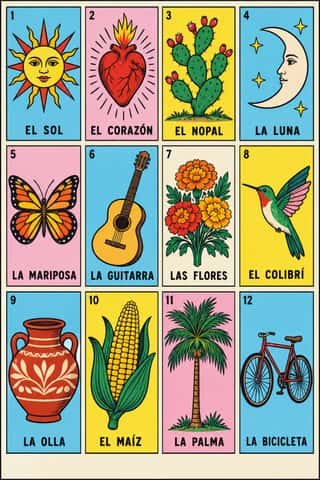
Lotería Card Imagery (Mexican Lotería)The picture deck of Mexico's lotería, a bingo-like game of chance.
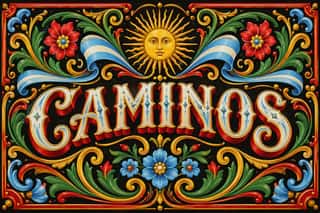
Fileteado PorteñoA Buenos Aires tradition of ornamental brush painting that began around 1900 on the grey-painted trade carts of Italian immigrant coachbuilders and spread to trucks, colectivo buses, shop signs and gallery panels.
- Guna MolaThe reverse-appliqué blouse panels of Guna women in Panama, made by cutting through two to seven stacked layers of cotton so that every shape is ringed by echoing bands of the colours beneath.
- Estridentismo (Stridentist) GraphicsMexico's first avant-garde (1921-27), launched when Manuel Maples Arce pasted his manifesto Actual No. 1 on Mexico City walls.
- Brazilian Modernismo Graphics (Klaxon and the Semana de 22)The print side of São Paulo's Modernismo (1922-29), set in jobbing print shops.
- Amazonian Boat Lettering (Abridores de Letras)The painted boat names of Pará's rivers in the Brazilian Amazon, made for about a century by self-taught riverside painters (abridores de letras).
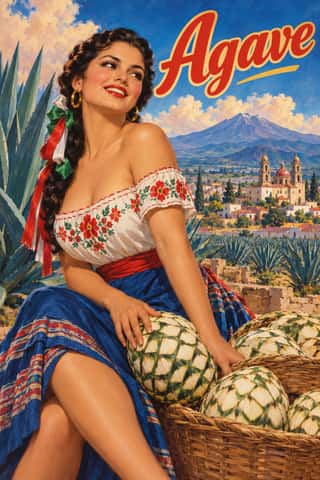
Mexican Calendar Chromo (Cromos calendáricos)Mexico's give-away advertising calendars, at their height from the 1930s to the late 1960s.
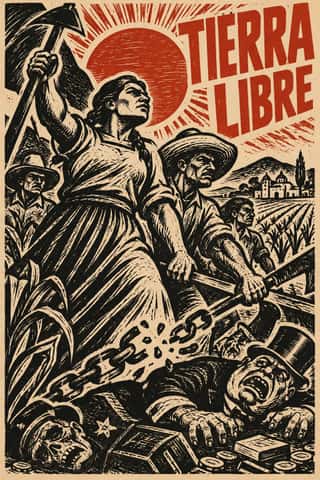
Taller de Gráfica PopularA Mexico City printmaking collective founded in 1937 around Leopoldo Méndez, Pablo O'Higgins and Luis Arenal to put art at the service of popular and anti-fascist struggles.
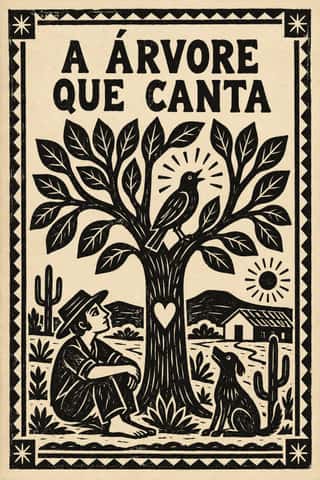
Literatura de Cordel WoodcutThe cover art of Brazil's literatura de cordel, pocket chapbooks of verse whose single picture is a small woodcut cut in soft umburana wood and printed in black above a plain letterpress title.
Puerto Rican Silkscreen Poster (DIVEDCO & ICP)The hand-pulled silkscreen poster of Puerto Rico, begun by Irene Delano's workshop in 1946–47 and grown in the government's Division of Community Education (DIVEDCO, 1949) and the Instituto de Cultura Puertorriqueña's print workshop under Lorenzo Homar (1957–73).
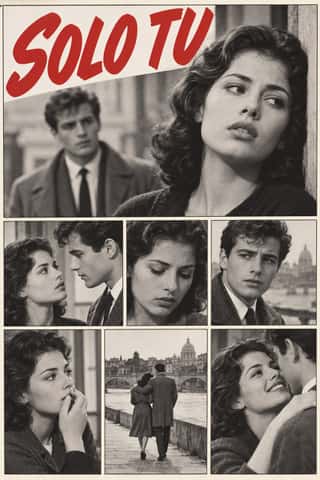
Fotoromanzo (Italian Photo-Romance)The photo-romance of the Italian women's weeklies: a melodrama told in staged photographs, first printed by Il mio sogno and Bolero Film in May 1947 and copied from France to Brazil.
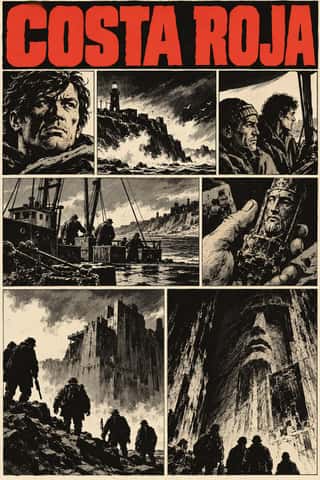
Argentine Adventure Historieta (Oesterheld–Breccia)The adult adventure comics of Buenos Aires newsstand magazines, from Misterix (1948) and Oesterheld's Hora Cero (1957) to Skorpio and Fierro; the humour line of Patoruzú, Rico Tipo and Mafalda is another tradition.
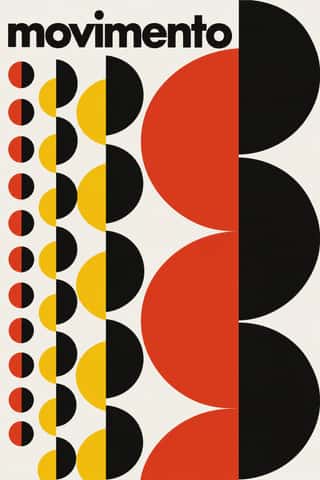
Brazilian Concrete DesignA São Paulo and Rio movement in which concrete art, concrete poetry and Brazil's first design offices shared one vocabulary: Max Bill's mathematically generated geometry, serial repetition and sans-serif type.
Vicente Rojo & Mexican Editorial ModernismThe design of Mexico City's literary and cultural press, shaped from the 1950s by the Barcelona-born exile Vicente Rojo: México en la Cultura, the Revista de la Universidad, Plural, La Jornada and the covers of Ediciones Era.
- Bossa Nova Sleeve Modernism (César Villela and Elenco)The cover language of bossa nova, made in Rio by the self-taught designer César Villela, first at Odeon and then on the first sixteen LPs of Aloysio de Oliveira's label Elenco (from 1963), often around Francisco Pereira's photographs.
Cuban Revolutionary Poster (OSPAAAL & ICAIC)The poster culture of revolutionary Cuba, produced for the film institute ICAIC and the solidarity organisation OSPAAAL.
Di Tella Graphic Design (Instituto Torcuato Di Tella)The in-house graphics of Buenos Aires' Instituto Torcuato Di Tella, 1960–1970, led by Juan Carlos Distéfano with Juan Andralis, Rubén Fontana, Norberto Coppola and Carlos Soler.
Tropicália Graphic DesignThe graphic language of Brazil's Tropicália, foreshadowed by Rogério Duarte's poster for Deus e o Diabo na Terra do Sol (1964), which already devours Ulm modernism, and set by his 1968 covers for Caetano Veloso and Gilberto Gil.
- Mexico 68 Olympic & Metro IdentityThe graphic programme of the 1968 Mexico City Olympics and the city's first Metro line.
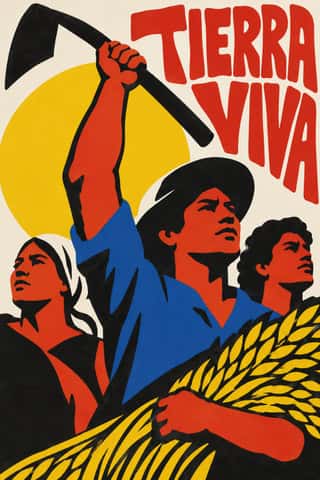
Chilean Unidad Popular & Nueva Canción GraphicsThe graphics of the Nueva Canción Chilena and Allende's Unidad Popular, 1967–1973.
- Picó Sound-System Painting (Colombian Caribbean)The hand-painted fronts of the picós, the giant sound systems that play dances in the barrios of Barranquilla and Cartagena.
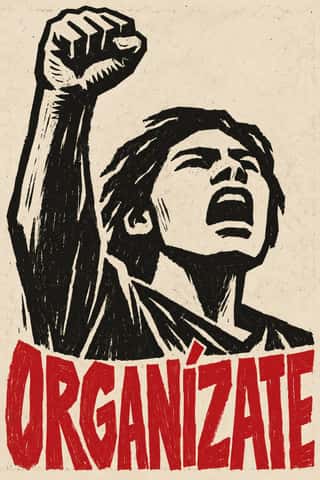
Gráfica del 68 (Mexican Student Movement Graphics)The graphics of the 1968 Mexican student movement, made in days by brigades in the print workshops of San Carlos and La Esmeralda and in improvised school workshops.
Pop Achorado (Peruvian Agrarian Reform Posters)Posters for the Peruvian military government's agrarian reform, made in Lima from 1969 by Jesús Ruiz Durand and colleagues at the state's reform publicity office.
- Roots Reggae Sleeve Art & Rasta IconographyThe record sleeves of roots reggae, from Catch a Fire (1973) until dancehall took over in the 1980s.
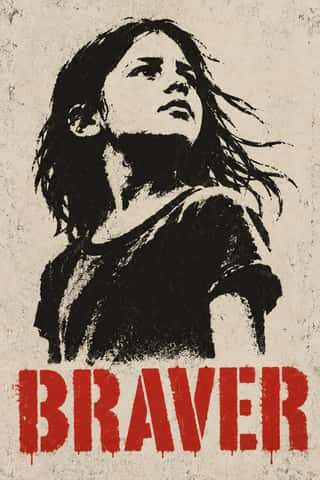
Stencil Street ArtPictures cut rather than drawn: a photograph is reduced to two or three flat tones, cut into card and sprayed onto a wall, usually uninvited, so one hard-edged figure appears in the street, in black with at most one accent colour.
- Chicha PosterFluorescent screen-printed street posters that emerged in the 1980s to promote chicha (Andean cumbia) concerts in Lima, made by printers from Andean migrant communities.
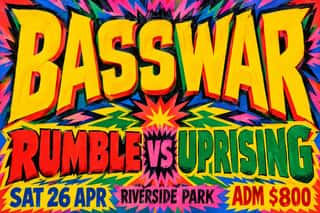
Jamaican Dancehall Signs & Sleeve ArtThe street graphics of Jamaica's dancehall era.
Pixação (São Paulo Tag Reto)The name-writing of São Paulo's pixadores, which since the 1980s has covered walls and façades and, from the 1990s, the upper floors of tower blocks.
- Cartonera Books (Latin American Cardboard Publishing)Books of Latin America's cartonera presses, begun by Eloísa Cartonera in Buenos Aires in 2003 after Argentina's 2001 crash: photocopied texts stapled and glued by hand into covers cut from used boxes, usually bought from cartoneros (waste pickers) above the market price.
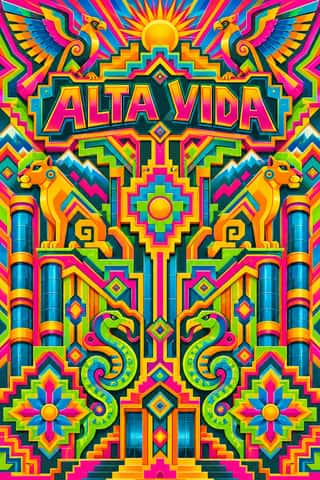
Neo-Andean Architecture (Cholets)The facades and party halls of El Alto, Bolivia, begun by the Aymara builder-architect Freddy Mamani in 2005 for a new Aymara merchant class.
- Oaxacan Protest Printmaking & Street Graphics (ASARO)The street graphics of Oaxaca City since the 2006 teachers' strike and APPO uprising, when ASARO, the stencil collective Lapiztola and later workshops such as Colectivo Subterráneos made the colonial centre's walls a newspaper.
- 'Good Morning' Greeting Images (WhatsApp Forward Vernacular)The ready-made greeting pictures that millions of smartphone users, many of them older and new to the internet, forward to family, friends and groups each morning on WhatsApp, above all in India and Brazil.
SolarpunkHopeful eco-futurist imagery born online.
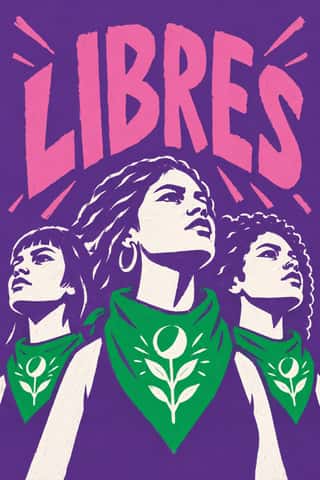
Latin American Feminist Protest Graphics (Ni Una Menos and the Green Wave)The graphics of Latin America's feminist tide, a mass movement since Ni Una Menos (Buenos Aires, 3 June 2015) and the 2018 'marea verde' for legal abortion, though its scarf dates from 2003.
- Front-of-Pack Warning Octagons (Latin American Food Warning Seals)A state warning system stacked on commercial food packs.
Chilean Estallido Social Graphics (Revuelta Popular of 2019–20)The street graphics of Chile's popular revolt, from 18 October 2019 to the March 2020 lockdowns, when a leaderless movement covered Santiago's Plaza de la Dignidad, the Alameda and other cities' walls.
The design choices they share
The choices these styles make more often than the 359 styles in the atlas as a whole, most telling first.
- All capsin 34 of 40
- Communal & popularin 30 of 40
- Ornamented displayin 20 of 40
- Hard offset shadowin 13 of 40
- Condensed displayin 14 of 40
- Rebellious & subversivein 20 of 40
- Comic & cartoonin 18 of 40
- Agitational & persuasivein 19 of 40