Colour · Strategy
Monochrome
A single hue, or black and white.
A design choice in Stylogeny’s vocabulary, under colour: what is the colour strategy?
- styles make it
- 165
- as a defining choice
- 56
- as a usual one
- 66
- now and then
- 43
- avoid it
- 29
Styles defined by it 56
For these styles it is one of the choices that make the style.
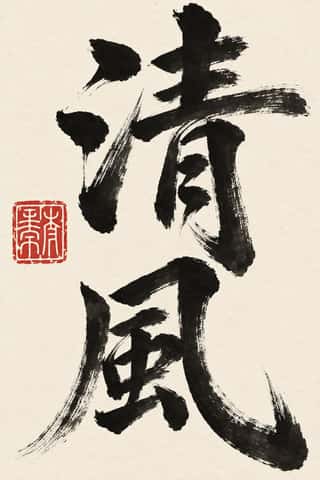
Chinese Calligraphy & Seal Carving (Shufa & Zhuanke)The written art of China and the root of East Asian lettering.
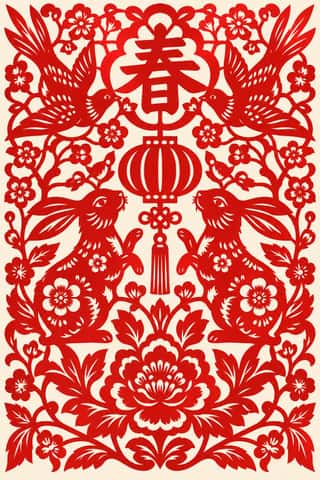
Chinese Paper-Cut (Jianzhi)China's folk art of cut paper, made mostly by rural women and passed from mother to daughter, and by town guilds and workshops.
- Hebrew MicrographyA Jewish scribal art in which lines of minute Hebrew script, usually the Masoretic notes that guard the biblical text, are written so that the line itself draws: interlaced frames and star rosettes on full carpet pages, and animals, knights, fish and grotesques in the margins.
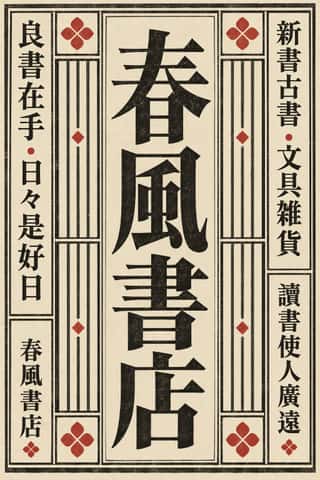
Song–Ming Woodblock Book Typography (Songti / Mincho)The page and letter of the East Asian book.
Kamon (Japanese Family Crests)Japan's family crests: small one-colour emblems that reduce a plant, animal, tool or pattern to a flat silhouette, mirrored or repeated around a centre, often ringed and drawn with compass and brush.
- Tibetan Woodblock Print Culture (Pecha & Prayer Flags)Tibetan Buddhist and Bön woodblock printing, from the first printed Kangyur (1410, cut in China) and the 15th-century presses of Gungthang to the great printing houses of Narthang, Derge and Lhasa.
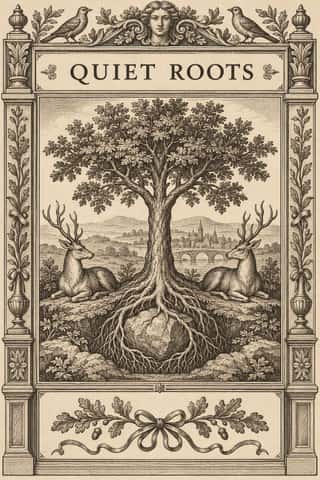
Emblem Book (Motto, Picture & Epigram)A European book genre in which, from Chrestien Wechel's Paris edition of 1534 on, every page or opening repeats one fixed unit: a short motto, an allegorical picture and an explanatory verse, which only together yield a moral, amorous or religious meaning.
- Thai Yantra (Yant) DiagramsThai protective diagrams in which Pali formulae, written in Khom, a sacred script derived from Khmer, are packed into squares, circles, triangles, spires and the outlines of Buddhas, monks and tigers, often framed by lines of script.
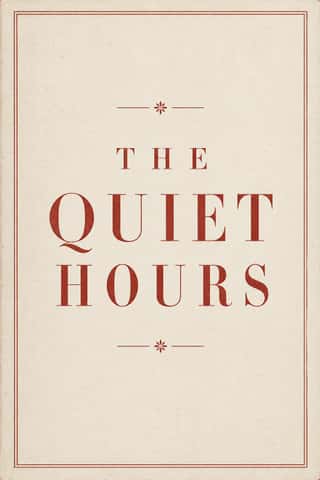
Neoclassical Book TypographyThe Enlightenment book stripped of Renaissance woodcut decoration.
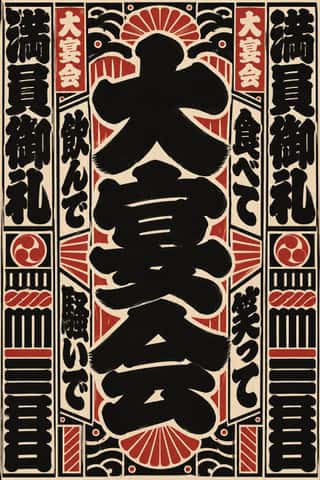
Edo-moji Commercial Lettering (Kanteiryū, Yose-moji, Sumō-ji)The fat, ink-heavy brush hands that Edo's professional sign and bill writers made for the city's entertainments: Kanteiryū for kabuki signboards and playbills from 1779, yose-moji for rakugo halls, sumō-ji for sumo ranking sheets, and squarish kago-moji for votive name slips.
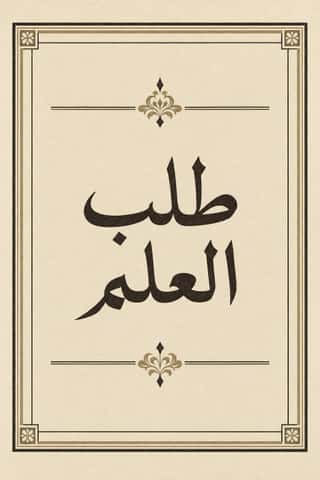
Bulaq (Amiriyya) Naskh Book PrintingThe page of the Arabic printed book as Egypt's state press at Bulaq shaped it from 1822: justified blocks of black Naskh type on pale paper, often boxed in a ruled frame, with an ornamental headpiece on the opening page, headings set larger or in a second script such as Nastaʿlīq, and almost no pictures.
- Urdu Katib LithographyFor about a century and a half Urdu chose lithography over movable type, because metal type could not reproduce the sloping, stacked ligatures of Nastaʿlīq.
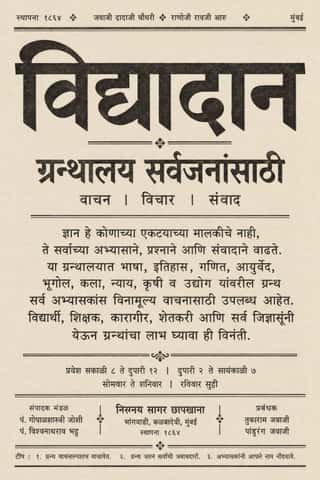
Nirnaya Sagar Devanagari Typography (Bombay Metal Type)Devanagari as Javaji Dadaji's Bombay type foundry (1864) and Nirnaya Sagar Press (1869) cut and printed it: upright metal type with a strong headline, cut with the punch-cutter Ranoji Aru, and enough conjunct and 'Akhand' sorts to set Sanskrit, Vedic accents and Marathi whole.
- Mexican Popular Graphics (Posada)Cheap broadsheets, chapbooks and gazettes sold on the streets of Porfirian Mexico City by the publisher Antonio Vanegas Arroyo and illustrated by Manuel Manilla and José Guadalupe Posada.
Uli & Nsibidi Line and Sign TraditionTwo linked graphic languages of southeastern Nigeria.
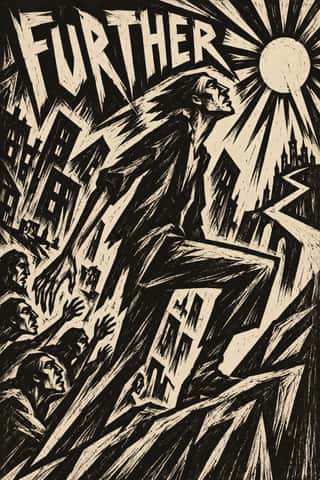
Expressionist Woodcut GraphicsThe graphic arm of German Expressionism, from Die Brücke in Dresden (1905) to the Berlin journals Der Sturm and Die Aktion and Frans Masereel's woodcut novels.
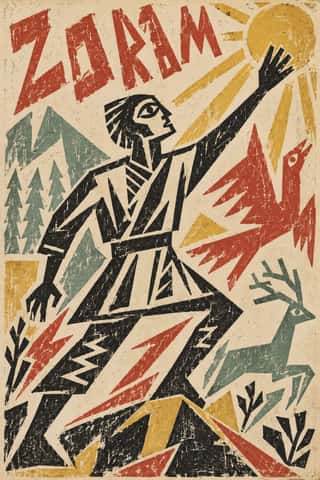
Russian Futurist BookThe cheap, small-run books of the Russian Cubo-Futurist poets and painters, from Kruchenykh and Khlebnikov to Goncharova, Larionov and Rozanova.
- Vorticism & BLAST TypographyLondon's short-lived rival to Futurism, launched by Wyndham Lewis with BLAST (dated 20 June 1914; War Number, July 1915).
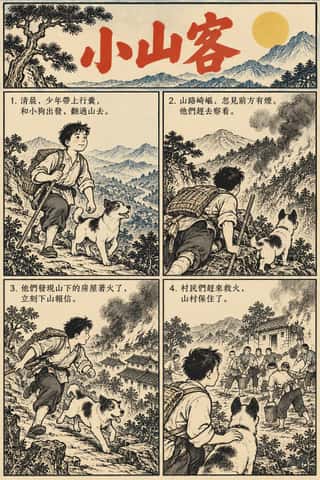
Lianhuanhua Picture-Story BooksPalm-sized Chinese picture books, about three by five inches, that tell a novel, opera, film or revolutionary story in hundreds of single framed drawings, one to a page, each with a short caption.
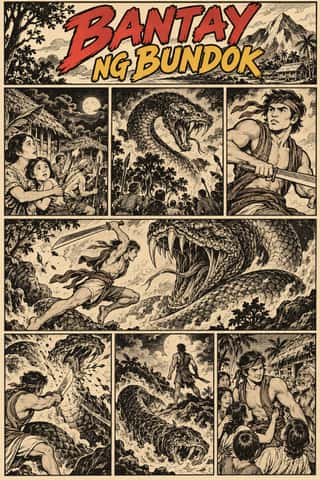
Filipino KomiksThe Philippines' newsstand comics magazines, from Kenkoy in Liwayway (1929) and Ace's Pilipino Komiks (1947) to the fall of the Roces titles in the late 1990s.
- AIZ Political Photomontage (Heartfield)The political photomontage John Heartfield made for the communist weekly AIZ from 1930 to 1938, in Berlin and, from 1933, in Prague exile.
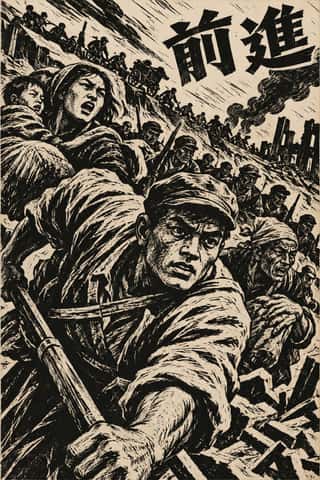
Chinese Modern Woodcut MovementThe leftist print movement launched by Lu Xun's 1931 Shanghai woodcut workshop, which made the self-cut black-and-white woodcut China's art of national crisis and revolution.
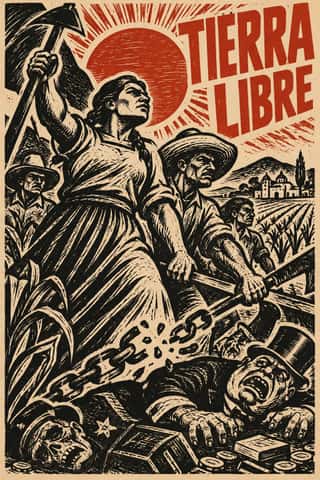
Taller de Gráfica PopularA Mexico City printmaking collective founded in 1937 around Leopoldo Méndez, Pablo O'Higgins and Luis Arenal to put art at the service of popular and anti-fascist struggles.
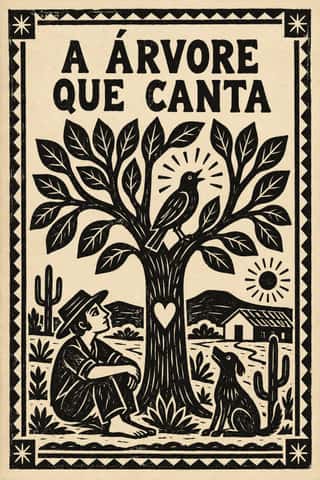
Literatura de Cordel WoodcutThe cover art of Brazil's literatura de cordel, pocket chapbooks of verse whose single picture is a small woodcut cut in soft umburana wood and printed in black above a plain letterpress title.
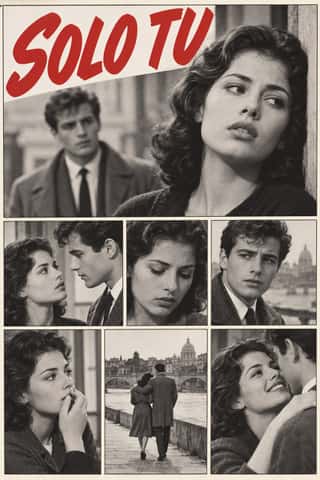
Fotoromanzo (Italian Photo-Romance)The photo-romance of the Italian women's weeklies: a melodrama told in staged photographs, first printed by Il mio sogno and Bolero Film in May 1947 and copied from France to Brazil.
- Machine-Age Simplified Arabic TypeArabic redrawn for the machine rather than the reed pen.
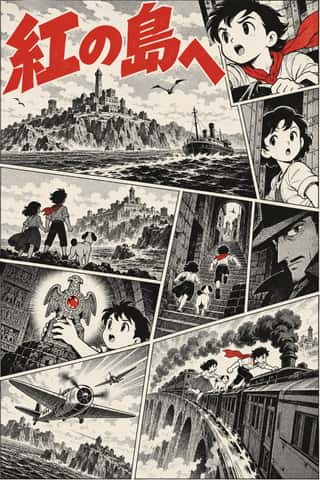
Story Manga (Postwar Japanese Comics)The black-and-white narrative comic of postwar Japan, from Tezuka Osamu's Shin Takarajima (1947) to the weekly boys' magazines of 1959 and 1968 and the paperbacks that collect them.
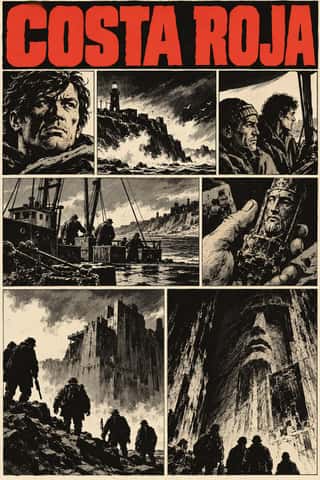
Argentine Adventure Historieta (Oesterheld–Breccia)The adult adventure comics of Buenos Aires newsstand magazines, from Misterix (1948) and Oesterheld's Hora Cero (1957) to Skorpio and Fierro; the humour line of Patoruzú, Rico Tipo and Mafalda is another tradition.
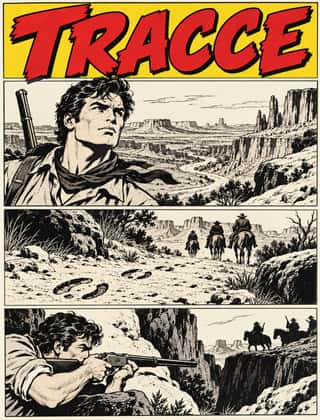
Bonelli Fumetto (Italian Popular Adventure Comics)The house format of Milan's Bonelli publishing house and its imitators (Tex, Zagor, Dylan Dog, Nathan Never): monthly newsstand paperbacks of 16 x 21 cm with about a hundred black-and-white pages, each a long episode of a serial hero.
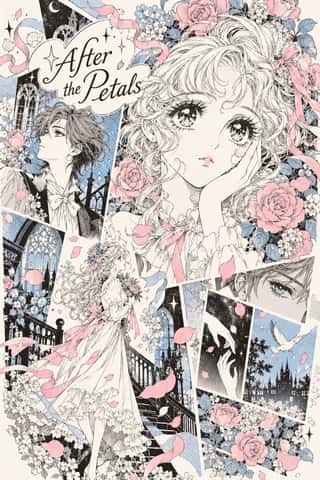
Shōjo Manga (Japanese Girls' Comics)The look of Japan's girls' comics (strictly a readership, not a style), which Takahashi Macoto fixed in 1958 from the lyrical illustration (jojōga) of Nakahara Jun'ichi and the Year 24 Group remade in the 1970s.
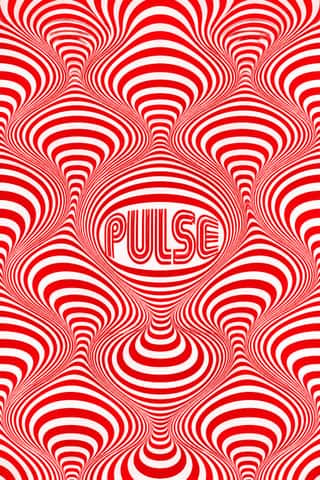
Op Art GraphicsA 1960s style that turned perceptual research into graphic effect: precisely drawn lines, checks, concentric rings and modular grids, usually black and white or complementaries of equal value, that seem to vibrate, swell or move.
Fluxus Graphics (Maciunas)The house graphics George Maciunas made from 1962 until his death in 1978 for Fluxus, a network of artists who staged events and sold cheap multiples.
Phototype Expressive Typography (Lubalin & U&lc)The display typography of the phototype era, led in New York by Herb Lubalin, his lettering partners John Pistilli, Tom Carnase and Tony DiSpigna, and the International Typeface Corporation.
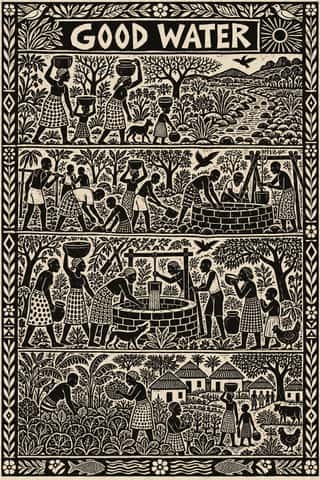
Rorke's Drift LinocutThe prints of the Lutheran art centre that Swedish teachers Peder and Ulla Gowenius started at Ceza Hospital in 1962 and moved to Rorke's Drift in 1963: under apartheid, which denied Black South Africans formal fine-art education, the chief training ground for many Black artists.
Baybayin Revival GraphicsThe revival of baybayin, the precolonial Tagalog abugida, as a mark of Filipino identity.
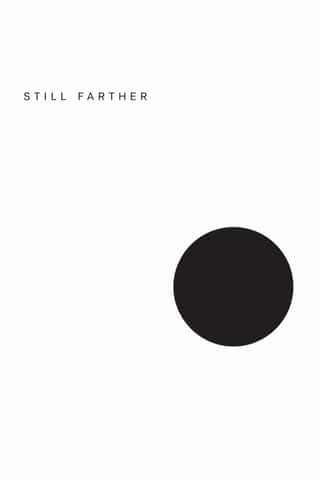
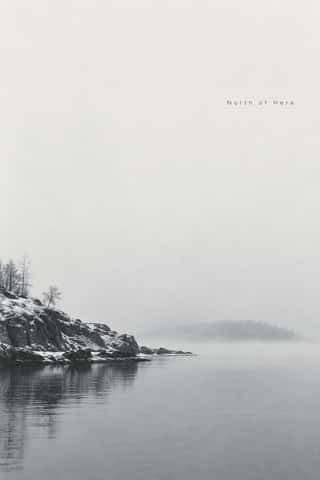
Minimalist Graphic DesignModernism reduced to its barest means, informed by 1960s Minimal art and Japanese emptiness: one image or line of type, vast white or neutral space, a monochrome or near-monochrome palette and meticulous typographic detail.
- Atelier Populaire (May '68 Screenprint Poster)The posters of the Atelier populaire, set up when students, teachers and artists occupied the École des Beaux-Arts in Paris on 14 May 1968, until police cleared the school on 27 June.
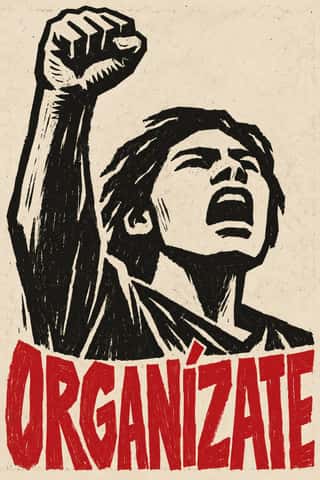
Gráfica del 68 (Mexican Student Movement Graphics)The graphics of the 1968 Mexican student movement, made in days by brigades in the print workshops of San Carlos and La Esmeralda and in improvised school workshops.
Underground ComixSelf-published, adults-only comic books from the San Francisco counterculture, made outside the Comics Code on the newsstand comic's format.
ECM Sleeve Aesthetic (Munich)The cover language of the Munich label ECM, made since 1970 by Barbara Wojirsch, Dieter Rehm and later Sascha Kleis and Mayo Bucher with co-founder Manfred Eicher.
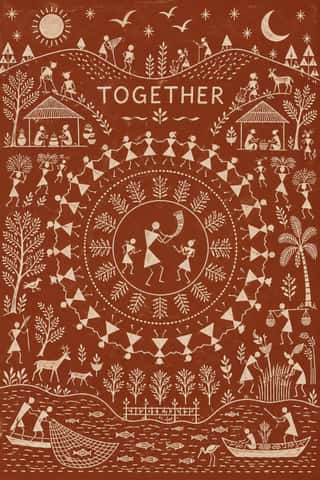
Warli PaintingThe ritual wall painting of the Warli, an Adivasi people of the northern Sahyadri in Maharashtra, carried onto paper and canvas from the 1970s by Jivya Soma Mashe and others.
- Punk & DIY ZineThe graphic voice of punk rock in fanzines, record sleeves and gig flyers: images and words cut from newspapers, typed or scrawled, pasted down and run off on a photocopier.
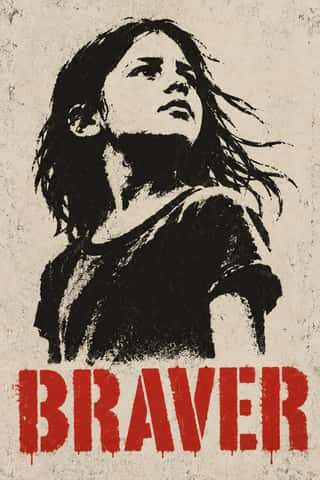
Stencil Street ArtPictures cut rather than drawn: a photograph is reduced to two or three flat tones, cut into card and sprayed onto a wall, usually uninvited, so one hard-edged figure appears in the street, in black with at most one accent colour.
NSK Retro-Avant-GardeThe retro-avant-garde of Neue Slowenische Kunst, founded in Ljubljana in 1984 by Laibach, IRWIN and the Scipion Nasice Sisters Theatre, with Novi kolektivizem as its design department.
Pixação (São Paulo Tag Reto)The name-writing of São Paulo's pixadores, which since the 1980s has covered walls and façades and, from the 1990s, the upper floors of tower blocks.
- Black Metal GraphicsThe visual language of black metal, fixed by Norway's second wave in the early 1990s, now worldwide, since the 2010s borrowed by mainstream acts (Szpajdel's Rihanna and Metallica logos, 2016).
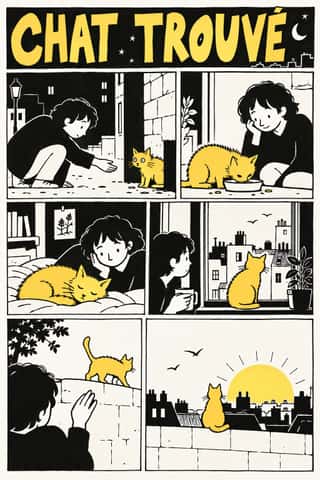
L'Association and French Alternative ComicsThe black-and-white auteur comics of L'Association, the Paris publisher founded by seven cartoonists in 1990, and the 1990s small-press scene it led.
Torres Strait Islander LinocutRelief prints by Torres Strait Islander artists of Zenadth Kes, which grew from an Indigenous visual art course at Cairns College of TAFE by 1991 and the Mualgau Minaral collective on Mua (Moa) Island.
- Bitterkomix (Afrikaans Underground Comics)The Afrikaans underground comics magazine founded in Stellenbosch in 1992 by Anton Kannemeyer (Joe Dog) and Conrad Botes (Konradski), with Mark Kannemeyer (Lorcan White).
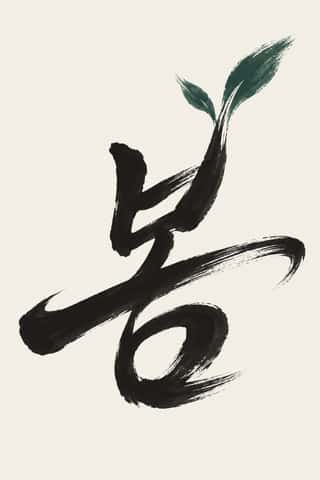
Korean Commercial Calligraphy (Kaelligeurapi)Brush-written Hangul made for commerce, not the scroll.
- Seoul Independent Graphic Design (Small-Studio Scene)Graphic design by Seoul's small, self-run studios, which from about 2005 chose to stay small.
- Oaxacan Protest Printmaking & Street Graphics (ASARO)The street graphics of Oaxaca City since the 2006 teachers' strike and APPO uprising, when ASARO, the stencil collective Lapiztola and later workshops such as Colectivo Subterráneos made the colonial centre's walls a newspaper.
Hipster Artisanal RevivalThe trade-mark look of the 2007–2018 craft boom, which dressed new coffee roasters, breweries and stationers as nineteenth- and early-twentieth-century firms.
Brutalist Web DesignA reaction against templated, conversion-optimised web design that exposes the raw materials of the browser: default system fonts, blue underlined links, visible borders, unstyled forms and plain document flow.
- Front-of-Pack Warning Octagons (Latin American Food Warning Seals)A state warning system stacked on commercial food packs.
NeumorphismA short-lived interface trend in which controls are extruded from, or pressed into, a background of the same colour and modelled only by paired soft shadows.
Styles that often use it 66
A characteristic choice: usual in these styles, though not essential.
- Square Kufic (Bannāʾī)Square Kufic builds Arabic script on a square grid: straight lines and right angles only, with every stroke as wide as the gap beside it.
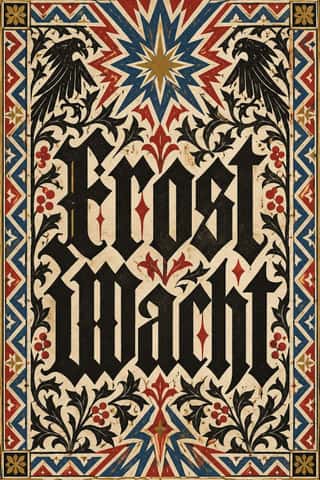
Gothic Blackletter & Fraktur TraditionThe broken scripts of the Latin West.
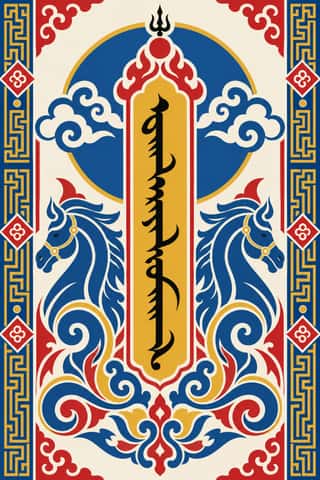
Mongol Bichig Calligraphy & Ugalz OrnamentMongolia's classical script and the auspicious ornament that frames it on state, Buddhist and household objects.
- Ottoman Tughra & Dîvânî Chancery CalligraphyThe Ottoman sultan's calligraphic monogram and the chancery hand written beneath it.
- Persian Nastaʿlīq Calligraphy (Qiṭʿa, Chalipa and Siyāh-mashq)The 'hanging' script of Persian poetry and an art of the single sheet.
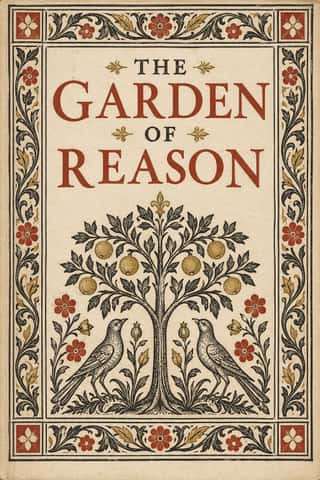
Renaissance Book TypographyThe printed book as shaped by humanist Italy and France: roman and italic types modelled on humanist handwriting, a single justified text block set in harmonious proportions within generous margins, and woodcut initials, borders and printer's devices as the only ornament.
Ma & Wabi-sabi AestheticsA Japanese aesthetic rooted in Zen and the wabi tea ceremony that prizes austerity, imperfection, impermanence and the charged interval (ma) between things.
- Zoomorphic & Figural Calligraphy (Islamic Calligrams)Pictorial writing in which the strokes of a devotional text form one figure: a lion of ʿAli built from the Nad-e ʿAli prayer, a galleon whose hull spells the names of the Seven Sleepers, a peacock, a Sufi cap.
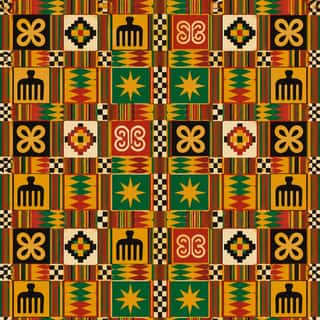
Adinkra & Kente Symbol SystemsThe Akan textile languages of Ghana.
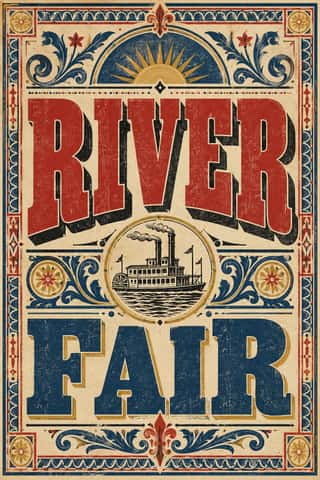
Victorian Letterpress & Wood TypeThe commercial jobbing print of the industrial century: posters, playbills, auction notices and ephemera built from a flood of new display types (fat faces, Egyptians, grotesques, Tuscans and condensed wood type).
- Persian Popular Narrative (Lithographs & Coffeehouse Painting)Iran's popular picture-stories in two media.
- Norwegian and Finnish National Romantic Graphics (Munthe & Karelianism)The flat, decorative branch of Norway's and Finland's national romanticism, which turned Viking carving, the sagas, the Kalevala and old peasant weaving into modern ornament.
- German Book Art Movement (Buchkunstbewegung)The German reform of the book, from the magazine Pan (1895) to the private presses that ended around 1933.
Simplicissimus Satirical Style (Munich)The house style of the Munich satirical weekly Simplicissimus, set by Th.
Cubist Pictorial SpaceThe pictorial revolution of Picasso and Braque that shattered single-point perspective into overlapping, faceted planes seen from several viewpoints at once.
- Italian FuturismLaunched by Marinetti's 1909 manifesto, Futurism glorified speed, machines, the city and war, and turned the printed page into an explosive, noisy field.
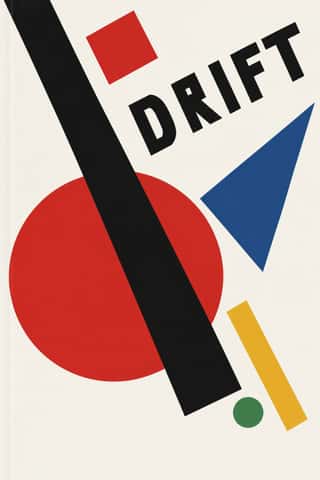
SuprematismKazimir Malevich's non-objective art, unveiled with the Black Square at the 0.10 exhibition in Petrograd in 1915, reduced painting to pure geometric planes floating in white, infinite space.
- DadaBorn in wartime Zurich at the Cabaret Voltaire in 1916 and spreading to Berlin, Hanover, Cologne and Paris, Dada used chance, absurdity and provocation against the culture that had produced the war.
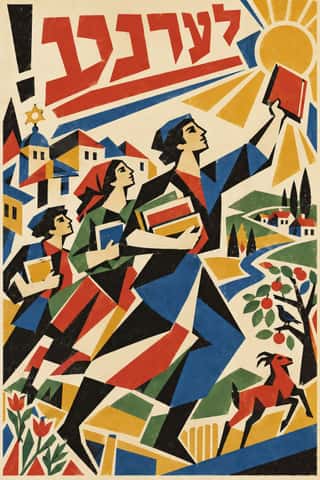
Kultur-Lige & Yiddish Avant-Garde Book DesignThe Yiddish modernist book of the Kultur-Lige, the secular Jewish culture league founded in Kyiv in 1918, and its circle: El Lissitzky, Issachar Ber Ryback, Iosif Chaikov, Boris Aronson and others, who sought a new Jewish art in the shtetl synagogues and tombstones they had recorded and in Cubo-Futurism and Suprematism.
- Estridentismo (Stridentist) GraphicsMexico's first avant-garde (1921-27), launched when Manuel Maples Arce pasted his manifesto Actual No. 1 on Mexico City walls.
- Italian Fascist Graphics (Romanità & Exhibition Photomontage)The visual language of Italian Fascism, which turned modernist means to a cult of Rome and of the Duce.
- Brazilian Modernismo Graphics (Klaxon and the Semana de 22)The print side of São Paulo's Modernismo (1922-29), set in jobbing print shops.
Die Neue TypographieThe programme that turned avant-garde experiment into a functional typographic method, named by Moholy-Nagy in 1923 and codified in Jan Tschichold's 'elementare typographie' (1925) and Die neue Typographie (1928).
- MavoTokyo's anarchist avant-garde, founded in July 1923 by Murayama Tomoyoshi, back from a year in Berlin, with four former Futurists, and its magazine MAVO (seven issues, July 1924 to August 1925).
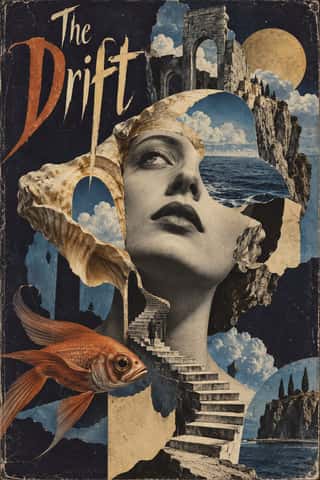
Surrealist GraphicsLaunched by André Breton's 1924 manifesto, Surrealism sought the marvellous in dreams, chance and the unconscious.
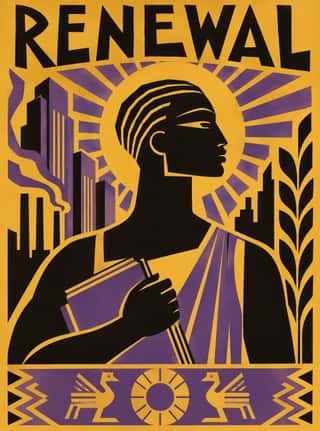
Harlem Renaissance Graphic ArtThe illustration, cover and jacket art of the New Negro movement, set by Aaron Douglas after he moved to Harlem in 1925 and studied with Winold Reiss.
- Nippon Kōbō & Tōhōsha Photo-Propaganda Magazines (NIPPON & FRONT)Luxury photo-propaganda magazines that imperial Japan sent abroad, 1934–45.
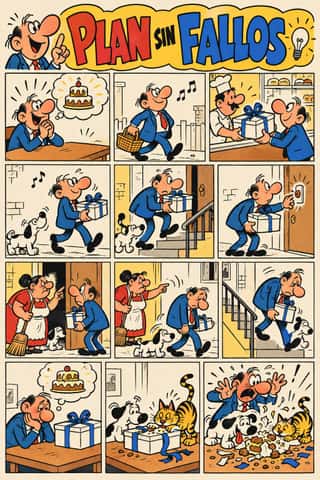
Escuela Bruguera (Spanish Humour Comics)The house style of Editorial Bruguera's humour cartoonists in Barcelona from 1947 to 1986, named the 'Escuela Bruguera' by Terenci Moix in 1968.
- Onitsha Market PamphletsCheap, stapled pamphlets of romance, advice, drama and political biography, written by students, clerks, journalists and traders and printed by jobbing letterpress shops around Onitsha Main Market in eastern Nigeria from the late 1940s.
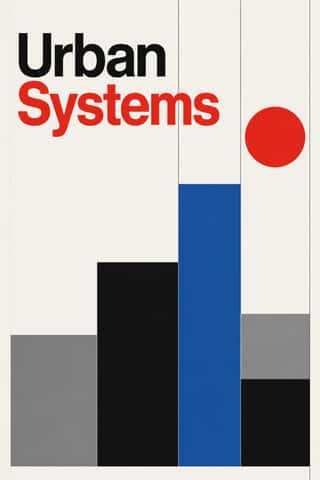
International Typographic StyleA post-war refinement of the New Typography in which the mathematical grid, objective photography and neo-grotesque sans-serifs were used to communicate with clarity and neutrality.
Drum Magazine & Sophiatown PhotojournalismThe picture magazine of Black urban Africa in the 1950s.
Finnish Bold Print (Marimekko Modernism)The printed-cotton modernism of Marimekko, founded in Helsinki in 1951 by Armi and Viljo Ratia out of Viljo's printing firm Printex.
HfG Ulm Systematic DesignThe Hochschule für Gestaltung Ulm (1953–1968) was founded as the successor to the Bauhaus.
Vicente Rojo & Mexican Editorial ModernismThe design of Mexico City's literary and cultural press, shaped from the 1950s by the Barcelona-born exile Vicente Rojo: México en la Cultura, the Revista de la Universidad, Plural, La Jornada and the covers of Ediciones Era.
West German Conceptual Film & Culture Poster (Hillmann and Rambow)The art-film and culture poster Hans Hillmann developed from 1953 for the West German distributors Neue Filmkunst and Atlas Film, which his Kassel student Gunter Rambow took with Gerhard Lienemeyer into staged photo posters for theatre, publishers and protest.
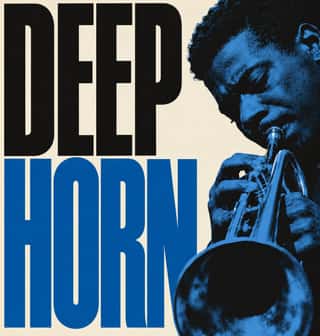
Blue Note Jazz Sleeve ModernismThe record-sleeve language of Blue Note Records, set by art director Reid Miles, who designed some 350 twelve-inch LP covers between about 1956 and 1967, often around Francis Wolff's session photographs.
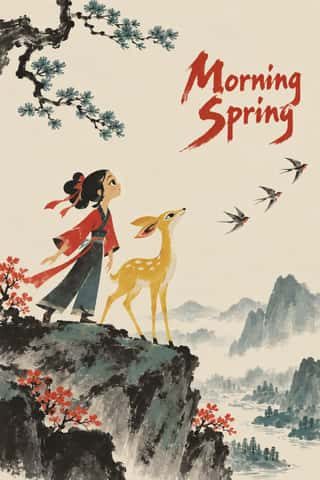
Chinese National-Style Animation (Shanghai Animation Film Studio)The 'national style' of the Shanghai Animation Film Studio, which turned from Disney and Soviet models to Chinese media: Peking-opera masks and movement, paper-cut and folded-paper figures, mural and New Year print colour and, from 1960, ink-wash painting set in motion after Qi Baishi and Li Keran.
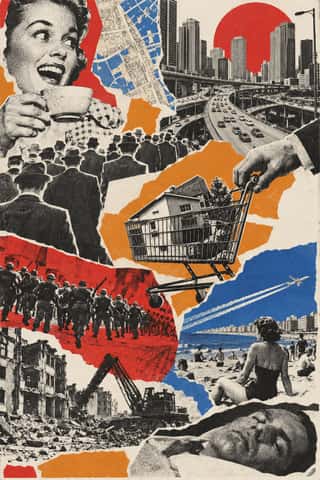
Situationist Détournement GraphicsGraphics of the Letterist and Situationist Internationals (1956–1972), built on détournement: taking existing words and pictures (comic strips, advertisements, news photographs, city maps, classic texts) and turning them against their source.
- Dazibao (Big-Character Posters)Handwritten wall posters in large brush characters that turned the walls of Mao-era China into a public forum for criticism, denunciation and, at the Democracy Wall, dissent.
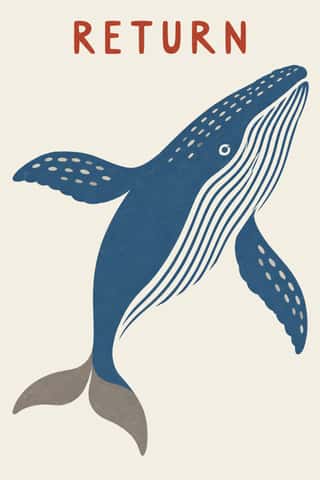
Kinngait (Cape Dorset) Inuit PrintmakingPrints from the Inuit co-operative studio at Kinngait (Cape Dorset), Nunavut, with a catalogued collection every year since 1959.
- Bossa Nova Sleeve Modernism (César Villela and Elenco)The cover language of bossa nova, made in Rio by the self-taught designer César Villela, first at Odeon and then on the first sixteen LPs of Aloysio de Oliveira's label Elenco (from 1963), often around Francisco Pereira's photographs.
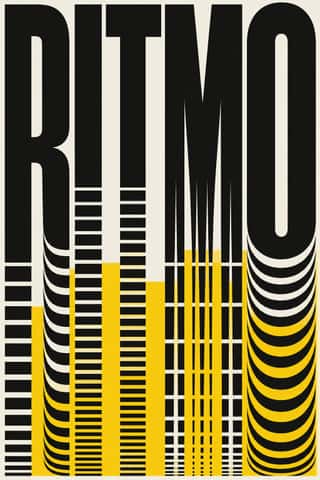
Di Tella Graphic Design (Instituto Torcuato Di Tella)The in-house graphics of Buenos Aires' Instituto Torcuato Di Tella, 1960–1970, led by Juan Carlos Distéfano with Juan Andralis, Rubén Fontana, Norberto Coppola and Carlos Soler.
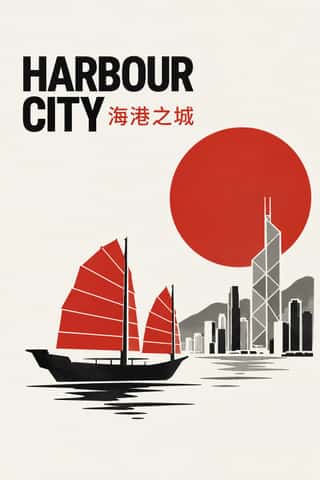
Hong Kong East–West Graphic ModernismThe studio design of Hong Kong from the 1960s, made for banks, developers, trade bodies, hotels and cultural events in a city that had to speak Chinese and English at once.
- Mexico 68 Olympic & Metro IdentityThe graphic programme of the 1968 Mexico City Olympics and the city's first Metro line.
- Swiss Punk / New Wave TypographyA rebellion from inside the Swiss school: Wolfgang Weingart and his Basel students kept the grotesque and the grid but set them in motion with extreme letterspacing, stepped and angled lines, rules and bars, enlarged halftone screens and layered film montage.
- Ethiopian Revolutionary Poster (Derg Era)The poster and mural art of the Derg military government and its successor, Mengistu's People's Democratic Republic of Ethiopia (1974–1991), made mostly by teachers and students of the Addis Ababa School of Fine Arts.
Bitmap & Pixel GraphicsGraphics and lettering built from the square pixels of low-resolution screens (arcade and console sprites, home-computer displays and the first graphical user interfaces), where every dot was placed by hand within tight limits of memory, resolution and palette.
- Post-Punk Record Sleeve (Stiff, Factory, 4AD)The record sleeves that British art-school designers made after punk, for independent labels and some majors: Barney Bubbles at Stiff, Malcolm Garrett for Buzzcocks, Peter Saville at Factory and 23 Envelope at 4AD.
Cranbrook & Deconstructivist TypographyGraduate-school experimentation, centred on Katherine and Michael McCoy's Cranbrook design programme, that applied post-structuralist literary theory to the page.
Emigre & Early Digital TypeRudy VanderLans and Zuzana Licko's magazine and type foundry, launched in 1984 alongside the first Macintosh, turned the computer's low-resolution constraints into a new typographic idiom.
Out-of-Square Hangul TypographyA Korean typographic movement that frees Hangul from the equal square in which metal and photo type had always set each syllable.
Hype Streetwear Graphics (Box Logo to Quotation Marks)The logo-led graphics of streetwear since the 1990s: one wordmark or emblem on a plain T-shirt, hoodie or object is the product.
- Indonesian Woodcut Activism (Taring Padi)The protest graphics of Taring Padi, the collective founded by students and activists in Yogyakarta in 1998 as Suharto fell, and of the punk and activist woodcut scenes around it.
Fantasy User Interface (FUI) & Sci-Fi HUDFantasy user interfaces are the screen graphics of films and series: computer screens, holograms and helmet HUDs made to be watched for a few seconds, not used.
Arabic CalligraffitiArabic letters sprayed, rolled and brushed at the scale of buildings.
- Contemporary Chinese Book Design ('Most Beautiful Books of China')Chinese book design since 2003, when Shanghai founded the yearly 'Most Beautiful Books of China' award, whose winners go on to Leipzig.
Contemporary Arabic & Dual-Script Type DesignA twenty-first-century type culture that redraws Arabic as a family matched to a Latin companion in weight, proportion and contrast, so the two scripts can share a page, screen or sign as equals.
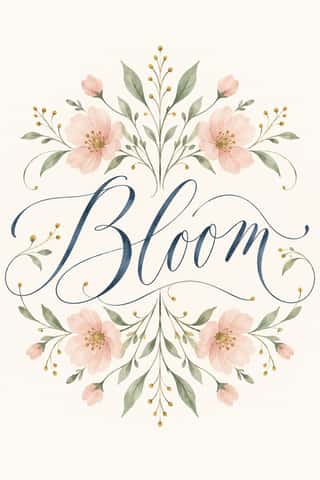
Modern Calligraphy and Brush LetteringThe loose pointed-pen and brush-pen script of wedding stationery and the 2010s craft boom.
Neo-Swiss RevivalA contemporary revival of the International Typographic Style, fuelled by digital re-releases of neo-grotesques and by studios such as Experimental Jetset and Norm: modular grids, flush-left grotesque type, huge tightly set headlines and flat fields of black, white and one signal colour.
- Danmaku Bullet-Comment OverlayThe bullet-comment layer of Japanese and Chinese video sites, begun on Niconico in December 2006 and taken up by AcFun and Bilibili in 2008–2009.
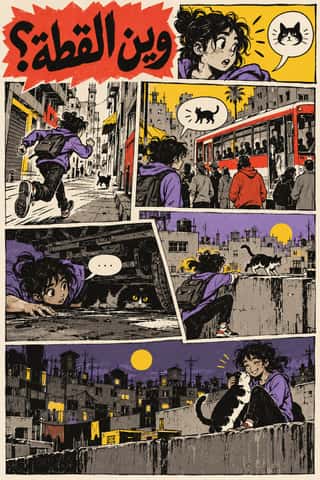
Arab Independent Comics (Samandal, TokTok, Lab619, Skefkef)Adult comics magazines edited by Arab artists' collectives since 2007, at times with a ministry grant or an NGO partner: Samandal in Beirut, TokTok in Cairo, Lab619 in Tunis and Skefkef in Casablanca.
Lucerne Poster Scene (Neubad & Südpol Posters)Lucerne's poster culture for small non-commercial venues (Südpol, Neubad, Treibhaus) and the Weltformat festival.
Syrian Revolution Graphics (Kafranbel Banners & Poster Collectives)Protest graphics of the Syrian uprising from 2011, made to be photographed and shared online rather than to last on a wall.
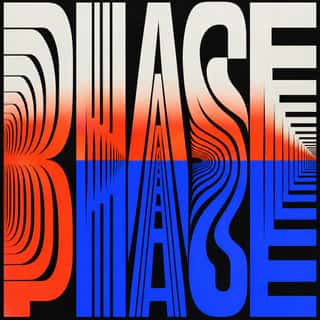
Kinetic Typography & Variable TypeTypography as the moving image: letterforms that stretch, squash, rotate and morph along variable-font axes, loop seamlessly and cut to the beat of music, used for identities, social-media posters and digital out-of-home screens.
Chilean Estallido Social Graphics (Revuelta Popular of 2019–20)The street graphics of Chile's popular revolt, from 18 October 2019 to the March 2020 lockdowns, when a leaderless movement covered Santiago's Plaza de la Dignidad, the Alameda and other cities' walls.
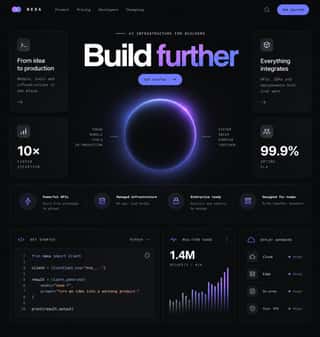
Dark Tech MinimalismThe dark, restrained aesthetic of developer tools and SaaS landing pages since about 2019: near-black grounds, grey type ramps, a neutral grotesque such as Inter, hairline borders, soft radial glows and bento grids of crisp product screenshots.
Styles that use it now and then 43
An occasional choice in these styles.
- Amazigh Sign System & Tifinaghc. 0–present
- Maghrebi Script (Maghribi Calligraphy of al-Andalus and North Africa)c. 900–present
- European Heraldryc. 1140–present
- Vyaz (Ornamental Slavonic Lettering)c. 1230–present
- Mithila (Madhubani) Paintingc. 1350–present
- Javanese Wayang Kulit (Tatah Sungging)1500–present
- Rinpa & Saga-bon1600–present
- Sápmi Graphic Identity (Duodji & Gákti Colour Code)1600–present
- Ten Bamboo Studio Colour Woodblock (Douban & Gonghua)1626–present
- Ukiyo-e Woodblock Prints1670–1900
- Kalighat Pat & Battala Bazaar Prints1830–1930
- Arts & Crafts Movement1860–1920
- Celtic Revival Illumination & Lettering1861–1951
- Mir iskusstva Book Art1898–1927
- Santiniketan & Bengal School Graphics1905–1954
- Hungarian Revolutionary Poster1912–1919
- Russian Constructivism1917–1934
- Republican Chinese Book Cover Design (Lu Xun & Tao Yuanqing)1923–1949
- Penguin Paperback Design (Three Bands to the Marber Grid)1935–1972
- Vietnamese Propaganda Poster (Tranh cổ động)1945–present
- Zagreb Modernist Graphics (EXAT 51 to Teatar &TD)1951–1975
- Black Panther Party Graphics1967–1980
- Chilean Unidad Popular & Nueva Canción Graphics1967–1973
- Hipgnosis Photographic Concept Sleeve1968–1983
- Turkish Weekly Humour Magazines (Gırgır to Uykusuz)1972–2025
- Métal hurlant Science-Fiction Comics (Mœbius, Druillet & Les Humanoïdes Associés)1974–1987
- Lebanese Civil War Party Poster1975–1990
- La Movida Madrileña Graphics1977–1988
- South African Resistance Poster1978–1994
- Solidarność & Polish Underground Graphics1980–1989
- Pardhan Gond Painting (Jangarh Kalam)1981–present
- Madinah Mushaf (King Fahd Complex Qur'an Page)1985–present
- ACT UP & Gran Fury AIDS Activist Graphics1987–1995
- Grunge Typography1990–2000
- Emoji Pictographic Language1997–present
- Internet Ugly & Meme Vernacular2003–present
- Natural Wine Label Art2007–present
- Egyptian Revolutionary Street Art (Mohamed Mahmoud Murals)2011–2014
- Slow-Living Editorial (the Kinfolk Look)2011–present
- GOV.UK Design (GDS Style)2012–present
- Analog Horror Graphics2015–present
- Weirdcore & Dreamcore2019–present
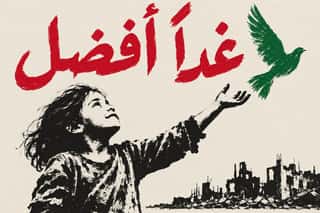
- Palestinian Watermelon and Keffiyeh Graphics2021–present
It often goes with
Choices that the styles making it make more often than the atlas as a whole.
- Typography onlyin 81 of 165
- Paper & letterpress bitein 78 of 165
- Light groundin 129 of 165
- Line illustrationin 100 of 165
- Pen, brush & inkin 80 of 165
- Letterpressin 47 of 165
Styles that avoid it
Styles that deliberately leave it out.
- Nianhua & Chinese Folk Printc. 1100–present
- Tarot de Marseille Woodcut Cards1639–present
- Chaekgeori & Minhwa Screen Painting1776–present
- Cuban Tobacco Lithography (Habilitaciones & Marquillas)1845–present
- Belle Époque Lithographic Poster1866–1914
- Indian Calendar & Bazaar Art1878–present
- Spanish Bullfight Poster (Cartel Taurino)1879–present
- Amazonian Boat Lettering (Abridores de Letras)1925–present
- Giallo Mondadori Covers (I Libri Gialli)1929–present
- Egyptian Painted Film Poster1932–1996
- Hand-Painted Bollywood Poster1940–1999
- Jeepney Art1946–present
- Pakistani Truck Art1947–present
- Taiwan Floral Cloth (Huabu)1950–present
- Arab Children's Comic Magazines (Samir to Majid)1956–present
- Tropicália Graphic Design1964–1975
- AfriCOBRA1968–present
- Tingatinga Painting1968–present
- Dutch Expressive Postmodernism (Studio Dumbar & Hard Werken)1977–1994
- Memphis Design1981–1988
- Matatu & Nganya Art1990–present
- Nigerian Pentecostal Crusade Poster & Billboard1990–present
- Indian Pop-Kitsch Design (Desi Kitsch)1997–present
- Korean Webtoon Graphics2002–present
- Neo-Andean Architecture (Cholets)2005–present
- 'Good Morning' Greeting Images (WhatsApp Forward Vernacular)2013–present
- VTuber Avatar and Stream Graphics2016–present
- Guochao (China-Chic National Trend)2018–present
- Book Blob (Abstract Colour-Blob Literary Fiction Cover)2019–2023