Postmodern · 1980–1998 · North America
Cranbrook & Deconstructivist Typography
Also known as Cranbrook typography, Deconstruction, The New Discourse
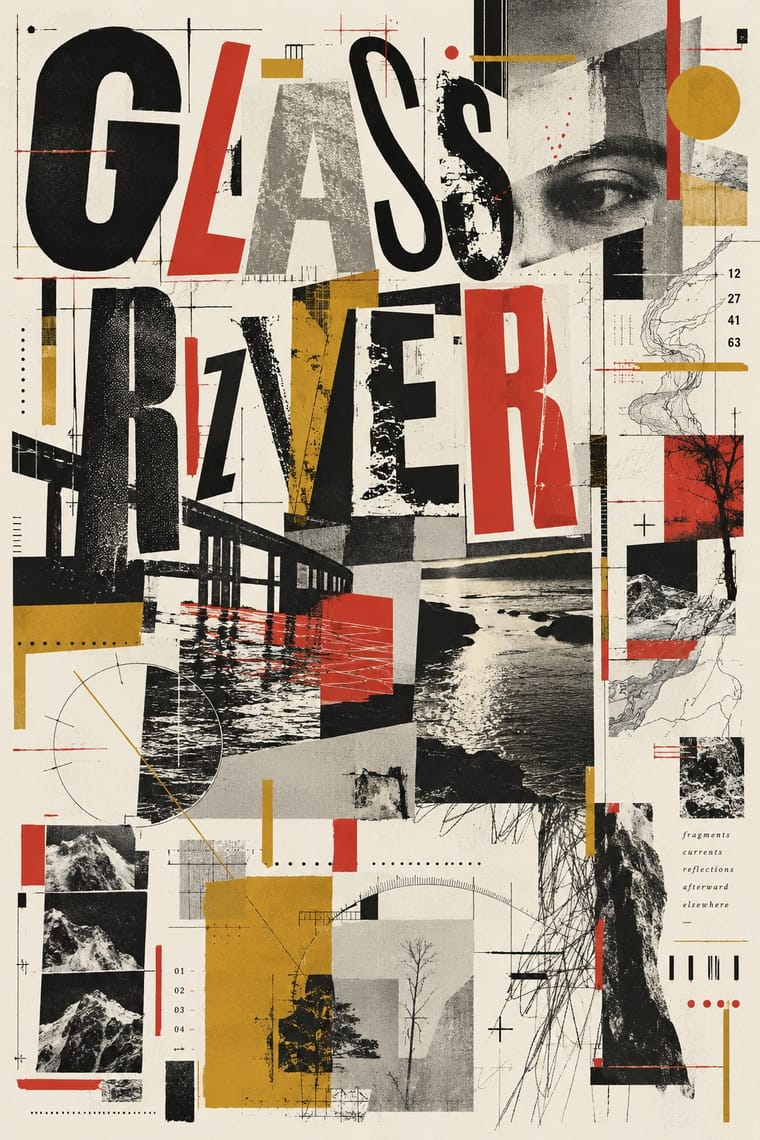
Graduate-school experimentation, centred on Katherine and Michael McCoy's Cranbrook design programme, that applied post-structuralist literary theory to the page. Text and image were layered into dense fields to be read rather than merely seen; typographic hierarchy was fractured, vernacular lettering was mixed with theory, and meaning was left open for the reader to construct.
Make something in this styleGet advice in this styleMix it with another style
01
How it works
- Layer text and image into one dense field that must be read slowly rather than scanned.
- Fracture hierarchy by giving captions, quotations and headlines competing weights and positions.
- Mix typefaces, scales and orientations within a single block so reading becomes an act of interpretation.
- Borrow vernacular lettering and commercial ephemera, then recontextualise them.
- Let the structure of the content, not a universal grid, generate the layout.
Cranbrook Academy of Art, Bloomfield Hills, Michigan; CalArts, Valencia, California
02
Its design choices
From Stylogeny’s vocabulary of design choices: defining choices make the style, characteristic ones are usual, occasional ones turn up now and then.
- Layout & composition
- Space & hierarchy
- Typography
- Surface & texture
- Imagery
- Medium & production
- Tone & intent
- Avoids
- Classical text block, Central symmetry, Single focal point, Gloss & highlights, Authoritative & institutional, Rational & objective
Palette
#f2efe6#141414#8a8780#d1342c#c99a2e
Typefaces
Keedy Sans
Jeffery Keedy
Dead History
P. Scott Makela, 1990
Outwest
Edward Fella
Univers and Helvetica, fragmented and layered
Known for
Katherine & Michael McCoy
Cranbrook Academy of Art design department, 1971–95
Edward Fella
flyers for Detroit Focus Gallery
Jeffery Keedy
Keedy Sans; CalArts
Allen Hori
P. Scott Makela & Laurie Haycock Makela
Cranbrook Design
The New Discourse (Rizzoli, 1990)
03
Make something in this style
Say what you need, and Stylogeny’s image studio draws it from Cranbrook & Deconstructivist Typography’s design choices and checks it against them. It takes about a minute, and you get a link to share.
04
Where it comes from, and what it’s close to
Before it
The style it grew out of, and the styles it borrowed from.


After it
The styles that grew out of it.
No later style in the atlas grew out of it yet.
Alike in its design choices
Styles that make many of the same choices, related or not, besides those above.


05
Real works
Artefacts in museums, libraries and archives that show the style, linked at their source.
- Detroit Focus. Morris Brose: A Sustained Vision (exhibition lecture poster)Edward Fella · 1987 · Victoria and Albert Museum, London (E.594-1998)
- The Cranbrook Graduate Program in Design, Michigan (recruitment poster)Katherine McCoy (printer: Signet) · 1989 (V&A production date; its brief description says 'early 1990s') · Victoria and Albert Museum, London (E.599-1998)
- Holland, Michigan (spread, Emigre no. 10, Cranbrook issue, pp. 9-11)Lisa Anderson (Cranbrook Academy of Art) · 1988 · Letterform Archive, digitised on the Internet Archive (LFAEmigre0010)
- Poetics (definition spread from the CalArts 'lexicon' project, Emigre no. 21)Uncredited CalArts graphic design graduate student (issue guest-edited by Jeffery Keedy) · 1992 · Letterform Archive, digitised on the Internet Archive (LFAEmigre0021)
06
Sources
- Katherine McCoy, Michael McCoy et al., Cranbrook Design: The New Discourse (Rizzoli, 1990)
- Ellen Lupton & J. Abbott Miller, 'Deconstruction and Graphic Design', in Design Writing Research (1996)
- Rick Poynor, No More Rules: Graphic Design and Postmodernism (2003)
How Stylogeny researches and checks a style: where the facts come from.