Counterculture · 1978–present · Western Europe, Latin America & Caribbean, North America, Global / networked
Stencil Street Art
Also known as Stencil graffiti, Street-art stencils, Art du pochoir (French street usage), Banksy style, Hope-poster style
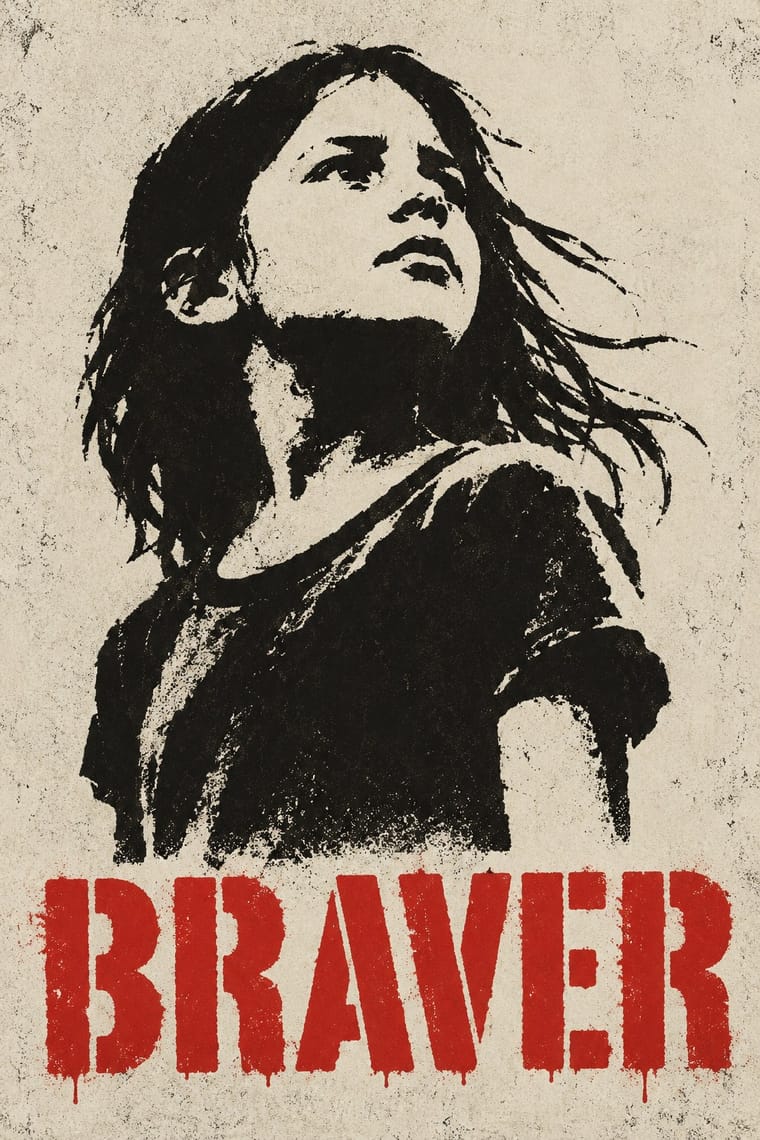
Pictures cut rather than drawn: a photograph is reduced to two or three flat tones, cut into card and sprayed onto a wall, usually uninvited, so one hard-edged figure appears in the street, in black with at most one accent colour. Foreshadowed by Ernest Pignon-Ernest's Hiroshima silhouettes (1966), it took shape in 1978 in Amsterdam's punk scene (Hugo Kaagman) and São Paulo (Alex Vallauri), was taken up in Paris by Blek le Rat in the early 1980s, and went global after 2000 with Banksy's satirical stencils and Shepard Fairey's Obey posters and Obama 'Hope' portrait.
Make something in this styleGet advice in this styleMix it with another style
Use it with care
Spraying a wall without the owner's consent is vandalism or criminal damage in most jurisdictions, so get permission or a legal wall; a brand faking street stencils is no exception (IBM's 2001 'Peace, Love, and Linux' sidewalk stencils led to arrests and more than US$120,000 in fines). Most stencils start from someone else's photograph, as the AP's dispute over Fairey's Hope poster showed (settled 2011): shoot or license the source image, and do not pass off a pastiche as a Banksy, whose work is authenticated only by Pest Control. Do not use photographs of real victims, or places of real suffering such as separation walls and war ruins, as props for a brand or a joke; by Banksy's own account, a Palestinian man at the West Bank barrier told him they did not want the wall made beautiful.
01
How it works
- Start from a photograph: reduce it to two or three flat tones and cut each tone as its own stencil, so the figure keeps photographic proportions but loses every gradation.
- Spray or roll the stencil straight onto a found surface and make the wall, a pipe, a doorway or a sign part of the picture; place figures at life size where passers-by meet them.
- Keep to black on whatever colour the wall is, with at most one accent such as a red balloon; for posters, allow only a few flat posterised tones, as in the Hope poster's red, beige and two blues.
- Stand one figure or scene alone, unframed, and add at most a short slogan in stencilled capitals.
- Turn authority against itself with a darkly funny reversal: police, soldiers, rats, children, cartoon characters, press photographs and famous paintings made to say the opposite of what they usually say.
- Cut once and repeat: spray the same stencil across a city, then reissue it as screenprints, stickers and paste-ups, leaving overspray, drips and weathering visible.
After Ernest Pignon-Ernest's life-size stencil of a Hiroshima victim's shadow on the roads to the Plateau d'Albion (1966) and the stencilled protest words John Fekner sprayed in New York from 1976: Amsterdam's punk and squatting scene (Hugo Kaagman, first stencil in 1978 by his own account) and São Paulo (Alex Vallauri's Bota Preta, 1978); Paris, where Blek le Rat stencilled rats and then black-and-white figures from the early 1980s; global after 2000 through Bristol's Banksy, the Buenos Aires stencil groups after the 2001 crisis, and Shepard Fairey's Obey campaign and Obama 'Hope' portrait (2008)
02
Its design choices
From Stylogeny’s vocabulary of design choices: defining choices make the style, characteristic ones are usual, occasional ones turn up now and then.
- Layout & composition
- Space & hierarchy
- Surface & texture
- Imagery
- Medium & production
- Tone & intent
- Avoids
- Full polychrome, Gradients, Ornamented display, Abundant decoration, Horror vacui, Gloss & highlights, Luxurious & glamorous
Palette
#111111#e6e2d8#8f8a82#d3212d#1f3a4d#e9d9a6
Typefaces
Hand-cut stencil capitals, bridged where the counters would otherwise fall out
Industrial and military marking stencils
crate and serial-number lettering; Banksy has said a stencilled serial number prompted his switch to stencils
Stencil (R. Hunter Middleton for Ludlow and Gerry Powell for American Type Founders, both 1937) when a slogan is typeset rather than cut by hand
Heavy sans-serif capitals reversed out of a red bar, as in Shepard Fairey's OBEY
Known for
Ernest Pignon-Ernest
life-size silhouette cut from the photograph of a Hiroshima passer-by's shadow, stencilled with paint and a brush on walls, rocks and roads leading to the Plateau d'Albion, where France's nuclear strike force was being installed (1966; some sources give 1963) (the photographic forerunner); finding the stencil 'too binary', he turned to screenprinted paste-ups, such as the recumbent figures he pasted around Paris for the Commune's centenary (1971)
John Fekner, stencilled words such as Decay and Broken Promises on buildings in Queens and the South Bronx, from 1976
the text-only forerunner
Hugo Kaagman, punk stencils in Amsterdam (first stencil in 1978, by his own account); co-founder of the fanzine Koekrant and the punk club DDT666
Alex Vallauri, Bota Preta (São Paulo, 1978–80)
a stencilled black high-heeled boot repeated across the city and gradually completed into a whole woman
Crass, stencilled anti-war, anarchist and feminist slogans on the London Underground and on advertising billboards in the band's early years (late 1970s)
Blek le Rat (Xavier Prou), stencilled rats in Paris from 1981 by his own account, then black-and-white figures of famous and anonymous people, some life-size
Banksy, stencils from 2000
Girl with Balloon (Waterloo Bridge, London, 2002), nine images on the West Bank barrier (2005), Dismaland (Weston-super-Mare, 2015), and the canvas Girl with Balloon shredded at Sotheby's in 2018 and renamed Love Is in the Bin
Shepard Fairey, 'Andre the Giant Has a Posse' stickers (from 1989, at the Rhode Island School of Design), recast as OBEY
1996
03
Make something in this style
Say what you need, and Stylogeny’s image studio draws it from Stencil Street Art’s design choices and checks it against them. It takes about a minute, and you get a link to share.
04
Where it comes from, and what it’s close to
Before it
The style it grew out of, and the styles it borrowed from.


After it
The styles that grew out of it.

Alike in its design choices
Styles that make many of the same choices, related or not, besides those above.

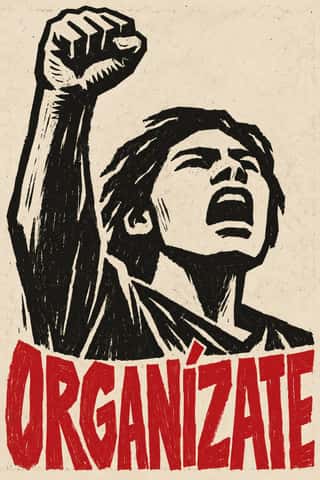
- Atelier Populaire (May '68 Screenprint Poster)69% alike



05
Sources
- Wikipedia: 'Stencil graffiti' (stencil graffiti as an art form from the 1960s; Pignon-Ernest's life-size stencilled silhouettes of a nuclear bomb victim, Plateau d'Albion, 1966, with paint and a brush; Fekner from 1976; Kaagman and Vallauri from 1978; Blek le Rat's first stencils in 1981 by his own account, press reports from July 1984), 'Banksy' (rats and apes among his subjects; Napalm, 2004, pairs Nick Ut's photograph of Kim Phuc with Mickey Mouse and Ronald McDonald), 'Blek le Rat', 'Shepard Fairey', 'John Fekner', 'Barack Obama "Hope" poster', 'Stencil (typeface)' (Middleton's Ludlow version advertised in June 1937, Powell's ATF version a month later), 'Commercial graffiti' (IBM's 'Peace, Love, and Linux' stencils, 2001: arrests and more than US$120,000 in fines)
- fr.wikipedia: 'Ernest Pignon-Ernest' (the stencil from the photograph of a Hiroshima passer-by's shadow, traced on walls, rocks and roads leading to the Plateau d'Albion, a life-size human image, 1966, with a footnote giving 1963; the stencil 'vraiment binaire et trop pauvre graphiquement'; screenprinted gisants pasted in Paris for the Commune's centenary, 1971); 'Pochoir' (pochoiristes)
- nl.wikipedia: 'Hugo Kaagman' (co-founder of Koekrant and DDT666, in the Amsterdam punk and squatting movement)
- Oscar van Gelderen, 'Nobody was doing well. On Hugo Kaagman: Stencil King (eighties)', https://www.oscarvangelderen.nl/post/Nobody-was-doing-well--On-Hugo-Kaagman--Stencil-King-eighties-N15.html (Kaagman states that he made his first stencil in 1978)
- Debra N. Mancoff, 'Banksy', Encyclopaedia Britannica, https://www.britannica.com/biography/Banksy (freehand from 1993, stencils from 2000; Girl with Balloon, 2002; West Bank, 2005; Dismaland, 2015; Love Is in the Bin, 2018; Pest Control)
- 'Blek le Rat', Enciclopedia on line, Treccani, https://www.treccani.it/enciclopedia/blek-le-rat/
- Sandra Reimão, Jane A. Marques, Manuella V. Reale, Gabriella L. M. de Matos & Beatriz P. Cherobin, 'Cenas de leitura em grafites paulistanos', Revista Eco-Pós 27(3), pp. 523–537, doi:10.29146/eco-ps.v27i3.28209 (Vallauri's Bota Preta, 1978–80; Spinelli on his images' reference to 'a mitologia urbana das histórias em quadrinhos')
- Taís Rios Salomão de Souza & Lílian de Jesus Assumpção Mello, 'O Folk virou cult: o grafite como veículo de comunicação', Revista de Estudos da Comunicação (PUCPR, Curitiba), v. 8, n. 17, pp. 195–202, 2007, doi:10.7213/rec.v8i17.14537 (Vallauri from 1978; short phrases and irony)
- María Cecilia Guerra Lage, 'Intervenciones urbanas en la ciudad global. El caso del stencil en Buenos Aires (2000-2007)', Revista Latinoamericana de Ciencias Sociales, Niñez y Juventud 7(1), 2009, pp. 355–374, https://dialnet.unirioja.es/descarga/articulo/2981964.pdf (the stencil's greatest visibility in Buenos Aires after the 2001 crisis; BsAsStencil, formed December 2002; Disney War; media icons; Traverso's 350 life-size bicycles in Rosario)
- National Portrait Gallery, Smithsonian: Shepard Fairey, Barack Obama (2008), hand-finished collage, stencil and acrylic on heavy paper, NPG.2008.52, https://npg.si.edu/object/npg_NPG.2008.52, and the acquisition press release (January 2009)
- Crass's stencilled graffiti on the London Underground and billboards: George McKay, Senseless Acts of Beauty (Verso, 1996), p. 87, as cited in Wikipedia: 'Crass'
- Banksy, Wall and Piece (Century, 2005)
- Banksy's own account of the West Bank exchange, as quoted by Jason Kottke, kottke.org, 5 August 2005, https://kottke.org/05/08/gallery-of-work-by-guerilla-artist-banksy, and Matador Network, 'Searching for Banksy on the West Bank wall', https://matadornetwork.com/abroad/searching-for-banksy-on-the-west-bank-wall
- Centre Georges Pompidou, 'L'Art vif: murs peints et pochoirs' (Grand Foyer, 15 January – 24 February 1992), exhibition text, https://www.centrepompidou.fr/media/document/80/f2/80f241fe9c607d2302846aa13edeeaa2/normal.pdf ('l'art du pochoir, ce nouvel art sur béton', in the streets of Paris from about 1983)
- Further reading: Tristan Manco, Stencil Graffiti (Thames & Hudson, 2002); Josh MacPhee, Stencil Pirates (Soft Skull Press, 2004); Ulrich Blanché, Instant Public Art: A Street Art History of Stencil Graffiti (Heidelberg: arthistoricum.net, 2025), cited by Wikipedia 'Stencil graffiti' for Pignon-Ernest (pp. 76–84)
How Stylogeny researches and checks a style: where the facts come from.