Counterculture · 2002–present · Middle East & North Africa, Western Europe, Global / networked
Arabic Calligraffiti
Also known as Arabic graffiti, Arabic street art
Arabic letters sprayed, rolled and brushed at the scale of buildings. From the early 2000s graffiti writers, many of Arab, Iranian or South Asian background, turned hip-hop wall writing to Arabic script, keeping its outlines and aerosol but dropping Latin tags, bubble letters and cartoon characters. Calligraphic letters freed from the reed-pen rules are stretched, interlaced and stacked into one sweeping gesture across a wall, a tunnel, a minaret or a whole district, spelling a verse, poem or saying chosen for the place, a political comment, or words picked for their shape.
Make something in this styleGet advice in this styleMix it with another style

Use it with care
Many works carry Qur'anic verses, the names of God or devotional sayings, written on mosques and in religious communities: never use such text as texture or put it on floors, footwear or throwaway items, and have every Arabic or Persian word read and approved by a fluent reader before it is painted or printed. The style stretches and interlaces letters, so put a Qur'anic verse or a name of God into it only when a skilled Arabic-script writer composes it and the mosque or community approves it, as at the Jara Mosque; never digitally warp, crop or mirror existing sacred text. Never fill a design with invented pseudo-Arabic, which image models readily produce; do not ask an image model for eL Seed's Liquid Alphabet or any named writer's hand, and never present a generated wall as their work. The best-known walls rest on the consent of governors, imams, priests and residents, so get the owner's permission (spraying without it is a crime in most places), work with the people of the place, and commission and credit Arabic-script writers rather than faking the script for a brand.
01
How it works
- Let Arabic script lead and carry the picture: no Latin tag, bubble letters or cartoon character beside it; where Latin letters or a face appear, as in Zepha's bilingual walls or Yazan Halwani's portraits, they answer to the Arabic or are built from it.
- Start from the proportions of a calligraphic hand, then stretch, interlace and stack the strokes freely; do not keep to the reed-pen rules or a single uniform script.
- Let the letters follow the building, up a minaret, along a tunnel or across neighbouring facades, as one continuous gesture sprayed or brushed at architectural scale.
- Choose the words for the place, usually a short verse, line of poetry, saying or anthem agreed with the people who live with the wall, or a political comment, as in Zepha's and Mohammed Ali's walls; some writers, such as Halwani, choose words for their shape rather than their meaning, but every word must still be correctly written.
- Outline the letters graffiti-fashion and fill them with flat, saturated colour, or reduce them to a single-colour line on a plain wall.
- Often paint with the community, and for an anamorphic piece fix the one viewpoint from which the text reads whole.
Graffiti writers in Western Europe and the Middle East, many of Arab, Iranian or South Asian background, who turned hip-hop wall writing to Arabic and Persian script: the British-Bangladeshi Mohammed Ali (Aerosol Arabic) in Birmingham, who by his own account began using Islamic script about 2002; A1one (Tanha) in Tehran; Zepha (Vincent Abadie Hafez) in France; and the French-Tunisian eL Seed (born in Paris, 1981), whose murals in Montreal, Gabès, Doha and Cairo made the word known. Collected in Pascal Zoghbi and Don Karl's Arabic Graffiti (From Here to Fame, Berlin, 2011). The word itself is older: Leila Heller and Jeffrey Deitch staged a 1984 show called Calligraffiti at her New York gallery, setting US graffiti artists and mid-century abstract painters beside calligraphic artists from the Middle East and its diaspora (restaged in 2013 with eL Seed); Brion Gysin used it in 1986 and Wijdan Ali in 1997, before Niels Shoe Meulman's 2007 exhibition
02
Its design choices
From Stylogeny’s vocabulary of design choices: defining choices make the style, characteristic ones are usual, occasional ones turn up now and then.
- Layout & composition
- Space & hierarchy
- Typography
- Colour
- Form & shape
- Imagery
- Medium & production
- Tone & intent
- Avoids
- Comic & cartoon, Straight photography, Ornamented display, Gloss & highlights, Modular grid, Grotesque & neo-grotesque, Ironic & self-aware
Palette
#d8d2c4#151515#f7f5f0#f07f1e#1f5fae#f6c32b
Typefaces
Freehand Arabic script sprayed or painted rather than written with a reed pen, after calligraphy but without its rules or a uniform hand
as the Museum für Islamische Kunst describes eL Seed's work
eL Seed's 'Liquid Alphabet'
calligraphic writings built on top of each other so that they seem to travel (Salwa Road tunnels, Doha, 2013)
Arabic letters used as the 'pixels' of a portrait, a cloud of calligraphy from which a face emerges, the words chosen for their shape, movement or composition rather than their meaning (Yazan Halwani, Beirut)
Flexible Arabic script set against block-like Latin letters in one bilingual piece
Zepha
Persian words spray-painted after siah-mashq, the calligraphy exercise of writing one word over and over
A1one, Tehran
Known for
eL Seed, Qur'an 49:13 on the concrete minaret of the Jara Mosque, Gabès, Tunisia (2012), approved by the governor and the imam and supported by the Barjeel Art Foundation
eL Seed, 52 murals in the four Salwa Road tunnels, Doha, for the Qatar Museums Authority and Ashghal (2013, a four-month project begun in January), in part in his 'Liquid Alphabet' of letters built on top of each other, some with lines of the Qatari national anthem
eL Seed, Perception, Manshiyat Nasr, Cairo (painted 2015, completed 2016)
a saying of St Athanasius of Alexandria painted anamorphically over about 50 buildings of the Coptic Zaraeeb community, legible whole only from Muqattam Mountain; helpers filled the calligraphy he traced with blue, yellow and orange, and the letters were painted in white glow-in-the-dark paint
Zepha (Vincent Abadie Hafez), Unity (wahda), a 15 × 10 m acrylic wall combining Arabic script, Latin letters and geometric shapes at the GRAFFME#Lebanon festival, Beirut (2013)
Yazan Halwani, the face of the singer Sabah rising out of a cloud of Arabic calligraphy on the side of a five-storey building in Hamra, Beirut (new in June 2015)
A1one (Tanha), the word haqiqat ('truth') spray-painted in Tehran (2011) after siah-mashq, the calligrapher's exercise of writing one word over and over
Mohammed Ali (Aerosol Arabic)
mural beside the Annandale Street Mosque, Edinburgh, commissioned by the University of Edinburgh with the local Muslim community and unveiled on 9 September 2011, described by the university as fusing Arabic calligraphy with graffiti and Islamic patterns with Celtic design, with Edinburgh Castle and an Islamic and a Scottish blessing
Pascal Zoghbi and Don Karl (Stone), Arabic Graffiti (From Here to Fame, 2011), with eL Seed, Hest1, Julien Breton, Aerosol Arabic, Native & ZenTwO and Zepha
03
Make something in this style
Say what you need, and Stylogeny’s image studio draws it from Arabic Calligraffiti’s design choices and checks it against them. It takes about a minute, and you get a link to share.
04
Where it comes from, and what it’s close to
Before it
The style it grew out of, and the styles it borrowed from.


After it
The styles that grew out of it.
No later style in the atlas grew out of it yet.
Alike in its design choices
Styles that make many of the same choices, related or not, besides those above.
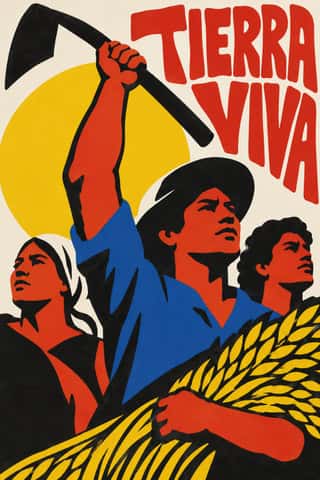
- Cartonera Books (Latin American Cardboard Publishing)58% alike
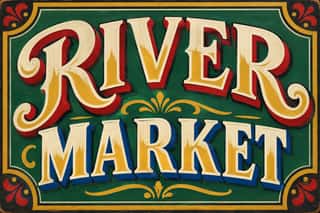
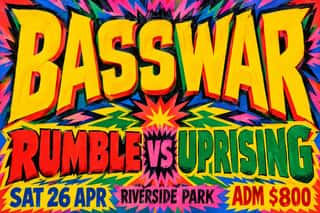
- Amazonian Boat Lettering (Abridores de Letras)50% alike


05
Sources
- Museum für Islamische Kunst, Staatliche Museen zu Berlin, 'Present: How do you create something new from the old?' worksheets on calligraffiti, eL Seed and Zepha (https://islamic-art.smb.museum/wp-content/uploads/2022/05/201030_E_Arbeitsblaetter_Aktion_Gegenwart_Kalligrafie_EN.pdf)
- Pascal Zoghbi and Don Karl, Arabic Graffiti (From Here to Fame, Berlin, 2011); Khatt Foundation book entry (https://khtt.net/ar/id/17546) and ArtAsiaPacific, 'Book Blog: Arabic Graffiti' (26 April 2011)
- Huda Smitshuijzen AbiFarès, 'A project of peace', Khatt Foundation (8 August 2016) (https://www.khtt.net/en/id/27137)
- Institute for Public Art, case study 'Perception' (https://instituteforpublicart.org/case-studies/perception)
- Barjeel Art Foundation, 'Jara Mosque Project' (23 February 2013) (https://www.barjeelartfoundation.org/news/jara-mosque-project/)
- Qatar Museums, 'eL Seed: Calligraffiti' (https://qm.org.qa/en/visit/public-art/el-seed-calligraffiti/); Gulf Times, 'Top artist's calligraffiti mural brightens up Salwa Road tunnel' (29 January 2013)
- Knowledge at Wharton, 'Spray Can Messenger: Aerosol Arabic Brings Ornate Islamic Graffiti to Urban Walls' (27 November 2012); Aga Khan Museum, 'Aerosol Arabic' (https://agakhanmuseum.org/bio/aerosol-arabic); South Asian Britain: Connecting Histories, 'Mohammed Ali' (https://southasianbritain.org/people/mohammed-ali/)
- University of Edinburgh, College of Arts, Humanities and Social Sciences, 'Graffiti artist unveils Islamic mural with Celtic twist' (2011) (https://cahss.ed.ac.uk/news-events/news/archive/2011/mural)
- Rustin Zarkar and Shahrzad Ghadjar, 'Taking Back the Streets: Iranian Graffiti Artists Negotiating Public Space', Ajam Media Collective (5 November 2012) (https://ajammc.com/2012/11/05/taking-back-the-streets-iranian-graffiti-artists-negotiating-public-space/); Wikipedia, 'A1one' (https://en.wikipedia.org/wiki/A1one)
- Al Jazeera, 'Q&A: Calligraphy meets street art in Beirut' (17 June 2015); Wikipedia, 'Yazan Halwani' (https://en.wikipedia.org/wiki/Yazan_Halwani)
- Rustin Zarkar, 'Word As Image: Contextualizing "Calligraffiti: 1984-2013" with French-Tunisian Street Artist eL Seed', Ajam Media Collective (17 September 2013) (https://ajammc.com/2013/09/17/word-as-image-contextualizing-calligraffiti-1984-2013-with-french-tunisian-street-artist-el-seed); Daniel Bates, 'Font of youth', The National (19 September 2013) (https://thenationalnews.com/arts-culture/art/font-of-youth-1.469987); Meer, 'Calligraffiti 1984/2013' (14 August 2013) (https://www.meer.com/en/4739-calligraffiti-1984-slash-2013)
- Dave Stelfox, 'Arabic Graffiti: Dances with walls', The National (15 July 2011) (https://thenationalnews.com/world/mena/arabic-graffiti-dances-with-walls-1.421851)
- Rose Issa, Juliet Cestar and Venetia Porter (eds), Signs of Our Times: From Calligraphy to Calligraffiti (Merrell, 2016)
- Wikipedia, 'Calligraffiti' and 'EL Seed' (https://en.wikipedia.org/wiki/Calligraffiti, https://en.wikipedia.org/wiki/EL_Seed)
How Stylogeny researches and checks a style: where the facts come from.