Ornament · Motif
Floral & vegetal
Leaves, vines, flowers, acanthus.
A design choice in Stylogeny’s vocabulary, under ornament: how much decoration, and of what kind?
- styles make it
- 94
- as a defining choice
- 11
- as a usual one
- 32
- now and then
- 51
- avoid it
- 52
Styles defined by it 11
For these styles it is one of the choices that make the style.


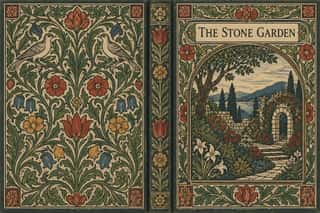

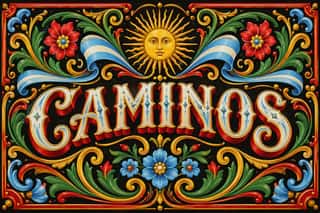
- Glasgow StyleGlasgow's distinctive answer to Art Nouveau, formed around Charles Rennie Mackintosh, Margaret and Frances Macdonald and Herbert MacNair at the Glasgow School of Art.
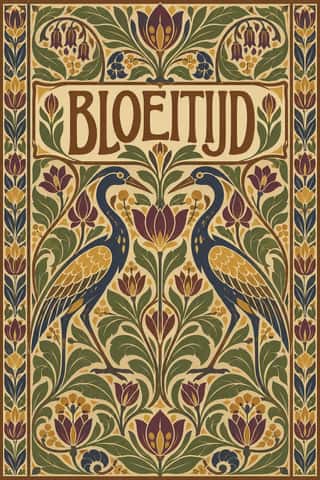
- Pakistani Truck ArtThe total decoration of Pakistan's trucks and buses, which grew from company marks and saints' portraits painted in the late 1940s into a workshop art in which painters, metalworkers, woodcarvers and reflective-tape specialists collaborate on each vehicle.
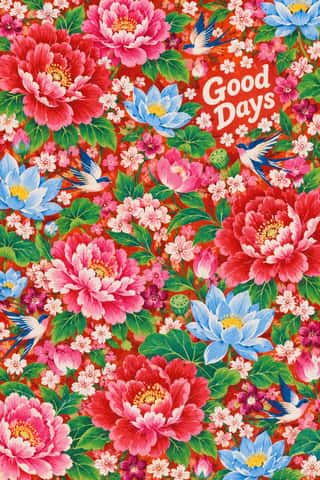


Styles that often use it 32
A characteristic choice: usual in these styles, though not essential.



- Ottoman Tughra & Dîvânî Chancery CalligraphyThe Ottoman sultan's calligraphic monogram and the chancery hand written beneath it.
- Persian Nastaʿlīq Calligraphy (Qiṭʿa, Chalipa and Siyāh-mashq)The 'hanging' script of Persian poetry and an art of the single sheet.
- Javanese Wayang Kulit (Tatah Sungging)The visual language of Javanese shadow puppets: flat figures cut from buffalo parchment, with head and legs in profile, shoulders turned to the front and long jointed arms worked by horn rods.

- Ten Bamboo Studio Colour Woodblock (Douban & Gonghua)A kind of colour woodblock printing begun in late-Ming Nanjing, made so that a print looks like a brush painting.


- Senegalese Sufi Devotional Imagery (Souwère Glass Painting and Amadou Bamba Portraits)The devotional imagery of Senegal's Sufi brotherhoods, above all the Mourides: reverse paintings on glass (souwère), made in Senegal's cities since about 1900, and the murals, banners, prints and photocopies that multiply one 1913 photograph of Sheikh Amadou Bamba across Dakar and Touba.
- Bezalel SchoolThe house style of the Bezalel School of Arts and Crafts, opened in Jerusalem by Boris Schatz in 1906 with E.

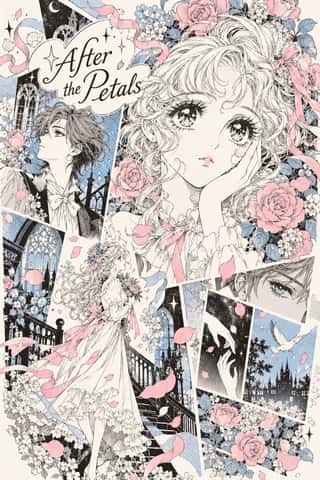
- Taishō Roman & Lyrical IllustrationThe lyrical illustration (jojōga) of late-Meiji to early-Shōwa Japan, led by Takehisa Yumeji: willowy, large-eyed women in kimono drawn with an Art Nouveau contour, set among camellias and kimono patterns and lettered by hand.


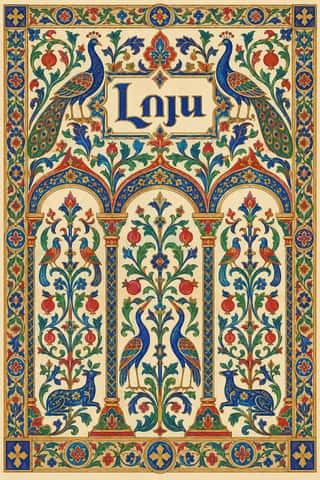
- Madinah Mushaf (King Fahd Complex Qur'an Page)One fixed page for the Qur'an across much of the Muslim world: Uthman Taha's fully vowelled Naskh in fifteen justified lines, written so that every page ends at the end of a verse (the late Ottoman âyet-berkenar layout), inside a floral frame, with sura titles in framed cartouches and verse numbers in small round medallions.
- 'Good Morning' Greeting Images (WhatsApp Forward Vernacular)The ready-made greeting pictures that millions of smartphone users, many of them older and new to the internet, forward to family, friends and groups each morning on WhatsApp, above all in India and Brazil.


Styles that use it now and then 51
An occasional choice in these styles.
- Ancient Egyptian Hieroglyphic & Register Compositionc. 0–394
- Hebrew Micrographyc. 895–present
- Maghrebi Script (Maghribi Calligraphy of al-Andalus and North Africa)c. 900–present
- European Heraldryc. 1140–present
- Gothic Blackletter & Fraktur Traditionc. 1180–present
- Mongol Bichig Calligraphy & Ugalz Ornamentc. 1204–present
- Kōwhaiwhai & Toi Māori Design1500–present
- Zoomorphic & Figural Calligraphy (Islamic Calligrams)1500–present
- Emblem Book (Motto, Picture & Epigram)1531–1724
- Đông Hồ & Hàng Trống Folk Prints1600–present
- Sápmi Graphic Identity (Duodji & Gákti Colour Code)1600–present
- Tarot de Marseille Woodcut Cards1639–present
- Lubok Popular Print1650–1920
- Ukiyo-e Woodblock Prints1670–1900
- Burmese Parabaik Painting (Konbaung Folding Books)1752–1885
- Victorian Letterpress & Wood Type1810–1900
- Bulaq (Amiriyya) Naskh Book Printing1822–1956
- Urdu Katib Lithography1837–present
- Persian Popular Narrative (Lithographs & Coffeehouse Painting)1843–2012
- Celtic Revival Illumination & Lettering1861–1951
- Belle Époque Lithographic Poster1866–1914
- Indian Calendar & Bazaar Art1878–present
- Spanish Bullfight Poster (Cartel Taurino)1879–present
- African Wax & Fancy Print1880–present
- Mexican Popular Graphics (Posada)1880–1917
- German Book Art Movement (Buchkunstbewegung)1895–1933
- Vienna Secession1897–1918
- Santiniketan & Bengal School Graphics1905–1954
- Russian Futurist Book1910–1920
- Harlem Renaissance Graphic Art1925–1940
- Hebrew Poster Lettering & Early Israeli State Design1934–1974
- Story Manga (Postwar Japanese Comics)1947–present
- Cairo–Beirut Arab Modernist Book & Periodical Design1952–1990
- Push Pin Style1954–1980
- Rorke's Drift Linocut1962–1982
- Tingatinga Painting1968–present
- Kawaii Design1970–present
- Australian Poster Collective Screenprints1971–1994
- Lebanese Civil War Party Poster1975–1990
- Iranian Revolutionary & Sacred Defence Poster1978–1988
- Pardhan Gond Painting (Jangarh Kalam)1981–present
- Global Village Coffeehouse1988–2003
- Black Metal Graphics1990–present
- Indian Pop-Kitsch Design (Desi Kitsch)1997–present
- Korean Commercial Calligraphy (Kaelligeurapi)1999–present
- Contemporary Chinese Book Design ('Most Beautiful Books of China')2003–present
- Neo-Andean Architecture (Cholets)2005–present
- Hong Kong Protest Art (Umbrella Movement to the 2019–20 Protests)2014–2020
- Corporate Memphis2017–present
- Post-Binary Typography (Bye Bye Binary and Inclusive French Type)2018–present
- Ukrainian Wartime Graphics (Saint Javelin, War Stamps and Be Brave Like Ukraine)2022–present
It often goes with
Choices that the styles making it make more often than the atlas as a whole.
- Borders & framesin 68 of 94
- Biomorphic curvesin 59 of 94
- Abundant decorationin 50 of 94
- Framed panelsin 73 of 94
- Spiritual & sacredin 55 of 94
- Brush & pen calligraphyin 46 of 94
Styles that avoid it
Styles that deliberately leave it out.
- Amazigh Sign System & Tifinaghc. 0–present
- Square Kufic (Bannāʾī)c. 1100–present
- Northwest Coast Formline Design1700–present
- Simplicissimus Satirical Style (Munich)1896–1944
- Expressionist Woodcut Graphics1905–1925
- Plakatstil / Sachplakat1905–1920
- London Transport Design1908–1966
- Italian Futurism1909–1944
- Hungarian Revolutionary Poster1912–1919
- Vorticism & BLAST Typography1914–1920
- De Stijl1917–1931
- Russian Constructivism1917–1934
- Bauhaus1919–1933
- Estridentismo (Stridentist) Graphics1921–1927
- Czech Poetist Book Design (Devětsil)1922–1938
- Leningrad Avant-Garde Picture Book1922–1936
- Mavo1923–1925
- Streamline Moderne1930–1945
- Milanese Industrial Modernism (Olivetti, Pirelli, Studio Boggeri)1933–1975
- Penguin Paperback Design (Three Bands to the Marber Grid)1935–1972
- Spanish Civil War Poster1936–1939
- American Mid-Century Modernism1940–1970
- Googie & Atomic Age1945–1965
- Machine-Age Simplified Arabic Type1947–present
- International Typographic Style1950–1975
- Brazilian Concrete Design1951–1975
- West German Conceptual Film & Culture Poster (Hillmann and Rambow)1953–1990
- Pop Art Graphics1955–1975
- Blue Note Jazz Sleeve Modernism1956–1967
- Situationist Détournement Graphics1956–1972
- British Road Signage (Kinneir & Calvert)1958–present
- Di Tella Graphic Design (Instituto Torcuato Di Tella)1960–1970
- Op Art Graphics1960–1975
- Fluxus Graphics (Maciunas)1962–1978
- Total Design & Dutch Functionalism1963–1990
- Mexico 68 Olympic & Metro Identity1966–1970
- Black Panther Party Graphics1967–1980
- Swiss Punk / New Wave Typography1968–1990
- Roman-like Thai Typography (modern loopless Thai)1973–present
- Punk & DIY Zine1976–1986
- Memphis Design1981–1988
- Emigre & Early Digital Type1984–1998
- Out-of-Square Hangul Typography1985–present
- Techno-Futurist Graphics1986–2002
- ACT UP & Gran Fury AIDS Activist Graphics1987–1995
- Y2K Futurism1997–2005
- Fantasy User Interface (FUI) & Sci-Fi HUD1999–present
- Neo-Swiss Revival2005–present
- Seoul Independent Graphic Design (Small-Studio Scene)2005–present
- Generative & Dynamic Identities2007–present
- Lucerne Poster Scene (Neubad & Südpol Posters)2007–present
- Kinetic Typography & Variable Type2016–present