Ornament · Motif
Cosmic & celestial
Stars, suns, orbits, sparkles and planets.
A design choice in Stylogeny’s vocabulary, under ornament: how much decoration, and of what kind?
- styles make it
- 66
- as a defining choice
- 4
- as a usual one
- 18
- now and then
- 44
- avoid it
- 0
Styles defined by it 4
For these styles it is one of the choices that make the style.
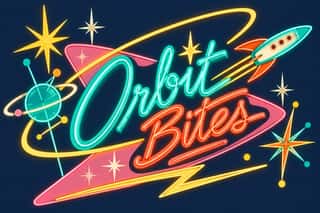
Googie & Atomic AgeThe exuberant commercial modernism of post-war American roadside culture (coffee shops, motels, car washes, bowling alleys and neon signs), named in 1952 by critic Douglas Haskell after John Lautner's Googie's coffee shop in Los Angeles (1949).
Afrofuturist DesignA visual language of Black futures that fuses African and diasporic iconography (pyramids and ankhs, Adinkra and Nsibidi glyphs, textile patterning) with spacecraft, cosmic fields and technology.
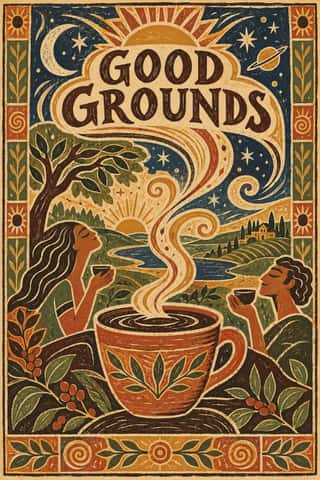
Global Village CoffeehouseThe faux-naive, earth-toned illustration style that late-1980s American designers set against Memphis, and that chain cafés, bookstores, packaging and clip art spread through the 1990s.
Synthwave / OutrunThe retro-futurist look of synthwave music: a 1980s revival that grew from mid-2000s French electro and online synth scenes, took its other name from Sega's arcade racer Out Run (1986) and reached the mainstream with Drive (2011).
Styles that often use it 18
A characteristic choice: usual in these styles, though not essential.
- Indian Calendar & Bazaar ArtMass-printed images of Hindu deities, epic scenes, saints, nationalist heroes and film stars, sold in bazaars and given away as business calendars, from the chromolithographs of the Calcutta Art Studio and Ravi Varma Press to Sivakasi offset.
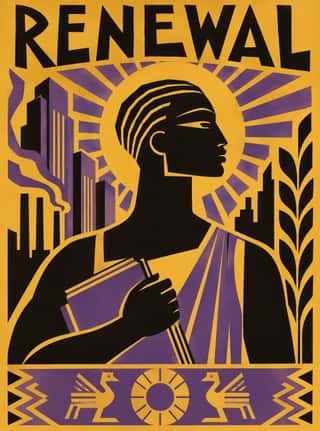
Art DecoThe glamorous modern style named after the 1925 Paris Exposition des Arts Décoratifs, which disciplined ornament into geometry: sunbursts, chevrons, stepped forms and sleek stylised figures rendered in lacquer-smooth colour with metallic accents.
Harlem Renaissance Graphic ArtThe illustration, cover and jacket art of the New Negro movement, set by Aaron Douglas after he moved to Harlem in 1925 and studied with Winold Reiss.
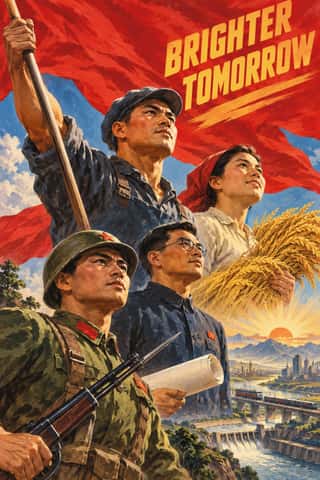
Socialist Realist Propaganda PosterThe official art doctrine of the Soviet Union from 1932, later exported across the socialist world, which replaced avant-garde experiment with legible, heroic realism 'national in form, socialist in content'.
Thaw Modernism (Soviet and Czechoslovak)The light, stylised modernism that replaced Socialist Realist illusionism and Stalinist pomp in Soviet and Czechoslovak graphic and applied design, from the 1956 Secret Speech, the 1957 Moscow youth festival and Expo 58 to the crushing of the Prague Spring in 1968 (a political cut-off; the manner ran on into the 1970s).
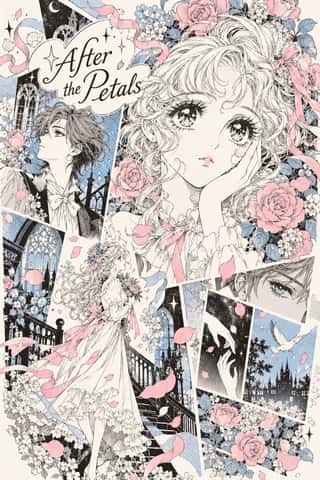
Shōjo Manga (Japanese Girls' Comics)The look of Japan's girls' comics (strictly a readership, not a style), which Takahashi Macoto fixed in 1958 from the lyrical illustration (jojōga) of Nakahara Jun'ichi and the Year 24 Group remade in the 1970s.
Angura Theatre PosterThe posters of Japan's underground (angura) theatre from the mid-1960s to the mid-1980s, made for troupes such as Kara Jūrō's Jōkyō Gekijō and Terayama Shūji's Tenjō Sajiki.
Soviet Central Asian Ornamental ModernismThe monumental art of Soviet Central Asia after the 1966 Tashkent earthquake: a strand of Socialist Realism mixed with Islamic and national ornament.
Kawaii DesignJapan's culture of cuteness, which grew from 1970s teenage rounded handwriting and shōjo fancy goods into a global design language through Sanrio, character merchandise and emoji.
Graffiti & Hip-Hop GraphicsBorn on New York's subway cars and Bronx party flyers, graffiti writing turns the writer's name into a monumental letter-sculpture: bubble, block and wildstyle letters with arrows, 3D drop shadows, fades and highlights, painted freehand in aerosol.
- Ethiopian Revolutionary Poster (Derg Era)The poster and mural art of the Derg military government and its successor, Mengistu's People's Democratic Republic of Ethiopia (1974–1991), made mostly by teachers and students of the Addis Ababa School of Fine Arts.
Métal hurlant Science-Fiction Comics (Mœbius, Druillet & Les Humanoïdes Associés)The adult science-fiction comics of Métal hurlant, the Paris magazine founded in 1974 by Mœbius, Philippe Druillet, Jean-Pierre Dionnet and Bernard Farkas.
- Iranian Revolutionary & Sacred Defence PosterPosters, murals and stamps of the 1978–79 Iranian Revolution and the 1980–88 war with Iraq, which fused the red-white-black international revolutionary poster with Persian miniature and coffeehouse narrative painting.
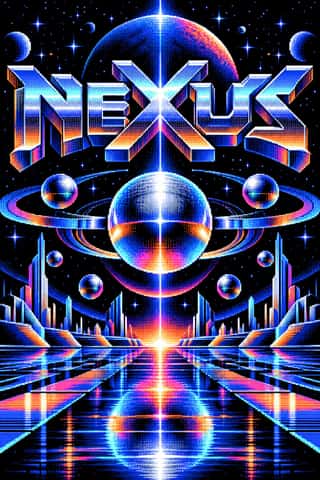
Demoscene Graphics (Cracktros, Demos & Text-Mode Art)The graphics of the demoscene, a mainly European community of coders, graphicians and musicians that grew from the intros software crackers added to pirated Commodore 64 and Amiga games in the mid-1980s.
Rave & Acid House GraphicsThe pocket-sized promotional art of acid house, rave and early techno, handed out in record shops and car parks to advertise all-night parties.
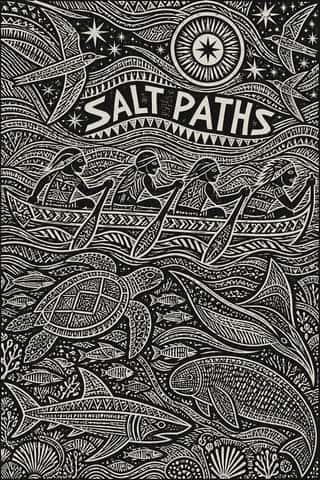
Torres Strait Islander LinocutRelief prints by Torres Strait Islander artists of Zenadth Kes, which grew from an Indigenous visual art course at Cairns College of TAFE by 1991 and the Mualgau Minaral collective on Mua (Moa) Island.
SolarpunkHopeful eco-futurist imagery born online.
Acid Graphics / New UglyA late-2010s club and poster style that updates 1990s rave graphics with modern 3D tools: liquid-chrome and melting lettering, neo-tribal spikes, wireframes, op-art patterns and acid-green palettes on black, mixed with blackletter and stretched grotesques.
Styles that use it now and then 44
An occasional choice in these styles.
- Ancient Egyptian Hieroglyphic & Register Compositionc. 0–394
- Mixteca-Puebla Codex Paintingc. 1200–1560
- Mongol Bichig Calligraphy & Ugalz Ornamentc. 1204–present
- Ottoman Tughra & Dîvânî Chancery Calligraphyc. 1324–present
- Mithila (Madhubani) Paintingc. 1350–present
- Tibetan Woodblock Print Culture (Pecha & Prayer Flags)c. 1410–present
- Sápmi Graphic Identity (Duodji & Gákti Colour Code)1600–present
- Tarot de Marseille Woodcut Cards1639–present
- Lotería Card Imagery (Mexican Lotería)1887–present
- Art Nouveau1890–1910
- Uli & Nsibidi Line and Sign Tradition1900–present
- Arnhem Land Bark Painting & Rarrk1912–present
- Surrealist Graphics1924–1960
- Literatura de Cordel Woodcut1940–present
- Vietnamese Propaganda Poster (Tranh cổ động)1945–present
- Pakistani Truck Art1947–present
- Story Manga (Postwar Japanese Comics)1947–present
- Greek Tourism Modernism (EOT)1960–1974
- Baybayin Revival Graphics1963–present
- Tropicália Graphic Design1964–1975
- Chicano Screenprint Poster1965–present
- Munich 1972 Olympic Design (Otl Aicher)1966–1972
- Amar Chitra Katha Comics1967–present
- Chilean Unidad Popular & Nueva Canción Graphics1967–1973
- Picó Sound-System Painting (Colombian Caribbean)1967–present
- Pop Achorado (Peruvian Agrarian Reform Posters)1969–1975
- Warli Painting1970–present
- Nigerian Pentecostal Crusade Poster & Billboard1990–present
- Early Web Vernacular1994–2004
- Emoji Pictographic Language1997–present
- Y2K Futurism1997–2005
- Korean Webtoon Graphics2002–present
- Frutiger Aero2004–2013
- Hauntology & Ghost Box Design2004–present
- Vaporwave2011–2017
- 'Good Morning' Greeting Images (WhatsApp Forward Vernacular)2013–present
- Illustrated Rom-Com Book Cover (Cartoon Couple Cover)2016–present
- VTuber Avatar and Stream Graphics2016–present
- Lo-fi Anime Aesthetic2017–present
- Post-Binary Typography (Bye Bye Binary and Inclusive French Type)2018–present
- Weirdcore & Dreamcore2019–present
- Claymorphism & Soft 3D2020–present
- Neo-Brutalism2020–present
- Generative-AI Image Aesthetic2022–present
It often goes with
Choices that the styles making it make more often than the atlas as a whole.
- Gradientsin 33 of 66
- Gloss & highlightsin 19 of 66
- Motion & broadcastin 20 of 66
- Fluorescent & neonin 19 of 66
- Single focal pointin 53 of 66
- Web & CSSin 21 of 66