Ornament · Motif
Borders & frames
Decorative frames, cartouches and rules around content.
A design choice in Stylogeny’s vocabulary, under ornament: how much decoration, and of what kind?
- styles make it
- 134
- as a defining choice
- 18
- as a usual one
- 63
- now and then
- 53
- avoid it
- 8
Styles defined by it 18
For these styles it is one of the choices that make the style.
- Ancient Egyptian Hieroglyphic & Register CompositionThe visual system of pharaonic Egypt, in which writing is made of pictures and pictures are ruled like writing.
- Ethiopian Ge'ez Manuscript & Haräg IlluminationThe manuscript art of the Ethiopian and Eritrean Orthodox Tewahedo Church, written in the Ge'ez syllabary on parchment from the Garima Gospels (radiocarbon-dated to roughly the 4th–7th centuries) to the present.
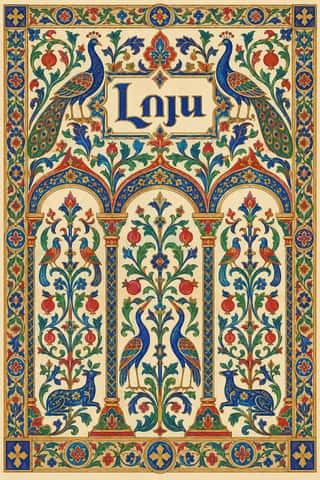
Armenian Manuscript IlluminationThe illuminated books of the Armenian Church, from the Gospel of Queen Mlke (c. 862) and the Etchmiadzin Gospels (989) to the last manuscripts around 1800.
- Hebrew MicrographyA Jewish scribal art in which lines of minute Hebrew script, usually the Masoretic notes that guard the biblical text, are written so that the line itself draws: interlaced frames and star rosettes on full carpet pages, and animals, knights, fish and grotesques in the margins.
Persian Miniature (Ilkhanid, Timurid and Safavid Book Painting)The court book painting of Iran and Timurid Herat, formed in Mongol Tabriz from Islamic, Byzantine and Chinese models: from Rashid al-Din's Jamiʿ al-tawarikh (1314) and the Great Mongol Shahnama to Behzad's Herat and the Shahnama of Shah Tahmasp, ending in the album pages of Safavid Isfahan.
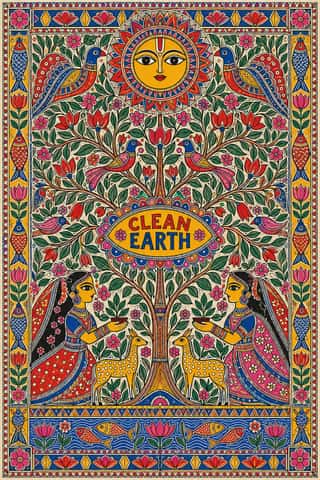
Mithila (Madhubani) PaintingWomen's ritual wall and floor painting from Mithila in north Bihar and Nepal's Terai, attested from at least the 14th century, seen by W.
- Persian Nastaʿlīq Calligraphy (Qiṭʿa, Chalipa and Siyāh-mashq)The 'hanging' script of Persian poetry and an art of the single sheet.
- Sápmi Graphic Identity (Duodji & Gákti Colour Code)Duodji is Sámi handicraft: hard work in wood, horn and bone, soft work in skin and cloth; drums painted with alder-bark figures survive from the 17th and 18th centuries.
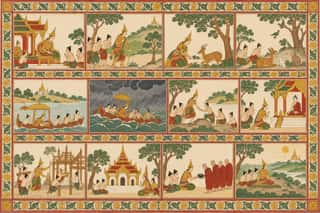
Burmese Parabaik Painting (Konbaung Folding Books)Painted Burmese folding books of the Konbaung court and its monasteries.
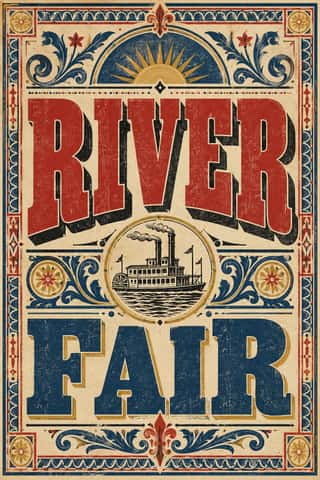
Victorian Letterpress & Wood TypeThe commercial jobbing print of the industrial century: posters, playbills, auction notices and ephemera built from a flood of new display types (fat faces, Egyptians, grotesques, Tuscans and condensed wood type).
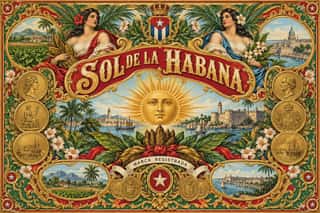
Cuban Tobacco Lithography (Habilitaciones & Marquillas)The chromolithographed dress of Havana tobacco.
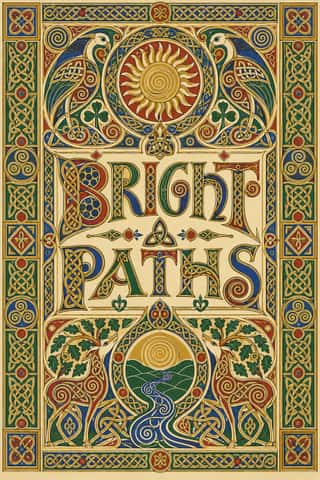
Celtic Revival Illumination & LetteringOrnament and lettering of the Celtic Revival in Ireland, Scotland and the Isle of Man, modelled on Insular gospel books such as Kells and on carved stone crosses.
Kanga (Swahili Message Cloth)Printed cotton wraps worn by women of the Swahili coast and its hinterland since the late nineteenth century, bought in pairs.
Mir iskusstva Book ArtThe graphic idiom of the St Petersburg World of Art circle (journal 1898–1904, exhibitions until Paris 1927) and the book artists around it.
- Bezalel SchoolThe house style of the Bezalel School of Arts and Crafts, opened in Jerusalem by Boris Schatz in 1906 with E.
Shanghai Modern & YuefenpaiThe commercial art of treaty-port Shanghai.
Wendingen & Amsterdam School TypographyThe graphic language of Wendingen (1918–1932), monthly of the Amsterdam architects' society Architectura et Amicitia, and its editor H.
- Madinah Mushaf (King Fahd Complex Qur'an Page)One fixed page for the Qur'an across much of the Muslim world: Uthman Taha's fully vowelled Naskh in fifteen justified lines, written so that every page ends at the end of a verse (the late Ottoman âyet-berkenar layout), inside a floral frame, with sura titles in framed cartouches and verse numbers in small round medallions.
Styles that often use it 63
A characteristic choice: usual in these styles, though not essential.
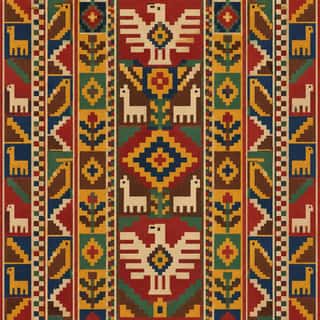
Andean Woven Graphic SystemsThe graphic systems of Andean cloth, the region's most prestigious medium, in which every motif is built on the warp-and-weft grid.
Islamic Geometric & Calligraphic TraditionA visual system shared across the Islamic world in which proportioned calligraphy, compass-and-straightedge geometry and the vegetal arabesque carry meaning and beauty in place of figurative imagery.
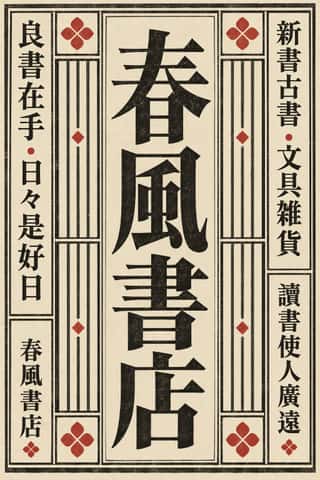
Song–Ming Woodblock Book Typography (Songti / Mincho)The page and letter of the East Asian book.
Kamon (Japanese Family Crests)Japan's family crests: small one-colour emblems that reduce a plant, animal, tool or pattern to a flat silhouette, mirrored or repeated around a centre, often ringed and drawn with compass and brush.
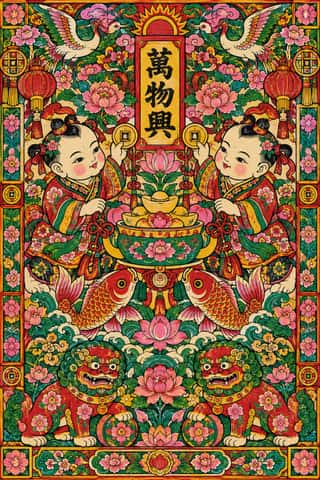
Nianhua & Chinese Folk PrintWoodblock pictures bought each New Year and pasted on doors, walls and kitchen shrines to invite luck and ward off harm: paired door gods, plump babies with carp, the Kitchen God, opera scenes and auspicious rebuses.
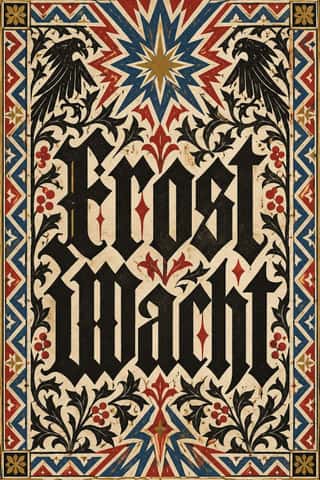
Gothic Blackletter & Fraktur TraditionThe broken scripts of the Latin West.
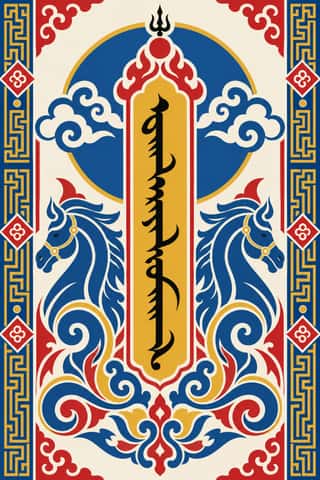
Mongol Bichig Calligraphy & Ugalz OrnamentMongolia's classical script and the auspicious ornament that frames it on state, Buddhist and household objects.
Vyaz (Ornamental Slavonic Lettering)Cyrillic letters bound into one even band of ornament.
- Tibetan Woodblock Print Culture (Pecha & Prayer Flags)Tibetan Buddhist and Bön woodblock printing, from the first printed Kangyur (1410, cut in China) and the 15th-century presses of Gungthang to the great printing houses of Narthang, Derge and Lhasa.
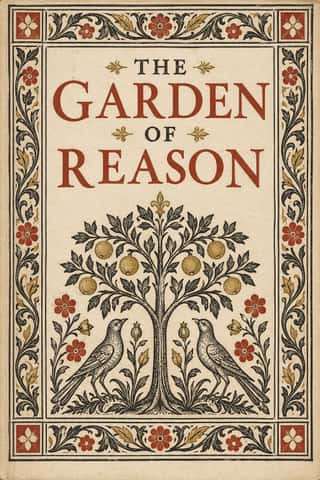
Renaissance Book TypographyThe printed book as shaped by humanist Italy and France: roman and italic types modelled on humanist handwriting, a single justified text block set in harmonious proportions within generous margins, and woodcut initials, borders and printer's devices as the only ornament.
Emblem Book (Motto, Picture & Epigram)A European book genre in which, from Chrestien Wechel's Paris edition of 1534 on, every page or opening repeats one fixed unit: a short motto, an allegorical picture and an explanatory verse, which only together yield a moral, amorous or religious meaning.
Batik Pattern TraditionThe Javanese wax-resist textile tradition in which hot wax is drawn with a canting or stamped with a copper cap, then dyed in successive baths to build layered all-over patterns.
Tarot de Marseille Woodcut CardsThe standard pattern of French tarot cards, descended from Milanese tarot and recut by card-makers in Paris, Lyon, Avignon, Dijon and Marseille from the 17th century.
Lubok Popular PrintCheap single-sheet Russian popular prints sold at fairs and by pedlars from the later 17th century: woodcut, later engraved and lithographed pictures of saints, fables, heroes, battles and satire in which text and image share one sheet.
Diné (Navajo) Weaving DesignThe tapestry-woven design tradition of Diné (Navajo) weavers, recorded in Spanish sources from the early 18th century.
Pacific Barkcloth (Tapa) DesignBarkcloth beaten from paper-mulberry inner bark and decorated across Polynesia and Fiji for gift exchange at weddings, funerals and chiefly investitures.
- Thai Yantra (Yant) DiagramsThai protective diagrams in which Pali formulae, written in Khom, a sacred script derived from Khmer, are packed into squares, circles, triangles, spires and the outlines of Buddhas, monks and tigers, often framed by lines of script.
Imagerie d'Épinal & European BilderbogenCheap single-sheet popular prints sold by pedlars across 19th-century Europe, led by the Pellerin imagerie at Épinal and the Neuruppin Bilderbogen.
Hand-Painted Signage & Vernacular LetteringLetters painted by trained sign writers on fascias, windows, walls, vehicles and showcards, from Victorian gold leaf on glass to Mexican rótulos, Indian bazaar boards and Ghanaian barbershop signs.
Bulaq (Amiriyya) Naskh Book PrintingThe page of the Arabic printed book as Egypt's state press at Bulaq shaped it from 1822: justified blocks of black Naskh type on pale paper, often boxed in a ruled frame, with an ornamental headpiece on the opening page, headings set larger or in a second script such as Nastaʿlīq, and almost no pictures.
- Urdu Katib LithographyFor about a century and a half Urdu chose lithography over movable type, because metal type could not reproduce the sloping, stacked ligatures of Nastaʿlīq.
- Persian Popular Narrative (Lithographs & Coffeehouse Painting)Iran's popular picture-stories in two media.
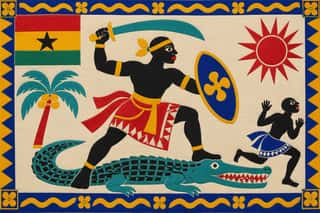
Fante Asafo Flags (Frankaa)The company flags (frankaa) of the Fante asafo, the old warrior companies of Ghana's central coast, widely adopted from the mid-nineteenth century.
Arts & Crafts MovementA British-led reform movement that answered industrial shoddiness with honest handcraft, medieval models and the ideal of joy in labour.
- Indian Calendar & Bazaar ArtMass-printed images of Hindu deities, epic scenes, saints, nationalist heroes and film stars, sold in bazaars and given away as business calendars, from the chromolithographs of the Calcutta Art Studio and Ravi Varma Press to Sivakasi offset.
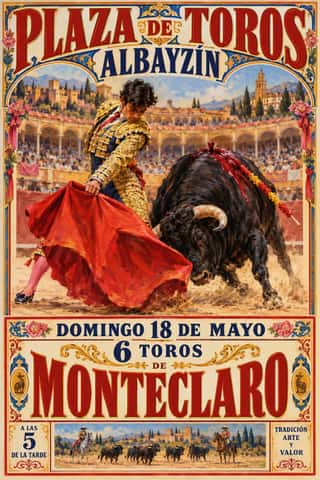
Spanish Bullfight Poster (Cartel Taurino)The Spanish bullfight poster in its illustrated form, from Marcelino de Unceta's lithographs (from 1879) to the Valencian house of Ortega, which supplied rings across Spain.
- Mexican Popular Graphics (Posada)Cheap broadsheets, chapbooks and gazettes sold on the streets of Porfirian Mexico City by the publisher Antonio Vanegas Arroyo and illustrated by Manuel Manilla and José Guadalupe Posada.
- Norwegian and Finnish National Romantic Graphics (Munthe & Karelianism)The flat, decorative branch of Norway's and Finland's national romanticism, which turned Viking carving, the sagas, the Kalevala and old peasant weaving into modern ornament.
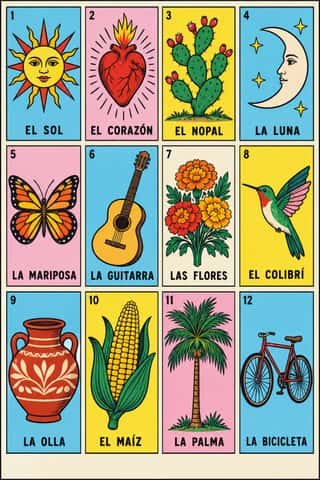
Lotería Card Imagery (Mexican Lotería)The picture deck of Mexico's lotería, a bingo-like game of chance.
Art NouveauAn international 'new art' that sought a modern style free of historical revival, drawing its forms from plant growth and the female figure.
Fileteado PorteñoA Buenos Aires tradition of ornamental brush painting that began around 1900 on the grey-painted trade carts of Italian immigrant coachbuilders and spread to trucks, colectivo buses, shop signs and gallery panels.
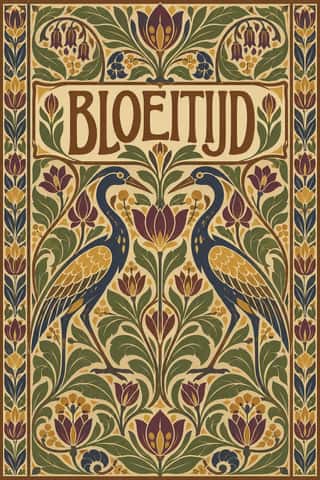
Nieuwe Kunst (Dutch Art Nouveau)The Dutch branch of Art Nouveau, seen mostly in book covers, vignettes and posters.
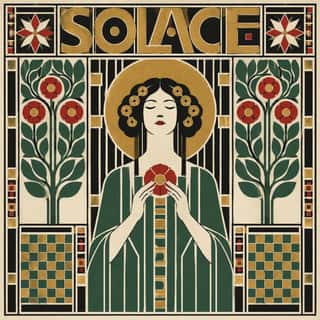
Vienna SecessionThe Viennese break with academic art led by Gustav Klimt, Koloman Moser, Josef Hoffmann and Alfred Roller, which pulled Art Nouveau toward the square, the grid and the flat plane.
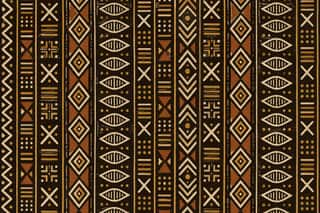
Bògòlanfini Mud ClothThe mud-dyed cotton cloth of the Bamana and other Malian peoples, in which the ground rather than the motif is painted: cloth dyed yellow with n'gallama leaves is covered around each sign with fermented iron-rich mud, and the unpainted signs are then bleached pale.
- Senegalese Sufi Devotional Imagery (Souwère Glass Painting and Amadou Bamba Portraits)The devotional imagery of Senegal's Sufi brotherhoods, above all the Mourides: reverse paintings on glass (souwère), made in Senegal's cities since about 1900, and the murals, banners, prints and photocopies that multiply one 1913 photograph of Sheikh Amadou Bamba across Dakar and Touba.
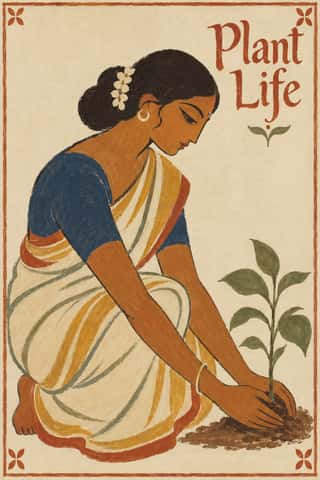
Santiniketan & Bengal School GraphicsThe nationalist, anti-academic art of Calcutta and Santiniketan, which turned from oil-paint naturalism and chromolithograph gloss to Indian and pan-Asian sources.
- Arnhem Land Bark Painting & RarrkPainting in ochres on flattened stringybark by Yolŋu, Kunwinjku, Kuninjku and other clans of Arnhem Land, carrying ceremonial designs into portable form; collected from 1912, painted through art centres since the 1970s.
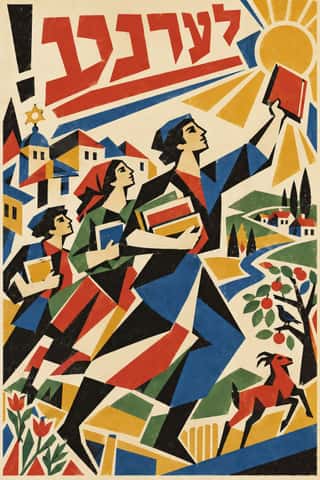
Kultur-Lige & Yiddish Avant-Garde Book DesignThe Yiddish modernist book of the Kultur-Lige, the secular Jewish culture league founded in Kyiv in 1918, and its circle: El Lissitzky, Issachar Ber Ryback, Iosif Chaikov, Boris Aronson and others, who sought a new Jewish art in the shtetl synagogues and tombstones they had recorded and in Cubo-Futurism and Suprematism.
- MavoTokyo's anarchist avant-garde, founded in July 1923 by Murayama Tomoyoshi, back from a year in Berlin, with four former Futurists, and its magazine MAVO (seven issues, July 1924 to August 1925).
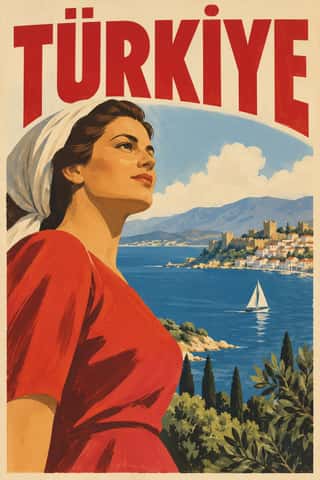
Early Turkish Republican Graphic DesignThe pictorial poster, label and ticket art of the young Turkish Republic, led by İhap Hulusi Görey after his Munich training in Ludwig Hohlwein's orbit, with Münif Fehim Özarman and, after 1943, Kenan Temizan.
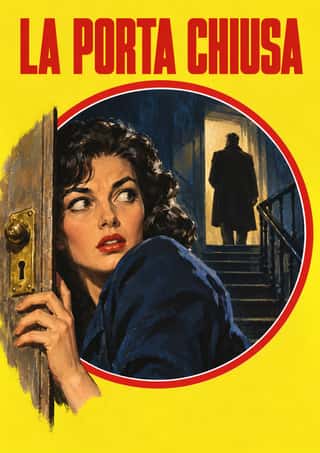
Giallo Mondadori Covers (I Libri Gialli)The cover system of Mondadori's crime series, Milan, from I Libri Gialli of 1929 to Il Giallo Mondadori today.
Tiki Pop (Polynesian Pop)The mainland American fantasy of the South Seas, begun by Don the Beachcomber's Hollywood bar (about 1934) and Trader Vic's in Oakland and at its height in the Polynesian restaurants of the 1950s and 60s.
Literatura de Cordel WoodcutThe cover art of Brazil's literatura de cordel, pocket chapbooks of verse whose single picture is a small woodcut cut in soft umburana wood and printed in black above a plain letterpress title.
- Ndebele Geometric PaintingThe mural tradition of Southern Ndebele women, who paint homestead walls and gateways, and later canvases and objects, with bold, symmetrical geometric designs.
- Pakistani Truck ArtThe total decoration of Pakistan's trucks and buses, which grew from company marks and saints' portraits painted in the late 1940s into a workshop art in which painters, metalworkers, woodcarvers and reflective-tape specialists collaborate on each vehicle.
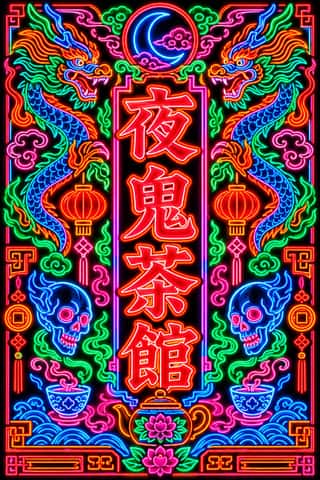
Hong Kong Neon & Beiwei Shop-Sign LetteringThe night-time signscape of Hong Kong's Kowloon streets.
Cairo–Beirut Arab Modernist Book & Periodical DesignThe illustrated book, magazine and children's-book culture that ran from Cairo's post-1952 publishing houses to the Arab nationalist and leftist presses of Beirut.
Vicente Rojo & Mexican Editorial ModernismThe design of Mexico City's literary and cultural press, shaped from the 1950s by the Barcelona-born exile Vicente Rojo: México en la Cultura, the Revista de la Universidad, Plural, La Jornada and the covers of Ediciones Era.
Push Pin StyleThe eclectic illustrative style of New York's Push Pin Studios, founded by Seymour Chwast, Milton Glaser and Edward Sorel.
Rorke's Drift LinocutThe prints of the Lutheran art centre that Swedish teachers Peder and Ulla Gowenius started at Ceza Hospital in 1962 and moved to Rorke's Drift in 1963: under apartheid, which denied Black South Africans formal fine-art education, the chief training ground for many Black artists.
Psychedelic PosterThe concert-poster language of the 1960s counterculture, born in San Francisco's Fillmore and Avalon ballrooms and echoed in London's underground press.
Tingatinga PaintingA Tanzanian popular painting school begun in Dar es Salaam by Edward Tingatinga (1932–1972), who from 1968 painted animals, birds and village scenes in glossy bicycle enamel on square hardboard ceiling boards for residents and tourists.
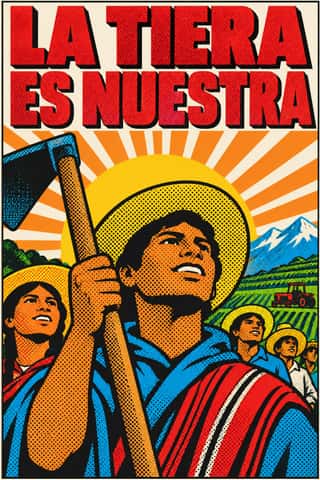
Pop Achorado (Peruvian Agrarian Reform Posters)Posters for the Peruvian military government's agrarian reform, made in Lima from 1969 by Jesús Ruiz Durand and colleagues at the state's reform publicity office.
- Roots Reggae Sleeve Art & Rasta IconographyThe record sleeves of roots reggae, from Catch a Fire (1973) until dancehall took over in the 1980s.
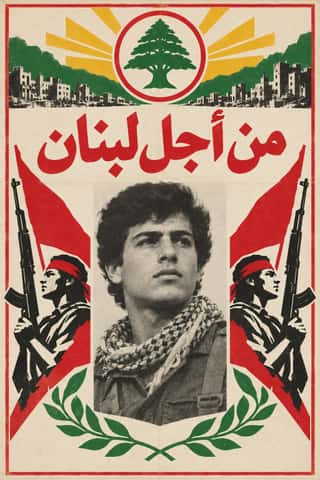
Lebanese Civil War Party PosterThe posters that some twenty parties and militias pasted on the walls of Beirut and other towns between 1975 and 1990, marking each quarter as one faction's territory.
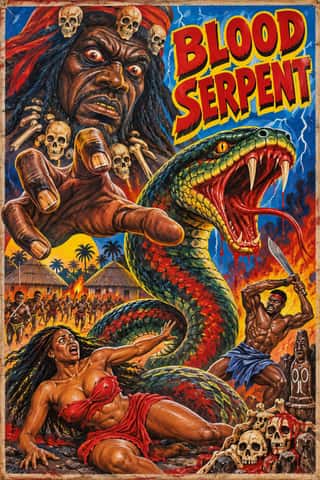
Ghanaian Movie PosterHand-painted posters commissioned by Ghana's mobile video clubs from about 1985, painted by apprenticed sign painters on stitched flour sacks to advertise VHS screenings of Hollywood, Hong Kong, Nigerian and Indian films.
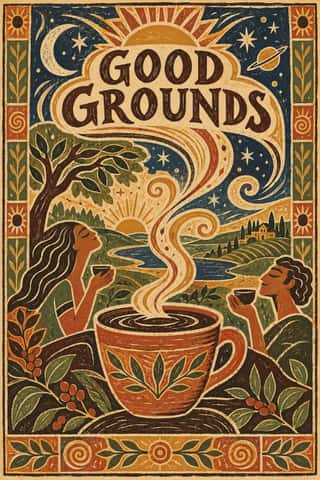
Global Village CoffeehouseThe faux-naive, earth-toned illustration style that late-1980s American designers set against Memphis, and that chain cafés, bookstores, packaging and clip art spread through the 1990s.
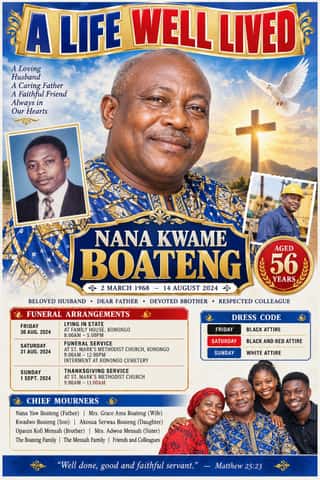
Ghanaian Funeral Poster & BannerThe printed death announcements of southern Ghana, also found elsewhere in West Africa: colour posters, mostly A2, pasted on walls, trees, poles and vehicles, and by the mid-2010s large PVC banners hung at the family house.
- Indian Pop-Kitsch Design (Desi Kitsch)Urban Indian gift and T-shirt design from the late 1990s into the 2010s that recasts the street and bazaar as ironic, affectionate icons: truck tails and 'Horn OK Please', auto-rickshaws, Ambassadors and Chetaks, cutting chai, old Bollywood stills and dialogues, Bhagat Singh in place of Che.
Fantasy User Interface (FUI) & Sci-Fi HUDFantasy user interfaces are the screen graphics of films and series: computer screens, holograms and helmet HUDs made to be watched for a few seconds, not used.
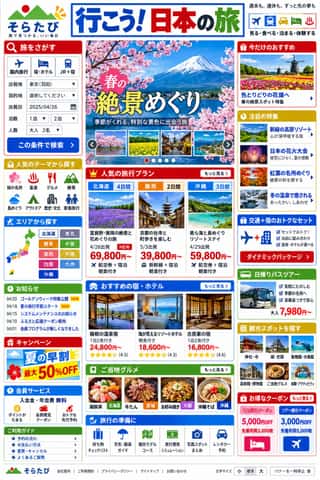
Japanese Dense Web DesignThe information-packed look of Japan's big portals, shops, airlines and ministries: three or more narrow columns of boxed modules, crowded with small Japanese text, blue links, tiny thumbnails, dated news lists and rotating ad banners, in bright colours on a white page.
Newtro (Korean New-Retro)A South Korean branding trend, named 'Going New-tro' in Seoul National University's Trend Korea 2019 (October 2018), in which heritage firms reissue their own postwar to 1990s labels, trademarks and mascots, polished for young buyers.
Guochao (China-Chic National Trend)A Chinese branding and fashion trend, usually dated from Li-Ning's 'China Li-Ning' show at New York Fashion Week in February 2018, that redraws heritage motifs as finishes for sneakers, apparel, cosmetics and museum merchandise.
Styles that use it now and then 53
An occasional choice in these styles.
- Amazigh Sign System & Tifinaghc. 0–present
- Chinese Calligraphy & Seal Carving (Shufa & Zhuanke)c. 0–present
- Chinese Paper-Cut (Jianzhi)c. 500–present
- Maghrebi Script (Maghribi Calligraphy of al-Andalus and North Africa)c. 900–present
- Square Kufic (Bannāʾī)c. 1100–present
- European Heraldryc. 1140–present
- Ottoman Tughra & Dîvânî Chancery Calligraphyc. 1324–present
- Kōwhaiwhai & Toi Māori Design1500–present
- Zoomorphic & Figural Calligraphy (Islamic Calligrams)1500–present
- Đông Hồ & Hàng Trống Folk Prints1600–present
- Adinkra & Kente Symbol Systems1700–present
- Neoclassical Book Typography1757–1830
- Chaekgeori & Minhwa Screen Painting1776–present
- Edo-moji Commercial Lettering (Kanteiryū, Yose-moji, Sumō-ji)1779–present
- Kalighat Pat & Battala Bazaar Prints1830–1930
- African Wax & Fancy Print1880–present
- German Book Art Movement (Buchkunstbewegung)1895–1933
- Guna Mola1900–present
- Taishō Roman & Lyrical Illustration1910–1940
- Republican Chinese Book Cover Design (Lu Xun & Tao Yuanqing)1923–1949
- Harlem Renaissance Graphic Art1925–1940
- Lianhuanhua Picture-Story Books1925–1990
- Filipino Komiks1929–1999
- Egyptian Painted Film Poster1932–1996
- Penguin Paperback Design (Three Bands to the Marber Grid)1935–1972
- Jeepney Art1946–present
- Onitsha Market Pamphlets1947–1980
- West African Barbershop & Hair Salon Signs1950–present
- Drum Magazine & Sophiatown Photojournalism1951–1965
- Arab Children's Comic Magazines (Samir to Majid)1956–present
- British Road Signage (Kinneir & Calvert)1958–present
- Phototype Expressive Typography (Lubalin & U&lc)1962–1985
- Baybayin Revival Graphics1963–present
- Palestinian Resistance Poster1965–1993
- Soviet Central Asian Ornamental Modernism1966–1999
- Underground Comix1968–1982
- Kinshasa Popular Painting1970–present
- Warli Painting1970–present
- Métal hurlant Science-Fiction Comics (Mœbius, Druillet & Les Humanoïdes Associés)1974–1987
- Chicha Poster1980–present
- Jamaican Dancehall Signs & Sleeve Art1980–present
- NSK Retro-Avant-Garde1980–present
- Screenprinted Gig & Alt-Movie Poster1991–present
- Skeuomorphic UI2000–2013
- Modern Calligraphy and Brush Lettering2005–present
- Hipster Artisanal Revival2007–2018
- Polish Information Picture Book (Dwie Siostry)2008–present
- 'Good Morning' Greeting Images (WhatsApp Forward Vernacular)2013–present
- Solarpunk2014–present
- Front-of-Pack Warning Octagons (Latin American Food Warning Seals)2016–present
- VTuber Avatar and Stream Graphics2016–present
- Palestinian Watermelon and Keffiyeh Graphics2021–present
- Ukrainian Wartime Graphics (Saint Javelin, War Stamps and Be Brave Like Ukraine)2022–present
It often goes with
Choices that the styles making it make more often than the atlas as a whole.
- Framed panelsin 118 of 134
- Central symmetryin 113 of 134
- Spiritual & sacredin 79 of 134
- Floral & vegetalin 68 of 134
- Folk & sacred symbolsin 74 of 134
- Authoritative & institutionalin 65 of 134
Styles that avoid it
Styles that deliberately leave it out.
- Basel Object Poster (Swiss Sachplakat)1919–1955
- Die Neue Typographie1923–1940
- Kinngait (Cape Dorset) Inuit Printmaking1957–present
- Minimalist Graphic Design1965–present
- Danmaku Bullet-Comment Overlay2006–present
- Generative & Dynamic Identities2007–present
- Natural Wine Label Art2007–present
- Flat Design2010–2016