Tone & intent · Emotion
Warm & approachable
Friendly, inclusive, human-scaled.
A design choice in Stylogeny’s vocabulary, under tone & intent: what should the work make people feel or do?
- styles make it
- 116
- as a defining choice
- 13
- as a usual one
- 54
- now and then
- 49
- avoid it
- 4
Styles defined by it 13
For these styles it is one of the choices that make the style.
Scandinavian FunctionalismNordic functionalism (funkis) arrived in graphic form with Sigurd Lewerentz's posters and winged emblem for the 1930 Stockholm Exhibition.
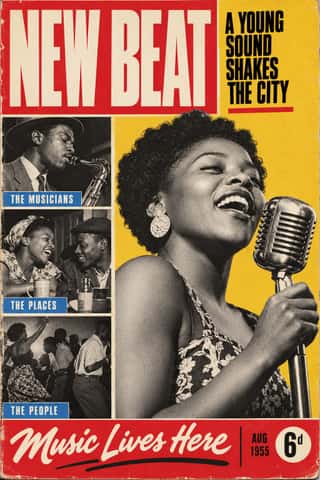
Drum Magazine & Sophiatown PhotojournalismThe picture magazine of Black urban Africa in the 1950s.
Arab Children's Comic Magazines (Samir to Majid)Arabic children's comics weeklies, from Dar al-Hilal's Samir in Cairo (1956) to Abu Dhabi's Majid (1979), mixing translated Western strips with house characters by Egyptian, Lebanese, Armenian and European artists.
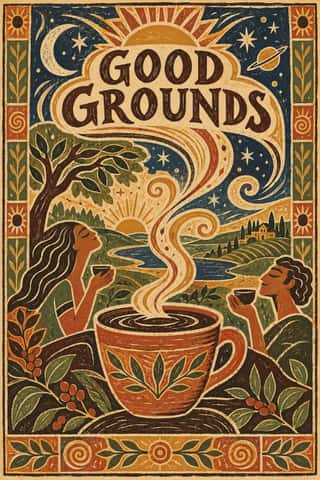
Global Village CoffeehouseThe faux-naive, earth-toned illustration style that late-1980s American designers set against Memphis, and that chain cafés, bookstores, packaging and clip art spread through the 1990s.
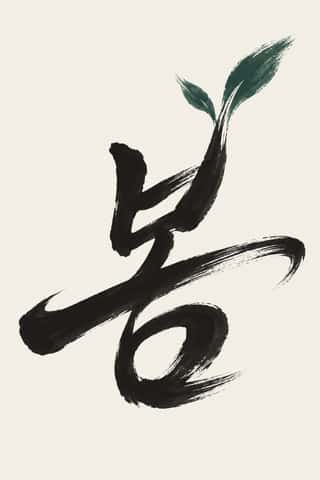
Korean Commercial Calligraphy (Kaelligeurapi)Brush-written Hangul made for commerce, not the scroll.
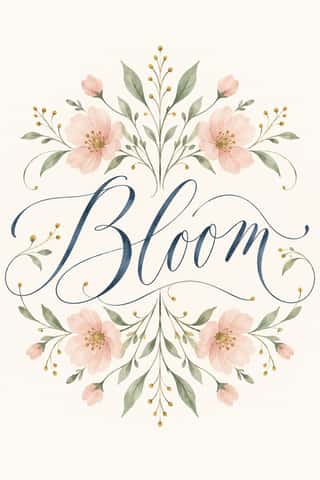
Modern Calligraphy and Brush LetteringThe loose pointed-pen and brush-pen script of wedding stationery and the 2010s craft boom.
Natural Wine Label ArtThe labels of the natural (low-intervention) wine scene, which grew from Beaujolais into a worldwide network of small growers, bars and importers.
Slow-Living Editorial (the Kinfolk Look)The look of Kinfolk, the slow-living quarterly founded in Portland in 2011 and run from Copenhagen since 2015, and of the indie lifestyle titles and Instagram feeds that copied it.
DTC 'Blanding' / Millennial MinimalismThe friendly, frictionless minimalism of 2010s direct-to-consumer start-ups, built for the phone screen, the Instagram feed and the unboxing.
- 'Good Morning' Greeting Images (WhatsApp Forward Vernacular)The ready-made greeting pictures that millions of smartphone users, many of them older and new to the internet, forward to family, friends and groups each morning on WhatsApp, above all in India and Brazil.
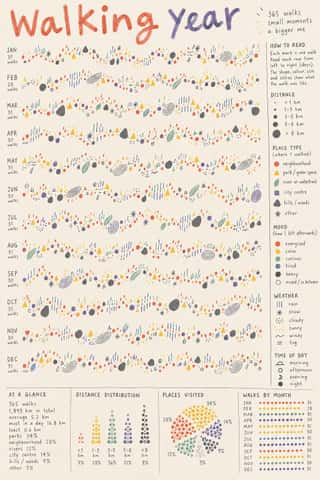
Data HumanismAn information-design approach that draws data rather than charting it, treating numbers as personal, approximate and human.
Corporate MemphisThe flat vector illustration style that became the default visual voice of big tech in the late 2010s: faceless, ethnically non-specific figures with elongated limbs and tiny heads, drawn in bright flat colour among blobs, leaves and confetti.
Instagram Slideshow Activism (Social-Justice Infographics)The text-led explainer slideshows that filled Instagram after George Floyd's murder in May 2020.
Styles that often use it 54
A characteristic choice: usual in these styles, though not essential.
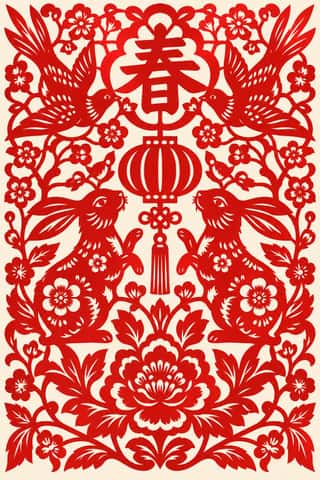
Chinese Paper-Cut (Jianzhi)China's folk art of cut paper, made mostly by rural women and passed from mother to daughter, and by town guilds and workshops.
- Đông Hồ & Hàng Trống Folk PrintsVietnam's two classic folk-print schools, bought for Tết. Đông Hồ families press each colour from its own carved block onto giấy điệp, dó paper brushed with ground scallop shell whose streaked, faintly sparkling surface serves as the white, and print the black line last.
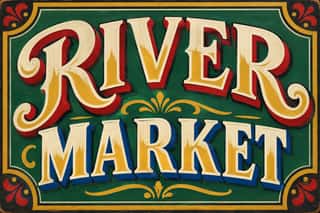
Hand-Painted Signage & Vernacular LetteringLetters painted by trained sign writers on fascias, windows, walls, vehicles and showcards, from Victorian gold leaf on glass to Mexican rótulos, Indian bazaar boards and Ghanaian barbershop signs.
Kanga (Swahili Message Cloth)Printed cotton wraps worn by women of the Swahili coast and its hinterland since the late nineteenth century, bought in pairs.
Lotería Card Imagery (Mexican Lotería)The picture deck of Mexico's lotería, a bingo-like game of chance.
Santiniketan & Bengal School GraphicsThe nationalist, anti-academic art of Calcutta and Santiniketan, which turned from oil-paint naturalism and chromolithograph gloss to Indian and pan-Asian sources.
- London Transport DesignThe design programme Frank Pick built for London's Underground from 1908 and the London Passenger Transport Board (1933–40), continued by Harold Hutchison (1947–66).
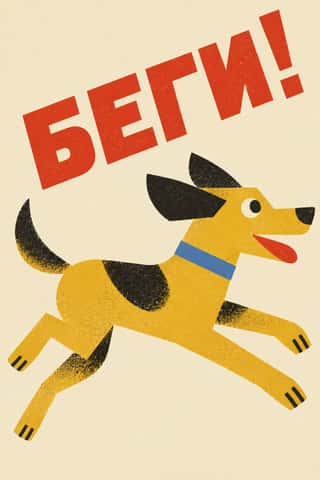
Leningrad Avant-Garde Picture BookThin, large picture books made in Petrograd/Leningrad from 1922 to the mid-1930s for Raduga and the Gosizdat children's department led by Samuil Marshak, with Vladimir Lebedev as art editor.
- Amazonian Boat Lettering (Abridores de Letras)The painted boat names of Pará's rivers in the Brazilian Amazon, made for about a century by self-taught riverside painters (abridores de letras).
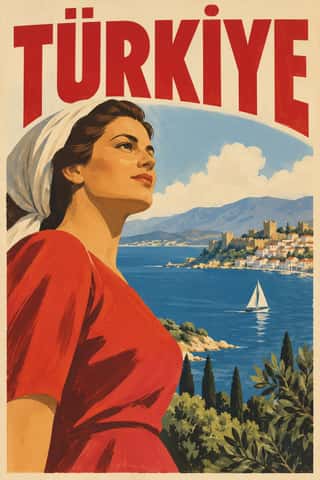
Early Turkish Republican Graphic DesignThe pictorial poster, label and ticket art of the young Turkish Republic, led by İhap Hulusi Görey after his Munich training in Ludwig Hohlwein's orbit, with Münif Fehim Özarman and, after 1943, Kenan Temizan.
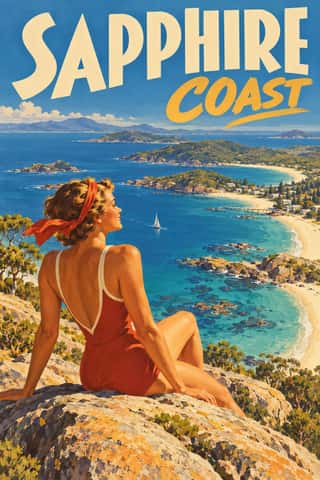
Australian Travel Poster (ANTA Era)The pictorial posters that the Australian National Travel Association (ANTA, 1929), state tourist bureaux, railways and shipping lines commissioned to sell Australia abroad and at home.
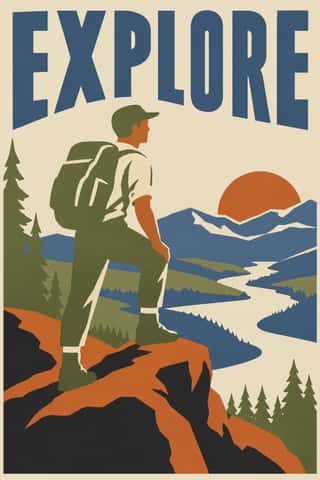
WPA Silkscreen PostersPosters made by the Federal Art Project of the Works Progress Administration to promote health campaigns, education, theatre, travel and the national parks during the Depression.
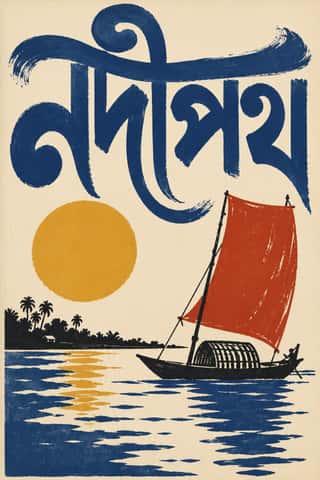
Bengali Modernist Book Cover (Prachchhad)A literary book-jacket culture that began at Calcutta's Signet Press in 1943, where Satyajit Ray and later Purnendu Pattrea made the hand-drawn Bengali title the main image of the cover.
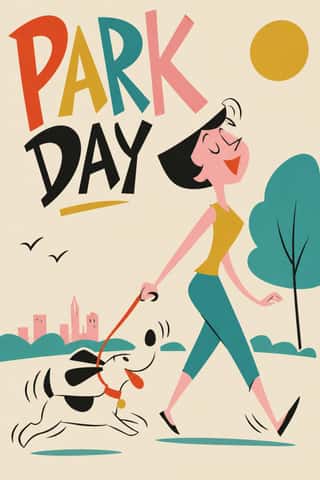
UPA & Cartoon ModernThe modern cartoon of United Productions of America (UPA) and the 1950s films, commercials and books it inspired.
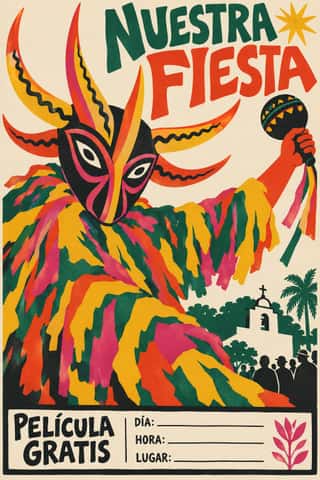
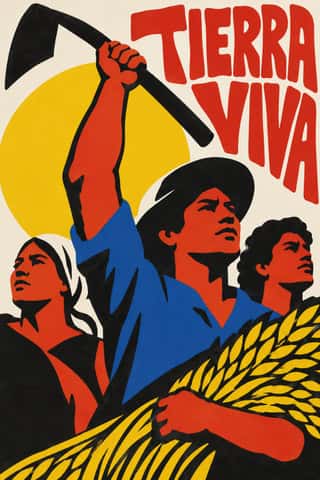
Puerto Rican Silkscreen Poster (DIVEDCO & ICP)The hand-pulled silkscreen poster of Puerto Rico, begun by Irene Delano's workshop in 1946–47 and grown in the government's Division of Community Education (DIVEDCO, 1949) and the Instituto de Cultura Puertorriqueña's print workshop under Lorenzo Homar (1957–73).
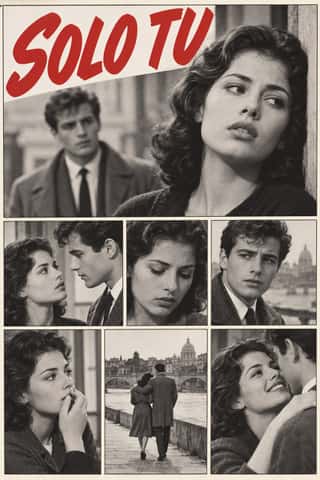
Fotoromanzo (Italian Photo-Romance)The photo-romance of the Italian women's weeklies: a melodrama told in staged photographs, first printed by Il mio sogno and Bolero Film in May 1947 and copied from France to Brazil.
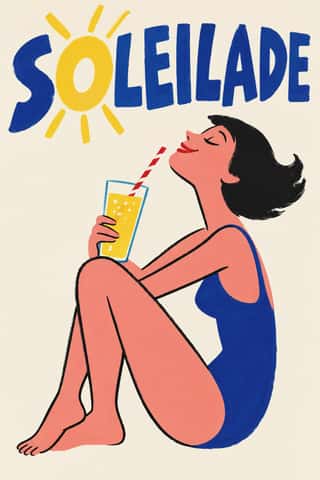
French Post-War Visual-Gag Poster (Savignac, Villemot, Morvan)The humorous street poster of post-war Paris, which took off in 1949 when Raymond Savignac and Bernard Villemot showed their rejected projects together and Savignac's Monsavon cow, its udder filling a bar of soap, went up on the walls.
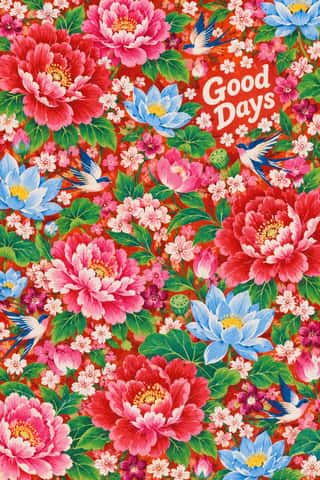
Taiwan Floral Cloth (Huabu)Cheap printed cotton covered edge to edge in large, full-blown peonies with lotuses, phoenixes, dragons, mandarin ducks, small florets and auspicious emblems on saturated vermilion, bright pink or sky-blue grounds.
West African Barbershop & Hair Salon SignsHand-painted boards advertising barbershops and braiding salons across West and Central Africa, made by self-taught, often anonymous sign painters since the mid-20th century.
Finnish Bold Print (Marimekko Modernism)The printed-cotton modernism of Marimekko, founded in Helsinki in 1951 by Armi and Viljo Ratia out of Viljo's printing firm Printex.
Cairo–Beirut Arab Modernist Book & Periodical DesignThe illustrated book, magazine and children's-book culture that ran from Cairo's post-1952 publishing houses to the Arab nationalist and leftist presses of Beirut.
Chinese National-Style Animation (Shanghai Animation Film Studio)The 'national style' of the Shanghai Animation Film Studio, which turned from Disney and Soviet models to Chinese media: Peking-opera masks and movement, paper-cut and folded-paper figures, mural and New Year print colour and, from 1960, ink-wash painting set in motion after Qi Baishi and Li Keran.
Thaw Modernism (Soviet and Czechoslovak)The light, stylised modernism that replaced Socialist Realist illusionism and Stalinist pomp in Soviet and Czechoslovak graphic and applied design, from the 1956 Secret Speech, the 1957 Moscow youth festival and Expo 58 to the crushing of the Prague Spring in 1968 (a political cut-off; the manner ran on into the 1970s).
- Bossa Nova Sleeve Modernism (César Villela and Elenco)The cover language of bossa nova, made in Rio by the self-taught designer César Villela, first at Odeon and then on the first sixteen LPs of Aloysio de Oliveira's label Elenco (from 1963), often around Francisco Pereira's photographs.
- Greek Tourism Modernism (EOT)The modernist image of Greece made for the National Tourism Organisation (EOT) by Michalis Katzourakis, its art adviser in 1960-1967, and by Frederick Carabott, who advised it until 1967; in 1962 the two also founded the K&K Athens Advertising Centre.
Phototype Expressive Typography (Lubalin & U&lc)The display typography of the phototype era, led in New York by Herb Lubalin, his lettering partners John Pistilli, Tom Carnase and Tony DiSpigna, and the International Typeface Corporation.
Munich 1972 Olympic Design (Otl Aicher)The visual programme Otl Aicher's department made for the 1972 Munich Olympics, the 'cheerful Games' meant to show a democratic, modest West Germany.
Soviet Central Asian Ornamental ModernismThe monumental art of Soviet Central Asia after the 1966 Tashkent earthquake: a strand of Socialist Realism mixed with Islamic and national ornament.
Chilean Unidad Popular & Nueva Canción GraphicsThe graphics of the Nueva Canción Chilena and Allende's Unidad Popular, 1967–1973.
AfriCOBRAThe Black Arts Movement collective founded in Chicago in 1968 by Jeff Donaldson, Wadsworth and Jae Jarrell, Barbara Jones-Hogu and Gerald Williams, after OBAC's Wall of Respect mural.
Tingatinga PaintingA Tanzanian popular painting school begun in Dar es Salaam by Edward Tingatinga (1932–1972), who from 1968 painted animals, birds and village scenes in glossy bicycle enamel on square hardboard ceiling boards for residents and tourists.
- Grapus (French Militant Graphic Collective)The posters and identities of Grapus, a Paris collective founded in 1970 by Communist Party members who had met in the 1968 poster workshops.
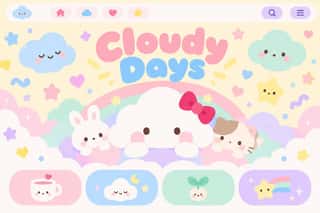
Kawaii DesignJapan's culture of cuteness, which grew from 1970s teenage rounded handwriting and shōjo fancy goods into a global design language through Sanrio, character merchandise and emoji.
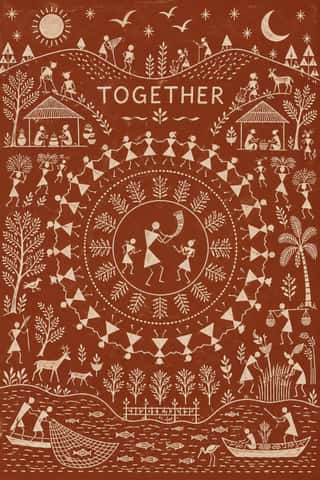
Warli PaintingThe ritual wall painting of the Warli, an Adivasi people of the northern Sahyadri in Maharashtra, carried onto paper and canvas from the 1970s by Jivya Soma Mashe and others.
- Pardhan Gond Painting (Jangarh Kalam)Painting on paper and canvas by Pardhan Gond artists of Patangarh and Bhopal, begun when Bharat Bhavan, Bhopal, recruited Jangarh Singh Shyam in 1981; the style was later named Jangarh Kalam after him.
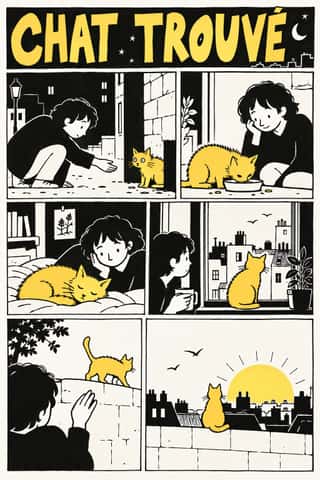
L'Association and French Alternative ComicsThe black-and-white auteur comics of L'Association, the Paris publisher founded by seven cartoonists in 1990, and the 1990s small-press scene it led.
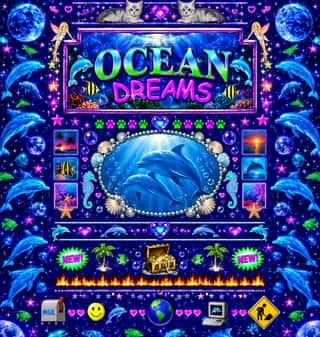
Early Web VernacularThe amateur web of the mid-1990s to early 2000s, when millions of people hand-coded personal homepages on free hosts such as GeoCities with table layouts, browser-default fonts, tiled backgrounds, animated GIFs, MIDI soundtracks, hit counters and ‘under construction’ signs.
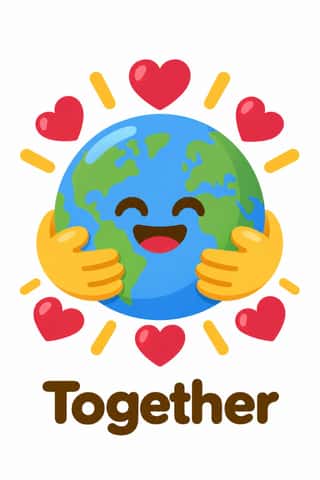
Emoji Pictographic LanguagePictographs typed as characters and set inline in running text.
Skeuomorphic UIInterface design that imitates physical materials and objects (stitched leather, linen, wooden shelves, brushed aluminium, felt, paper and glass) so that digital tools look and behave like their real-world counterparts.
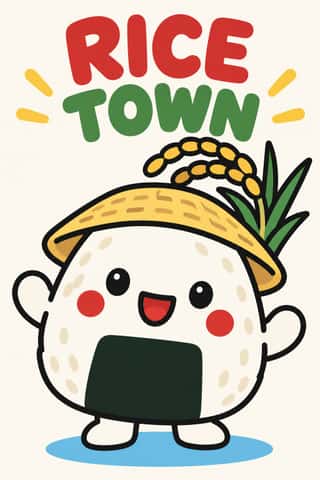
Yuru-chara (Japanese Local Mascot Design)Japan's local mascots: characters commissioned by prefectures, towns and tourism bodies to stand for a place, named yuru-kyara ('loose characters') by the illustrator Jun Miura around 2000.
- Cartonera Books (Latin American Cardboard Publishing)Books of Latin America's cartonera presses, begun by Eloísa Cartonera in Buenos Aires in 2003 after Argentina's 2001 crash: photocopied texts stapled and glued by hand into covers cut from used boxes, usually bought from cartoneros (waste pickers) above the market price.
- Danmaku Bullet-Comment OverlayThe bullet-comment layer of Japanese and Chinese video sites, begun on Niconico in December 2006 and taken up by AcFun and Bilibili in 2008–2009.
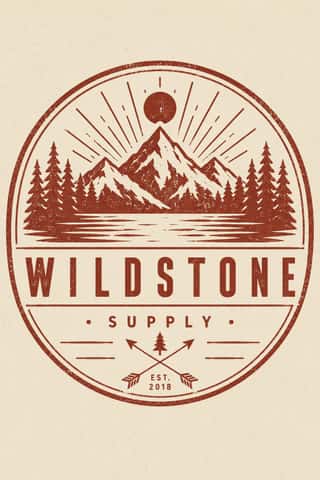
Hipster Artisanal RevivalThe trade-mark look of the 2007–2018 craft boom, which dressed new coffee roasters, breweries and stationers as nineteenth- and early-twentieth-century firms.
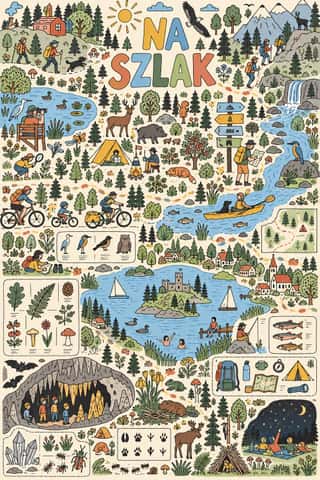
Polish Information Picture Book (Dwie Siostry)Mostly large-format information picture books made since 2008 by the Warsaw publisher Dwie Siostry with young illustrators led by Aleksandra and Daniel Mizieliński, graduates of the city's Academy of Fine Arts: atlases, cross-sections, labyrinths, activity books and wordless seek-and-find board books.
Risograph & Indie Print CultureA contemporary culture of zines, art books, posters and prints made on Japanese Risograph stencil duplicators, whose soy-based spot inks (fluorescent pink, yellow, blue, teal) are laid down one drum at a time.
- YouTube Thumbnail Style (the 'YouTube Face')The custom thumbnail of YouTube's creator economy: a 16:9 still made to be read at fingernail size in a feed of recommendations.
SolarpunkHopeful eco-futurist imagery born online.
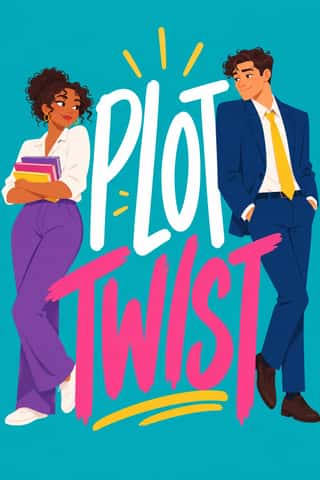
Illustrated Rom-Com Book Cover (Cartoon Couple Cover)The illustrated cover of the contemporary romantic comedy: a couple drawn as flat cartoon figures with simplified faces, from silhouettes and hidden faces to a few cartoon features, caught in one gesture that states the premise, on a single saturated ground of teal, pink, yellow or purple, under a hand-lettered title so large that the figures often lean on it.
- VTuber Avatar and Stream GraphicsThe graphic kit of virtual YouTubers, streamers who perform behind an animated anime-style character instead of their own face.
- Lo-fi Anime AestheticThe look of YouTube's 24/7 lo-fi hip hop streams.
Newtro (Korean New-Retro)A South Korean branding trend, named 'Going New-tro' in Seoul National University's Trend Korea 2019 (October 2018), in which heritage firms reissue their own postwar to 1990s labels, trademarks and mascots, polished for young buyers.
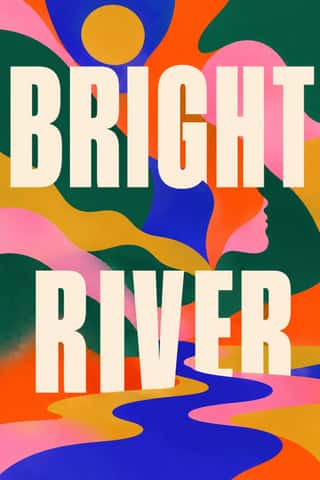
Book Blob (Abstract Colour-Blob Literary Fiction Cover)The default jacket of US literary fiction around 2019–2023: soft, overlapping blobs of saturated colour fill the cover edge to edge (cobalt, pink, orange-red, deep green, mustard).
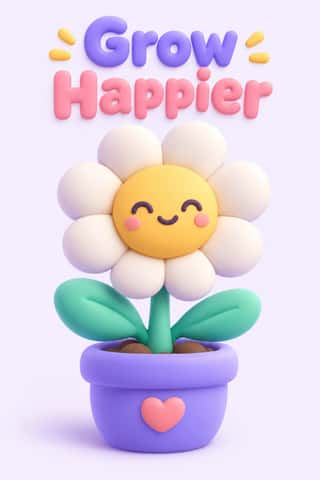
Claymorphism & Soft 3DA soft, toy-like 3D look from product design around 2020, given the name 'claymorphism' in a December 2021 article by Michał Malewicz.
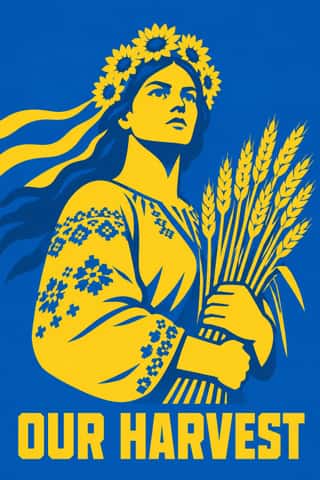
Ukrainian Wartime Graphics (Saint Javelin, War Stamps and Be Brave Like Ukraine)The graphics of Ukraine's defence since Russia's full-scale invasion in February 2022, made by the state, the national post, agencies, illustrators and volunteers at home and abroad.
Styles that use it now and then 49
An occasional choice in these styles.
- Nianhua & Chinese Folk Printc. 1100–present
- Mithila (Madhubani) Paintingc. 1350–present
- Ma & Wabi-sabi Aesthetics1500–present
- Edo-moji Commercial Lettering (Kanteiryū, Yose-moji, Sumō-ji)1779–present
- Guna Mola1900–present
- Senegalese Sufi Devotional Imagery (Souwère Glass Painting and Amadou Bamba Portraits)1900–present
- Taishō Roman & Lyrical Illustration1910–1940
- Isotype Pictorial Statistics1925–1971
- Lianhuanhua Picture-Story Books1925–1990
- Ligne Claire (Franco-Belgian Clear Line)1929–present
- Mexican Calendar Chromo (Cromos calendáricos)1930–1970
- Hebrew Poster Lettering & Early Israeli State Design1934–1974
- Penguin Paperback Design (Three Bands to the Marber Grid)1935–1972
- Taller de Gráfica Popular1937–1977
- American Mid-Century Modernism1940–1970
- Literatura de Cordel Woodcut1940–present
- Escuela Bruguera (Spanish Humour Comics)1947–1986
- Story Manga (Postwar Japanese Comics)1947–present
- Argentine Adventure Historieta (Oesterheld–Breccia)1948–1996
- Vicente Rojo & Mexican Editorial Modernism1953–1990
- Push Pin Style1954–1980
- Zagreb School of Animated Film1954–1980
- Blue Note Jazz Sleeve Modernism1956–1967
- Kinngait (Cape Dorset) Inuit Printmaking1957–present
- British Road Signage (Kinneir & Calvert)1958–present
- Shōjo Manga (Japanese Girls' Comics)1958–present
- Turkish Modernist Poster & Graphic Design1959–2000
- Indian Institutional Modernism (NID)1961–1990
- Casablanca School Graphic Modernism1962–1987
- Rorke's Drift Linocut1962–1982
- Amar Chitra Katha Comics1967–present
- Black Panther Party Graphics1967–1980
- Roman-like Thai Typography (modern loopless Thai)1973–present
- Bitmap & Pixel Graphics1977–1995
- South African Vernacular Design (Ijusi)1995–present
- Indian Pop-Kitsch Design (Desi Kitsch)1997–present
- Arabic Calligraffiti2002–present
- Korean Webtoon Graphics2002–present
- Internet Ugly & Meme Vernacular2003–present
- Frutiger Aero2004–2013
- Arab Independent Comics (Samandal, TokTok, Lab619, Skefkef)2007–present
- Flat Design2010–2016
- GOV.UK Design (GDS Style)2012–present
- Hong Kong Protest Art (Umbrella Movement to the 2019–20 Protests)2014–2020
- Material Design2014–present
- Post-Binary Typography (Bye Bye Binary and Inclusive French Type)2018–present
- Black Lives Matter Street Murals2020–present
- Neo-Brutalism2020–present
- Palestinian Watermelon and Keffiyeh Graphics2021–present
It often goes with
Choices that the styles making it make more often than the atlas as a whole.
- Playful & wittyin 83 of 116
- Isolated objectin 80 of 116
- Measured densityin 40 of 116
- Flat vector illustrationin 30 of 116
- Single focal pointin 89 of 116
- Comic & cartoonin 46 of 116
Styles that avoid it
Styles that deliberately leave it out.