Imagery · Systematic
Icons & pictograms
Systematic icon families.
A design choice in Stylogeny’s vocabulary, under imagery: what kind of pictures, if any?
- styles make it
- 60
- as a defining choice
- 12
- as a usual one
- 22
- now and then
- 26
- avoid it
- 1
Styles defined by it 12
For these styles it is one of the choices that make the style.
- Ancient Egyptian Hieroglyphic & Register CompositionThe visual system of pharaonic Egypt, in which writing is made of pictures and pictures are ruled like writing.
Mixteca-Puebla Codex PaintingThe painted screenfold books of Postclassic southern and central Mexico (not the Maya codices): long strips of gesso-coated deerskin, folded like a screen and painted on both sides.
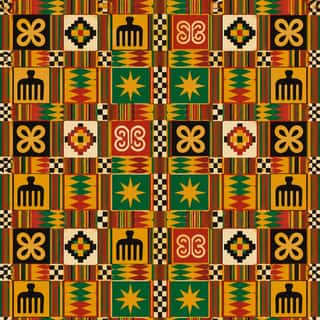
Adinkra & Kente Symbol SystemsThe Akan textile languages of Ghana.
Isotype Pictorial StatisticsA method of visual education developed by Otto Neurath, Marie Neurath (Reidemeister) and Gerd Arntz in Red Vienna from 1925, which turns statistics into rows of identical pictograms where a greater quantity is shown by more signs, never by bigger ones.
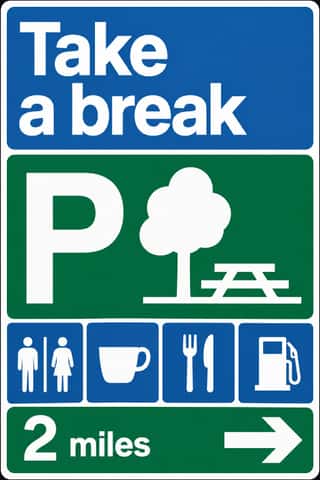
British Road Signage (Kinneir & Calvert)The national sign system Jock Kinneir and Margaret Calvert designed for Britain's motorways, first used on the Preston By-pass in 1958, and through the Worboys Committee for all roads from 1 January 1965.
- Mexico 68 Olympic & Metro IdentityThe graphic programme of the 1968 Mexico City Olympics and the city's first Metro line.
Munich 1972 Olympic Design (Otl Aicher)The visual programme Otl Aicher's department made for the 1972 Munich Olympics, the 'cheerful Games' meant to show a democratic, modest West Germany.
Bitmap & Pixel GraphicsGraphics and lettering built from the square pixels of low-resolution screens (arcade and console sprites, home-computer displays and the first graphical user interfaces), where every dot was placed by hand within tight limits of memory, resolution and palette.
Emoji Pictographic LanguagePictographs typed as characters and set inline in running text.
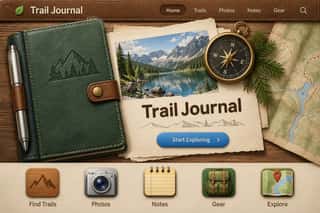
Skeuomorphic UIInterface design that imitates physical materials and objects (stitched leather, linen, wooden shelves, brushed aluminium, felt, paper and glass) so that digital tools look and behave like their real-world counterparts.
Flat DesignAn interface and illustration language that stripped screens of simulated materials, replacing bevels, gloss and textures with solid fields of colour, clean sans-serif type and reduced pictograms.
Material DesignGoogle's design system, launched in 2014, which reintroduced controlled depth to flat design through the metaphor of 'material': sheets of digital paper and ink that sit at defined elevations, cast consistent shadows and move with meaningful motion.
Styles that often use it 22
A characteristic choice: usual in these styles, though not essential.
Kamon (Japanese Family Crests)Japan's family crests: small one-colour emblems that reduce a plant, animal, tool or pattern to a flat silhouette, mirrored or repeated around a centre, often ringed and drawn with compass and brush.
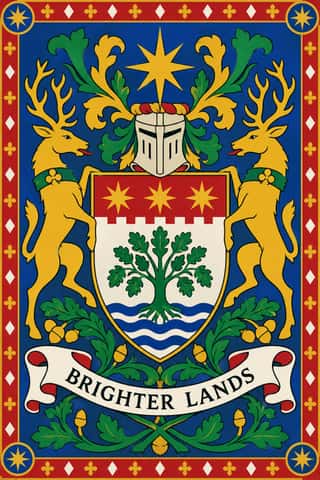
European HeraldryThe hereditary identifying devices of medieval Europe's knights and seals, codified into a rule-bound grammar still used by states, cities, churches, universities and families.
Tarot de Marseille Woodcut CardsThe standard pattern of French tarot cards, descended from Milanese tarot and recut by card-makers in Paris, Lyon, Avignon, Dijon and Marseille from the 17th century.
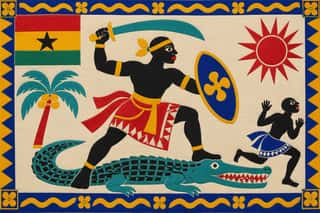
Fante Asafo Flags (Frankaa)The company flags (frankaa) of the Fante asafo, the old warrior companies of Ghana's central coast, widely adopted from the mid-nineteenth century.
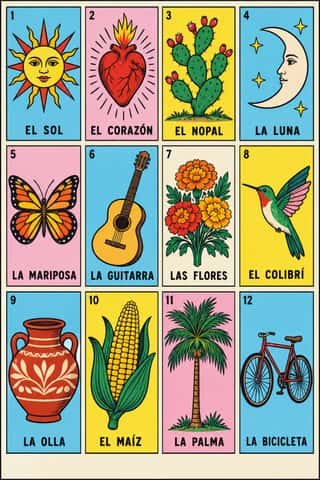
Lotería Card Imagery (Mexican Lotería)The picture deck of Mexico's lotería, a bingo-like game of chance.
Uli & Nsibidi Line and Sign TraditionTwo linked graphic languages of southeastern Nigeria.
Japanese Postwar ModernismBuilding on the New Typography that Hiromu Hara and the Nippon Kobo circle had absorbed in the 1930s, Japan's postwar graphic designers fused the grid, sans-serif and objective photography of European modernism with indigenous traditions of family crests (kamon), asymmetry and charged emptiness (ma).
Corporate Identity ModernismModernist reduction applied to corporate communication.
Indian Institutional Modernism (NID)The design culture of independent India's public institutions, banks and broadcasters.
Kawaii DesignJapan's culture of cuteness, which grew from 1970s teenage rounded handwriting and shōjo fancy goods into a global design language through Sanrio, character merchandise and emoji.
Techno-Futurist GraphicsElectronic-music and video-game graphics of the late 1980s and 1990s that turned corporate modernism into a sci-fi consumer fantasy.
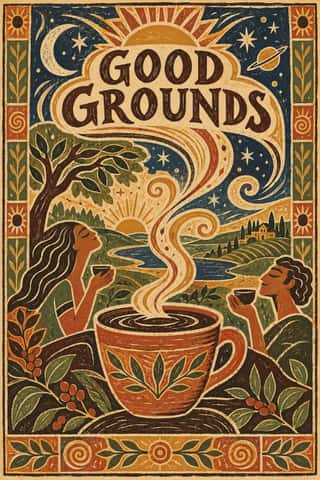
Global Village CoffeehouseThe faux-naive, earth-toned illustration style that late-1980s American designers set against Memphis, and that chain cafés, bookstores, packaging and clip art spread through the 1990s.
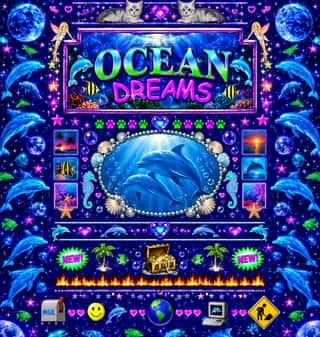
Early Web VernacularThe amateur web of the mid-1990s to early 2000s, when millions of people hand-coded personal homepages on free hosts such as GeoCities with table layouts, browser-default fonts, tiled backgrounds, animated GIFs, MIDI soundtracks, hit counters and ‘under construction’ signs.
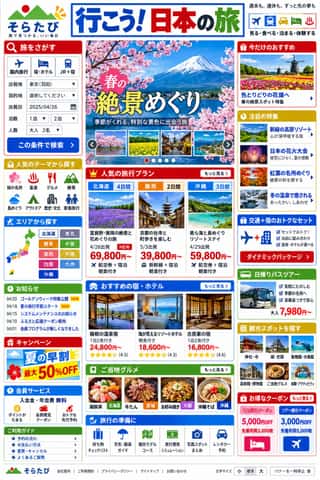
Japanese Dense Web DesignThe information-packed look of Japan's big portals, shops, airlines and ministries: three or more narrow columns of boxed modules, crowded with small Japanese text, blue links, tiny thumbnails, dated news lists and rotating ad banners, in bright colours on a white page.
- Frutiger AeroThe glossy, optimistic look of consumer technology from the mid-2000s to the early 2010s, retrospectively named in 2017 by the Consumer Aesthetics Research Institute after Windows Vista's Aero interface and Adrian Frutiger's humanist sans.
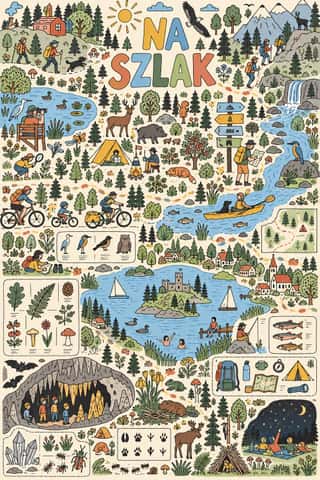
Polish Information Picture Book (Dwie Siostry)Mostly large-format information picture books made since 2008 by the Warsaw publisher Dwie Siostry with young illustrators led by Aleksandra and Daniel Mizieliński, graduates of the city's Academy of Fine Arts: atlases, cross-sections, labyrinths, activity books and wordless seek-and-find board books.
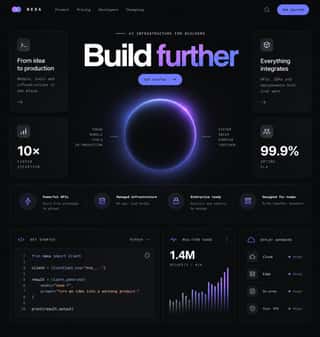
Dark Tech MinimalismThe dark, restrained aesthetic of developer tools and SaaS landing pages since about 2019: near-black grounds, grey type ramps, a neutral grotesque such as Inter, hairline borders, soft radial glows and bento grids of crisp product screenshots.
NeumorphismA short-lived interface trend in which controls are extruded from, or pressed into, a background of the same colour and modelled only by paired soft shadows.
Claymorphism & Soft 3DA soft, toy-like 3D look from product design around 2020, given the name 'claymorphism' in a December 2021 article by Michał Malewicz.
GlassmorphismAn interface style of translucent, frosted panels floating over vivid, blurred backgrounds, so that depth and hierarchy come from layered transparency.
- Neo-BrutalismA friendly, commercial descendant of web brutalism that keeps its blunt boxes but adds candy colour: thick black outlines, hard unblurred offset shadows, flat saturated fills and chunky sans-serif type on conventional, usable layouts.
- Palestinian Watermelon and Keffiyeh GraphicsGraphics of Palestinian identity and of solidarity with Palestinians, made by Palestinian artists, the diaspora and supporters worldwide and shared mainly online, above all since the Gaza war began in October 2023.
Styles that use it now and then 26
An occasional choice in these styles.
- Javanese Wayang Kulit (Tatah Sungging)1500–present
- Bògòlanfini Mud Cloth1900–present
- Scandinavian Functionalism1930–present
- West African Barbershop & Hair Salon Signs1950–present
- HfG Ulm Systematic Design1953–1968
- Cuban Revolutionary Poster (OSPAAAL & ICAIC)1960–1990
- Hong Kong East–West Graphic Modernism1964–present
- Palestinian Resistance Poster1965–1993
- Chilean Unidad Popular & Nueva Canción Graphics1967–1973
- Gráfica del 68 (Mexican Student Movement Graphics)1968
- Warli Painting1970–present
- Western Desert Iconography1971–present
- Roman-like Thai Typography (modern loopless Thai)1973–present
- Nigerian Pentecostal Crusade Poster & Billboard1990–present
- Hype Streetwear Graphics (Box Logo to Quotation Marks)1993–present
- Indian Pop-Kitsch Design (Desi Kitsch)1997–present
- Fantasy User Interface (FUI) & Sci-Fi HUD1999–present
- Internet Ugly & Meme Vernacular2003–present
- Contemporary Arabic & Dual-Script Type Design2004–present
- Danmaku Bullet-Comment Overlay2006–present
- YouTube Thumbnail Style (the 'YouTube Face')2012–present
- Data Humanism2014–present
- Front-of-Pack Warning Octagons (Latin American Food Warning Seals)2016–present
- VTuber Avatar and Stream Graphics2016–present
- Corporate Memphis2017–present
- NFT Profile-Picture Collections (CryptoPunks to Bored Apes)2017–present
It often goes with
Choices that the styles making it make more often than the atlas as a whole.
- Pictogramin 44 of 60
- Modular gridin 31 of 60
- App & OS interfacein 23 of 60
- Web & CSSin 24 of 60
- Rational & objectivein 24 of 60
- Grotesque & neo-grotesquein 29 of 60