Medium & production · Screen
Motion & broadcast
Animated, time-based work: titles, broadcast, video.
A design choice in Stylogeny’s vocabulary, under medium & production: what technology shaped it?
- styles make it
- 53
- as a defining choice
- 11
- as a usual one
- 14
- now and then
- 28
- avoid it
- 0
Styles defined by it 11
For these styles it is one of the choices that make the style.
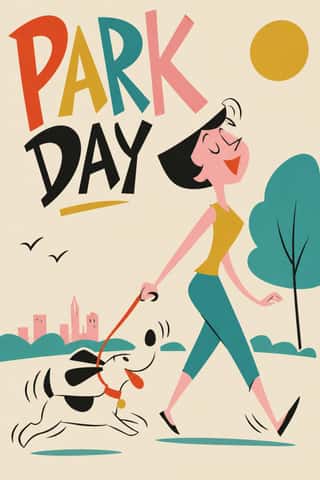
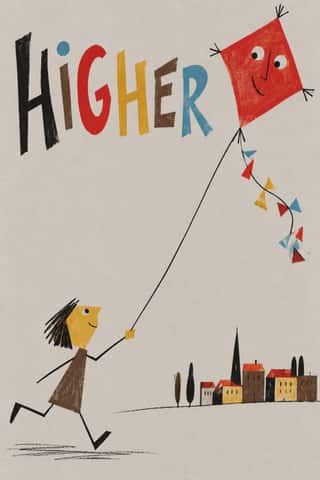
UPA & Cartoon ModernThe modern cartoon of United Productions of America (UPA) and the 1950s films, commercials and books it inspired.
Zagreb School of Animated FilmThe modernist animation of Zagreb Film's Studio for Animated Film, grown from reduced-animation advertisements of 1954-1955 and named the 'Zagreb school' by Georges Sadoul and André Martin after Cannes 1958.
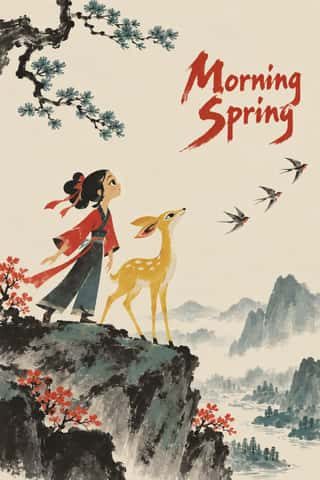
Chinese National-Style Animation (Shanghai Animation Film Studio)The 'national style' of the Shanghai Animation Film Studio, which turned from Disney and Soviet models to Chinese media: Peking-opera masks and movement, paper-cut and folded-paper figures, mural and New Year print colour and, from 1960, ink-wash painting set in motion after Qi Baishi and Li Keran.
Demoscene Graphics (Cracktros, Demos & Text-Mode Art)The graphics of the demoscene, a mainly European community of coders, graphicians and musicians that grew from the intros software crackers added to pirated Commodore 64 and Amiga games in the mid-1980s.
Fantasy User Interface (FUI) & Sci-Fi HUDFantasy user interfaces are the screen graphics of films and series: computer screens, holograms and helmet HUDs made to be watched for a few seconds, not used.
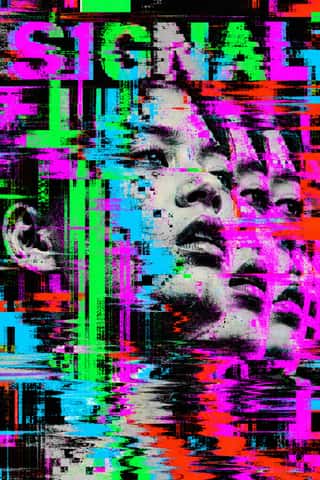
Glitch Art & Datamosh GraphicsAn art and design practice that makes digital failure the picture.
- Danmaku Bullet-Comment OverlayThe bullet-comment layer of Japanese and Chinese video sites, begun on Niconico in December 2006 and taken up by AcFun and Bilibili in 2008–2009.
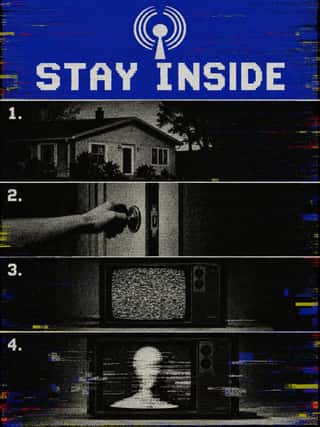
Analog Horror GraphicsA horror genre, mostly on YouTube, that tells its stories through imitation television and home-video graphics rather than actors: emergency-alert screens, station IDs, public-service, educational and instructional tapes, set between the 1960s and early 2000s.
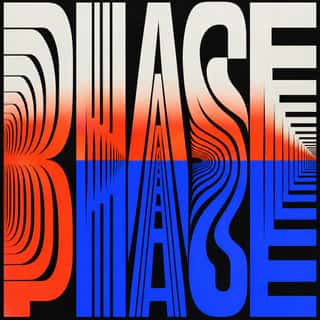
Kinetic Typography & Variable TypeTypography as the moving image: letterforms that stretch, squash, rotate and morph along variable-font axes, loop seamlessly and cut to the beat of music, used for identities, social-media posters and digital out-of-home screens.
- VTuber Avatar and Stream GraphicsThe graphic kit of virtual YouTubers, streamers who perform behind an animated anime-style character instead of their own face.
- Lo-fi Anime AestheticThe look of YouTube's 24/7 lo-fi hip hop streams.
Styles that often use it 14
A characteristic choice: usual in these styles, though not essential.
- Javanese Wayang Kulit (Tatah Sungging)The visual language of Javanese shadow puppets: flat figures cut from buffalo parchment, with head and legs in profile, shoulders turned to the front and long jointed arms worked by horn rods.
Thaw Modernism (Soviet and Czechoslovak)The light, stylised modernism that replaced Socialist Realist illusionism and Stalinist pomp in Soviet and Czechoslovak graphic and applied design, from the 1956 Secret Speech, the 1957 Moscow youth festival and Expo 58 to the crushing of the Prague Spring in 1968 (a political cut-off; the manner ran on into the 1970s).
Afrofuturist DesignA visual language of Black futures that fuses African and diasporic iconography (pyramids and ankhs, Adinkra and Nsibidi glyphs, textile patterning) with spacecraft, cosmic fields and technology.
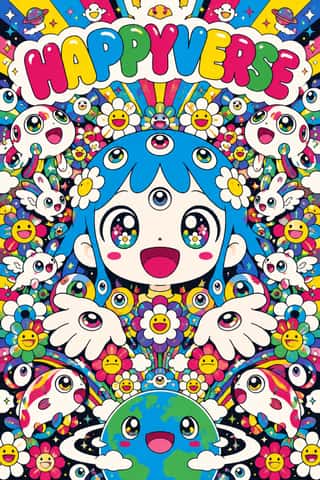
SuperflatThe flat, saturated, cartoon-crowded look that Takashi Murakami named in his exhibition and manifesto Superflat (Tokyo, 2000; US tour 2001).
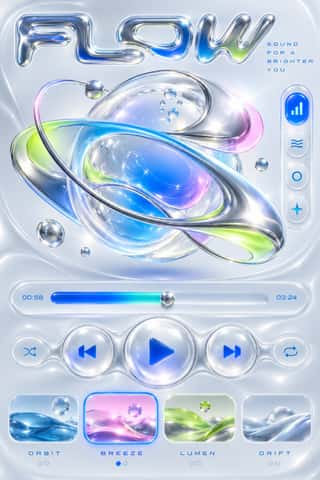
Y2K FuturismThe optimistic, chrome-plated vision of the future that surrounded the turn of the millennium, spread by consumer electronics, music videos, games, fashion and dot-com branding.
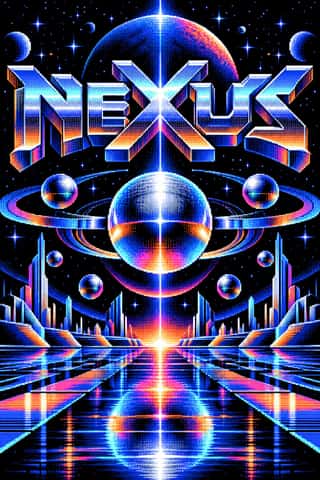
Synthwave / OutrunThe retro-futurist look of synthwave music: a 1980s revival that grew from mid-2000s French electro and online synth scenes, took its other name from Sega's arcade racer Out Run (1986) and reached the mainstream with Drive (2011).
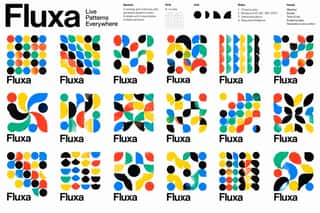
Generative & Dynamic IdentitiesIdentity systems designed as rules rather than fixed marks: logos and graphics generated by code, data or parameters so that they vary endlessly while staying recognisable.
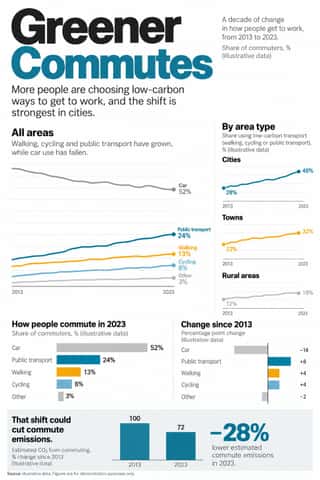
Newsroom Data Graphics & ScrollytellingThe house style of newspaper graphics desks since about 2009–2011 (the New York Times graphics desk, D3.js, the Guardian Datablog): conventional charts drawn from the data, on a white or pale paper ground with light grey gridlines and no axis titles, lines labelled directly in place of a legend where possible and short annotations saying what to look at.
Low Poly IllustrationA digital illustration and game look in which subjects are built from a visible mesh of a few flat-shaded polygons, so that animals, faces, vehicles and landscapes read as hard-edged facets with no outline or texture.
Material DesignGoogle's design system, launched in 2014, which reintroduced controlled depth to flat design through the metaphor of 'material': sheets of digital paper and ink that sit at defined elevations, cast consistent shadows and move with meaningful motion.
SolarpunkHopeful eco-futurist imagery born online.
Acid Graphics / New UglyA late-2010s club and poster style that updates 1990s rave graphics with modern 3D tools: liquid-chrome and melting lettering, neo-tribal spikes, wireframes, op-art patterns and acid-green palettes on black, mixed with blackletter and stretched grotesques.
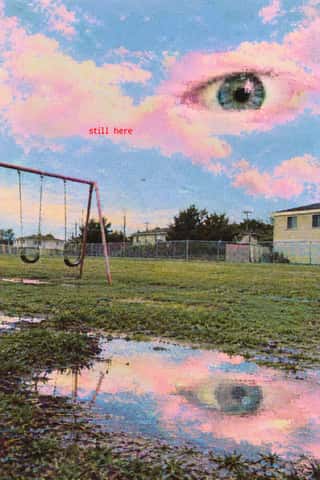
Weirdcore & DreamcoreAn internet aesthetic popularised on Reddit, TikTok and YouTube in the early 2020s, with dreamcore as its softer, pastel, cloud-filled sister.
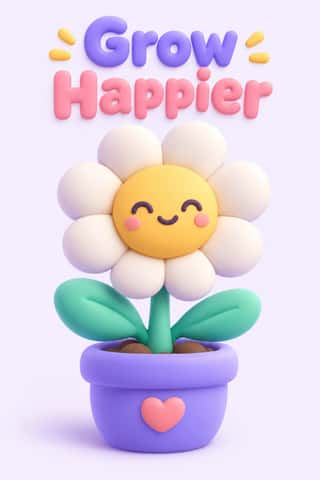
Claymorphism & Soft 3DA soft, toy-like 3D look from product design around 2020, given the name 'claymorphism' in a December 2021 article by Michał Malewicz.
Styles that use it now and then 28
An occasional choice in these styles.
- Surrealist Graphics1924–1960
- Isotype Pictorial Statistics1925–1971
- American Mid-Century Modernism1940–1970
- Corporate Identity Modernism1955–1990
- Polish Cold War Neon (PRL Neonisation)1956–1981
- Indian Institutional Modernism (NID)1961–1990
- Tingatinga Painting1968–present
- Métal hurlant Science-Fiction Comics (Mœbius, Druillet & Les Humanoïdes Associés)1974–1987
- Bitmap & Pixel Graphics1977–1995
- Techno-Futurist Graphics1986–2002
- ACT UP & Gran Fury AIDS Activist Graphics1987–1995
- Emoji Pictographic Language1997–present
- Japanese Dense Web Design1999–present
- Korean Commercial Calligraphy (Kaelligeurapi)1999–present
- Yuru-chara (Japanese Local Mascot Design)2000–present
- Korean Webtoon Graphics2002–present
- Frutiger Aero2004–2013
- Hauntology & Ghost Box Design2004–present
- Neo-Swiss Revival2005–present
- Lucerne Poster Scene (Neubad & Südpol Posters)2007–present
- Vaporwave2011–2017
- YouTube Thumbnail Style (the 'YouTube Face')2012–present
- 'Good Morning' Greeting Images (WhatsApp Forward Vernacular)2013–present
- Data Humanism2014–present
- Dark Tech Minimalism2019–present
- Generative-AI Image Aesthetic2022–present
- Ukrainian Wartime Graphics (Saint Javelin, War Stamps and Be Brave Like Ukraine)2022–present
- Woman, Life, Freedom Protest Graphics (Iran and the Diaspora)2022–present
It often goes with
Choices that the styles making it make more often than the atlas as a whole.
- Web & CSSin 30 of 53
- 3D renderin 22 of 53
- Gradientsin 29 of 53
- Technological & futuristin 23 of 53
- Illusion of depthin 27 of 53
- Chrome & 3D renderin 14 of 53