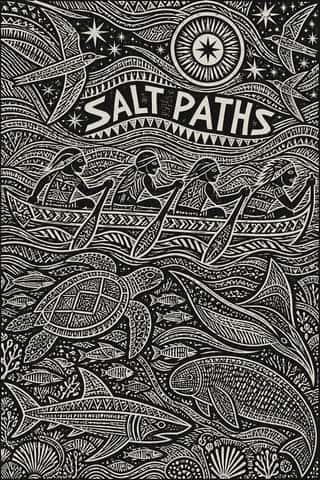
Form & shape · Geometric
Angular & zigzag
Chevrons, zigzags, sunbursts and faceted shards.
A design choice in Stylogeny’s vocabulary, under form & shape: what is the shape language?
- styles make it
- 80
- as a defining choice
- 15
- as a usual one
- 30
- now and then
- 35
- avoid it
- 8
Styles defined by it 15
For these styles it is one of the choices that make the style.
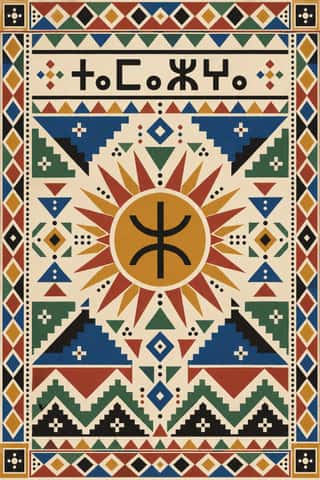
Amazigh Sign System & TifinaghThe visual language shared by Amazigh communities from the Rif, Atlas and Kabylie to the Aurès and the Tuareg Sahara.
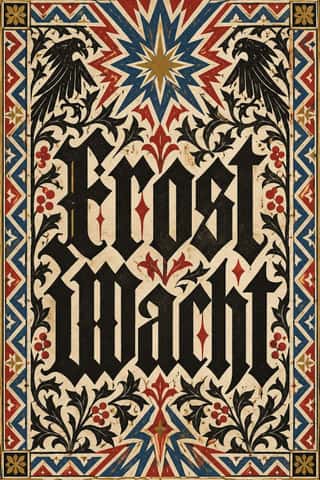
Gothic Blackletter & Fraktur TraditionThe broken scripts of the Latin West.
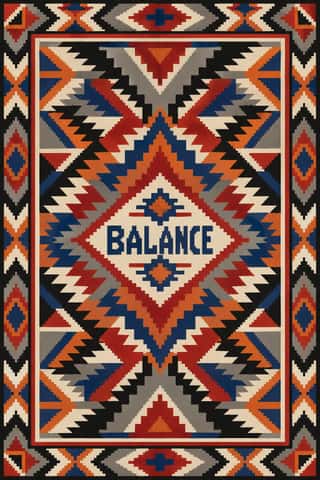
Diné (Navajo) Weaving DesignThe tapestry-woven design tradition of Diné (Navajo) weavers, recorded in Spanish sources from the early 18th century.
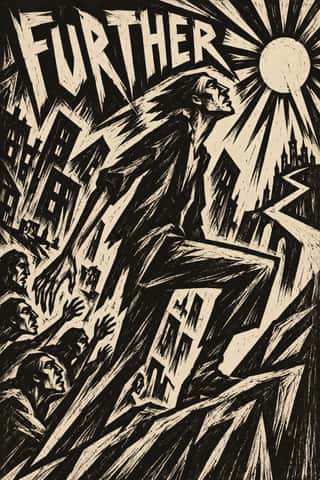
Expressionist Woodcut GraphicsThe graphic arm of German Expressionism, from Die Brücke in Dresden (1905) to the Berlin journals Der Sturm and Die Aktion and Frans Masereel's woodcut novels.
Cubist Pictorial SpaceThe pictorial revolution of Picasso and Braque that shattered single-point perspective into overlapping, faceted planes seen from several viewpoints at once.
- Italian FuturismLaunched by Marinetti's 1909 manifesto, Futurism glorified speed, machines, the city and war, and turned the printed page into an explosive, noisy field.
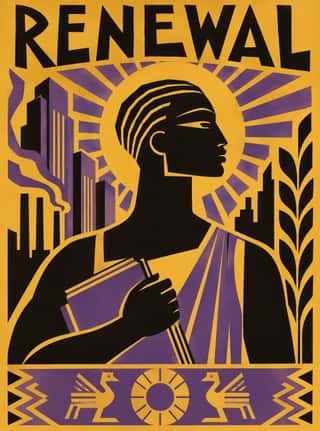
Art DecoThe glamorous modern style named after the 1925 Paris Exposition des Arts Décoratifs, which disciplined ornament into geometry: sunbursts, chevrons, stepped forms and sleek stylised figures rendered in lacquer-smooth colour with metallic accents.
- Vorticism & BLAST TypographyLondon's short-lived rival to Futurism, launched by Wyndham Lewis with BLAST (dated 20 June 1914; War Number, July 1915).
- Estridentismo (Stridentist) GraphicsMexico's first avant-garde (1921-27), launched when Manuel Maples Arce pasted his manifesto Actual No. 1 on Mexico City walls.
- Ndebele Geometric PaintingThe mural tradition of Southern Ndebele women, who paint homestead walls and gateways, and later canvases and objects, with bold, symmetrical geometric designs.
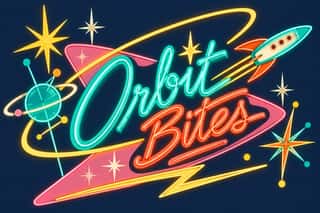
Googie & Atomic AgeThe exuberant commercial modernism of post-war American roadside culture (coffee shops, motels, car washes, bowling alleys and neon signs), named in 1952 by critic Douglas Haskell after John Lautner's Googie's coffee shop in Los Angeles (1949).
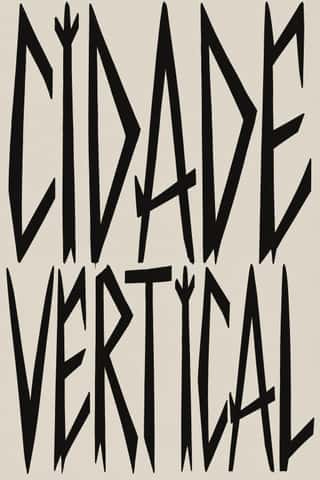
Pixação (São Paulo Tag Reto)The name-writing of São Paulo's pixadores, which since the 1980s has covered walls and façades and, from the 1990s, the upper floors of tower blocks.
- Black Metal GraphicsThe visual language of black metal, fixed by Norway's second wave in the early 1990s, now worldwide, since the 2010s borrowed by mainstream acts (Szpajdel's Rihanna and Metallica logos, 2016).
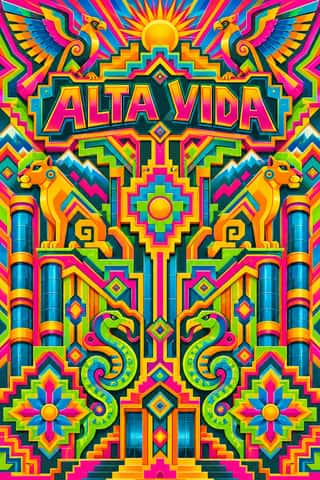
Neo-Andean Architecture (Cholets)The facades and party halls of El Alto, Bolivia, begun by the Aymara builder-architect Freddy Mamani in 2005 for a new Aymara merchant class.
Low Poly IllustrationA digital illustration and game look in which subjects are built from a visible mesh of a few flat-shaded polygons, so that animals, faces, vehicles and landscapes read as hard-edged facets with no outline or texture.
Styles that often use it 30
A characteristic choice: usual in these styles, though not essential.
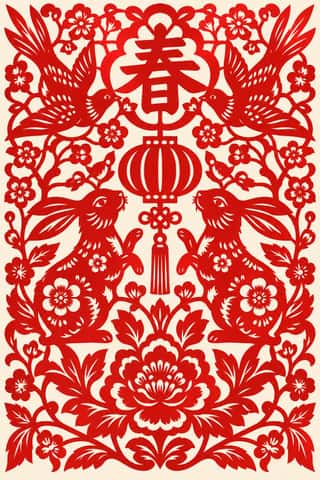
Chinese Paper-Cut (Jianzhi)China's folk art of cut paper, made mostly by rural women and passed from mother to daughter, and by town guilds and workshops.
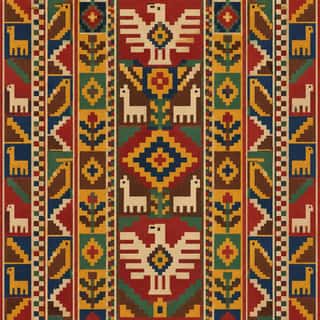
Andean Woven Graphic SystemsThe graphic systems of Andean cloth, the region's most prestigious medium, in which every motif is built on the warp-and-weft grid.
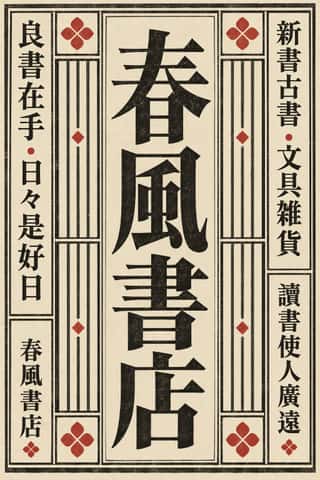
Song–Ming Woodblock Book Typography (Songti / Mincho)The page and letter of the East Asian book.
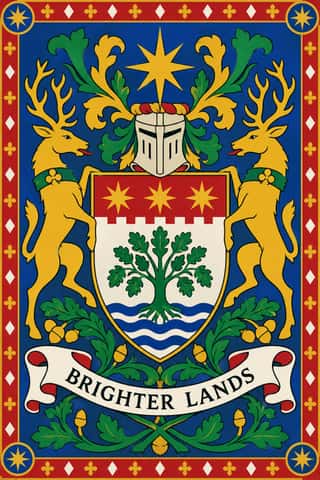
European HeraldryThe hereditary identifying devices of medieval Europe's knights and seals, codified into a rule-bound grammar still used by states, cities, churches, universities and families.
- Sápmi Graphic Identity (Duodji & Gákti Colour Code)Duodji is Sámi handicraft: hard work in wood, horn and bone, soft work in skin and cloth; drums painted with alder-bark figures survive from the 17th and 18th centuries.
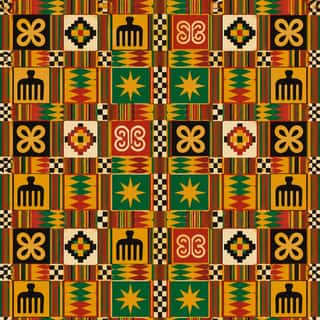
Adinkra & Kente Symbol SystemsThe Akan textile languages of Ghana.
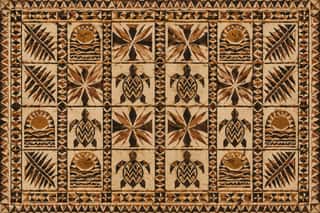
Pacific Barkcloth (Tapa) DesignBarkcloth beaten from paper-mulberry inner bark and decorated across Polynesia and Fiji for gift exchange at weddings, funerals and chiefly investitures.
- Norwegian and Finnish National Romantic Graphics (Munthe & Karelianism)The flat, decorative branch of Norway's and Finland's national romanticism, which turned Viking carving, the sagas, the Kalevala and old peasant weaving into modern ornament.
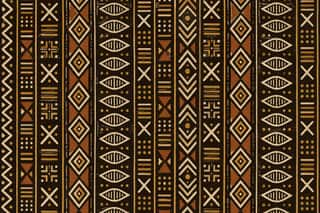
Bògòlanfini Mud ClothThe mud-dyed cotton cloth of the Bamana and other Malian peoples, in which the ground rather than the motif is painted: cloth dyed yellow with n'gallama leaves is covered around each sign with fermented iron-rich mud, and the unpainted signs are then bleached pale.
- Guna MolaThe reverse-appliqué blouse panels of Guna women in Panama, made by cutting through two to seven stacked layers of cotton so that every shape is ringed by echoing bands of the colours beneath.
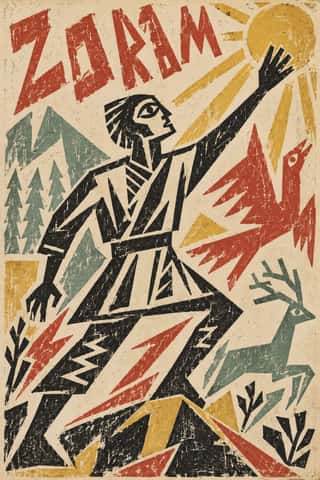
Russian Futurist BookThe cheap, small-run books of the Russian Cubo-Futurist poets and painters, from Kruchenykh and Khlebnikov to Goncharova, Larionov and Rozanova.
- Arnhem Land Bark Painting & RarrkPainting in ochres on flattened stringybark by Yolŋu, Kunwinjku, Kuninjku and other clans of Arnhem Land, carrying ceremonial designs into portable form; collected from 1912, painted through art centres since the 1970s.
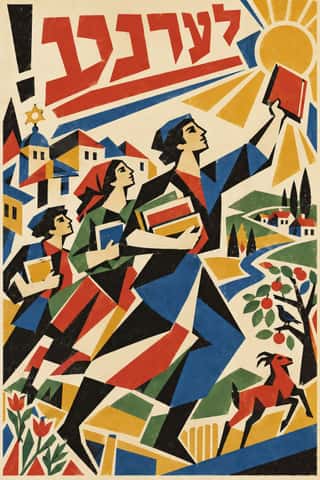
Kultur-Lige & Yiddish Avant-Garde Book DesignThe Yiddish modernist book of the Kultur-Lige, the secular Jewish culture league founded in Kyiv in 1918, and its circle: El Lissitzky, Issachar Ber Ryback, Iosif Chaikov, Boris Aronson and others, who sought a new Jewish art in the shtetl synagogues and tombstones they had recorded and in Cubo-Futurism and Suprematism.
- Russian ConstructivismConstructivism rejected art for art's sake in favour of the artist-engineer building useful things for the new Soviet society.
- MavoTokyo's anarchist avant-garde, founded in July 1923 by Murayama Tomoyoshi, back from a year in Berlin, with four former Futurists, and its magazine MAVO (seven issues, July 1924 to August 1925).
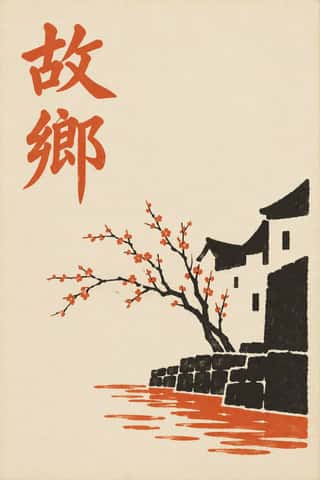
Republican Chinese Book Cover Design (Lu Xun & Tao Yuanqing)The covers of China's New Literature.
Harlem Renaissance Graphic ArtThe illustration, cover and jacket art of the New Negro movement, set by Aaron Douglas after he moved to Harlem in 1925 and studied with Winold Reiss.
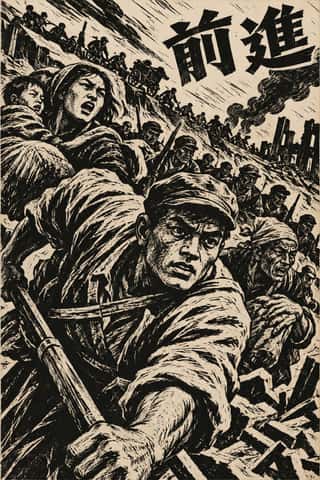
Chinese Modern Woodcut MovementThe leftist print movement launched by Lu Xun's 1931 Shanghai woodcut workshop, which made the self-cut black-and-white woodcut China's art of national crisis and revolution.
Tiki Pop (Polynesian Pop)The mainland American fantasy of the South Seas, begun by Don the Beachcomber's Hollywood bar (about 1934) and Trader Vic's in Oakland and at its height in the Polynesian restaurants of the 1950s and 60s.
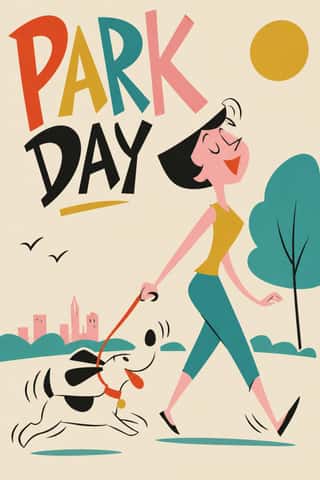
UPA & Cartoon ModernThe modern cartoon of United Productions of America (UPA) and the 1950s films, commercials and books it inspired.
- Pakistani Truck ArtThe total decoration of Pakistan's trucks and buses, which grew from company marks and saints' portraits painted in the late 1940s into a workshop art in which painters, metalworkers, woodcarvers and reflective-tape specialists collaborate on each vehicle.
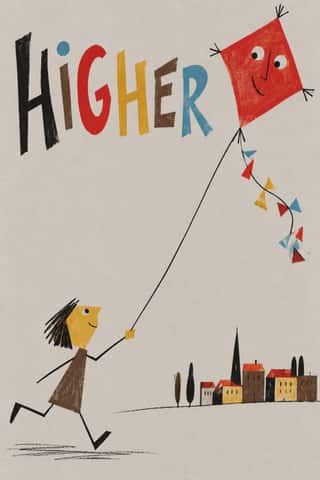
Zagreb School of Animated FilmThe modernist animation of Zagreb Film's Studio for Animated Film, grown from reduced-animation advertisements of 1954-1955 and named the 'Zagreb school' by Georges Sadoul and André Martin after Cannes 1958.
- Casablanca School Graphic ModernismA postcolonial modernism formed at the Casablanca fine-art school under Farid Belkahia, where Mohamed Melehi, Mohammed Chabâa and colleagues set Amazigh rugs and jewellery, painted ceilings and calligraphy beside a Bauhaus-style merging of art, craft and design.
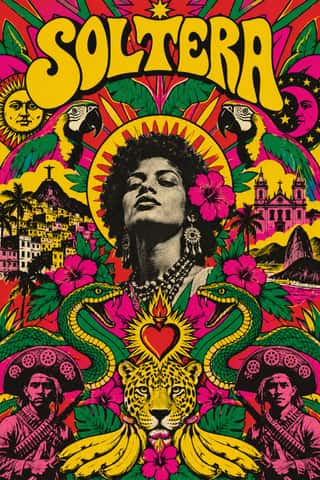
Tropicália Graphic DesignThe graphic language of Brazil's Tropicália, foreshadowed by Rogério Duarte's poster for Deus e o Diabo na Terra do Sol (1964), which already devours Ulm modernism, and set by his 1968 covers for Caetano Veloso and Gilberto Gil.
AfriCOBRAThe Black Arts Movement collective founded in Chicago in 1968 by Jeff Donaldson, Wadsworth and Jae Jarrell, Barbara Jones-Hogu and Gerald Williams, after OBAC's Wall of Respect mural.
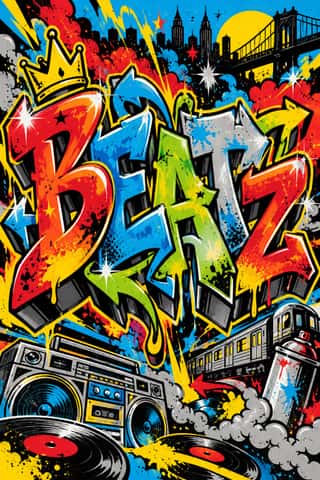
Graffiti & Hip-Hop GraphicsBorn on New York's subway cars and Bronx party flyers, graffiti writing turns the writer's name into a monumental letter-sculpture: bubble, block and wildstyle letters with arrows, 3D drop shadows, fades and highlights, painted freehand in aerosol.
Memphis DesignThe Milan collective founded by Ettore Sottsass, whose furniture, laminates and objects (first shown in September 1981) became a graphic language of their own.
Torres Strait Islander LinocutRelief prints by Torres Strait Islander artists of Zenadth Kes, which grew from an Indigenous visual art course at Cairns College of TAFE by 1991 and the Mualgau Minaral collective on Mua (Moa) Island.
Fantasy User Interface (FUI) & Sci-Fi HUDFantasy user interfaces are the screen graphics of films and series: computer screens, holograms and helmet HUDs made to be watched for a few seconds, not used.
Acid Graphics / New UglyA late-2010s club and poster style that updates 1990s rave graphics with modern 3D tools: liquid-chrome and melting lettering, neo-tribal spikes, wireframes, op-art patterns and acid-green palettes on black, mixed with blackletter and stretched grotesques.
Styles that use it now and then 35
An occasional choice in these styles.
- Ethiopian Ge'ez Manuscript & Haräg Illuminationc. 500–present
- Islamic Geometric & Calligraphic Traditionc. 690–present
- Hebrew Micrographyc. 895–present
- Square Kufic (Bannāʾī)c. 1100–present
- Vyaz (Ornamental Slavonic Lettering)c. 1230–present
- Mithila (Madhubani) Paintingc. 1350–present
- Fante Asafo Flags (Frankaa)1850–present
- Celtic Revival Illumination & Lettering1861–1951
- Nieuwe Kunst (Dutch Art Nouveau)1892–1914
- Uli & Nsibidi Line and Sign Tradition1900–present
- Shanghai Modern & Yuefenpai1910–1949
- Hungarian Revolutionary Poster1912–1919
- Italian Fascist Graphics (Romanità & Exhibition Photomontage)1921–1943
- Brazilian Modernismo Graphics (Klaxon and the Semana de 22)1922–1929
- American Four-Colour Comic Book (Golden to Bronze Age)1934–1993
- WPA Silkscreen Posters1935–1943
- Spanish Civil War Poster1936–1939
- Literatura de Cordel Woodcut1940–present
- Bengali Modernist Book Cover (Prachchhad)1943–present
- Jeepney Art1946–present
- Puerto Rican Silkscreen Poster (DIVEDCO & ICP)1946–1989
- Hurufiyya Calligraphic Modernism1949–present
- Drum Magazine & Sophiatown Photojournalism1951–1965
- Thaw Modernism (Soviet and Czechoslovak)1956–1968
- Baybayin Revival Graphics1963–present
- Angura Theatre Poster1965–1985
- Soviet Central Asian Ornamental Modernism1966–1999
- Pop Achorado (Peruvian Agrarian Reform Posters)1969–1975
- Warli Painting1970–present
- Punk & DIY Zine1976–1986
- La Movida Madrileña Graphics1977–1988
- Nigerian Pentecostal Crusade Poster & Billboard1990–present
- Itasha (Anime Character Car Graphics)2005–present
- Synthwave / Outrun2006–present
- Post-Binary Typography (Bye Bye Binary and Inclusive French Type)2018–present
It often goes with
Choices that the styles making it make more often than the atlas as a whole.
- Geometric tessellationin 30 of 80
- Folk & sacred symbolsin 45 of 80
- Non-representationalin 38 of 80
- Abundant decorationin 33 of 80
- Horror vacuiin 49 of 80
- Pattern & repeatin 35 of 80
Styles that avoid it
Styles that deliberately leave it out.
- Maghrebi Script (Maghribi Calligraphy of al-Andalus and North Africa)c. 900–present
- Persian Nastaʿlīq Calligraphy (Qiṭʿa, Chalipa and Siyāh-mashq)c. 1400–present
- Art Nouveau1890–1910
- Taishō Roman & Lyrical Illustration1910–1940
- Streamline Moderne1930–1945
- Kawaii Design1970–present
- Modern Calligraphy and Brush Lettering2005–present
- Claymorphism & Soft 3D2020–present