Imagery · Systematic
Diagram & data
Charts, maps, isotypes, technical drawings.
A design choice in Stylogeny’s vocabulary, under imagery: what kind of pictures, if any?
- styles make it
- 39
- as a defining choice
- 9
- as a usual one
- 8
- now and then
- 22
- avoid it
- 1
Styles defined by it 9
For these styles it is one of the choices that make the style.
- Thai Yantra (Yant) DiagramsThai protective diagrams in which Pali formulae, written in Khom, a sacred script derived from Khmer, are packed into squares, circles, triangles, spires and the outlines of Buddhas, monks and tigers, often framed by lines of script.
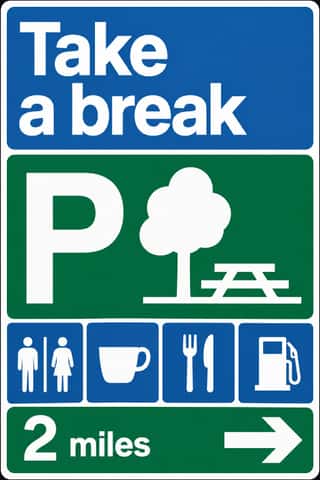
- London Transport DesignThe design programme Frank Pick built for London's Underground from 1908 and the London Passenger Transport Board (1933–40), continued by Harold Hutchison (1947–66).

- Western Desert IconographyThe acrylic painting movement that took form at Papunya in 1971, when men there painted the Honey Ant Dreaming on the school wall and then on board, carrying an older practice of sand, body and ceremonial designs into lasting form. 'Western Desert' is an umbrella name: the movement also includes Warlpiri, Anmatyerre and Arrernte painters of the Central Desert.



Styles that often use it 8
A characteristic choice: usual in these styles, though not essential.




- Hong Kong Protest Art (Umbrella Movement to the 2019–20 Protests)The graphics of Hong Kong's democracy protests, from the 2014 Umbrella Movement to the national security law of 2020, in two linked media.


Styles that use it now and then 22
An occasional choice in these styles.
- Tibetan Woodblock Print Culture (Pecha & Prayer Flags)c. 1410–present
- Sápmi Graphic Identity (Duodji & Gákti Colour Code)1600–present
- Arnhem Land Bark Painting & Rarrk1912–present
- Wendingen & Amsterdam School Typography1918–1932
- Bauhaus1919–1933
- Leningrad Avant-Garde Picture Book1922–1936
- International Typographic Style1950–1975
- Arab Children's Comic Magazines (Samir to Majid)1956–present
- Rorke's Drift Linocut1962–1982
- Total Design & Dutch Functionalism1963–1990
- Mexico 68 Olympic & Metro Identity1966–1970
- Munich 1972 Olympic Design (Otl Aicher)1966–1972
- Amar Chitra Katha Comics1967–present
- Hipgnosis Photographic Concept Sleeve1968–1983
- Roots Reggae Sleeve Art & Rasta Iconography1973–1985
- Post-Punk Record Sleeve (Stiff, Factory, 4AD)1977–1990
- Cranbrook & Deconstructivist Typography1980–1998
- Generative & Dynamic Identities2007–present
- GOV.UK Design (GDS Style)2012–present
- Analog Horror Graphics2015–present
- Neumorphism2019–2021
- Instagram Slideshow Activism (Social-Justice Infographics)2020–present
It often goes with
Choices that the styles making it make more often than the atlas as a whole.
- Modular gridin 24 of 39
- Rectilinearin 26 of 39
- Rational & objectivein 20 of 39
- Rules & barsin 22 of 39
- Grotesque & neo-grotesquein 21 of 39
- Geometric primitivesin 23 of 39