Digital native · 1987–1996 · Western Europe, North America
Cyberdelia ( Early Digital Psychedelic Graphics )
Also known as Cyberdelia, Digital psychedelia, Computer-generated psychedelia
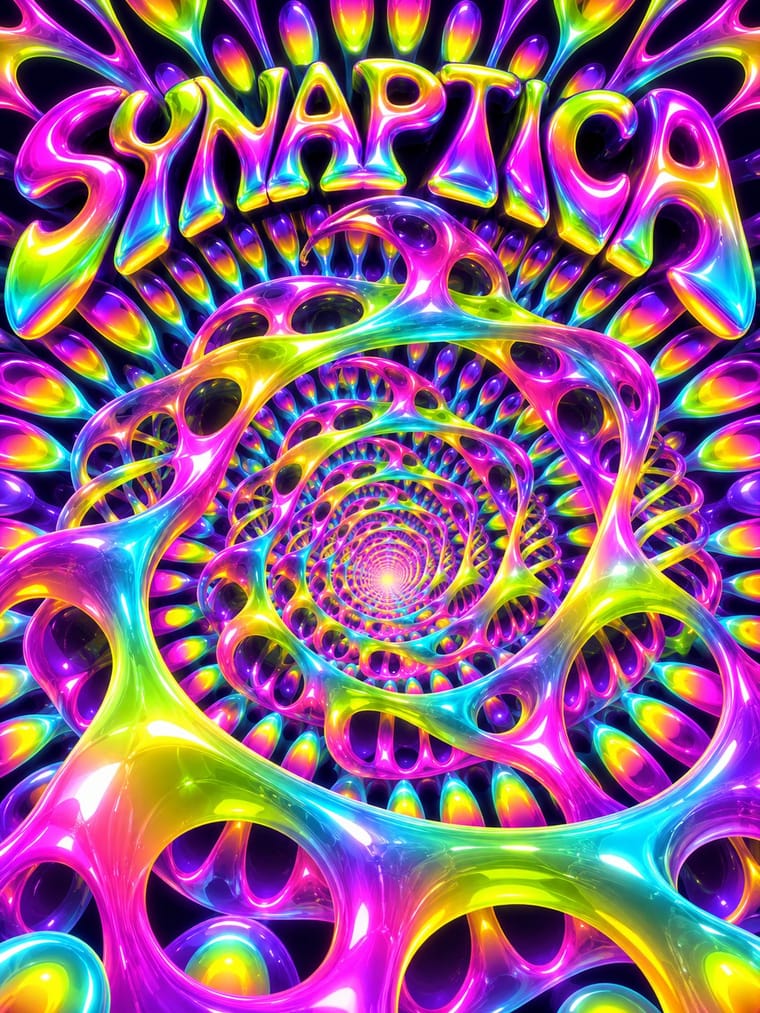
Psychedelic perception rebuilt with early computers: recursive organic forms, tunnels and kaleidoscopic repetition with synthetic highlights and spectral colour, on dance-music sleeves and CD-ROM interfaces. Unlike ai-image-aesthetic it is c. 1987-1996 3D and generative software built on tunnels and recursion; unlike demoscene-graphics it was published via record labels and CD-ROMs, not code competitions. Some works are monochrome or photo-collage.
Make something in this style Get advice in this style Mix it with another style
01
Its picture in other colours
Change a colour and every picture on this page follows. It happens in your browser, from the same pictures: nothing new is made or saved.
Choose a colour to change it
-
#0b0620 -
#ff2bd6 -
#c6ff1a -
#18d5ff -
#ffe534 -
#7a2cff
A faded colour isn’t in these pictures, so changing it changes nothing.
Light and dark stay where they are; greys hardly move.
More colours: any style’s, or your own
The pictures show the style’s own colours.
02
Make something in this style
Say what you need, and Stylogeny’s image studio draws it from Cyberdelia (Early Digital Psychedelic Graphics)’s design choices and checks it against them. It takes about a minute, and you get a link to share.
03
How it works
Palette
-
#0b0620ground · 11% -
#ff2bd6accent · 12% -
#c6ff1aink · 6% -
#18d5ffaccent · 4% -
#ffe534accent · 4% -
#7a2cffaccent · 7%
Shares measured from its picture. The ground is what the pictures sit on (of the colours covering most, the most neutral), the ink stands out from it most, the rest are accents.
Typefaces
-
Rendered 3D display lettering
extruded, bevelled, multicoloured
-
Early desktop-publishing experimental display faces
-
Sans-serif interface type for CD-ROM menus
- Generate or render the central form, a recursive, coiled or cell-like object, and repeat it until it becomes an environment.
- Pull the eye into a tunnel, vortex or kaleidoscope with converging perspective and concentric repetition.
- Give every surface a synthetic gleam: specular highlights, bevels and ray-traced sheen.
- Colour with spectral gradients and acid clashes on a dark ground, not a limited palette.
- Let the lettering be a dimensional, rendered object inside the scene, not a caption beside it.
Late-1980s and 1990s cyberculture, electronic-music publishing and interactive media in Britain and North America; a cross-media idiom rather than a single-city school. CARI links the name to the cyberpunk/psychedelic subculture and its popularisation by the nightclub in the film Hackers (1995); the film is not the origin of the graphics.
Change it with an idea. Any of the 73 moves that make a design say something can go on this style.
04
Its design choices
From Stylogeny’s vocabulary of design choices: defining choices make the style, characteristic ones are usual, occasional ones turn up now and then.
- Layout & composition
- Space & hierarchy
- Typography
- Colour
- Form & shape
- Surface & texture
- Ornament
- Imagery
- Medium & production
- Tone & intent
- Avoids
- Modular grid, Generous white space, Flat, Paper & letterpress bite, Humanist & Garalde serif, Earth & mineral, Ornament-free
How its pictures are made Synthetic & found, light, viewpoint, lens, pose, made with, figures
Kind of picture: Synthetic & found How they are made, from the questions Stylogeny asks of that kind:
- Light
-
- Specular highlights & gloss defining
- Rounded, modelled form defining
- Low-key & chiaroscuro characteristic
- Black shadows characteristic
- Hard-edged shadows characteristic
- Viewpoint
-
- Close & intimate characteristic
- Layered depth characteristic
- Lens
-
- Deep focus characteristic
- Normal lens characteristic
- Pose
-
- Shoulders square to the camera occasional
- Neutral face occasional
- Made with
-
- 3D modelling & render defining
- Generated by code or a model characteristic
- Figures
-
- Lifelike proportions occasional
- Idealised & heroic occasional
Known for
-
William Latham
computer artist; rendered organic evolutionary forms, whose artwork for The Shamen is credited to him by CARI
-
The Shamen, Destination Eschaton
One Little Indian, 1995; sleeve artwork attributed to William Latham by CARI, not corroborated by release credits
-
Brian Eno, Headcandy
BMG CD-ROM, 1994; interface credited to Lou Beach per CARI
-
Stephen Todd & William Latham, Evolutionary Art and Computers
1992
05
Where it comes from, and what it’s close to
Grew out of
Borrowed from
Cyberdelia (Early Digital Psychedelic Graphics) 1987–1996
No later style in the atlas grew out of it yet.
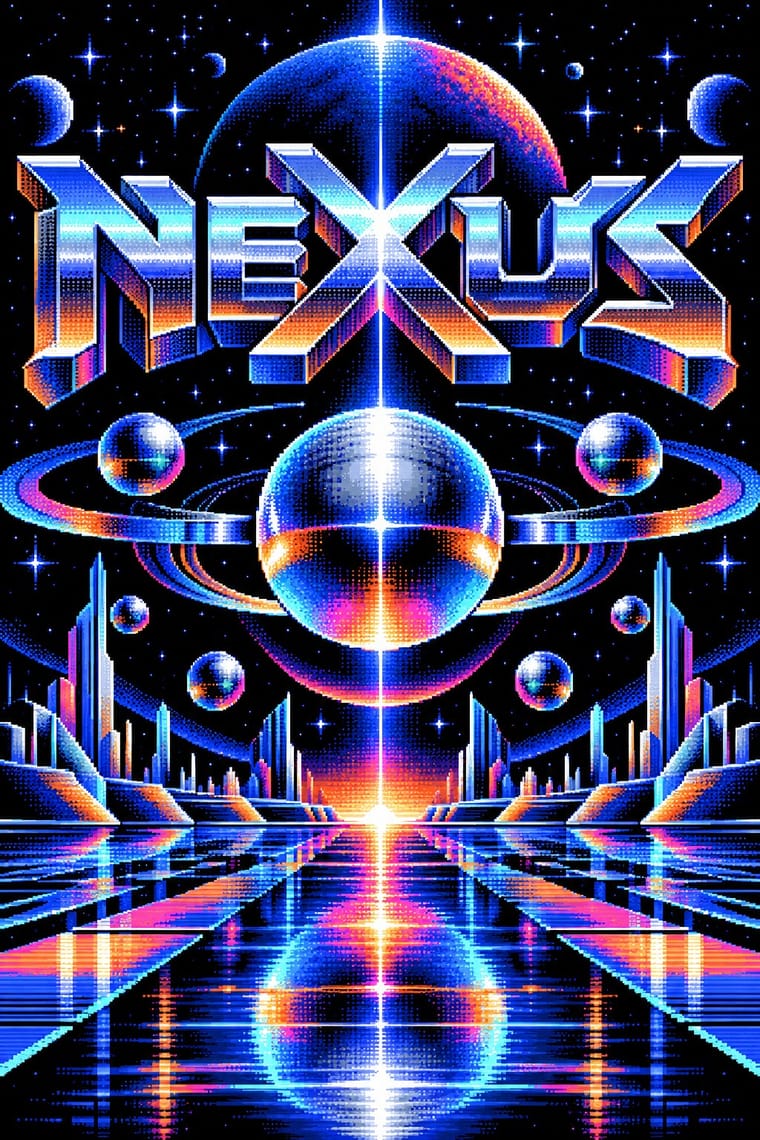
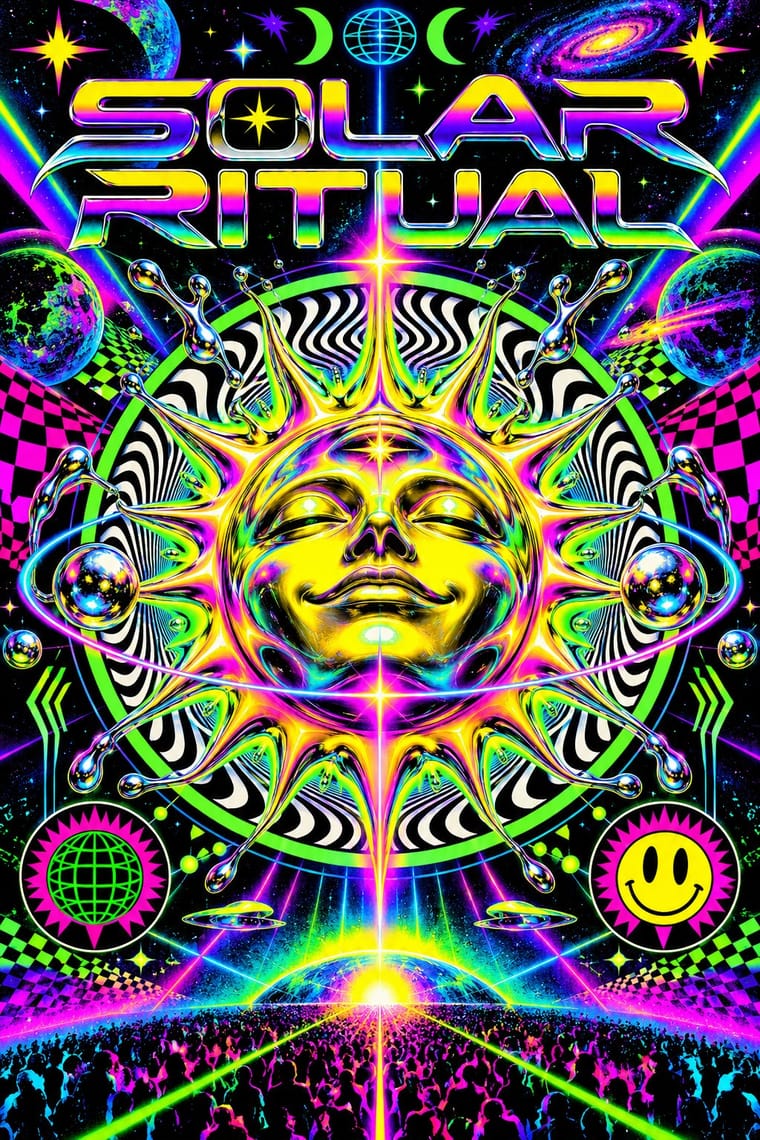
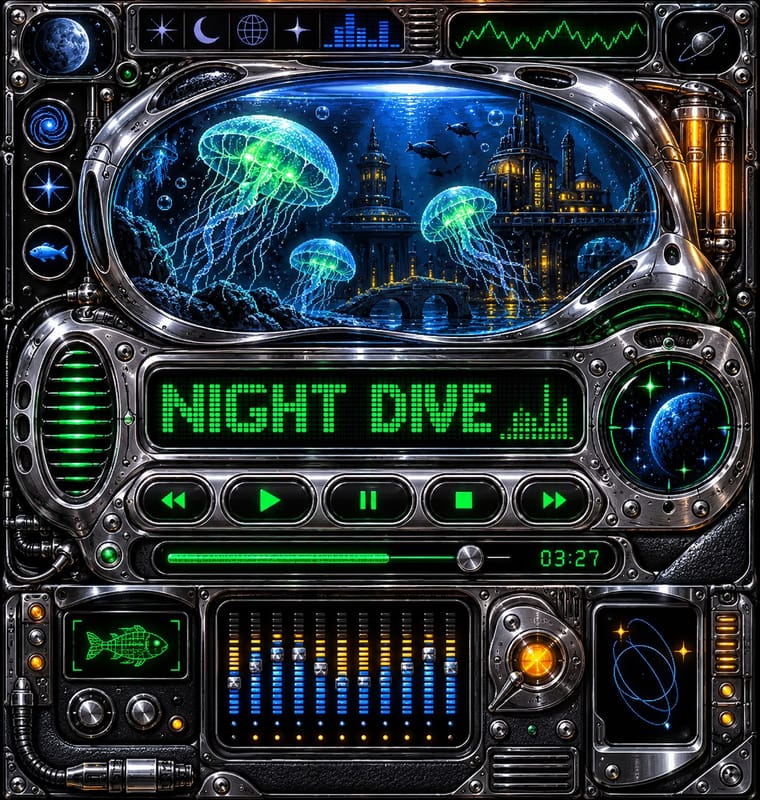
Alike in its design choices
06
Combine it with
Styles Cyberdelia (Early Digital Psychedelic Graphics) pairs well with or plays against, from the research. Each is worked out as a combination: which style gives the type, the colours and the forms.
- Rave & Acid House Graphics Pairs well · Add the flyer's event-information blocks and emblem to the rendered tunnel to make a club print piece.
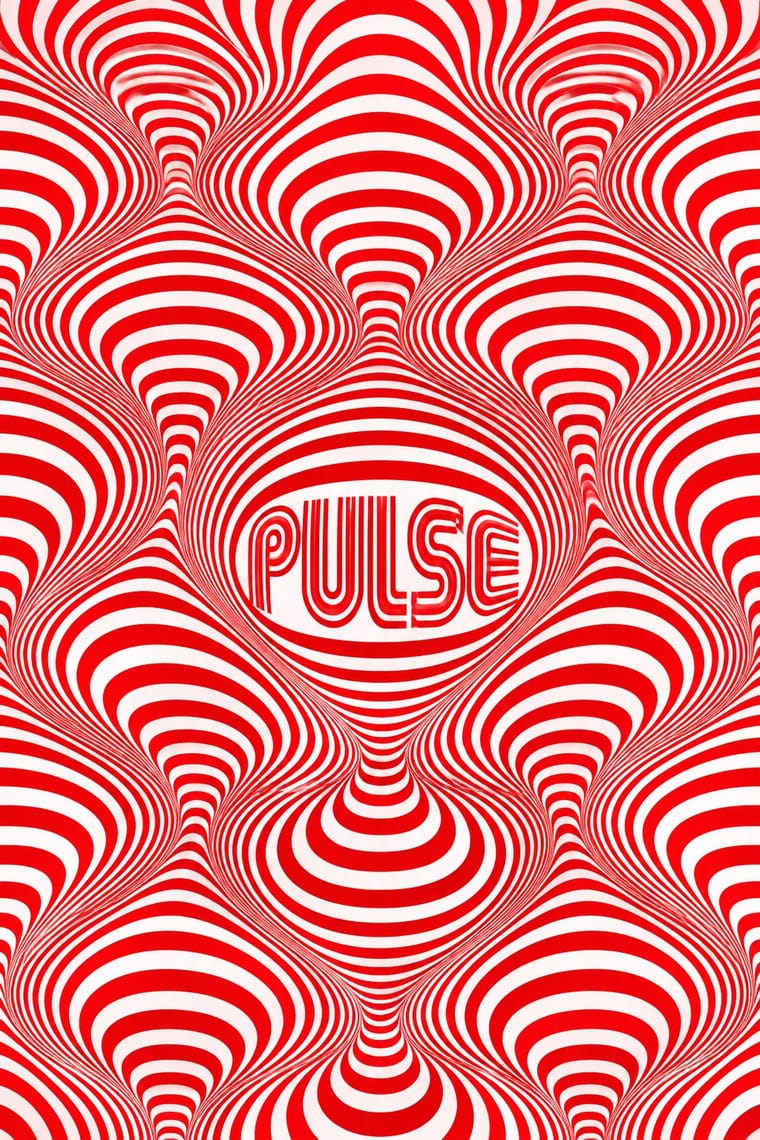
- Op Art Graphics Pairs well · Borrow Op Art's vibrating line fields to give the rendered space a flatter optical pulse.
- Ma & Wabi-sabi Aesthetics Contrasts · Weathered restraint against synthetic excess; use one muted element to calm an overloaded composition.
- Demoscene Graphics (Cracktros, Demos & Text-Mode Art) Contrasts · Shares generative code and rendered depth, but was published through record sleeves and commercial CD-ROMs rather than competition releases; use its constrained, show-off code look to strip back the gloss.
- International Typographic Style Contrasts · Its grid, white space and neutral type are the opposite of an immersive, glossy, polychrome vortex.
- Silicon Dreams (Early 3D Surrealism) Pairs well · Add its psychedelic colour and biomorphic repetition to turn a quiet rendered scene into a full digital trip.
07
Often taken for
Cyberdelia has no real works recorded yet, so these are its nearest styles by its choices alone, with the choices that tell them apart.
-
Generative-AI Image Aesthetic
Generative-AI Image Aesthetic is one of Cyberdelia’s nearest styles by choices; no real work of either fits the other better.
Choices that tell Cyberdelia and Generative-AI Image Aesthetic apart Choice Cyberdelia Generative-AI Image Aesthetic Non-representational characteristic avoids Naturalistic depiction — defining Biomorphic curves defining occasional Painterly illustration — characteristic Dark ground characteristic — No shared descent in the atlas: they reached these choices separately.
-
Demoscene Graphics (Cracktros, Demos & Text-Mode Art)
Demoscene Graphics is one of Cyberdelia’s nearest styles by choices; no real work of either fits the other better.
Choices that tell Cyberdelia and Demoscene Graphics apart Choice Cyberdelia Demoscene Graphics Biomorphic curves defining — Rules & bars — defining Complementary clash characteristic — Bitmap & pixel — defining Radial & concentric characteristic — No shared descent in the atlas: they reached these choices separately.
-
Rave & Acid House Graphics
Rave & Acid House Graphics is one of Cyberdelia’s nearest styles by choices; no real work of either fits the other better.
Choices that tell Cyberdelia and Rave apart Choice Cyberdelia Rave Illusion of depth defining — Emblems & badges — defining Biomorphic curves defining occasional Pictogram — characteristic Generative imagery defining occasional Both descend from Psychedelic Poster in the family tree.
-
Media-Player & Desktop Skins (Winamp-Era Skinning)
Media-Player & Desktop Skins is one of Cyberdelia’s nearest styles by choices; no real work of either fits the other better.
Choices that tell Cyberdelia and Media-Player apart Choice Cyberdelia Media-Player Full polychrome defining occasional Framed panels — defining 3D render defining occasional Skeuomorphic material — defining Generative imagery defining occasional No shared descent in the atlas: they reached these choices separately.
— means the choice isn’t among the style’s recorded choices. Critics recorded each work’s choices with the styles’ descriptions in view, so this shows whether the descriptions hold together, not proof that they are right.
08
Sources
- CARI Institute, Cyberdelia aesthetic entry (cari.institute/aesthetics/cyberdelia): late-1980s to mid-1990s core, kaleidoscopic imagery, acid colour, early 3D type; name derives from the subculture and was popularised by the film Hackers (1995); curatorial, not scholarly
- CARI gallery records for Destination Eschaton (sleeve credit to Latham) and Headcandy (interface credit to Lou Beach)
- Wikipedia, Destination Eschaton (release date 7 August 1995, One Little Indian; names no sleeve designer)
2 more sources
- Wikipedia, Brian Eno discography (Headcandy, 1994, BMG CD-ROM)
- Wikipedia, William Latham (computer scientist) (Evolutionary Art and Computers, 1992, with Todd; artwork for The Shamen)
How Stylogeny researches and checks a style: where the facts come from.