Form & shape · Representation
Distortion & exaggeration
Elongated, warped or grotesque figures.
A design choice in Stylogeny’s vocabulary, under form & shape: what is the shape language?
- styles make it
- 107
- as a defining choice
- 15
- as a usual one
- 49
- now and then
- 43
- avoid it
- 7
Styles defined by it 15
For these styles it is one of the choices that make the style.
- Javanese Wayang Kulit (Tatah Sungging)The visual language of Javanese shadow puppets: flat figures cut from buffalo parchment, with head and legs in profile, shoulders turned to the front and long jointed arms worked by horn rods.
- Mexican Popular Graphics (Posada)Cheap broadsheets, chapbooks and gazettes sold on the streets of Porfirian Mexico City by the publisher Antonio Vanegas Arroyo and illustrated by Manuel Manilla and José Guadalupe Posada.
- Glasgow StyleGlasgow's distinctive answer to Art Nouveau, formed around Charles Rennie Mackintosh, Margaret and Frances Macdonald and Herbert MacNair at the Glasgow School of Art.
Simplicissimus Satirical Style (Munich)The house style of the Munich satirical weekly Simplicissimus, set by Th.
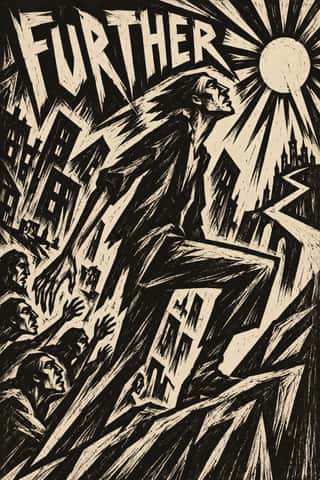
Expressionist Woodcut GraphicsThe graphic arm of German Expressionism, from Die Brücke in Dresden (1905) to the Berlin journals Der Sturm and Die Aktion and Frans Masereel's woodcut novels.
- Taishō Roman & Lyrical IllustrationThe lyrical illustration (jojōga) of late-Meiji to early-Shōwa Japan, led by Takehisa Yumeji: willowy, large-eyed women in kimono drawn with an Art Nouveau contour, set among camellias and kimono patterns and lettered by hand.
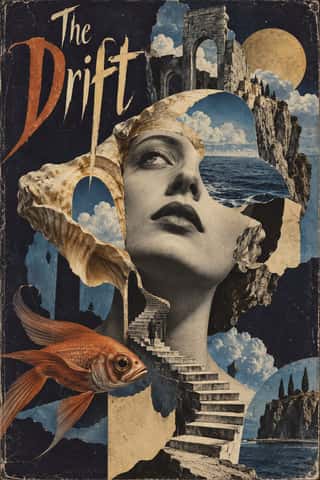
Surrealist GraphicsLaunched by André Breton's 1924 manifesto, Surrealism sought the marvellous in dreams, chance and the unconscious.
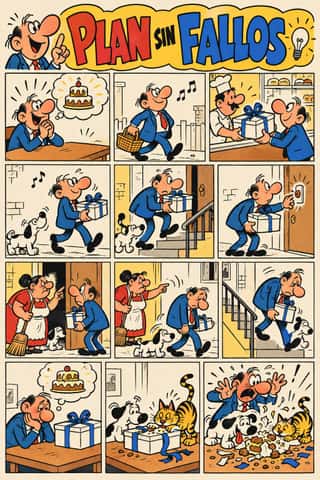
Escuela Bruguera (Spanish Humour Comics)The house style of Editorial Bruguera's humour cartoonists in Barcelona from 1947 to 1986, named the 'Escuela Bruguera' by Terenci Moix in 1968.
Polish Poster SchoolA painterly, metaphorical poster culture that flourished in communist Poland, chiefly for film, theatre, opera and circus.
Underground ComixSelf-published, adults-only comic books from the San Francisco counterculture, made outside the Comics Code on the newsstand comic's format.
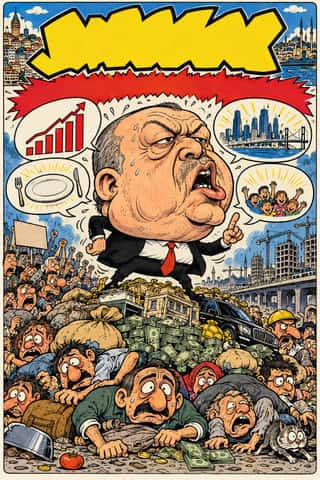
Turkish Weekly Humour Magazines (Gırgır to Uykusuz)Istanbul's weekly cartoon magazines, from the Aral brothers' Gırgır (1972), which sold up to about half a million copies, through the chain of breakaways that followed it: Limon, LeMan, Penguen and Uykusuz.
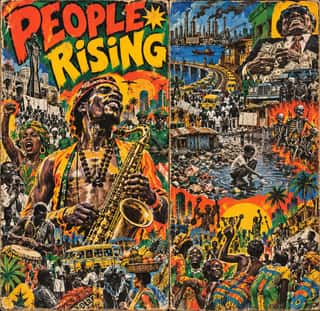
Afrobeat Sleeve ArtThe painted and collaged record covers of Nigerian Afrobeat, defined by Lemi Ghariokwu's sleeves for Fela Kuti from Alagbon Close (1974) onward.
Ghanaian Movie PosterHand-painted posters commissioned by Ghana's mobile video clubs from about 1985, painted by apprenticed sign painters on stitched flour sacks to advertise VHS screenings of Hollywood, Hong Kong, Nigerian and Indian films.
- Bitterkomix (Afrikaans Underground Comics)The Afrikaans underground comics magazine founded in Stellenbosch in 1992 by Anton Kannemeyer (Joe Dog) and Conrad Botes (Konradski), with Mark Kannemeyer (Lorcan White).
Corporate MemphisThe flat vector illustration style that became the default visual voice of big tech in the late 2010s: faceless, ethnically non-specific figures with elongated limbs and tiny heads, drawn in bright flat colour among blobs, leaves and confetti.
Styles that often use it 49
A characteristic choice: usual in these styles, though not essential.
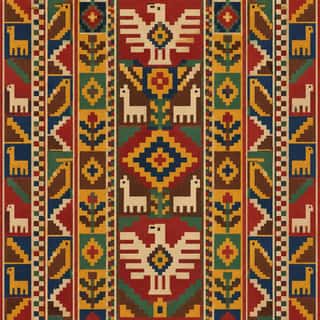
Andean Woven Graphic SystemsThe graphic systems of Andean cloth, the region's most prestigious medium, in which every motif is built on the warp-and-weft grid.
Mixteca-Puebla Codex PaintingThe painted screenfold books of Postclassic southern and central Mexico (not the Maya codices): long strips of gesso-coated deerskin, folded like a screen and painted on both sides.
Lubok Popular PrintCheap single-sheet Russian popular prints sold at fairs and by pedlars from the later 17th century: woodcut, later engraved and lithographed pictures of saints, fables, heroes, battles and satire in which text and image share one sheet.
- Northwest Coast Formline DesignThe two-dimensional design system of the northern Northwest Coast nations, painted, carved and woven onto boxes, house fronts, robes and hats, and printed as serigraphs since the 1960s.
- Kalighat Pat & Battala Bazaar PrintsThe bazaar art of nineteenth-century Calcutta: watercolours sold to pilgrims by patua painters at the Kalighat temple, and the cheap woodcuts and metal engravings that Battala presses printed for chapbooks and almanacs.
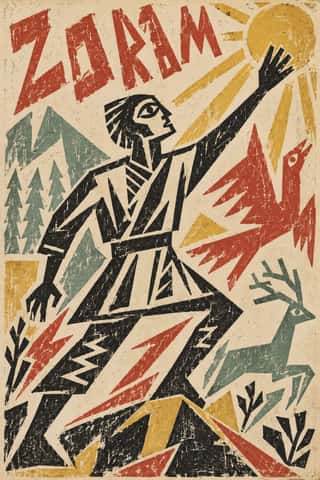
Russian Futurist BookThe cheap, small-run books of the Russian Cubo-Futurist poets and painters, from Kruchenykh and Khlebnikov to Goncharova, Larionov and Rozanova.
Hungarian Revolutionary PosterThe political posters of Hungary's revolutions.
- DadaBorn in wartime Zurich at the Cabaret Voltaire in 1916 and spreading to Berlin, Hanover, Cologne and Paris, Dada used chance, absurdity and provocation against the culture that had produced the war.
ROSTA WindowsHand-stencilled satirical news posters made by the Russian Telegraph Agency during the Civil War and hung in empty shop windows, first in Moscow, then in Petrograd and provincial towns.
- Brazilian Modernismo Graphics (Klaxon and the Semana de 22)The print side of São Paulo's Modernismo (1922-29), set in jobbing print shops.
- AIZ Political Photomontage (Heartfield)The political photomontage John Heartfield made for the communist weekly AIZ from 1930 to 1938, in Berlin and, from 1933, in Prague exile.
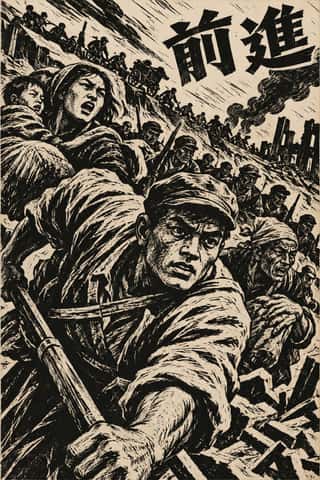
Chinese Modern Woodcut MovementThe leftist print movement launched by Lu Xun's 1931 Shanghai woodcut workshop, which made the self-cut black-and-white woodcut China's art of national crisis and revolution.
American Four-Colour Comic Book (Golden to Bronze Age)The American newsstand comic book from Famous Funnies (1934) and Action Comics #1 (1938) through the Golden, Silver and Bronze Ages, and past the Bronze Age's end in 1985 until computer colour replaced hand separations in the early 1990s.
Tiki Pop (Polynesian Pop)The mainland American fantasy of the South Seas, begun by Don the Beachcomber's Hollywood bar (about 1934) and Trader Vic's in Oakland and at its height in the Polynesian restaurants of the 1950s and 60s.
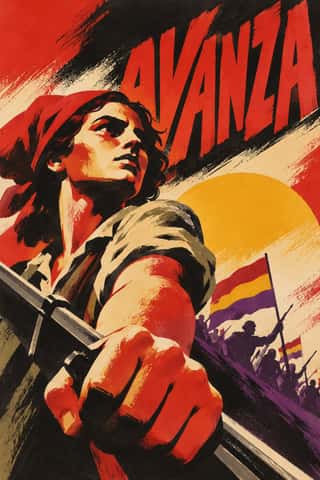
Spanish Civil War PosterThe poster war waged by the Spanish Republic, its unions and its anarchist, communist and socialist parties against Franco's uprising.
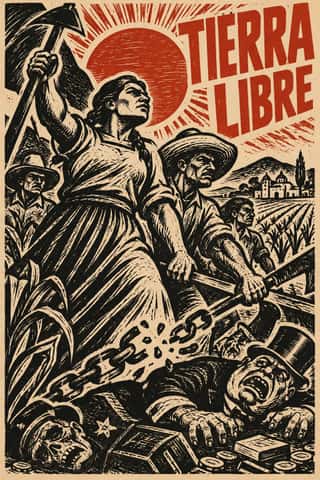
Taller de Gráfica PopularA Mexico City printmaking collective founded in 1937 around Leopoldo Méndez, Pablo O'Higgins and Luis Arenal to put art at the service of popular and anti-fascist struggles.
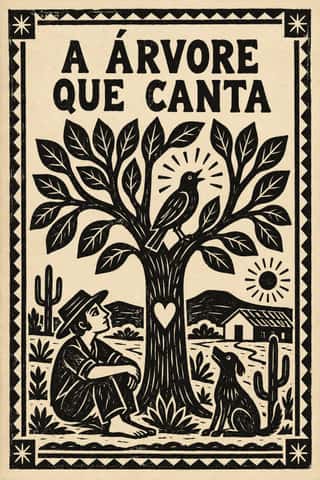
Literatura de Cordel WoodcutThe cover art of Brazil's literatura de cordel, pocket chapbooks of verse whose single picture is a small woodcut cut in soft umburana wood and printed in black above a plain letterpress title.
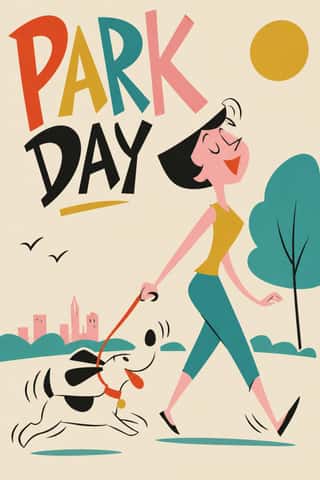
UPA & Cartoon ModernThe modern cartoon of United Productions of America (UPA) and the 1950s films, commercials and books it inspired.
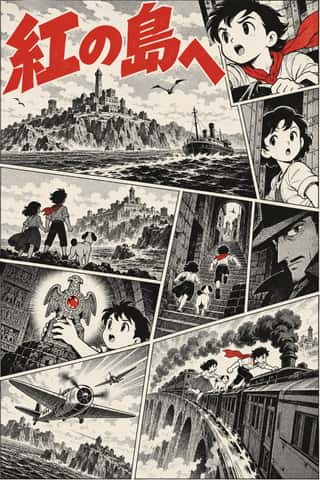
Story Manga (Postwar Japanese Comics)The black-and-white narrative comic of postwar Japan, from Tezuka Osamu's Shin Takarajima (1947) to the weekly boys' magazines of 1959 and 1968 and the paperbacks that collect them.
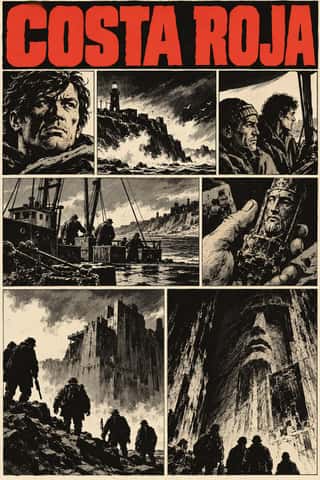
Argentine Adventure Historieta (Oesterheld–Breccia)The adult adventure comics of Buenos Aires newsstand magazines, from Misterix (1948) and Oesterheld's Hora Cero (1957) to Skorpio and Fierro; the humour line of Patoruzú, Rico Tipo and Mafalda is another tradition.
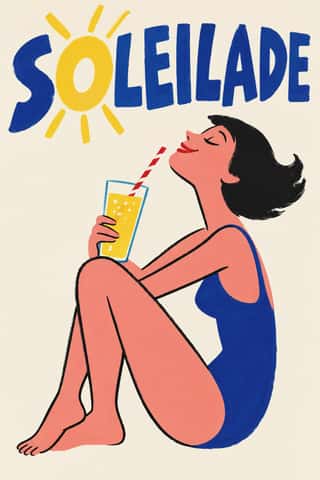
French Post-War Visual-Gag Poster (Savignac, Villemot, Morvan)The humorous street poster of post-war Paris, which took off in 1949 when Raymond Savignac and Bernard Villemot showed their rejected projects together and Savignac's Monsavon cow, its udder filling a bar of soap, went up on the walls.
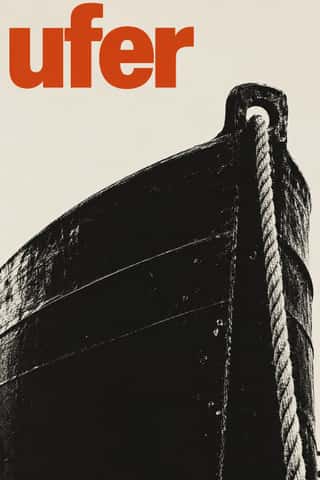
West German Conceptual Film & Culture Poster (Hillmann and Rambow)The art-film and culture poster Hans Hillmann developed from 1953 for the West German distributors Neue Filmkunst and Atlas Film, which his Kassel student Gunter Rambow took with Gerhard Lienemeyer into staged photo posters for theatre, publishers and protest.
Push Pin StyleThe eclectic illustrative style of New York's Push Pin Studios, founded by Seymour Chwast, Milton Glaser and Edward Sorel.
Zagreb School of Animated FilmThe modernist animation of Zagreb Film's Studio for Animated Film, grown from reduced-animation advertisements of 1954-1955 and named the 'Zagreb school' by Georges Sadoul and André Martin after Cannes 1958.
Arab Children's Comic Magazines (Samir to Majid)Arabic children's comics weeklies, from Dar al-Hilal's Samir in Cairo (1956) to Abu Dhabi's Majid (1979), mixing translated Western strips with house characters by Egyptian, Lebanese, Armenian and European artists.
Shōjo Manga (Japanese Girls' Comics)The look of Japan's girls' comics (strictly a readership, not a style), which Takahashi Macoto fixed in 1958 from the lyrical illustration (jojōga) of Nakahara Jun'ichi and the Year 24 Group remade in the 1970s.
Angura Theatre PosterThe posters of Japan's underground (angura) theatre from the mid-1960s to the mid-1980s, made for troupes such as Kara Jūrō's Jōkyō Gekijō and Terayama Shūji's Tenjō Sajiki.
- Black Panther Party GraphicsThe visual language of the Black Panther Party, created largely by its Minister of Culture, Emory Douglas, for the weekly newspaper The Black Panther.
- Picó Sound-System Painting (Colombian Caribbean)The hand-painted fronts of the picós, the giant sound systems that play dances in the barrios of Barranquilla and Cartagena.
- Atelier Populaire (May '68 Screenprint Poster)The posters of the Atelier populaire, set up when students, teachers and artists occupied the École des Beaux-Arts in Paris on 14 May 1968, until police cleared the school on 27 June.
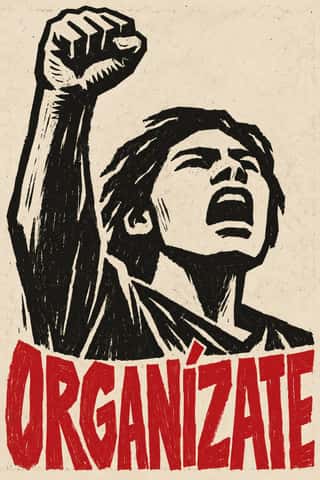
Gráfica del 68 (Mexican Student Movement Graphics)The graphics of the 1968 Mexican student movement, made in days by brigades in the print workshops of San Carlos and La Esmeralda and in improvised school workshops.
Tingatinga PaintingA Tanzanian popular painting school begun in Dar es Salaam by Edward Tingatinga (1932–1972), who from 1968 painted animals, birds and village scenes in glossy bicycle enamel on square hardboard ceiling boards for residents and tourists.
Kinshasa Popular PaintingA school of easel painting founded in Kinshasa in the early 1970s by Chéri Samba, Moké, Chéri Chérin and Pierre Bodo, largely self-taught painters, several of them trained in Kinshasa's billboard and sign workshops.
- Ethiopian Revolutionary Poster (Derg Era)The poster and mural art of the Derg military government and its successor, Mengistu's People's Democratic Republic of Ethiopia (1974–1991), made mostly by teachers and students of the Addis Ababa School of Fine Arts.
Métal hurlant Science-Fiction Comics (Mœbius, Druillet & Les Humanoïdes Associés)The adult science-fiction comics of Métal hurlant, the Paris magazine founded in 1974 by Mœbius, Philippe Druillet, Jean-Pierre Dionnet and Bernard Farkas.
Jamaican Dancehall Signs & Sleeve ArtThe street graphics of Jamaica's dancehall era.
L'Association and French Alternative ComicsThe black-and-white auteur comics of L'Association, the Paris publisher founded by seven cartoonists in 1990, and the 1990s small-press scene it led.
SuperflatThe flat, saturated, cartoon-crowded look that Takashi Murakami named in his exhibition and manifesto Superflat (Tokyo, 2000; US tour 2001).
- Indonesian Woodcut Activism (Taring Padi)The protest graphics of Taring Padi, the collective founded by students and activists in Yogyakarta in 1998 as Suharto fell, and of the punk and activist woodcut scenes around it.
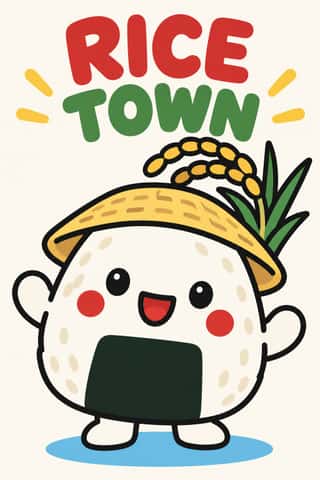
Yuru-chara (Japanese Local Mascot Design)Japan's local mascots: characters commissioned by prefectures, towns and tourism bodies to stand for a place, named yuru-kyara ('loose characters') by the illustrator Jun Miura around 2000.
Glitch Art & Datamosh GraphicsAn art and design practice that makes digital failure the picture.
- Internet Ugly & Meme VernacularA deliberately amateur image dialect of forums, imageboards and social feeds, named 'Internet Ugly' by Nick Douglas in 2014.
- Oaxacan Protest Printmaking & Street Graphics (ASARO)The street graphics of Oaxaca City since the 2006 teachers' strike and APPO uprising, when ASARO, the stencil collective Lapiztola and later workshops such as Colectivo Subterráneos made the colonial centre's walls a newspaper.
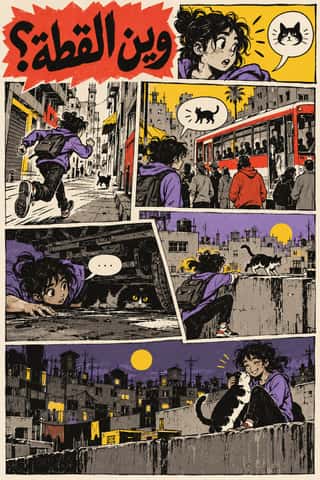
Arab Independent Comics (Samandal, TokTok, Lab619, Skefkef)Adult comics magazines edited by Arab artists' collectives since 2007, at times with a ministry grant or an NGO partner: Samandal in Beirut, TokTok in Cairo, Lab619 in Tunis and Skefkef in Casablanca.
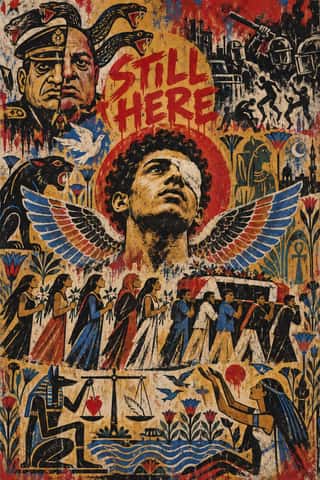
Egyptian Revolutionary Street Art (Mohamed Mahmoud Murals)The street art of Egypt's 2011 revolution and the years after it, when Cairo's walls, above all around Tahrir and Mohamed Mahmoud Street, became what Ammar Abo Bakr called a newspaper.
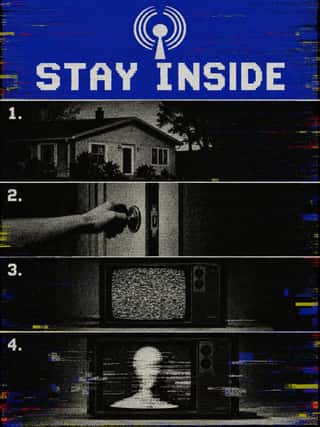
Analog Horror GraphicsA horror genre, mostly on YouTube, that tells its stories through imitation television and home-video graphics rather than actors: emergency-alert screens, station IDs, public-service, educational and instructional tapes, set between the 1960s and early 2000s.
Chilean Estallido Social Graphics (Revuelta Popular of 2019–20)The street graphics of Chile's popular revolt, from 18 October 2019 to the March 2020 lockdowns, when a leaderless movement covered Santiago's Plaza de la Dignidad, the Alameda and other cities' walls.
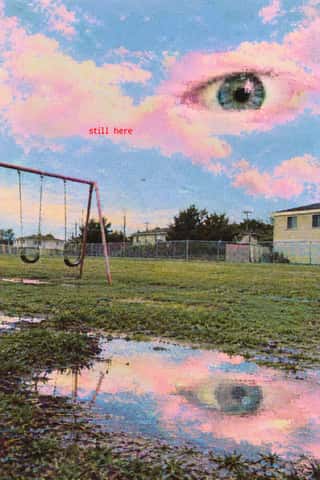
Weirdcore & DreamcoreAn internet aesthetic popularised on Reddit, TikTok and YouTube in the early 2020s, with dreamcore as its softer, pastel, cloud-filled sister.
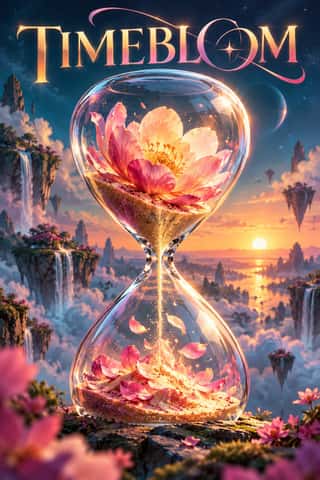
Generative-AI Image AestheticThe house look of pictures synthesised by text-to-image diffusion models since 2022.
Styles that use it now and then 43
An occasional choice in these styles.
- Hebrew Micrographyc. 895–present
- Emblem Book (Motto, Picture & Epigram)1531–1724
- Tarot de Marseille Woodcut Cards1639–present
- Ukiyo-e Woodblock Prints1670–1900
- Persian Popular Narrative (Lithographs & Coffeehouse Painting)1843–2012
- Cuban Tobacco Lithography (Habilitaciones & Marquillas)1845–present
- Fante Asafo Flags (Frankaa)1850–present
- Belle Époque Lithographic Poster1866–1914
- Nieuwe Kunst (Dutch Art Nouveau)1892–1914
- Cubist Pictorial Space1907–1925
- Kultur-Lige & Yiddish Avant-Garde Book Design1917–1924
- Italian Fascist Graphics (Romanità & Exhibition Photomontage)1921–1943
- Leningrad Avant-Garde Picture Book1922–1936
- Mavo1923–1925
- Filipino Komiks1929–1999
- Hand-Painted Bollywood Poster1940–1999
- Cairo–Beirut Arab Modernist Book & Periodical Design1952–1990
- Chinese National-Style Animation (Shanghai Animation Film Studio)1956–1989
- Dazibao (Big-Character Posters)1957–1980
- Kinngait (Cape Dorset) Inuit Printmaking1957–present
- Turkish Modernist Poster & Graphic Design1959–2000
- Rorke's Drift Linocut1962–1982
- Woodland School (Legend Painting)1962–present
- Chicano Screenprint Poster1965–present
- Psychedelic Poster1965–1973
- Hipgnosis Photographic Concept Sleeve1968–1983
- Australian Poster Collective Screenprints1971–1994
- Lebanese Civil War Party Poster1975–1990
- Punk & DIY Zine1976–1986
- La Movida Madrileña Graphics1977–1988
- Iranian Revolutionary & Sacred Defence Poster1978–1988
- Pardhan Gond Painting (Jangarh Kalam)1981–present
- Global Village Coffeehouse1988–2003
- Black Metal Graphics1990–present
- Screenprinted Gig & Alt-Movie Poster1991–present
- Nollywood Video Jacket & Film Poster1992–present
- South African Vernacular Design (Ijusi)1995–present
- Tamil Nadu Flex Banners2000–present
- Korean Webtoon Graphics2002–present
- Natural Wine Label Art2007–present
- Polish Information Picture Book (Dwie Siostry)2008–present
- YouTube Thumbnail Style (the 'YouTube Face')2012–present
- NFT Profile-Picture Collections (CryptoPunks to Bored Apes)2017–present
It often goes with
Choices that the styles making it make more often than the atlas as a whole.
- Comic & cartoonin 63 of 107
- Line illustrationin 79 of 107
- Sequential narrativein 52 of 107
- Agitational & persuasivein 52 of 107
- Stylised figurationin 89 of 107
- Ironic & self-awarein 42 of 107
Styles that avoid it
Styles that deliberately leave it out.
- Islamic Geometric & Calligraphic Traditionc. 690–present
- Senegalese Sufi Devotional Imagery (Souwère Glass Painting and Amadou Bamba Portraits)1900–present
- Fotoromanzo (Italian Photo-Romance)1947–present
- West African Barbershop & Hair Salon Signs1950–present
- Kawaii Design1970–present
- Roots Reggae Sleeve Art & Rasta Iconography1973–1985
- Emoji Pictographic Language1997–present