Digital native · 1987–1999 · North America, Western Europe
Silicon Dreams ( Early 3D Surrealism )
Also known as Silicon Dreams, Mind Warp
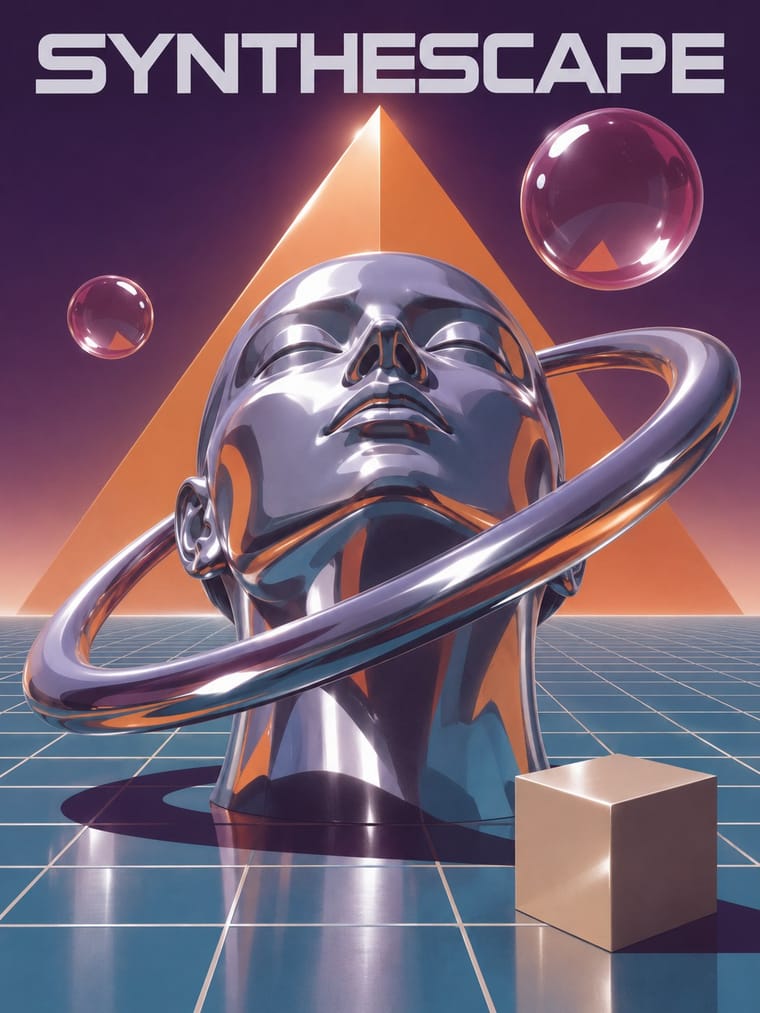
A retrospective label for the surrealist look of early 3D computer graphics, late 1980s to late 1990s: explicitly modelled objects, glossy artificial materials and strong perspective, staging impossible inhabitants in conspicuously synthetic rooms and landscapes. The name was coined by Karl Kraft for the Silicon Dreams Facebook group and adopted by the CARI archive; it is not a movement. The formal principles below are inferred from the label's description, not sourced, and the two typefaces are likely guesses, not documented for any exemplar.
Make something in this style Get advice in this style Mix it with another style
01
Its picture in other colours
Change a colour and every picture on this page follows. It happens in your browser, from the same pictures: nothing new is made or saved.
Choose a colour to change it
-
#2a1f3d -
#c9b8a0 -
#d9d9e3 -
#d8864a -
#3f7f9a -
#8a2f4e
A faded colour isn’t in these pictures, so changing it changes nothing.
Light and dark stay where they are; greys hardly move.
More colours: any style’s, or your own
The pictures show the style’s own colours.
02
Make something in this style
Say what you need, and Stylogeny’s image studio draws it from Silicon Dreams (Early 3D Surrealism)’s design choices and checks it against them. It takes about a minute, and you get a link to share.
03
How it works
Palette
-
#2a1f3dground · 23% -
#c9b8a0accent · 10% -
#d9d9e3ink · 5% -
#d8864aaccent · 10% -
#3f7f9aaccent · 13% -
#8a2f4enot in its pictures
Shares measured from its 2 pictures. The ground is what the pictures sit on (of the colours covering most, the most neutral), the ink stands out from it most, the rest are accents.
Typefaces
-
Futura
-
Eurostile
- Stage the scene as a rendered volume with strong one-point perspective, and let the synthetic space read as uncanny rather than as a stand-in for photography.
- Model objects from simple primitives and give them glossy, reflective or chrome-like materials that look artificial.
- Light the scene with a few plain sources and hard cast shadows rather than naturalistic global illumination.
- Populate the space with impossible or mannequin-like figures and objects in quiet, deadpan arrangements.
- Keep the picture central and let type be a small, separate caption or label around the render.
Early computer-animation and commercial illustration networks in North America and Western Europe; a retrospective curatorial category with no single verified birthplace.
With an idea put on it
-
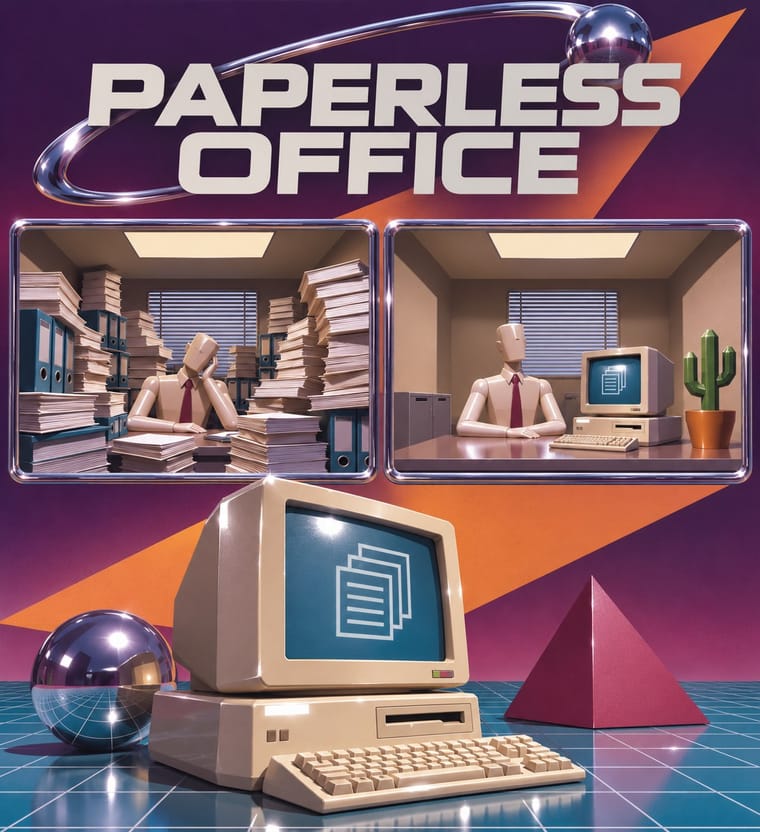
Steps and panels Two rendered rooms side by side, identical but for one change: before, a mannequin clerk sits buried under leaning towers of paper files; after, the same mannequin sits in the emptied room with one boxy computer and a potted cactus.
AI-generated: Silicon Dreams (Early 3D Surrealism) with an idea put on it. Not a real or historical work.
Change it with an idea. Any of the 73 moves that make a design say something can go on this style.
04
Its design choices
From Stylogeny’s vocabulary of design choices: defining choices make the style, characteristic ones are usual, occasional ones turn up now and then.
- Layout & composition
- Space & hierarchy
- Typography
- Form & shape
- Surface & texture
- Ornament
- Medium & production
- Tone & intent
- Avoids
- Broken grid, Horror vacui, Abundant decoration, Glitch, Photocopy & distress, Letterpress, Blackletter
How its pictures are made Synthetic & found
Kind of picture: Synthetic & found
Known for
-
Various artists, Artificial Intelligence (Warp, 1992)
CGI image by Phil Wolstenholme (credited 'Pixelpainting + Decorating'), design by The Designers Republic, per the Discogs credits; the cover shows an android in an armchair
-
Various artists, Pioneers Of The Hypnotic Groove (Warp, 1991)
sleeve built entirely as a 3D scene by Phil Wolstenholme, per his account in The Quietus oral history of Artificial Intelligence
-
Marc Aubry and Michel Hébert, Anniversary (National Film Board of Canada), a short film with computer-animated characters
a film, not a still image
05
Where it comes from, and what it’s close to
Borrowed from
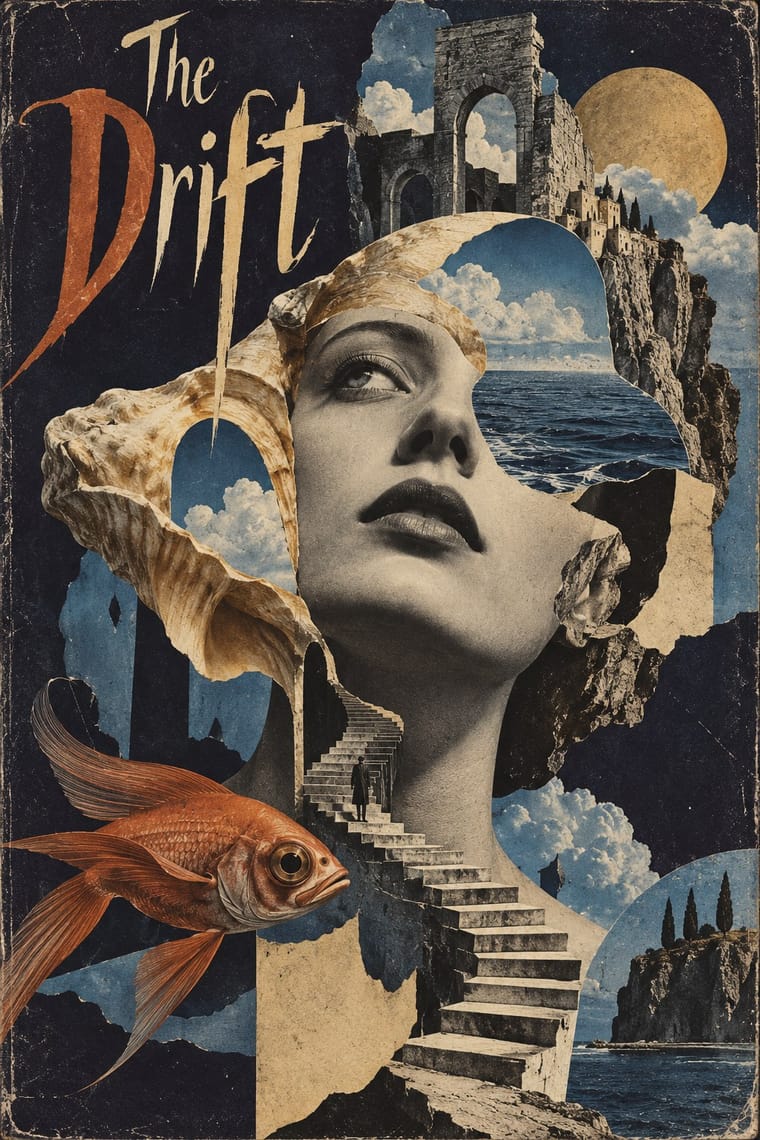
Silicon Dreams (Early 3D Surrealism) 1987–1999
No later style in the atlas grew out of it yet.
Alike in its design choices


06
Combine it with
Styles Silicon Dreams (Early 3D Surrealism) pairs well with or plays against, from the research. Each is worked out as a combination: which style gives the type, the colours and the forms.
- Y2K Futurism Contrasts · Shares chrome, gloss and 3D, but Y2K futurism is optimistic, bubbly and interface-bound; Silicon Dreams stays quiet, deadpan and surreal.
- Surrealist Graphics Pairs well · Borrow its dream logic, impossible juxtapositions and deadpan staging for the rendered scene.
- Demoscene Graphics (Cracktros, Demos & Text-Mode Art) Contrasts · Real-time hardware-limited showing off versus pre-rendered volumetric scenes; mixing them shows the same era from two angles.
- Cyberpunk Visual Style Contrasts · Dark, grimy, signage-heavy night city set against a calm, lit, glossy interior; pick one tone per piece.
- Cyberdelia (Early Digital Psychedelic Graphics) Pairs well · Add its psychedelic colour and biomorphic repetition to turn a quiet rendered scene into a full digital trip.
- Property-Marketing Architectural Visualisation (Photoreal Archviz Renders) Contrasts · Visibly synthetic impossible scenes against an image meant to pass as a real place.
07
Often taken for
Silicon Dreams has no real works recorded yet, so these are its nearest styles by its choices alone, with the choices that tell them apart.
-
Hyperreal 3D Render Art (Cinema 4D Instagram Era)
Hyperreal 3D Render Art is one of Silicon Dreams’s nearest styles by choices; no real work of either fits the other better.
Choices that tell Silicon Dreams and Hyperreal 3D Render Art apart Choice Silicon Dreams Hyperreal 3D Render Art Distortion & exaggeration characteristic — Pastel — defining Stylised figuration characteristic — Naturalistic depiction — defining Technological & futurist characteristic — Hyperreal 3D Render Art borrowed from Silicon Dreams, but neither descends from the other.
-
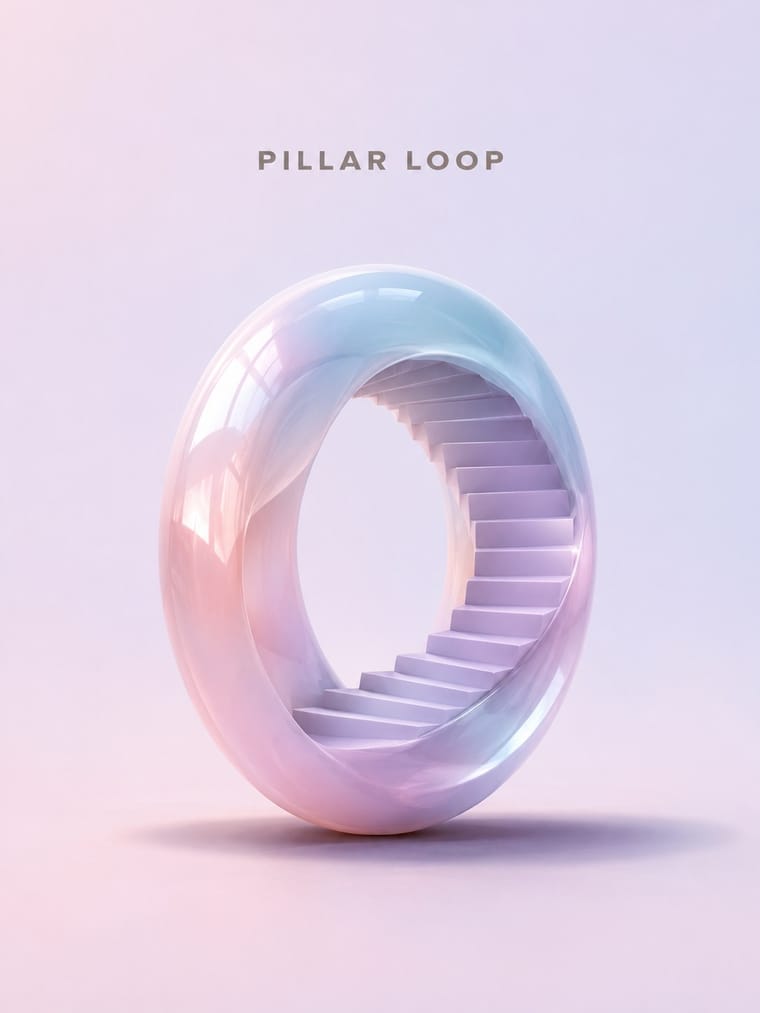
Claymorphism & Soft 3D
Claymorphism & Soft 3D is one of Silicon Dreams’s nearest styles by choices; no real work of either fits the other better.
Choices that tell Silicon Dreams and Claymorphism apart Choice Silicon Dreams Claymorphism Chrome & 3D render defining occasional Rounded & pill — defining Gloss & highlights defining occasional Light ground — characteristic Distortion & exaggeration characteristic — No shared descent in the atlas: they reached these choices separately.
-
Y2K Futurism
Y2K Futurism is one of Silicon Dreams’s nearest styles by choices; no real work of either fits the other better.
Choices that tell Silicon Dreams and Y2K Futurism apart Choice Silicon Dreams Y2K Futurism Distortion & exaggeration characteristic — Rounded & pill — defining Geometric primitives characteristic — Iridescent & holographic — characteristic Stylised figuration characteristic — No shared descent in the atlas: they reached these choices separately.
-
Hyperreal Photo-Composite Advertising (Photoshop Era)
Hyperreal Photo-Composite Advertising is one of Silicon Dreams’s nearest styles by choices; no real work of either fits the other better.
Choices that tell Silicon Dreams and Hyperreal Photo-Composite Advertising apart Choice Silicon Dreams Hyperreal Photo-Composite Advertising Chrome & 3D render defining — Naturalistic depiction — defining 3D render defining occasional Treated photography — defining Geometric primitives characteristic — No shared descent in the atlas: they reached these choices separately.
— means the choice isn’t among the style’s recorded choices. Critics recorded each work’s choices with the styles’ descriptions in view, so this shows whether the descriptions hold together, not proof that they are right.
08
Sources
- CARI, Silicon Dreams aesthetic page, cari.institute/aesthetics/silicon-dreams (name credited to Karl Kraft and the Silicon Dreams Facebook group)
- National Film Board of Canada, Anniversary, nfb.ca/film/anniversary/
- Discogs, Various, Artificial Intelligence (Warp, 1992) credits; The Quietus, Are You Sitting Comfortably? An Oral History Of Warp's Artificial Intelligence; Sheffield Tribune, The client is always wrong
How Stylogeny researches and checks a style: where the facts come from.