Rational modernism · 1931–present · Western Europe, Global / networked
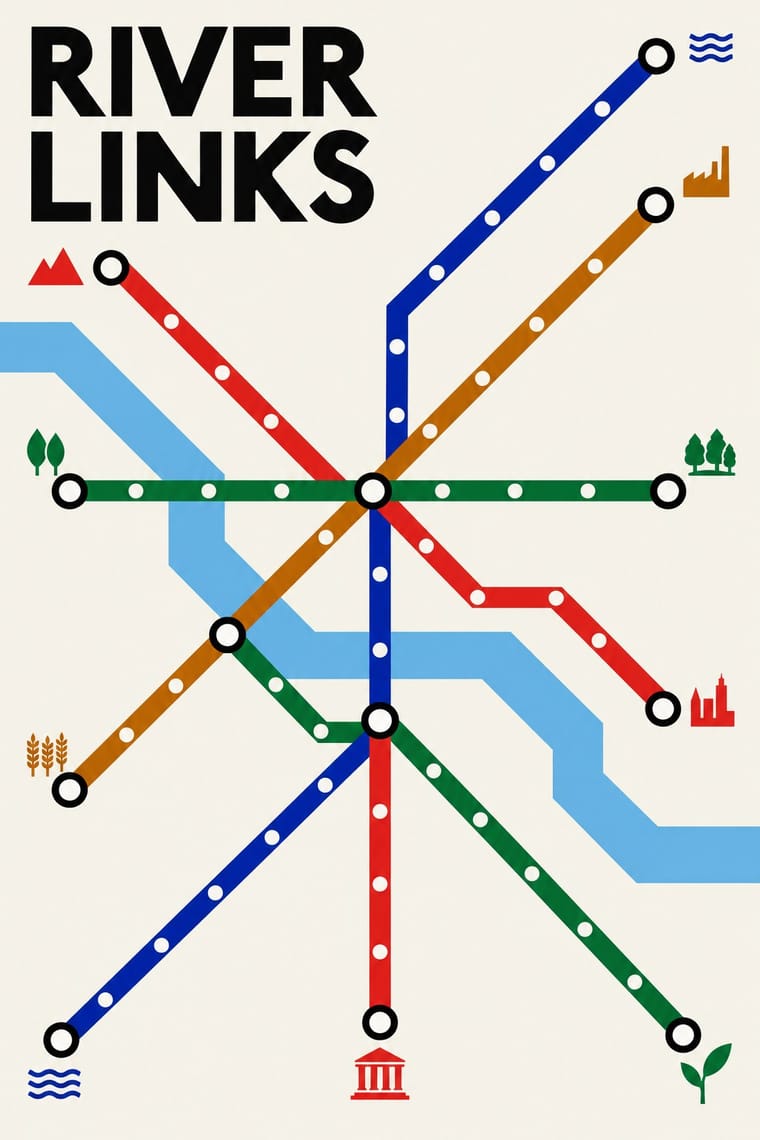
Schematic Transit Diagram (Beck Tube Map Idiom)
Also known as Octilinear transit map, Beck diagram, Subway diagram, Metro map
A diagram idiom for rail networks that puts topology before geography: lines run only horizontally, vertically or at 45 degrees, stations sit at even intervals, each line has its own colour, and the real shape of the city is bent to fit. Born with Harry Beck's London Underground diagram, it was copied for metro and rail maps worldwide. Its real lineage, electrical circuit diagrams, is not in the atlas, so it has no parent here; the palette listed is modern TfL line colours, not Beck's 1933 palette.
Make something in this style Get advice in this style Mix it with another style
01
How it works
- Draw every line only horizontally, vertically or at 45 degrees.
- Space stations at near-equal intervals, ignoring true distance.
- Give each line one flat colour and keep it unbroken from end to end.
- Mark interchanges with a distinct ticks-to-circles or diamond symbol.
- Distort the city's geography freely to keep the network legible, and keep the river only as a simple band.
- Set all labels in one sans face at a few fixed sizes, placed clear of the lines.
London, where Harry Beck, a former Underground signals draughtsman, drew an uncommissioned schematic diagram in 1931; a small pocket edition reached the public in 1933 after a 500-copy trial in 1932
02
Its design choices
From Stylogeny’s vocabulary of design choices: defining choices make the style, characteristic ones are usual, occasional ones turn up now and then.
- Layout & composition
- Space & hierarchy
- Typography
- Surface & texture
- Ornament
- Medium & production
- Tone & intent
- Avoids
- Abundant decoration, Horror vacui, Ornamented display, Whiplash line, Naturalistic depiction, Skeuomorphic material, Straight photography
Palette
-
#f6f3ea -
#dc241f -
#0019a8 -
#007229 -
#b36305 -
#000000
Typefaces
-
Johnston
-
Helvetica
Known for
-
Harry Beck, London Underground diagram
drafted 1931, 500-copy trial 1932, pocket edition January 1933
-
Sydney Suburban and City Underground railway map (1939), a close follower of Beck's styling
-
Massimo Vignelli, New York subway map
1972
-
Mark Noad's more geographically accurate Tube map (2011), using 30 and 60 degree angles
-
Max Roberts's concentric-circle Tube map
2013
03
Make something in this style
Say what you need, and Stylogeny’s image studio draws it from Schematic Transit Diagram (Beck Tube Map Idiom)’s design choices and checks it against them. It takes about a minute, and you get a link to share.
04
Where it comes from, and what it’s close to
Before it
The style it grew out of, and the styles it borrowed from.
Nothing earlier is recorded: in the atlas it is a starting point.
After it
The styles that grew out of it.
No later style in the atlas grew out of it yet.
Alike in its design choices
Styles that make many of the same choices, related or not, besides those above.



05
Often taken for
Schematic Transit Diagram has no real works recorded yet, so these are its nearest styles by its choices alone, with the choices that tell them apart.
-
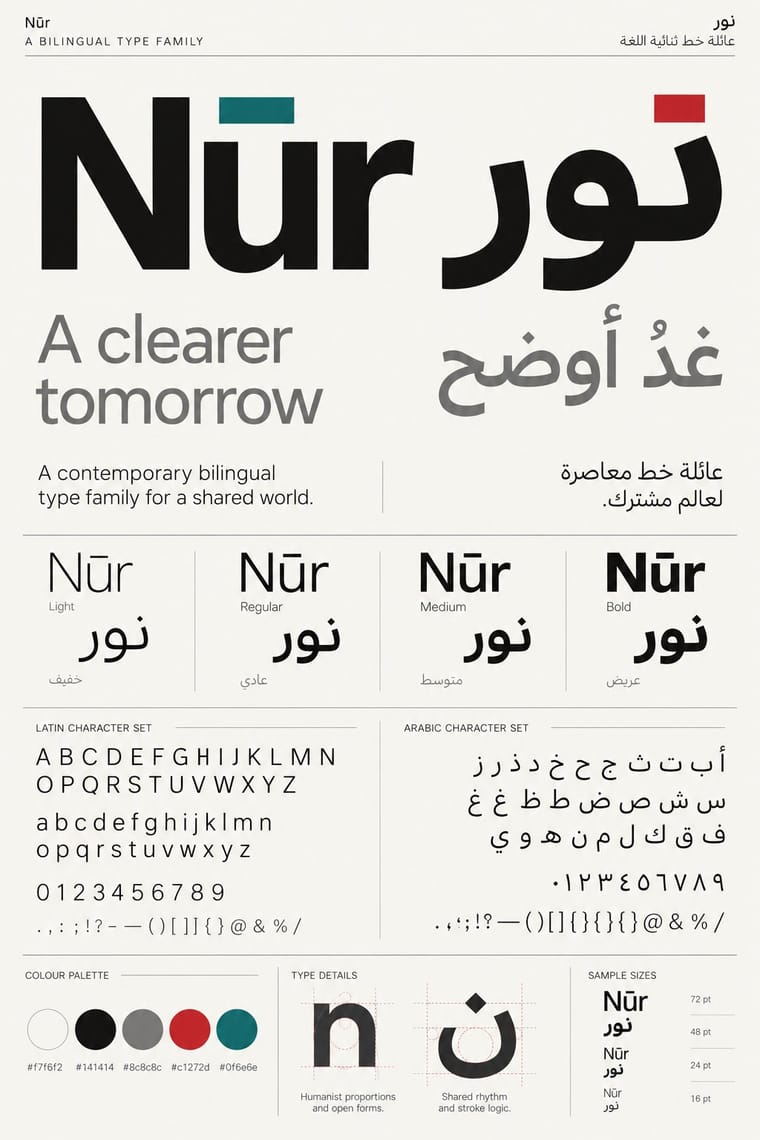
Contemporary Arabic & Dual-Script Type Design
Contemporary Arabic & Dual-Script Type Design is one of Schematic Transit Diagram’s nearest styles by choices; no real work of either fits the other better.
Choices that tell Schematic Transit Diagram and Contemporary Arabic apart Choice Schematic Transit Diagram Contemporary Arabic Full polychrome defining — Typography only — defining Diagram & data defining — Limited spot colours — characteristic Diagonal axis defining — No shared descent in the atlas: they reached these choices separately.
-
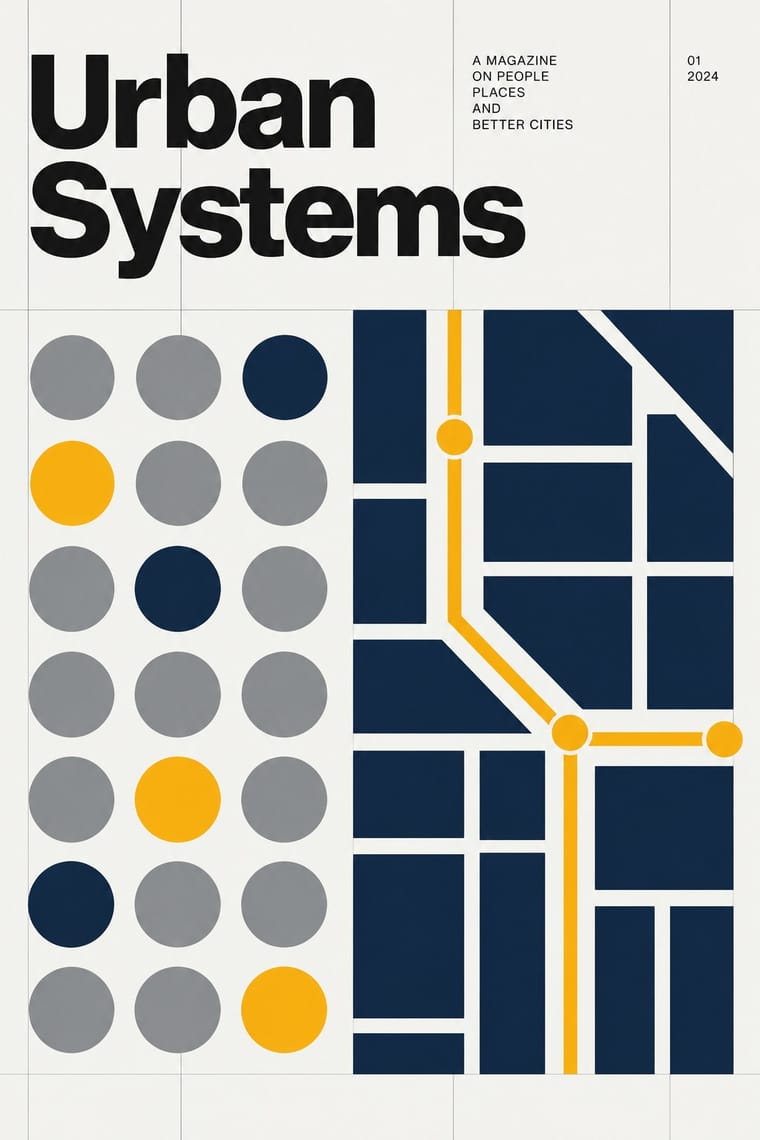
Flat Design
Flat Design is one of Schematic Transit Diagram’s nearest styles by choices; no real work of either fits the other better.
Choices that tell Schematic Transit Diagram and Flat Design apart Choice Schematic Transit Diagram Flat Design Diagram & data defining — Straight photography avoids occasional Diagonal axis defining — Pictogram occasional defining Non-representational characteristic — No shared descent in the atlas: they reached these choices separately.
-
Metro (Microsoft Design Language)
Metro is one of Schematic Transit Diagram’s nearest styles by choices; no real work of either fits the other better.
Choices that tell Schematic Transit Diagram and Metro apart Choice Schematic Transit Diagram Metro Diagram & data defining — Limited spot colours — defining Diagonal axis defining — Extreme scale contrast — defining Measured density defining — No shared descent in the atlas: they reached these choices separately.
-
Isometric Tech Illustration
Isometric Tech Illustration is one of Schematic Transit Diagram’s nearest styles by choices; no real work of either fits the other better.
Choices that tell Schematic Transit Diagram and Isometric Tech Illustration apart Choice Schematic Transit Diagram Isometric Tech Illustration Measured density defining — Geometric primitives — defining Humanist sans defining — Isolated object — defining Full polychrome defining occasional No shared descent in the atlas: they reached these choices separately.
— means the choice isn’t among the style’s recorded choices. Critics recorded each work’s choices with the styles’ descriptions in view, so this shows whether the descriptions hold together, not proof that they are right.
06
Combine it with
Styles Schematic Transit Diagram (Beck Tube Map Idiom) pairs well with or plays against, from the research. Each is worked out as a combination: which style gives the type, the colours and the forms.
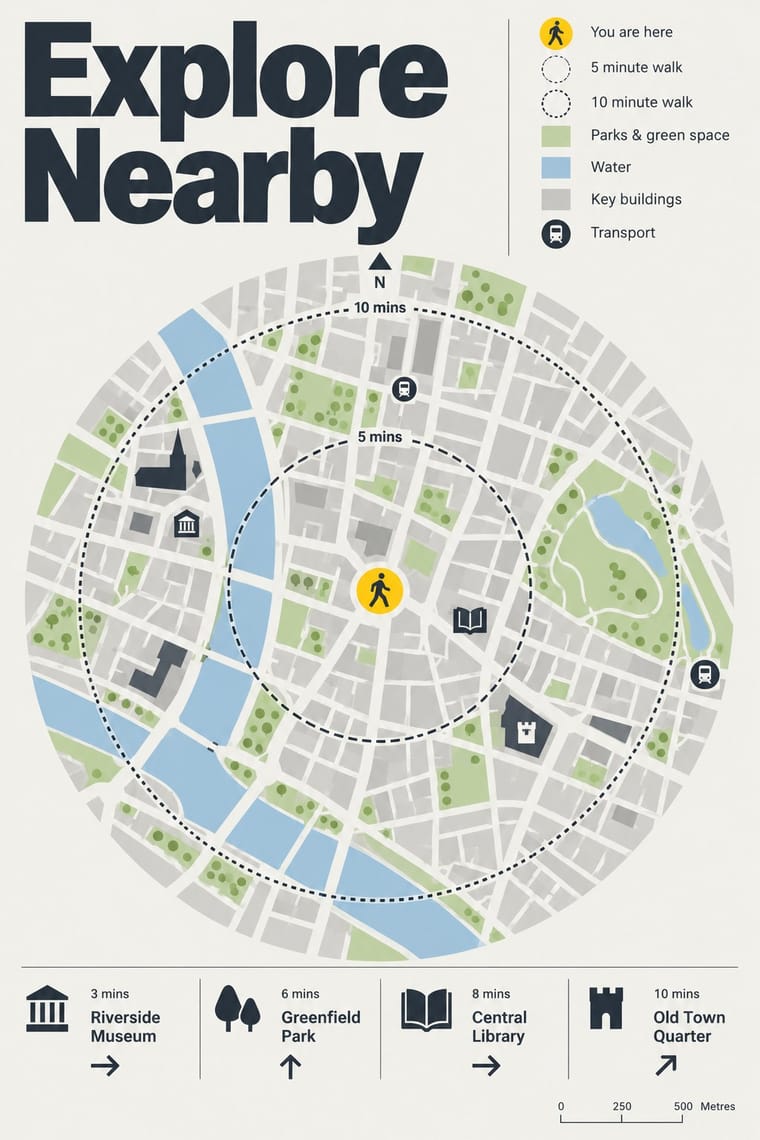
- Isotype Pictorial Statistics Pairs well · Add pictorial statistics beside the diagram to carry quantities as well as connections.
- Legible City Wayfinding (Heads-Up Pedestrian Maps) Pairs well · Pair the schematic network with heads-up street maps so users can move from topology to true geography.
- London Transport Design Pairs well · Set the diagram inside the wider transport identity of roundel, lettering and posters.
07
Sources
How Stylogeny researches and checks a style: where the facts come from.