Traditions & vernacular · 1539–present · Middle East & North Africa
Ebru and Ottoman Marbled Paper
Also known as Turkish marbling, Abri (Persian), Kagaz-e abri, Hatip ebru
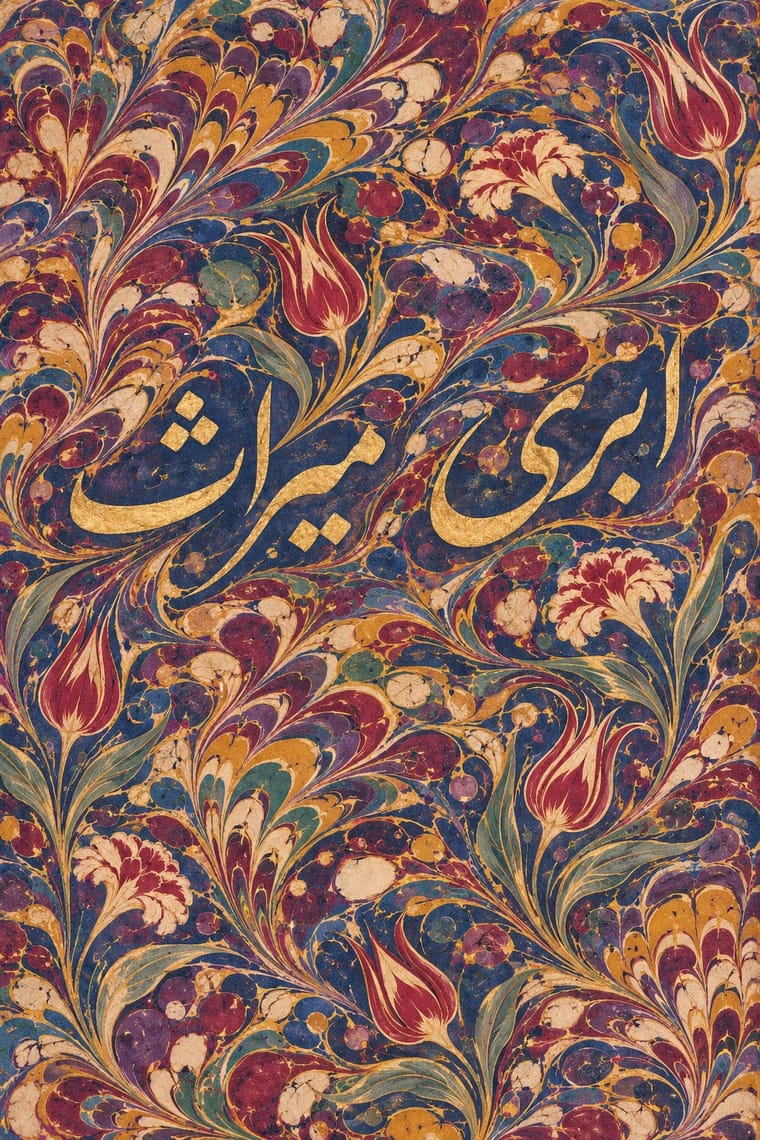
Paper decorated by floating pigments on a viscous size, stirred and combed into flowing, never-repeating veins, then lifted onto a sheet. Used for endpapers, book covers, calligraphy grounds and document margins, it ranges from loose stone and cloud patterns to the motif-built designs credited to Hatip Mehmed Efendi and floral ebru. A living craft inscribed by UNESCO in 2014.
Make something in this style Get advice in this style Mix it with another style
Use it with care
Ebru is a living craft: UNESCO inscribed it on the Representative List of the Intangible Cultural Heritage of Humanity in 2014 for Turkiye, and it is passed on through master-apprentice training that takes at least two years to reach basic skill, so credit the tradition and its masters, and do not sell a digital swirl filter as 'authentic ebru' or a named master's pattern. Marbled grounds may be paired with calligraphy, including sacred text; if you set Qur'anic verses or divine names, keep them uncropped, unmirrored and off disposable surfaces, and have a fluent reader check every word. The craft is also claimed by Iran (abri) and Central Asia, where it is thought to have emerged by the late 15th century (per the Paper marbling source), so say which tradition you draw on.
01
Its picture in other colours
Change a colour and every picture on this page follows. It happens in your browser, from the same pictures: nothing new is made or saved.
Choose a colour to change it
-
#1f3a5f -
#8c2f39 -
#c9a24a -
#2f6f62 -
#e9dfc9 -
#4b2e5a
A faded colour isn’t in these pictures, so changing it changes nothing.
Light and dark stay where they are; greys hardly move.
More colours: any style’s, or your own
The pictures show the style’s own colours.
02
Make something in this style
Say what you need, and Stylogeny’s image studio draws it from Ebru and Ottoman Marbled Paper’s design choices and checks it against them. It takes about a minute, and you get a link to share.
03
How it works
Palette
-
#1f3a5fink · 11% -
#8c2f39accent · 13% -
#c9a24aground · 16% -
#2f6f62not in its pictures -
#e9dfc9accent · 2% -
#4b2e5anot in its pictures
Shares measured from its picture. The ground is what the pictures sit on (of the colours covering most, the most neutral), the ink stands out from it most, the rest are accents.
Typefaces
-
Dîvânî and celî dîvânî
Ottoman chancery calligraphy
-
Sülüs and nesih calligraphy
-
Nastaʿlīq
Persian abri tradition
- Float the colour on a thickened size and let the liquid carry the pattern; steer it with combs, rakes and styluses rather than drawing it.
- Accept that no sheet repeats: design the process and the palette, not the exact image.
- Fill the whole sheet with flowing colour, using the paper as a ground for text or a binding.
- Build figurative flowers, tulips and leaves from single drops and stylus strokes.
- Keep inks to a few deep, mineral tones that spread and veil into each other.
- Reserve a space for calligraphy, set in gum-arabic resist or written over the marbled field.
Where and when Greater Iran and Central Asia, where the method is thought to have emerged by the late 15th century, and later Ottoman Turkey.
Greater Iran and Central Asia, where the method is thought to have emerged by the late 15th century, and later Ottoman Turkey. The earliest Ottoman marbling cited is the marbled margins of a cut-paper manuscript of Arifi's Halnama, completed in 1539-40 by Mehmed bin Gazanfer, which may be the earliest Ottoman example. Recipes attributed to a master named Shebek appear in the anonymous Tertib-i Risale-i Ebri (after 1615). Hatip Mehmed Efendi (d. 1773) is credited by many in Turkey with the motif-based 'Hatip' designs. The current Turkish tradition is dated to the mid-19th century, tied to a Naqshbandi lodge at Sultantepe near Uskudar. Necmeddin Okyay (1885-1976) taught it at the Fine Arts Academy in Istanbul and is associated with yazili ebru; Mustafa Duzgunman (1920-1990) was his premier student. The modern Turkish word ebru comes from Persian abri, 'clouded paper'.
Change it with an idea. Any of the 73 moves that make a design say something can go on this style.
04
Its design choices
From Stylogeny’s vocabulary of design choices: defining choices make the style, characteristic ones are usual, occasional ones turn up now and then.
- Layout & composition
- Space & hierarchy
- Typography
- Colour
- Form & shape
- Surface & texture
- Ornament
- Medium & production
- Tone & intent
- Avoids
- Modular grid, Rectilinear, Geometric primitives, Ornament-free, Geometric tessellation, Flat, Flat fields, Grotesque & neo-grotesque, Technological & futurist, Offset printing
How its pictures are made Systematic
Kind of picture: Systematic
Known for
-
Marbled margins of the Halnama manuscript of Arifi, completed 1539-40 by Mehmed bin Gazanfer
-
Designs credited by many in Turkey to Hatip Mehmed Efendi
d. 1773
-
Necmeddin Okyay (1885-1976), who taught at the Fine Arts Academy and is associated with yazili ebru
-
Mustafa Duzgunman (1920-1990), Okyay's premier student, and the traditional pattern repertoire
-
Marbled endpapers and book bindings of the Ottoman bookbinding trade
05
Where it comes from, and what it’s close to
Borrowed from
Ebru and Ottoman Marbled Paper 1539–present
No later style in the atlas grew out of it yet.
Alike in its design choices
06
Combine it with
Styles Ebru and Ottoman Marbled Paper pairs well with or plays against, from the research. Each is worked out as a combination: which style gives the type, the colours and the forms.
- Ottoman Tughra & Dîvânî Chancery Calligraphy Pairs well · Marbled paper is a traditional ground for calligraphy; set a commissioned line of calligraphy over or inside a marbled field.
- Islamic Geometric & Calligraphic Tradition Contrasts · Rigid tessellation against drifting liquid pattern: a counterpoint, not an ancestor.
- Persian Miniature (Ilkhanid, Timurid and Safavid Book Painting) Pairs well · Both come from the Persianate book arts; use marbled margins around painted pages or text.
- Batik Pattern Tradition Pairs well · Another craft where resist and fluid colour produce unrepeatable flowing surfaces.
- Psychedelic Poster Contrasts · Swirling fluid colour with the opposite intent: the marbler's inks stay deep, quiet and bookish.
- Ottoman Tezhip & Saz Illumination Pairs well · Marbled end papers and borders sit beside gold illumination in the same book; use ebru for fluid colour and tezhip for fine line.
07
Often taken for
Stylogeny checks the choices recorded in Ebru and Ottoman Marbled Paper’s one real work against all 702 styles. None fits its own choices best.
One fits best a style outside Ebru and Ottoman Marbled Paper’s nearest: Folio Decorated with Marbling (Auricular Ornament, a style 21% alike). A work like that is unusual for its style, or shows a side of it the recorded choices miss; it doesn’t make the two styles alike.
Most of its works fit other styles clearly better, so its recorded choices may be too narrow; the real works are the better guide.
-
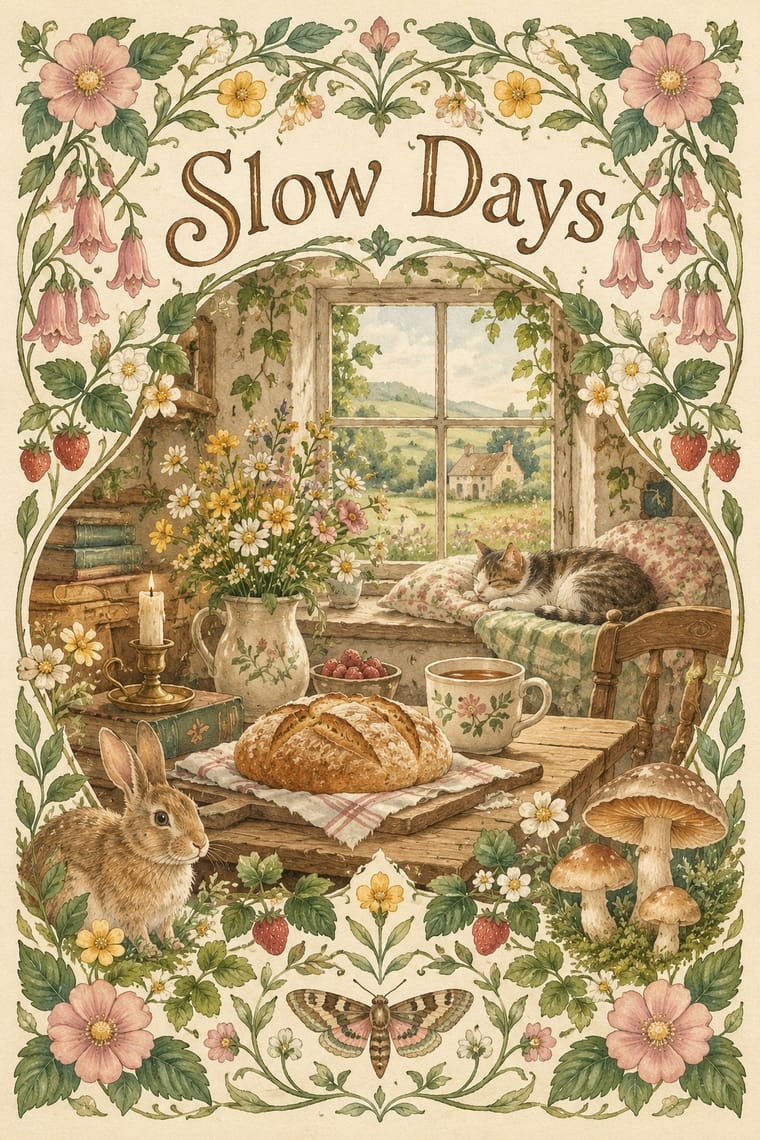
Cottagecore
Cottagecore is one of Ebru and Ottoman Marbled Paper’s nearest styles by choices; no real work of either fits the other better.
Choices that tell Ebru and Ottoman Marbled Paper and Cottagecore apart Choice Ebru and Ottoman Marbled Paper Cottagecore Jewel & metallic defining — Light ground — characteristic All-over field defining — Pastel — characteristic Gradients characteristic — No shared descent in the atlas: they reached these choices separately.
-
Hurufiyya Calligraphic Modernism
Hurufiyya Calligraphic Modernism is one of Ebru and Ottoman Marbled Paper’s nearest styles by choices; no real work of either fits the other better.
Choices that tell Ebru and Ottoman Marbled Paper and Hurufiyya Calligraphic Modernism apart Choice Ebru and Ottoman Marbled Paper Hurufiyya Calligraphic Modernism Jewel & metallic defining occasional Repetition & rhythm — defining Pattern & repeat defining occasional Geometric tessellation avoids occasional Gradients characteristic — No shared descent in the atlas: they reached these choices separately.
-
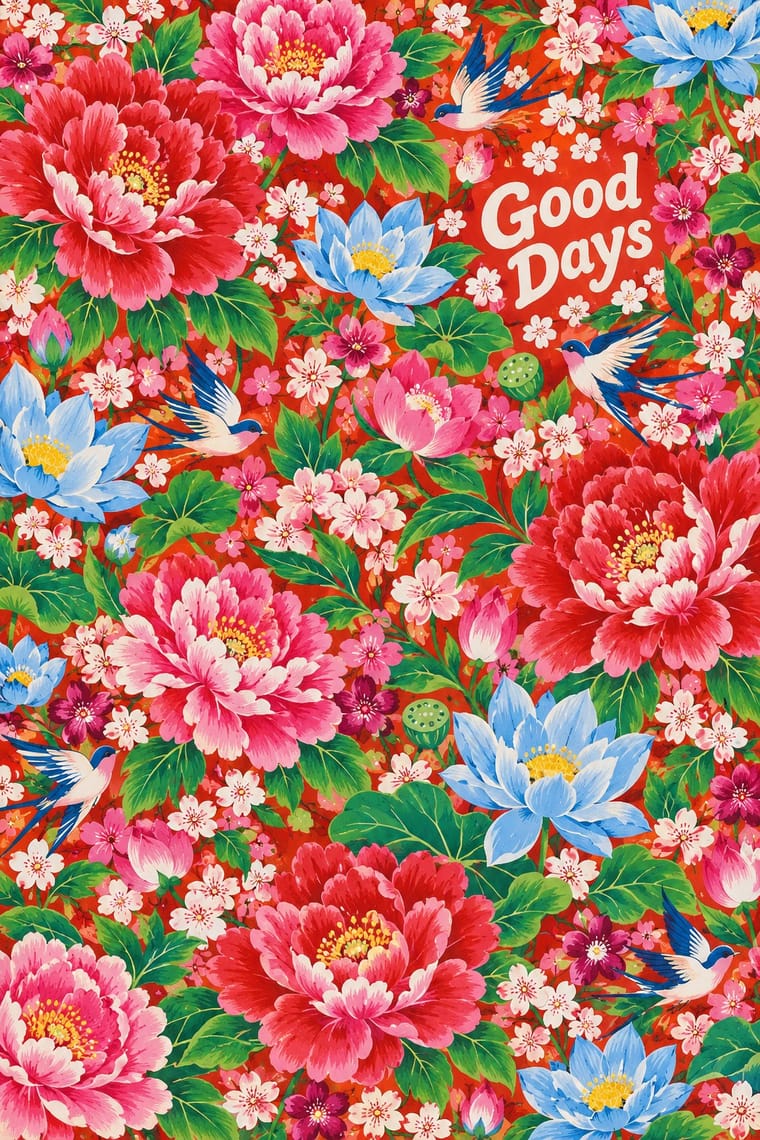
Taiwan Floral Cloth (Huabu)
Taiwan Floral Cloth is one of Ebru and Ottoman Marbled Paper’s nearest styles by choices; no real work of either fits the other better.
Choices that tell Ebru and Ottoman Marbled Paper and Taiwan Floral Cloth apart Choice Ebru and Ottoman Marbled Paper Taiwan Floral Cloth Non-representational characteristic avoids Flat fields avoids characteristic Jewel & metallic defining — Flat avoids characteristic Organic flow defining — No shared descent in the atlas: they reached these choices separately.
-
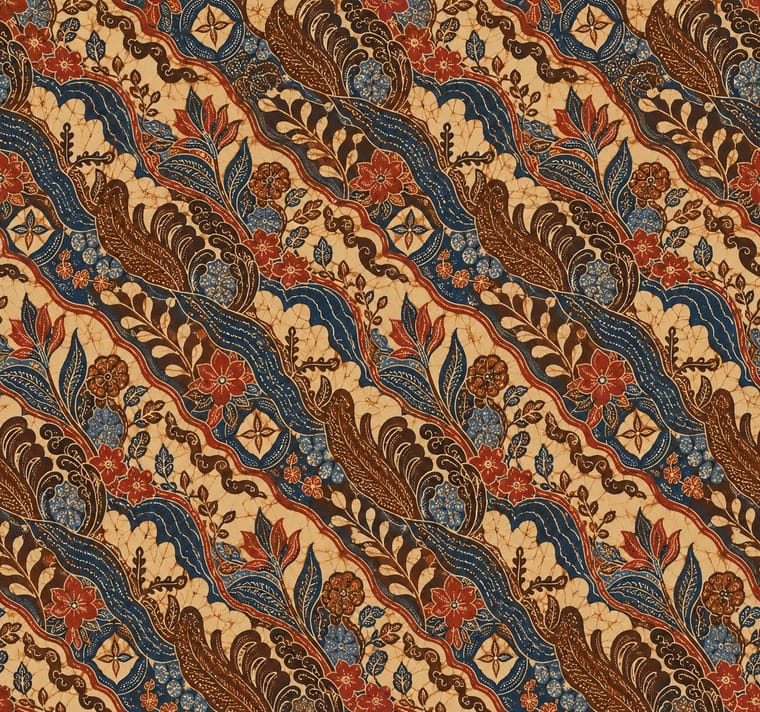
Batik Pattern Tradition
Batik Pattern Tradition is one of Ebru and Ottoman Marbled Paper’s nearest styles by choices; no real work of either fits the other better.
Choices that tell Ebru and Ottoman Marbled Paper and Batik Pattern Tradition apart Choice Ebru and Ottoman Marbled Paper Batik Pattern Tradition Jewel & metallic defining — Flat fields avoids characteristic Organic flow defining — Geometric tessellation avoids characteristic Naturalistic depiction occasional avoids No shared descent in the atlas: they reached these choices separately.
— means the choice isn’t among the style’s recorded choices. Critics recorded each work’s choices with the styles’ descriptions in view, so this shows whether the descriptions hold together, not proof that they are right.
08
Real works
Artefacts in museums, libraries and archives that show the style, linked at their source.
- Folio Decorated with Marbling 18th century · The Metropolitan Museum of Art
09
Sources
- https://en.wikipedia.org/wiki/Paper_marbling
- https://ich.unesco.org/en/RL/ebru-turkish-art-of-marbling-00644
How Stylogeny researches and checks a style: where the facts come from.