Style combination · Pairs well
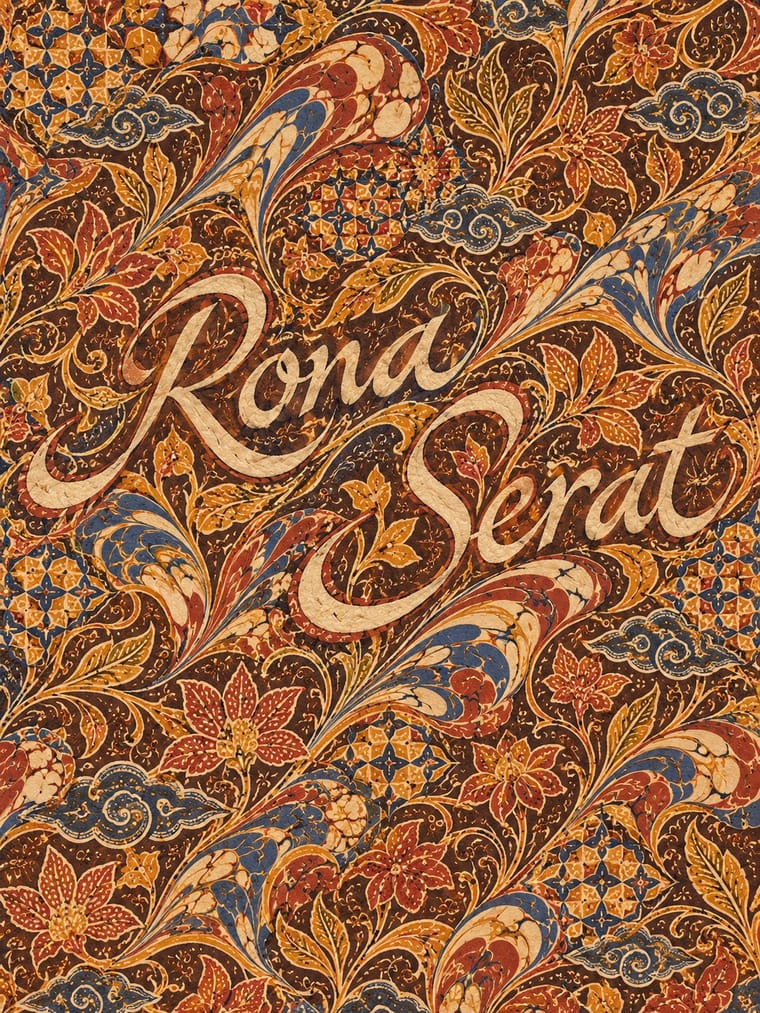
Batik Pattern Tradition × Ebru and Ottoman Marbled Paper
Another craft where resist and fluid colour produce unrepeatable flowing surfaces.
Mix them and make something Batik Pattern Tradition Ebru and Ottoman Marbled Paper
01
What each style brings
Each part of the design comes from the style with the stronger say in it, and each style gives at least two.
Batik Pattern Tradition Ebru and Ottoman Marbled Paper
- Type from Ebru and Ottoman Marbled Paper
-
- Colour from Batik Pattern Tradition
- Form from Batik Pattern Tradition
- Composition from Batik Pattern Tradition
- Surface from Ebru and Ottoman Marbled Paper
02
The type
Open fonts standing in for each style’s own type, which is often hand-drawn or commercial.
Display · Ebru and Ottoman Marbled Paper
Quiet
Rakkas, standing in for Nastaʿlīq (Persian abri tradition)
Text · Batik Pattern Tradition
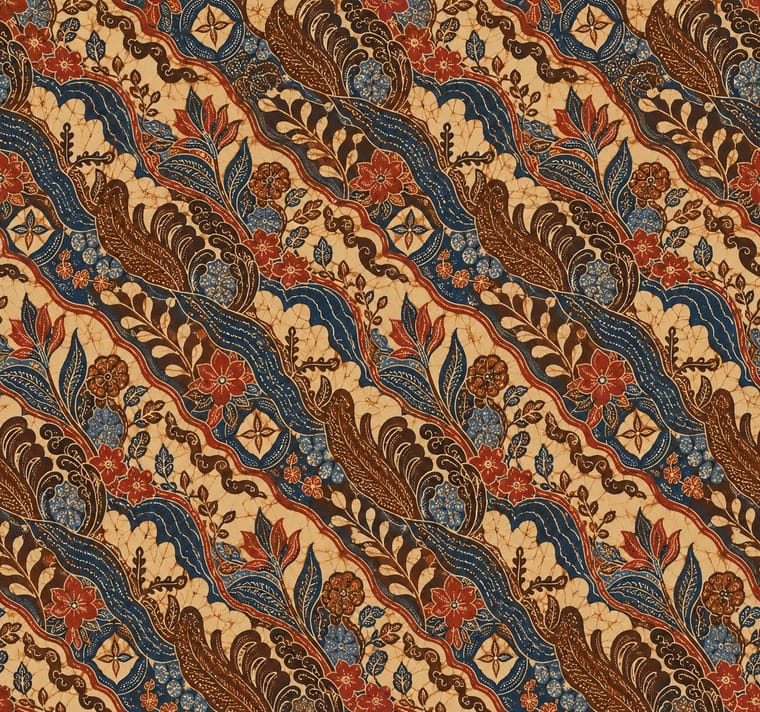
The Javanese wax-resist textile tradition in which hot wax is drawn with a canting or stamped with a copper cap, then dyed in successive baths to build layered all-over patterns. Court batik of Yogyakarta and Surakarta keeps to indigo, soga brown and cream with diagonal parang and four-lobed kawung repeats; north-coast batik absorbs Chinese, Dutch and Arab motifs in brighter colour.
EB Garamond; Batik Pattern Tradition used Arabic calligraphy of batik besurek (Bengkulu) and Cirebon and Signed Latin script of batik Belanda workshops
03
The colours
The ground and leading colours come from Batik Pattern Tradition, with a counter-accent from Ebru and Ottoman Marbled Paper. The ink reads on the ground at 4.5:1 or more.
Batik Pattern Tradition Ebru and Ottoman Marbled Paper
-
#2a1c14ground · 36% -
#ecdcbcink · 14% -
#a6322baccent · 18% -
#c9a24aaccent · 14% -
#2c6aa0accent · 10% -
#6b3e1eaccent · 8%
As CSS
:root {
  --ground: #2a1c14;
  --ink: #ecdcbc;
  --accent-1: #a6322b;
  --accent-2: #c9a24a;
  --accent-3: #2c6aa0;
  --accent-4: #6b3e1e;
  --font-display: "Rakkas", cursive;
  --font-text: "EB Garamond", serif;
}
Use it with care
Batik Pattern Tradition: Batik is inscribed by UNESCO as Indonesian intangible cultural heritage (2009), and some court motifs such as parang rusak were historically reserved for royalty and carry philosophical meanings. Learn a motif's meaning before using it, credit the region and makers, and do not market printed batik-look fabric as hand-drawn or stamped batik.
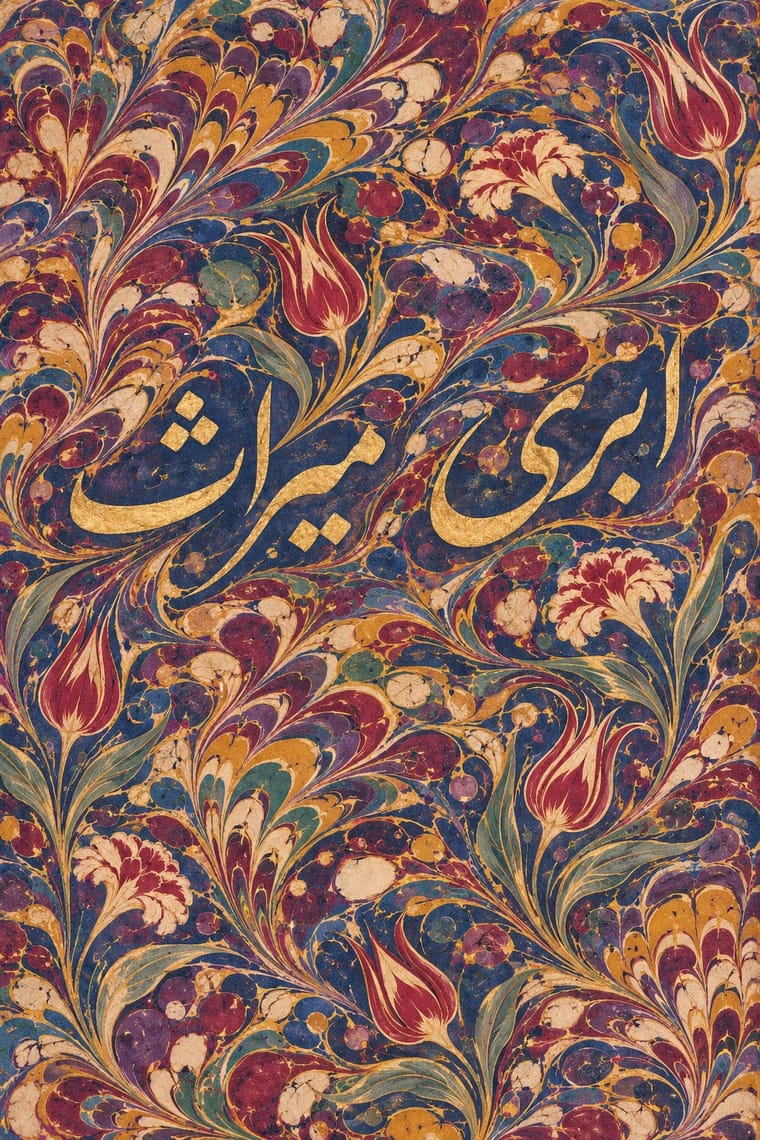
Ebru and Ottoman Marbled Paper: Ebru is a living craft: UNESCO inscribed it on the Representative List of the Intangible Cultural Heritage of Humanity in 2014 for Turkiye, and it is passed on through master-apprentice training that takes at least two years to reach basic skill, so credit the tradition and its masters, and do not sell a digital swirl filter as 'authentic ebru' or a named master's pattern. Marbled grounds may be paired with calligraphy, including sacred text; if you set Qur'anic verses or divine names, keep them uncropped, unmirrored and off disposable surfaces, and have a fluent reader check every word. The craft is also claimed by Iran (abri) and Central Asia, where it is thought to have emerged by the late 15th century (per the Paper marbling source), so say which tradition you draw on.
04
The two styles
05
More combinations
With Batik Pattern Tradition
- Islamic Geometric & Calligraphic Tradition Pairs well · Coastal batik already absorbs Arabic script and geometric lattices; combine the two for pattern that is both structured and hand-made.
- Minimalist Graphic Design Contrasts · Crop a single batik motif onto a large empty field to show its line quality instead of drowning a minimal layout in pattern.
- Art Nouveau Pairs well · Dutch Nieuwe Kunst designers such as Chris Lebeau worked in batik; pair its vegetal repeats with Art Nouveau linework for book covers and textiles.
- Psychedelic Poster Pairs well · Crackle texture and layered dyes suit psychedelic colour; keep batik's dense all-over repeat as the structure underneath.
- Guna Mola Contrasts · Batik builds pattern by resist-dyeing, molas by cutting and sewing; never render a mola as a printed texture, because the stepped, stitched edge is the whole point.
- Nieuwe Kunst (Dutch Art Nouveau) Pairs well · Its direct source: Dutch designers used wax-resist dyeing for covers in cotton, velvet and parchment; pair a constructed Nieuwe Kunst repeat with real batik colour layering, and credit the Javanese craft.
- Javanese Wayang Kulit (Tatah Sungging) Pairs well · Both are court arts of Yogyakarta and Surakarta; set one coded figure against batik's all-over repeat to pair a single focus with a patterned field.
- Mithila (Madhubani) Painting Contrasts · Batik spreads a resist-dyed repeat evenly across cloth; Mithila builds a unique, hand-drawn composition around a centre and closes it with borders. Borrow one or the other, not both, to keep pattern and picture distinct.
With Ebru and Ottoman Marbled Paper
- Ottoman Tughra & Dîvânî Chancery Calligraphy Pairs well · Marbled paper is a traditional ground for calligraphy; set a commissioned line of calligraphy over or inside a marbled field.
- Islamic Geometric & Calligraphic Tradition Contrasts · Rigid tessellation against drifting liquid pattern: a counterpoint, not an ancestor.
- Persian Miniature (Ilkhanid, Timurid and Safavid Book Painting) Pairs well · Both come from the Persianate book arts; use marbled margins around painted pages or text.
- Psychedelic Poster Contrasts · Swirling fluid colour with the opposite intent: the marbler's inks stay deep, quiet and bookish.
- Ottoman Tezhip & Saz Illumination Pairs well · Marbled end papers and borders sit beside gold illumination in the same book; use ebru for fluid colour and tezhip for fine line.