Style combination · Pairs well
Ebru and Ottoman Marbled Paper × Ottoman Tezhip
Marbled end papers and borders sit beside gold illumination in the same book; use ebru for fluid colour and tezhip for fine line.
Mix them and make something Ebru and Ottoman Marbled Paper Ottoman Tezhip
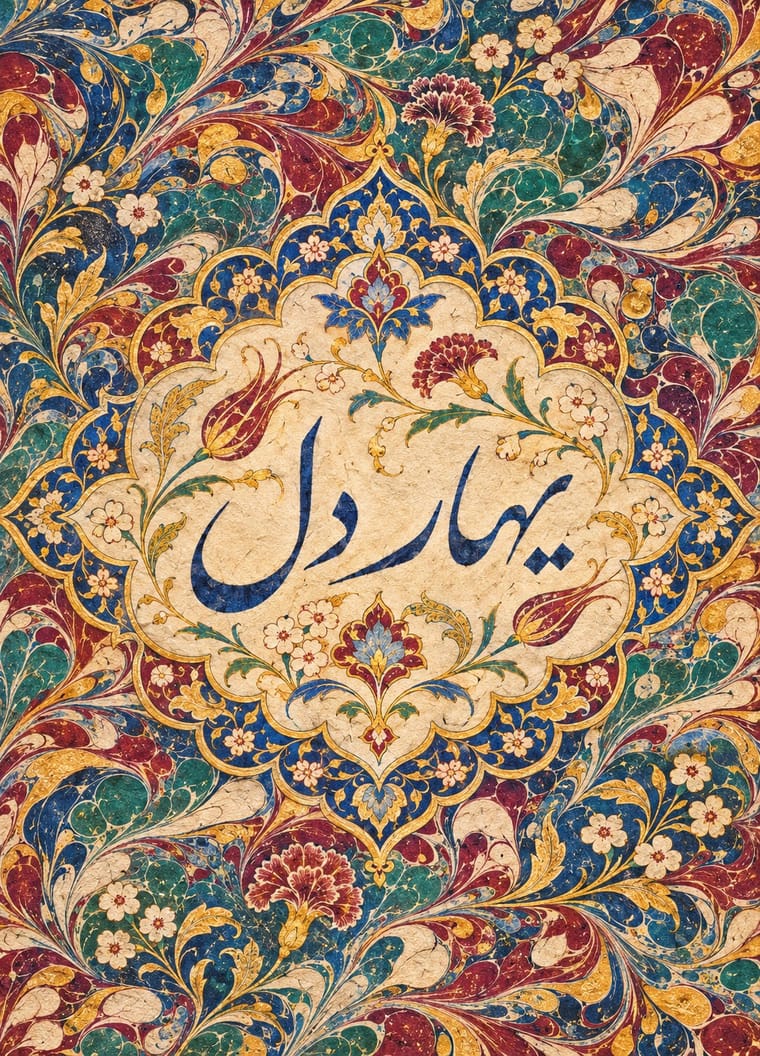
01
What each style brings
Each part of the design comes from the style with the stronger say in it, and each style gives at least two.
Ebru and Ottoman Marbled Paper Ottoman Tezhip & Saz Illumination
- Type from Ottoman Tezhip
- Colour from Ebru and Ottoman Marbled Paper
- Form from Ottoman Tezhip
- Composition from Ebru and Ottoman Marbled Paper
- Surface from Ebru and Ottoman Marbled Paper
02
The type
Open fonts standing in for each style’s own type, which is often hand-drawn or commercial.
Text · Ebru and Ottoman Marbled Paper
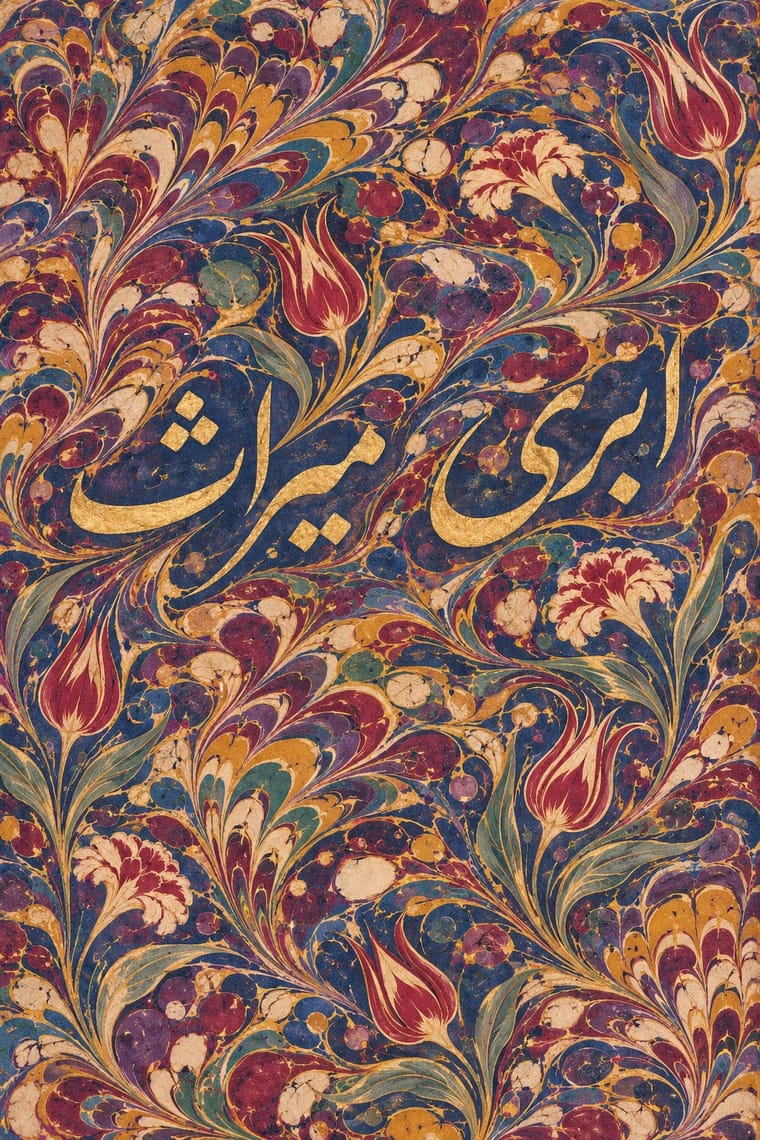
Paper decorated by floating pigments on a viscous size, stirred and combed into flowing, never-repeating veins, then lifted onto a sheet. Used for endpapers, book covers, calligraphy grounds and document margins, it ranges from loose stone and cloud patterns to the motif-built designs credited to Hatip Mehmed Efendi and floral ebru. A living craft inscribed by UNESCO in 2014.
EB Garamond; Ebru and Ottoman Marbled Paper used Dîvânî and celî dîvânî and Sülüs and nesih calligraphy
03
The colours
The ground and leading colours come from Ebru and Ottoman Marbled Paper, with a counter-accent from Ottoman Tezhip. The ink reads on the ground at 4.5:1 or more.
Ebru and Ottoman Marbled Paper Ottoman Tezhip & Saz Illumination
-
#e9dfc9ground · 39% -
#1f3a5fink · 15% -
#c9a24aaccent · 20% -
#8c2f39accent · 15% -
#2f6f62accent · 11%
As CSS
:root {
  --ground: #e9dfc9;
  --ink: #1f3a5f;
  --accent-1: #c9a24a;
  --accent-2: #8c2f39;
  --accent-3: #2f6f62;
  --font-display: "Rakkas", cursive;
  --font-text: "EB Garamond", serif;
}
Use it with care
Ebru and Ottoman Marbled Paper: Ebru is a living craft: UNESCO inscribed it on the Representative List of the Intangible Cultural Heritage of Humanity in 2014 for Turkiye, and it is passed on through master-apprentice training that takes at least two years to reach basic skill, so credit the tradition and its masters, and do not sell a digital swirl filter as 'authentic ebru' or a named master's pattern. Marbled grounds may be paired with calligraphy, including sacred text; if you set Qur'anic verses or divine names, keep them uncropped, unmirrored and off disposable surfaces, and have a fluent reader check every word. The craft is also claimed by Iran (abri) and Central Asia, where it is thought to have emerged by the late 15th century (per the Paper marbling source), so say which tradition you draw on.
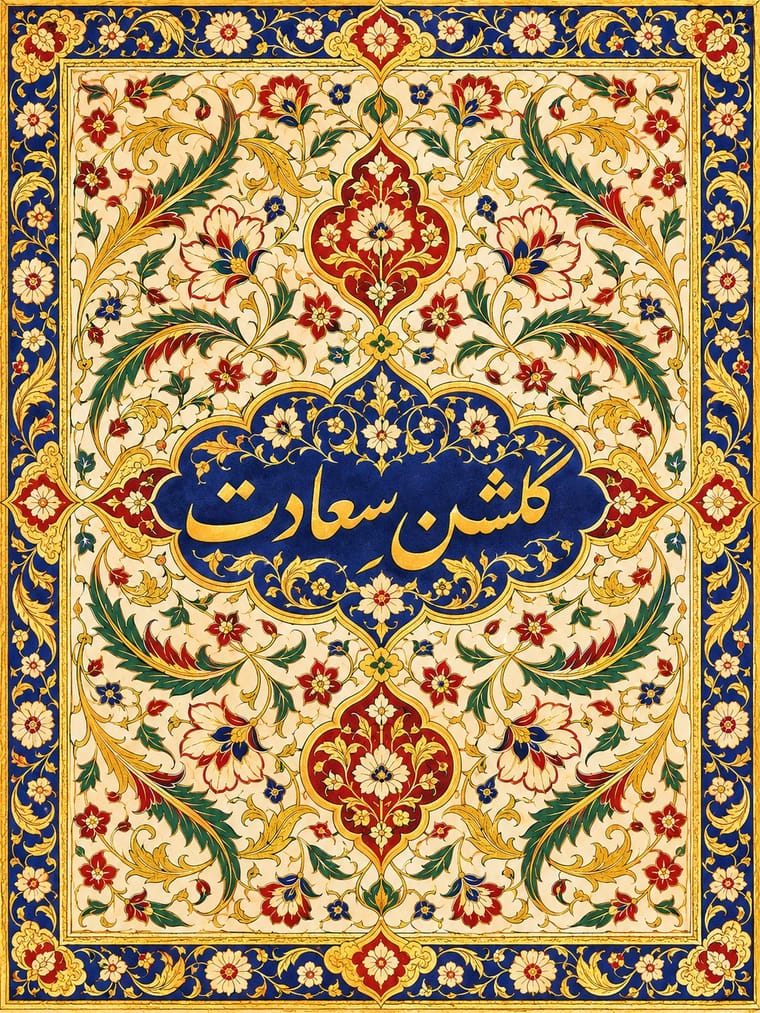
Ottoman Tezhip & Saz Illumination: Tezhip is a living craft taught by master-apprentice lineages and at institutions in Turkey, and it frames Qur'ans, hilye panels and other sacred texts: never crop, flip or distort illuminated sacred pages, keep them off throwaway surfaces, and commission a trained müzehhip for work that claims to belong to the tradition rather than imitating it as a generic 'oriental' pattern. Because it also adorned imperial edicts, it can read as a claim to Ottoman rule where that rule is remembered as conquest, so consider how the audience will read it.
04
The two styles
05
More combinations
With Ebru and Ottoman Marbled Paper
- Ottoman Tughra & Dîvânî Chancery Calligraphy Pairs well · Marbled paper is a traditional ground for calligraphy; set a commissioned line of calligraphy over or inside a marbled field.
- Islamic Geometric & Calligraphic Tradition Contrasts · Rigid tessellation against drifting liquid pattern: a counterpoint, not an ancestor.
- Persian Miniature (Ilkhanid, Timurid and Safavid Book Painting) Pairs well · Both come from the Persianate book arts; use marbled margins around painted pages or text.
- Batik Pattern Tradition Pairs well · Another craft where resist and fluid colour produce unrepeatable flowing surfaces.
- Psychedelic Poster Contrasts · Swirling fluid colour with the opposite intent: the marbler's inks stay deep, quiet and bookish.
With Ottoman Tezhip
- Ottoman Tughra & Dîvânî Chancery Calligraphy Pairs well · The tughra is the calligraphic sign that illumination frames; pair a tezhip headpiece with a calligraphic panel.
- Persian Miniature (Ilkhanid, Timurid and Safavid Book Painting) Contrasts · Miniatures tell scenes with figures; tezhip frames text with ornament and, in the saz style, mythical beasts rather than narrative scenes. Ottoman illumination grew from Persian practice (Şahkulu trained with Persian artists), so pair them when a book needs both image and frame.
- Armenian Manuscript Illumination Contrasts · Armenian manuscripts mix human figures and ornament in polychrome; tezhip keeps human figures and narrative scenes out of the main field, so choose it when the page should carry mainly ornament.
- Islamic Geometric & Calligraphic Tradition Contrasts · The parent builds on girih and calligraphic geometry; tezhip uses curving vegetal scrolls. Use geometry for rigid structure and tezhip for flowing, floral richness.
- Art Nouveau Pairs well · Both turn plant stems into sinuous lines; borrow saz curves for a floral Art Nouveau frame, but keep tezhip's gold and flipped symmetry.