Medium & production · Environment & craft
Textile & craft
Weaving, dyeing, embroidery and applied craft.
A design choice in Stylogeny’s vocabulary, under medium & production: what technology shaped it?
- styles make it
- 81
- as a defining choice
- 19
- as a usual one
- 25
- now and then
- 37
- avoid it
- 0
Styles defined by it 19
For these styles it is one of the choices that make the style.
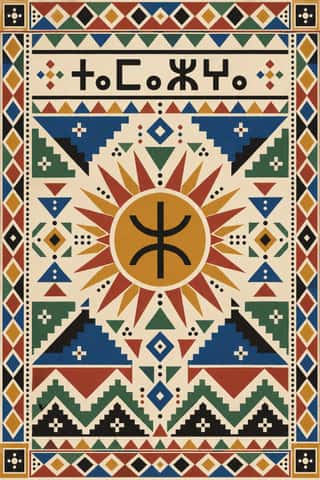


- Sápmi Graphic Identity (Duodji & Gákti Colour Code)Duodji is Sámi handicraft: hard work in wood, horn and bone, soft work in skin and cloth; drums painted with alder-bark figures survive from the 17th and 18th centuries.
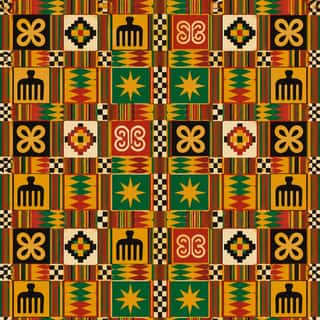
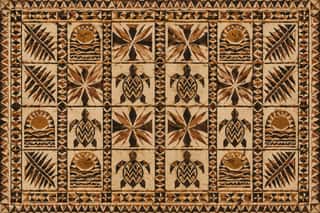
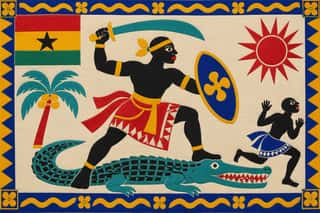
- African Wax & Fancy PrintIndustrially printed cotton made for West and Central African markets, first by Dutch and British mills that imitated Javanese batik with resin resist, and later by African mills.
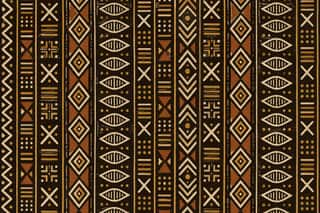
- Norwegian and Finnish National Romantic Graphics (Munthe & Karelianism)The flat, decorative branch of Norway's and Finland's national romanticism, which turned Viking carving, the sagas, the Kalevala and old peasant weaving into modern ornament.

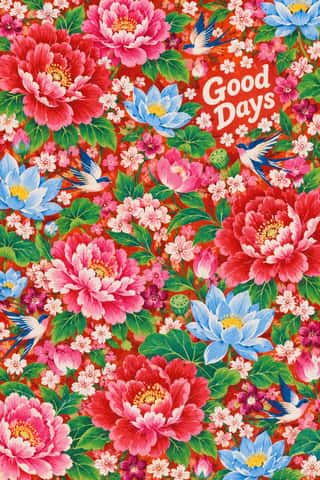
- Guna MolaThe reverse-appliqué blouse panels of Guna women in Panama, made by cutting through two to seven stacked layers of cotton so that every shape is ringed by echoing bands of the colours beneath.
- Ultras Graphics (Curva Banners and Tifo)The graphic language of Italy's organised football supporters, the ultras, from the late 1960s, and of the groups that copied them across Europe, North Africa and beyond.


Styles that often use it 25
A characteristic choice: usual in these styles, though not essential.
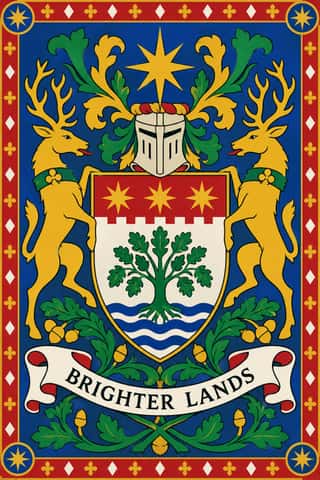
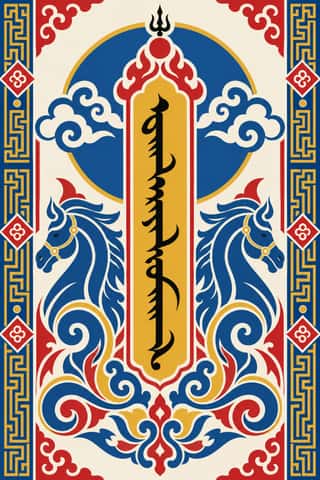

- Tibetan Woodblock Print Culture (Pecha & Prayer Flags)Tibetan Buddhist and Bön woodblock printing, from the first printed Kangyur (1410, cut in China) and the 15th-century presses of Gungthang to the great printing houses of Narthang, Derge and Lhasa.
- Javanese Wayang Kulit (Tatah Sungging)The visual language of Javanese shadow puppets: flat figures cut from buffalo parchment, with head and legs in profile, shoulders turned to the front and long jointed arms worked by horn rods.
- Kōwhaiwhai & Toi Māori DesignToi Māori, the visual arts of the tangata whenua of Aotearoa, of which kōwhaiwhai, the painted scroll patterns of paddles and meeting-house rafters, is the most graphic strand.


- Northwest Coast Formline DesignThe two-dimensional design system of the northern Northwest Coast nations, painted, carved and woven onto boxes, house fronts, robes and hats, and printed as serigraphs since the 1960s.
- Thai Yantra (Yant) DiagramsThai protective diagrams in which Pali formulae, written in Khom, a sacred script derived from Khmer, are packed into squares, circles, triangles, spires and the outlines of Buddhas, monks and tigers, often framed by lines of script.
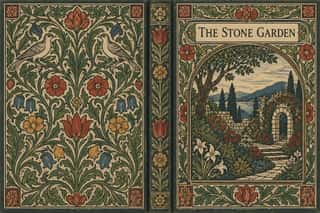
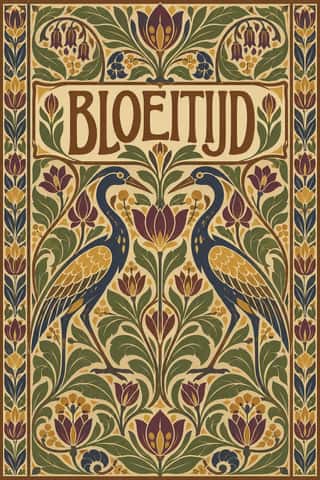

- Bezalel SchoolThe house style of the Bezalel School of Arts and Crafts, opened in Jerusalem by Boris Schatz in 1906 with E.
- Ndebele Geometric PaintingThe mural tradition of Southern Ndebele women, who paint homestead walls and gateways, and later canvases and objects, with bold, symmetrical geometric designs.


- Indian Pop-Kitsch Design (Desi Kitsch)Urban Indian gift and T-shirt design from the late 1990s into the 2010s that recasts the street and bazaar as ironic, affectionate icons: truck tails and 'Horn OK Please', auto-rickshaws, Ambassadors and Chetaks, cutting chai, old Bollywood stills and dialogues, Bhagat Singh in place of Che.
- Contemporary Chinese Book Design ('Most Beautiful Books of China')Chinese book design since 2003, when Shanghai founded the yearly 'Most Beautiful Books of China' award, whose winners go on to Leipzig.


- Palestinian Watermelon and Keffiyeh GraphicsGraphics of Palestinian identity and of solidarity with Palestinians, made by Palestinian artists, the diaspora and supporters worldwide and shared mainly online, above all since the Gaza war began in October 2023.


Styles that use it now and then 37
An occasional choice in these styles.
- Islamic Geometric & Calligraphic Traditionc. 690–present
- Mithila (Madhubani) Paintingc. 1350–present
- Zoomorphic & Figural Calligraphy (Islamic Calligrams)1500–present
- Chaekgeori & Minhwa Screen Painting1776–present
- Edo-moji Commercial Lettering (Kanteiryū, Yose-moji, Sumō-ji)1779–present
- Japonisme1860–1910
- Celtic Revival Illumination & Lettering1861–1951
- Spanish Bullfight Poster (Cartel Taurino)1879–present
- Glasgow Style1890–1914
- Taishō Roman & Lyrical Illustration1910–1940
- Suprematism1915–1925
- Bauhaus1919–1933
- Scandinavian Functionalism1930–present
- Tiki Pop (Polynesian Pop)1934–present
- Pakistani Truck Art1947–present
- Op Art Graphics1960–1975
- Baybayin Revival Graphics1963–present
- Mexico 68 Olympic & Metro Identity1966–1970
- Munich 1972 Olympic Design (Otl Aicher)1966–1972
- Picó Sound-System Painting (Colombian Caribbean)1967–present
- AfriCOBRA1968–present
- Kawaii Design1970–present
- Warli Painting1970–present
- Australian Poster Collective Screenprints1971–1994
- Western Desert Iconography1971–present
- NSK Retro-Avant-Garde1980–present
- Solidarność & Polish Underground Graphics1980–1989
- Ghanaian Movie Poster1985–2005
- Superflat1993–present
- Indonesian Woodcut Activism (Taring Padi)1998–present
- Glitch Art & Datamosh Graphics2001–present
- Modern Calligraphy and Brush Lettering2005–present
- Oaxacan Protest Printmaking & Street Graphics (ASARO)2006–present
- Syrian Revolution Graphics (Kafranbel Banners & Poster Collectives)2011–2024
- Data Humanism2014–present
- Hong Kong Protest Art (Umbrella Movement to the 2019–20 Protests)2014–2020
- Ukrainian Wartime Graphics (Saint Javelin, War Stamps and Be Brave Like Ukraine)2022–present
It often goes with
Choices that the styles making it make more often than the atlas as a whole.
- Pattern & repeatin 51 of 81
- Folk & sacred symbolsin 55 of 81
- All-over fieldin 41 of 81
- Repetition & rhythmin 61 of 81
- Geometric tessellationin 31 of 81
- Abundant decorationin 37 of 81