Traditions & vernacular · 2000–present · South Asia
Tamil Nadu Flex Banners
Also known as Flex boards, Flex banners, Digital banners, Banner culture, Fan-club banners
The digitally printed vinyl boards, locally called flex banners, that fan clubs, party cadres, businesses and families have put up along the roads of Tamil Nadu since about 2000, as flex displaced hand-painted cinema banners and cut-outs over the following decade. Laid out in Photoshop or Corel software by local studios, a board sets a towering photographic star or leader on a film still, a saturated gradient or a plain white ground, with outlined Tamil display lettering and rows of the sponsors' own portraits, ranked by their office in the club or party.
Use it with care
These boards show real, living people: stars, party leaders and the ordinary fans, cadres and families who paid for them, so do not reuse a real board's photographs, names or party symbols, and remember that a party's colours and leaders still align a design with one camp in Tamil Nadu politics. Vijay, the star of many fan boards, launched Tamilaga Vettri Kazhagam (TVK) in February 2024 and became Chief Minister in May 2026, so a Vijay board now also reads as ruling-party publicity (The South First, 10 May 2026; Deccan Chronicle, 14 October 2026). The practice is contested where it comes from: in October 2017 a single judge of the Madras High Court ordered that photographs of living persons not be used on banners and flex boards, though a division bench set that blanket ban aside in December 2017 (Bar & Bench, 20 December 2017), and illegally erected boards have killed people, among them Subhasri, a 23-year-old software engineer who died in Chennai on 12 September 2019 after a flex board put up by a former AIADMK councillor for his son's wedding struck her and she fell from her two-wheeler in front of a water tanker, so do not present the style as harmless kitsch. Treat the garlanding and milk abhishekam of the images as devotion borrowed from temple worship rather than a gag, do not file Tamil cinema under 'Bollywood', have every Tamil line written or checked by a fluent reader, and commission and credit Tamil designers and studios for work in this idiom.
01
How it works
- Make the star or leader the largest figure on the board, a photograph cut from its ground on screen that towers over the road and everyone else in the picture, and hunt for rare stills or unusual combinations so the board stands out from the rival boards around it.
- Put the sponsors' own photographs beside the hero and rank them by office, with the club president and district leaders closest to the star and larger than the rest.
- Name everyone and everything: the star's title, the film or occasion, the fan club or party unit, each sponsor and their town, and the studio that designed the board.
- Set the figures on a film still, a saturated gradient or a plain white ground, and fill the remaining space with Tamil display lettering in yellow, red or white, outlined or shadowed in a contrasting colour.
- On a party board, carry the party: its colours, such as the DMK's red and black, its emblem, and its leaders ranked from the top of the board down to the local functionaries who paid, so that the board declares a camp as well as a person.
- Repeat the boards along the approach to the cinema, hall or rally, so that their size and number measure the power of the star and of the people who paid for them.
Chennai, Puducherry and the towns of Tamil Nadu. The first digitally designed and printed vinyl hoarding went up in Chennai in 2000 (Osamu Note 2007, cited by Gerritsen 2012) and vinyl took hold in Puducherry after 2002. DT Next (2026) dates the decline of hand-painted banners to the late 2000s, with flex printing and government restrictions, and the Chennai advertising consultant Mara Varman estimates that 75% of banner artists moved to other jobs; Gita Hudson's documentary Deskilling of Art (2011) recorded how flex printing reshaped the painters' livelihoods, and by the end of Gerritsen's fieldwork in 2010 fan clubs made virtually no hand-painted signboards or cut-outs (Gerritsen 2012, p. 167). The boards inherit the formats, patrons and sites of the hand-painted cinema and political banners and of the cut-outs built from wooden planks, sometimes 60 feet high, that grew with the bond between cinema and politics which, in the art historian Preminda Jacob's words, 'has shaped the modern history of Tamil Nadu' (The News Minute's 2020 report of a Chennai Photo Biennale panel with Jacob and S. Theodore Baskaran). Gerritsen places that painted banner style within the calendar or bazaar art of popular images, noting that Chennai banner artists interviewed by Jacob cited Ravi Varma as an inspiration (p. 159). In 2017 most of the DMK's official banners were made by the agency Arasu Arts, and printers such as Mega Digital in Chintadripet worked from a vast file of high-resolution images, in sizes from 6 × 3 to 15 × 30 feet (DT Next, January 2017). Banners and cut-outs of film stars are the norm in almost every Indian state (MyNation, 2019); what is Tamil is the fan clubs (manrams), the cine-politics of the Dravidian parties and the scale of the display. Giant cut-outs still go up beside the boards at cinemas, party meetings and celebrations (The News Minute, 2019; Deccan Chronicle, 2026), but the sources consulted do not say how they are now made, so this entry covers the printed boards.
02
Its design choices
From Stylogeny’s vocabulary of design choices: defining choices make the style, characteristic ones are usual, occasional ones turn up now and then.
- Layout & composition
- Space & hierarchy
- Colour
- Surface & texture
- Imagery
- Medium & production
- Tone & intent
- Avoids
- Hand-painted, Painterly illustration, Painterly brushwork, Generous white space, Typography only, Non-representational, Ironic & self-aware, Rational & objective
Palette
#4a2f96#1f5fc4#1fa36b#ffd21f#e0261d#141414
Typefaces
Tamil display lettering for the star's title
the film or occasion and the fan club or party unit, often slanted, filled in yellow, red or white and outlined or shadowed in a contrasting colour (on the 2006 Aathi banner a jeweller's name in yellow with a red shadow, a slogan in red outlined in white)
The film's title as a large red letter outlined in white, under the star's epithet
Ilaya Thalapathy Vijay over Aathi, 2006
Smaller Tamil text for each sponsor's name under their portrait, with initials and the town sometimes in Latin letters ('Pondy'), and the date and greetings in coloured bands
A Latin-script studio credit with a phone number in a corner
Yuvaraaj on the Aathi banner
Known for
Banner for Vijay fans for the film Aathi from the Puducherry designer Yuvaraaj, whose studio credit sits in a corner, 2006
Vijay strides along a railway track ahead of the four fans who paid for it, MGR and Rajinikanth look on from the top corners, a slogan in red Tamil italics outlined in white says every path Vijay takes is a path of victory, and the title is set in a red letter outlined in white over the fans' names (Gerritsen 2012, fig. 52)
Rajinikanth birthday hoarding by a fan club on Koot Road, a main junction in Villupuram, 2002
a long strip of Rajinikanth portraits from across his career above a row of small portraits of club members (Gerritsen 2012, fig. 51, collection Saktivel)
Reused hoarding for the ear-piercing ceremony of a Rajinikanth fan club member's son in Gingee, 2008
four close-ups of Rajinikanth, local fan club members in the middle and their leaders at top right, with the family's portrait pasted over the previous event's text, on an access road decorated for about 500 m with DMK flags and hoardings (Gerritsen 2012, fig. 53, pp. 174–175)
Two flex banners for a fan club member's family ear-piercing ceremony in Gingee, 2008
on a violet ground, Rajinikanth with folded hands, district fan club leader Ibrahim and the hosting family; on a blue-to-green ground, the same family with Karunanidhi, M. K. Stalin and three local DMK leaders (Gerritsen 2012, fig. 54)
A DMK supporter's request to J. Mani, a designer at a Chennai digital printing press, to superimpose M. K. Stalin's face on top of a lion
DT Next, January 2017
Tribute banners for Jayalalithaa after her death on 5 December 2016
one Royapettah printer, Anna Digital Banner Centre, took about 40 calls for them in under 12 hours, and supporters of her niece Deepa Jayakumar put up posters with Deepa's face morphed onto the late Chief Minister's (DT Next, January 2017)
Giant cut-outs and flex banners of stars at cinemas for the first day's first show, garlanded and anointed with milk (paal abhishekam)
in January 2019 Simbu, after first asking fans to skip celebrations, urged them to pour milk over his cut-outs for Vantha Rajavathaan Varuven, and the Tamil Nadu Milk Dealers Welfare Association asked the Chennai police for a ban
Four AIADMK cut-outs
(cardboard hoardings), 30 to 50 feet high, of Jayalalithaa, MGR, Edappadi K. Palaniswami and O. Panneerselvam, put up for a meeting of the Sholinganallur constituency in Chennai on C. N. Annadurai's 111th birth anniversary, according to a complainant, David Manohar, quoted by The News Minute on 17 September 2019, five days after a falling flex board killed Subhasri
03
Where it comes from, and what it’s close to
Before it
The style it grew out of, and the styles it borrowed from.

After it
The styles that grew out of it.
No later style in the atlas grew out of it yet.
Alike in its design choices
Styles that make many of the same choices, related or not, besides those above.
- Nigerian Pentecostal Crusade Poster & Billboard82% alike
- Nollywood Video Jacket & Film Poster77% alike
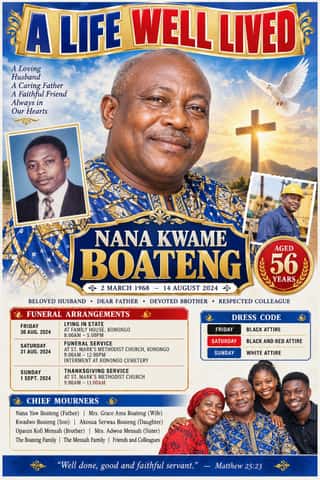
- 'Good Morning' Greeting Images (WhatsApp Forward Vernacular)58% alike
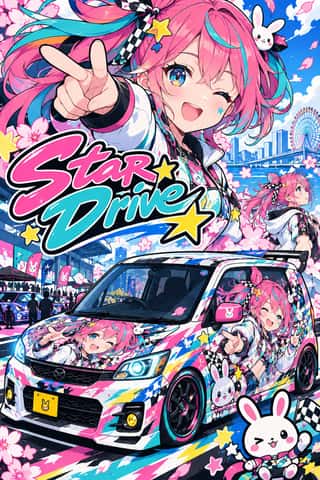
- YouTube Thumbnail Style (the 'YouTube Face')51% alike


04
Sources
- Roos Gerritsen, Fandom on Display: Intimate Visualities and the Politics of Spectacle (PhD thesis, Leiden University, 2012), esp. p. 20 (Annadurai's portrait, the DMK's rising sun and its colours red and black inserted into films, and party publicity modelled on film publicity), p. 104 (party members display party emblems, party colours and the leader on the invitation to a family function), pp. 158–162 (K. Madhavan at Gemini Studios; the painted banner style within 'calendar or bazaar art', with Chennai banner artists citing Ravi Varma, p. 159; the banner companies of Pondicherry), pp. 149–175 (flex banners competing with hand-painted hoardings and cloth banners at the turn of the century; the first digitally designed and printed vinyl hoarding in Chennai in 2000, after Note 2007, and vinyl in Pondicherry only after 2002, p. 166; fan clubs making 'virtually no hand-painted signboards or cutouts anymore', p. 167; the painter Muthu on how other digital banner artists 'usually leave the background of the picture blank or white', p. 168; 'Corelpaint and Photoshop' the most common programs, p. 171 n. 9; the insertion of fans' photos as 'the most important design potential of vinyl', with presidents and district leaders 'always shown closest to the star, and larger than the others', p. 171; the reused Gingee hoarding and the access road decorated with DMK flags and hoardings 'for about five hundred meters', p. 174; figures 51–54, pp. 172–175), p. 182 (continuous lines of political hoardings, 'each one bigger than the next') and p. 192 (the DMK's 'cut the cutout culture!'); fieldwork 2006–2010: https://hdl.handle.net/1887/20107
- Osamu Note, 'Imagining the Politics of the Senses in Public Spaces: Billboards and the Construction of Visuality in Chennai City', South Asian Popular Culture 5:2 (2007): 129–143, DOI 10.1080/14746680701619545 (cited by Gerritsen for the 2000 date; not consulted directly)
- Preminda Jacob, Celluloid Deities: The Visual Culture of Cinema and Politics in South India (Lanham, Md.: Lexington Books, 2009), on the hand-painted predecessors (cited by Gerritsen, p. 159; not consulted directly); reviewed in the Journal of Asian Studies, DOI 10.1017/s0021911810002652
- Anjana Shekar, 'Why posters and cut-outs in Tamil cinema are much more than advertisements', The News Minute (1 September 2020), on a Chennai Photo Biennale panel with S. Theodore Baskaran, Preminda Jacob, Jeevananthan and Rajiv Menon (hand-painted banners; cut-outs of wooden planks that 'may sometimes go up to 60 feet high'; Jacob on cinema and politics that 'has shaped the modern history of Tamil Nadu'): https://www.thenewsminute.com/tamil-nadu/why-posters-and-cut-outs-tamil-cinema-are-much-more-advertisements-132081
- Vaishnavi Deegwal, 'Chennai's forgotten art: How flex printing erased hand-painted banners', DT Next (9 July 2026), dating the decline to the late 2000s 'with the arrival of flex printing and legal restrictions by the government', with Mara Varman's estimate that '75% of banner artists shifted to other jobs' and Gita Hudson's Deskilling of Art (2011): https://www.dtnext.in/lifestyle/chennais-forgotten-art-how-flex-printing-erased-hand-painted-banners
- 'Poster politics', DT Next (10 January 2017), on Chennai's digital banner printers, Arasu Arts, Mega Digital's 'vast file of high-resolution images', Photoshop, flex sizes, a DMK supporter's request to superimpose Stalin's face on a lion, and the Jayalalithaa tribute banners: https://www.dtnext.in/news/tamilnadu/poster-politics
- 'Fans steal packets: TN milk dealers' body seeks ban on paal abhishekam for cut-outs', The News Minute (23 January 2019): https://www.thenewsminute.com/amp/story/tamil-nadu/fans-steal-packets-tn-milk-dealers-body-seeks-ban-paal-abhishekam-cut-outs-95531
- 'Madras HC bans pictures of living persons from banners and signboards in TN', The News Minute (24 October 2017), on Justice S. Vaidyanathan's order under the Tamil Nadu Open Places (Prevention of Disfigurement) Act, 1959: https://www.thenewsminute.com/tamil-nadu/madras-hc-bans-pictures-living-persons-banners-and-signboards-tn-70503
- 'Madras HC reverses ban on use of live persons in Banners, Hoardings', Bar & Bench (20 December 2017), on the division bench of Chief Justice Indira Banerjee and Justice R. Hemalatha setting aside Justice S. Vaidyanathan's ban: https://barandbench.com/news/madras-hc-reverses-ban-banners
- Priyanka Thirumurthy and Sreedevi Jayarajan, 'Despite Subhasri's death, TN's political parties fight to keep banner culture', The News Minute (17 September 2019), including the four AIADMK cut-outs for the Annadurai birth-anniversary meeting of the Sholinganallur constituency, according to the complainant David Manohar: https://www.thenewsminute.com/amp/story/tamil-nadu/despite-subhasris-death-tns-political-parties-fight-keep-banner-culture-109051
- 'Stars say no to banners', Deccan Chronicle (16 September 2019), on Vijay (Bigil audio launch) and Suriya (Kaappaan) asking fans not to put up banners and cut-outs after Subhasri's death: https://deccanchronicle.com/entertainment/kollywood/160919/stars-say-no-to-banners.html
- T. Sudheesh, 'TVK MLA's call for change of cut-out culture is food for thought', Deccan Chronicle (14 October 2026), on flex boards and cut-outs for birthdays and electoral victories after TVK 'came to power', including a large cut-out of Vijay with Royapuram MLA K. Vijay Dhamu, and on Subhashree, who 'lost control of her two-wheeler and fell in front of a water tanker' in 2019: https://www.deccanchronicle.com/southern-states/tamil-nadu/tvk-mlas-call-for-change-of-cut-out-culture-is-food-for-thought-1995627
- Subash Chandra Bose, 'From child star to CM: Vijay's rise from cinema to ‘Thalapathy’ of Tamil Nadu politics', The South First (10 May 2026), on Vijay formally announcing TVK in February 2024 and taking oath as Chief Minister after TVK won 108 of 234 seats: https://thesouthfirst.com/tamilnadu/from-child-star-to-cm-vijays-rise-from-cinema-to-thalapathy-of-tamil-nadu-politics/
- Balakumar Kuppuswamy, 'Ban the Banner: Cutout culture was pioneered in Tamil Nadu due to film-politics nexus', MyNation (14 September 2019), on cut-outs and huge banners for film stars as 'the norm in almost all states' and Tamil Nadu as the pioneer of cut-outs for politicians: https://www.mynation.com/views/ban-the-banner-cutout-culture-was-pioneered-in-tamil-nadu-due-to-film-politics-nexus-pxtlq4
How Stylogeny researches and checks a style: where the facts come from.