Medium & production · Print industry
Lithography
Stone or chromolithographic printing.
A design choice in Stylogeny’s vocabulary, under medium & production: what technology shaped it?
- styles make it
- 67
- as a defining choice
- 20
- as a usual one
- 29
- now and then
- 18
- avoid it
- 1
Styles defined by it 20
For these styles it is one of the choices that make the style.
Imagerie d'Épinal & European BilderbogenCheap single-sheet popular prints sold by pedlars across 19th-century Europe, led by the Pellerin imagerie at Épinal and the Neuruppin Bilderbogen.
- Urdu Katib LithographyFor about a century and a half Urdu chose lithography over movable type, because metal type could not reproduce the sloping, stacked ligatures of Nastaʿlīq.
- Persian Popular Narrative (Lithographs & Coffeehouse Painting)Iran's popular picture-stories in two media.
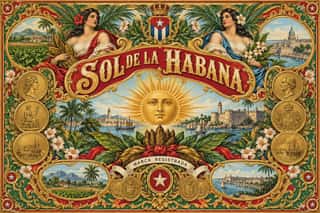
Cuban Tobacco Lithography (Habilitaciones & Marquillas)The chromolithographed dress of Havana tobacco.
Belle Époque Lithographic PosterThe large colour lithographic street poster that turned Paris into an open-air gallery, from Jules Chéret's first posters of 1866 to Leonetto Cappiello before the First World War.
- Indian Calendar & Bazaar ArtMass-printed images of Hindu deities, epic scenes, saints, nationalist heroes and film stars, sold in bazaars and given away as business calendars, from the chromolithographs of the Calcutta Art Studio and Ravi Varma Press to Sivakasi offset.
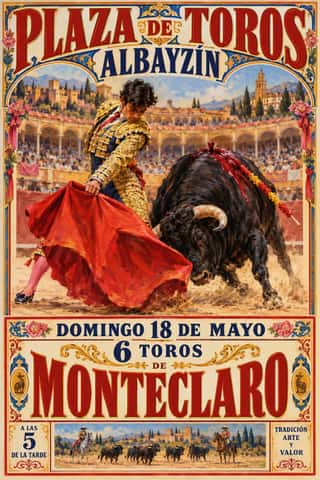
Spanish Bullfight Poster (Cartel Taurino)The Spanish bullfight poster in its illustrated form, from Marcelino de Unceta's lithographs (from 1879) to the Valencian house of Ortega, which supplied rings across Spain.
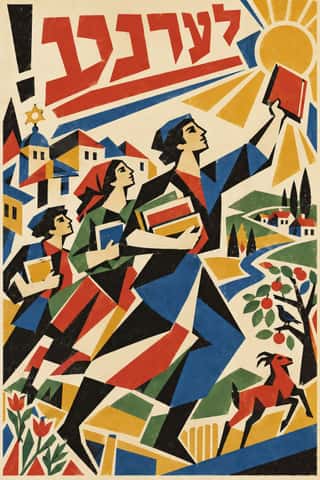
- Bezalel SchoolThe house style of the Bezalel School of Arts and Crafts, opened in Jerusalem by Boris Schatz in 1906 with E.
- London Transport DesignThe design programme Frank Pick built for London's Underground from 1908 and the London Passenger Transport Board (1933–40), continued by Harold Hutchison (1947–66).
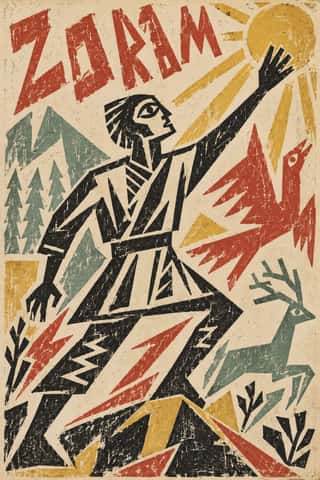
Russian Futurist BookThe cheap, small-run books of the Russian Cubo-Futurist poets and painters, from Kruchenykh and Khlebnikov to Goncharova, Larionov and Rozanova.
Hungarian Revolutionary PosterThe political posters of Hungary's revolutions.
Kultur-Lige & Yiddish Avant-Garde Book DesignThe Yiddish modernist book of the Kultur-Lige, the secular Jewish culture league founded in Kyiv in 1918, and its circle: El Lissitzky, Issachar Ber Ryback, Iosif Chaikov, Boris Aronson and others, who sought a new Jewish art in the shtetl synagogues and tombstones they had recorded and in Cubo-Futurism and Suprematism.
Basel Object Poster (Swiss Sachplakat)The Swiss descendant of the German object poster, made in Zurich and above all Basel from 1919 to the early 1950s.
Leningrad Avant-Garde Picture BookThin, large picture books made in Petrograd/Leningrad from 1922 to the mid-1930s for Raduga and the Gosizdat children's department led by Samuil Marshak, with Vladimir Lebedev as art editor.
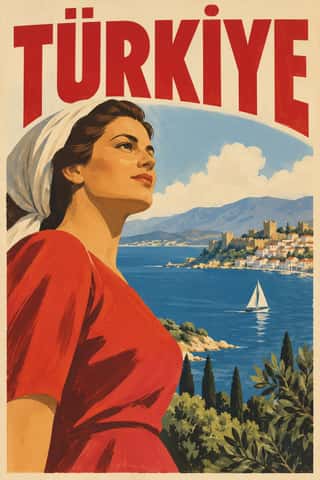
Early Turkish Republican Graphic DesignThe pictorial poster, label and ticket art of the young Turkish Republic, led by İhap Hulusi Görey after his Munich training in Ludwig Hohlwein's orbit, with Münif Fehim Özarman and, after 1943, Kenan Temizan.
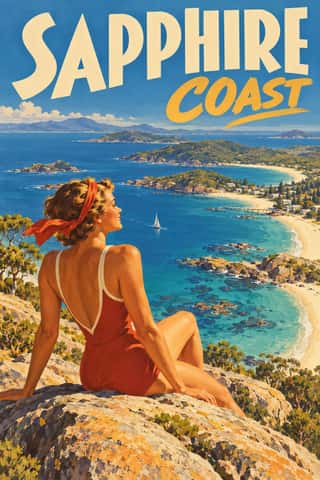
Australian Travel Poster (ANTA Era)The pictorial posters that the Australian National Travel Association (ANTA, 1929), state tourist bureaux, railways and shipping lines commissioned to sell Australia abroad and at home.
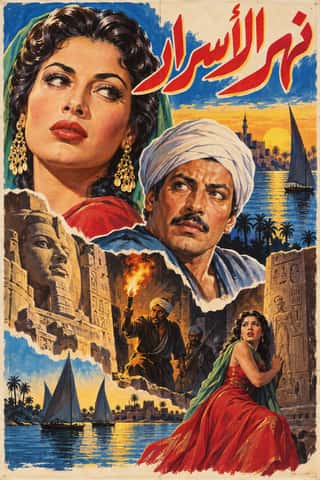
Egyptian Painted Film PosterThe painted publicity of Egyptian cinema from the early talkies to the 1990s, designed outside the studios by artist-printers such as Hassan Mazhar Gassour and printed as colour lithographs in Cairo.
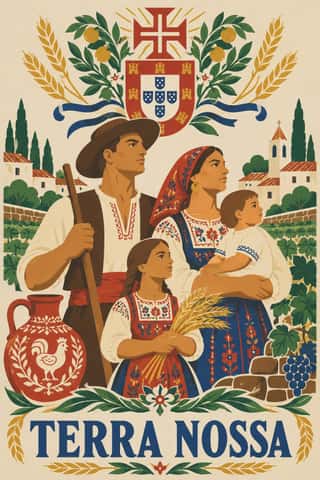
Estado Novo Folk Modernism (SPN)The official image of Salazar's Estado Novo, shaped by António Ferro's Secretariado de Propaganda Nacional (SPN, 1933; SNI from 1944).
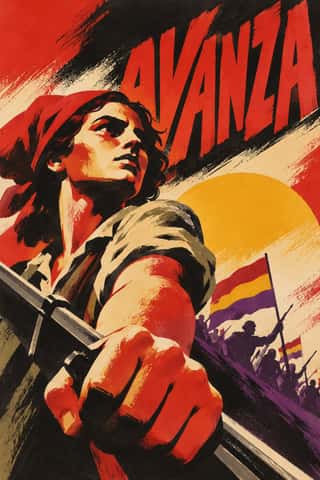
Spanish Civil War PosterThe poster war waged by the Spanish Republic, its unions and its anarchist, communist and socialist parties against Franco's uprising.
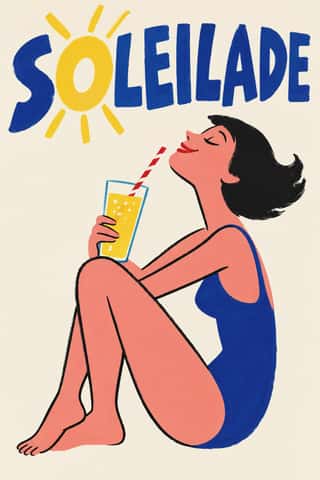
French Post-War Visual-Gag Poster (Savignac, Villemot, Morvan)The humorous street poster of post-war Paris, which took off in 1949 when Raymond Savignac and Bernard Villemot showed their rejected projects together and Savignac's Monsavon cow, its udder filling a bar of soap, went up on the walls.
Styles that often use it 29
A characteristic choice: usual in these styles, though not essential.
- Maghrebi Script (Maghribi Calligraphy of al-Andalus and North Africa)The family of Arabic scripts of al-Andalus and North Africa, descended from early Kufic bookhands.
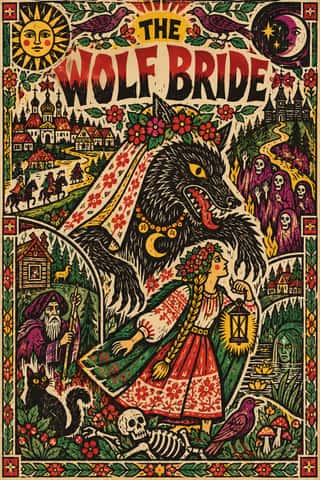
Lubok Popular PrintCheap single-sheet Russian popular prints sold at fairs and by pedlars from the later 17th century: woodcut, later engraved and lithographed pictures of saints, fables, heroes, battles and satire in which text and image share one sheet.
JaponismeThe Western absorption of Japanese woodblock prints, textiles and crafts after Japan reopened to trade in the 1850s.
Art NouveauAn international 'new art' that sought a modern style free of historical revival, drawing its forms from plant growth and the female figure.
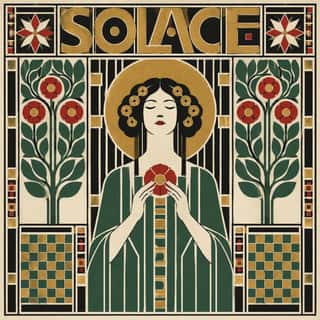
- Glasgow StyleGlasgow's distinctive answer to Art Nouveau, formed around Charles Rennie Mackintosh, Margaret and Frances Macdonald and Herbert MacNair at the Glasgow School of Art.
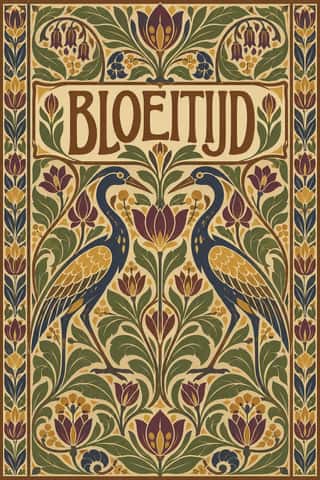
Nieuwe Kunst (Dutch Art Nouveau)The Dutch branch of Art Nouveau, seen mostly in book covers, vignettes and posters.
Vienna SecessionThe Viennese break with academic art led by Gustav Klimt, Koloman Moser, Josef Hoffmann and Alfred Roller, which pulled Art Nouveau toward the square, the grid and the flat plane.
Mir iskusstva Book ArtThe graphic idiom of the St Petersburg World of Art circle (journal 1898–1904, exhibitions until Paris 1927) and the book artists around it.
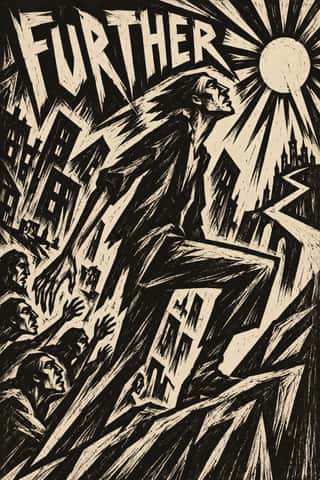
Expressionist Woodcut GraphicsThe graphic arm of German Expressionism, from Die Brücke in Dresden (1905) to the Berlin journals Der Sturm and Die Aktion and Frans Masereel's woodcut novels.
Plakatstil / SachplakatThe German 'object poster' launched by Lucian Bernhard's Priester match poster and printed by Berlin's Hollerbaum & Schmidt.
Art DecoThe glamorous modern style named after the 1925 Paris Exposition des Arts Décoratifs, which disciplined ornament into geometry: sunbursts, chevrons, stepped forms and sleek stylised figures rendered in lacquer-smooth colour with metallic accents.
Shanghai Modern & YuefenpaiThe commercial art of treaty-port Shanghai.
- Taishō Roman & Lyrical IllustrationThe lyrical illustration (jojōga) of late-Meiji to early-Shōwa Japan, led by Takehisa Yumeji: willowy, large-eyed women in kimono drawn with an Art Nouveau contour, set among camellias and kimono patterns and lettered by hand.
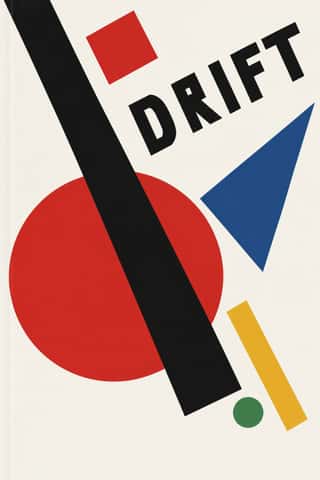
SuprematismKazimir Malevich's non-objective art, unveiled with the Black Square at the 0.10 exhibition in Petrograd in 1915, reduced painting to pure geometric planes floating in white, infinite space.
- Russian ConstructivismConstructivism rejected art for art's sake in favour of the artist-engineer building useful things for the new Soviet society.
Wendingen & Amsterdam School TypographyThe graphic language of Wendingen (1918–1932), monthly of the Amsterdam architects' society Architectura et Amicitia, and its editor H.
- Italian Fascist Graphics (Romanità & Exhibition Photomontage)The visual language of Italian Fascism, which turned modernist means to a cult of Rome and of the Duce.
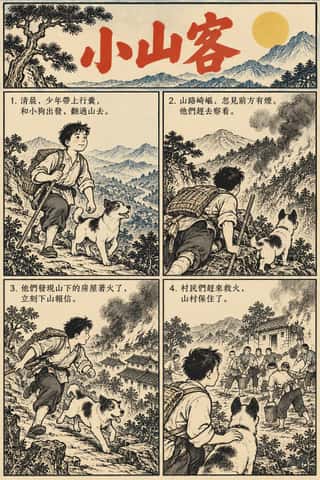
Lianhuanhua Picture-Story BooksPalm-sized Chinese picture books, about three by five inches, that tell a novel, opera, film or revolutionary story in hundreds of single framed drawings, one to a page, each with a short caption.
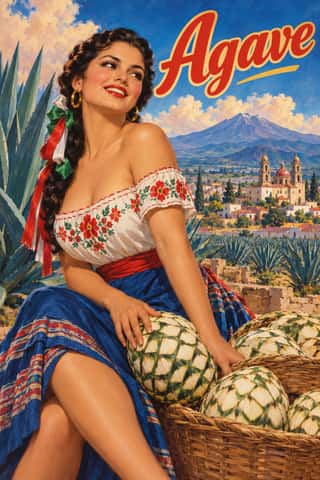
Mexican Calendar Chromo (Cromos calendáricos)Mexico's give-away advertising calendars, at their height from the 1930s to the late 1960s.
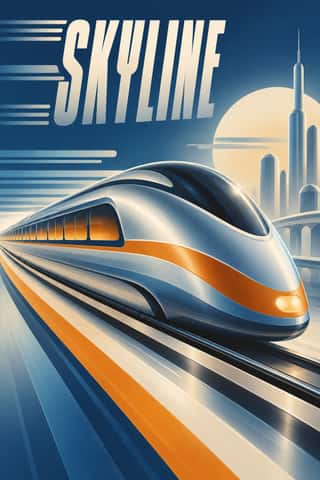
Streamline ModerneThe late, chiefly American phase of Art Deco, in which aerodynamic science became a visual language for a Depression-era culture hungry for progress.
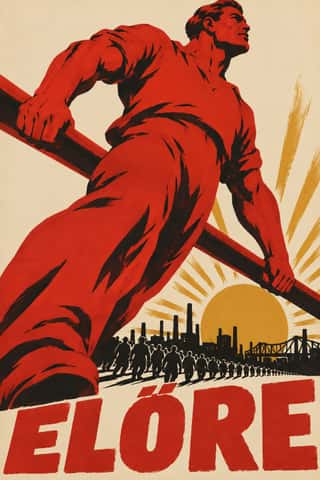
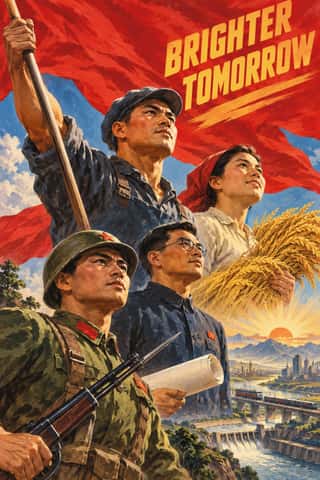
Socialist Realist Propaganda PosterThe official art doctrine of the Soviet Union from 1932, later exported across the socialist world, which replaced avant-garde experiment with legible, heroic realism 'national in form, socialist in content'.
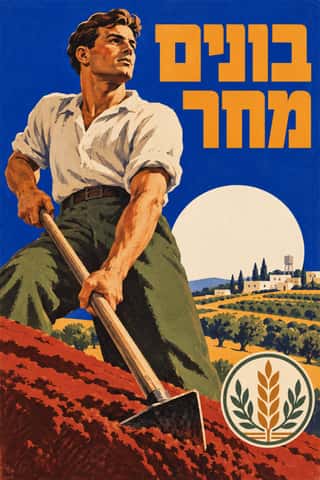
Hebrew Poster Lettering & Early Israeli State DesignThe commercial and state graphics of the Jewish community in Mandate Palestine and early Israel, made in Tel Aviv from 1934 by designers who had trained in Berlin and Vienna: Franz Krausz, Otte Wallish and the Shamir brothers.
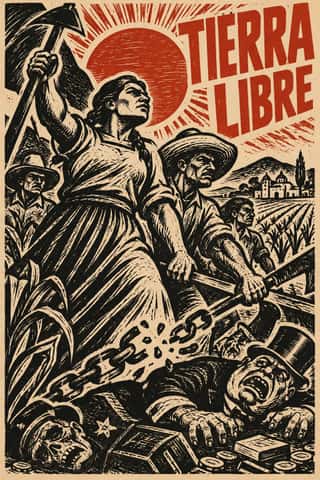
Taller de Gráfica PopularA Mexico City printmaking collective founded in 1937 around Leopoldo Méndez, Pablo O'Higgins and Luis Arenal to put art at the service of popular and anti-fascist struggles.
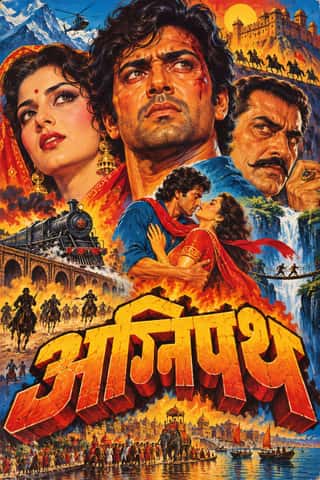
Hand-Painted Bollywood PosterThe painted publicity of Bombay's Hindi film industry, at its height from the 1940s to the 1980s.
Polish Poster SchoolA painterly, metaphorical poster culture that flourished in communist Poland, chiefly for film, theatre, opera and circus.
Situationist Détournement GraphicsGraphics of the Letterist and Situationist Internationals (1956–1972), built on détournement: taking existing words and pictures (comic strips, advertisements, news photographs, city maps, classic texts) and turning them against their source.
Kinngait (Cape Dorset) Inuit PrintmakingPrints from the Inuit co-operative studio at Kinngait (Cape Dorset), Nunavut, with a catalogued collection every year since 1959.
- Greek Tourism Modernism (EOT)The modernist image of Greece made for the National Tourism Organisation (EOT) by Michalis Katzourakis, its art adviser in 1960-1967, and by Frederick Carabott, who advised it until 1967; in 1962 the two also founded the K&K Athens Advertising Centre.
- Atelier Populaire (May '68 Screenprint Poster)The posters of the Atelier populaire, set up when students, teachers and artists occupied the École des Beaux-Arts in Paris on 14 May 1968, until police cleared the school on 27 June.
Styles that use it now and then 18
An occasional choice in these styles.
- Hebrew Micrographyc. 895–present
- Persian Nastaʿlīq Calligraphy (Qiṭʿa, Chalipa and Siyāh-mashq)c. 1400–present
- Bulaq (Amiriyya) Naskh Book Printing1822–1956
- Kalighat Pat & Battala Bazaar Prints1830–1930
- Celtic Revival Illumination & Lettering1861–1951
- Mexican Popular Graphics (Posada)1880–1917
- Norwegian and Finnish National Romantic Graphics (Munthe & Karelianism)1880–1922
- Simplicissimus Satirical Style (Munich)1896–1944
- Senegalese Sufi Devotional Imagery (Souwère Glass Painting and Amadou Bamba Portraits)1900–present
- Santiniketan & Bengal School Graphics1905–1954
- Italian Futurism1909–1944
- Vorticism & BLAST Typography1914–1920
- Czech Poetist Book Design (Devětsil)1922–1938
- Die Neue Typographie1923–1940
- Milanese Industrial Modernism (Olivetti, Pirelli, Studio Boggeri)1933–1975
- Nippon Kōbō & Tōhōsha Photo-Propaganda Magazines (NIPPON & FRONT)1933–1945
- WPA Silkscreen Posters1935–1943
- City Pop Illustration1979–present
It often goes with
Choices that the styles making it make more often than the atlas as a whole.
- Diagonal axisin 31 of 67
- Painterly illustrationin 42 of 67
- Letterpressin 24 of 67
- Line illustrationin 43 of 67
- Romantic & sensualin 26 of 67
- Hand-letteringin 57 of 67
Styles that avoid it
Styles that deliberately leave it out.