Style combination · Pairs well
Hanafuda Card Design × Mamluk Playing-Card Design
Another non-European card system where emblem, rank and seasonal or suit identity are carried by flat painted signs.
Mix them and make something Hanafuda Card Design Mamluk Playing-Card Design
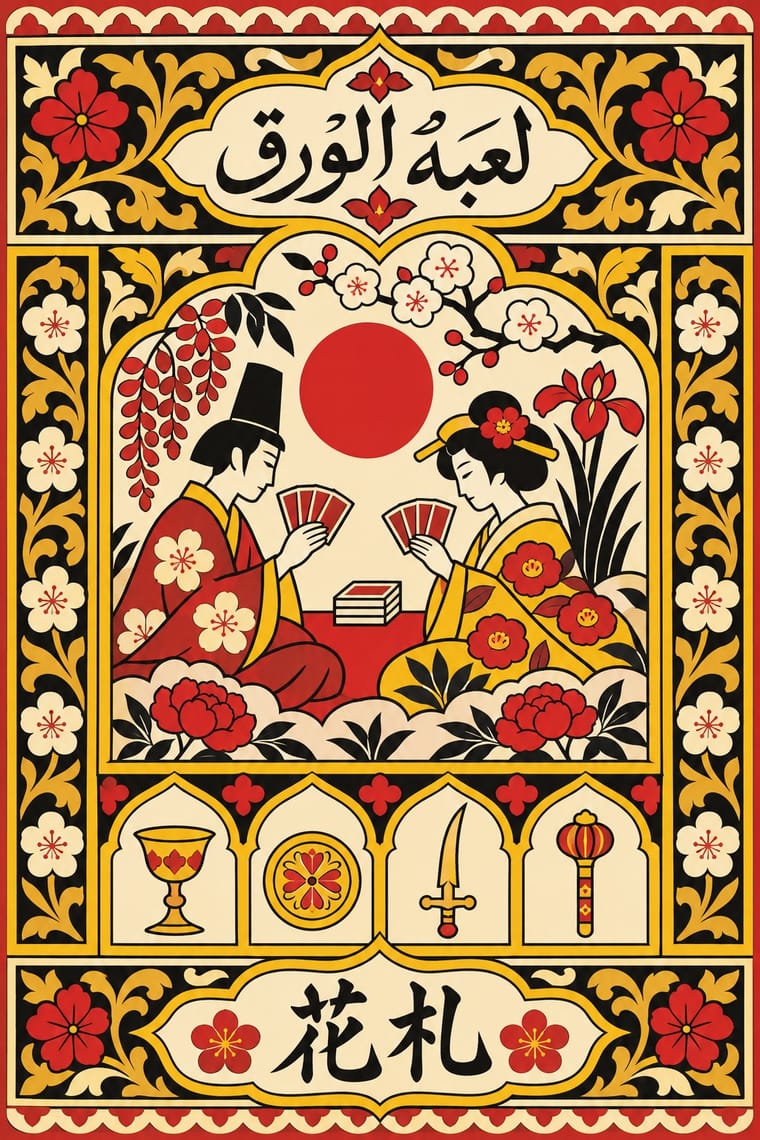
01
What each style brings
Each part of the design comes from the style with the stronger say in it, and each style gives at least two.
Hanafuda Card Design (Japanese Flower Cards) Mamluk Playing-Card Design (Mulūk wa-Nuwwāb)
- Type from Mamluk Playing-Card Design
- Colour from Hanafuda Card Design
- Form from Hanafuda Card Design
- Composition from Mamluk Playing-Card Design
- Surface from Hanafuda Card Design
02
The type
Open fonts standing in for each style’s own type, which is often hand-drawn or commercial.
Display · Mamluk Playing-Card Design
Hello
Rakkas, standing in for Arabic calligraphic bands of verse in gold on blue along the tops of the cards (partly later additions; the verse is unrelated to the cards)
Text · Hanafuda Card Design
A 48-card Japanese deck of twelve suits, one per month, each tied to a plant such as pine, plum, cherry, peony, maple or willow. Japanese cards carry no numbers or letters (Korean hwatu mark Bright cards with the character 光): flat, outlined flora, animals, ribbons and objects tell bright, animal, ribbon and chaff cards apart by picture alone, on a plain red or black back.
Shippori Mincho; Hanafuda Card Design used Calligraphic poem strips (tanzaku) in kana and kanji and Maker marks and brand names in Japanese brush lettering
03
The colours
The ground and leading colours come from Hanafuda Card Design, with a counter-accent from Mamluk Playing-Card Design. The ink reads on the ground at 4.5:1 or more.
Hanafuda Card Design (Japanese Flower Cards) Mamluk Playing-Card Design (Mulūk wa-Nuwwāb)
-
#f2e8cfground · 36% -
#111111ink · 14% -
#e8b923accent · 18% -
#c9a24aaccent · 14% -
#d7282faccent · 10% -
#a8332baccent · 8%
As CSS
:root {
  --ground: #f2e8cf;
  --ink: #111111;
  --accent-1: #e8b923;
  --accent-2: #c9a24a;
  --accent-3: #d7282f;
  --accent-4: #a8332b;
  --font-display: "Rakkas", cursive;
  --font-text: "Shippori Mincho", serif;
}
Use it with care
Mamluk Playing-Card Design (Mulūk wa-Nuwwāb): The pack is a mixed, partly replaced survival (a composite of up to three packs): sources disagree on how many cards remain and how ranks were assigned, the blue and gold panels are partly later additions, many reproductions are the flawed 1972 facsimile or colourised photographs, and the dates are a bracket. The absence of portraits in this pack is not a rule for all Islamic card traditions.
04
The two styles
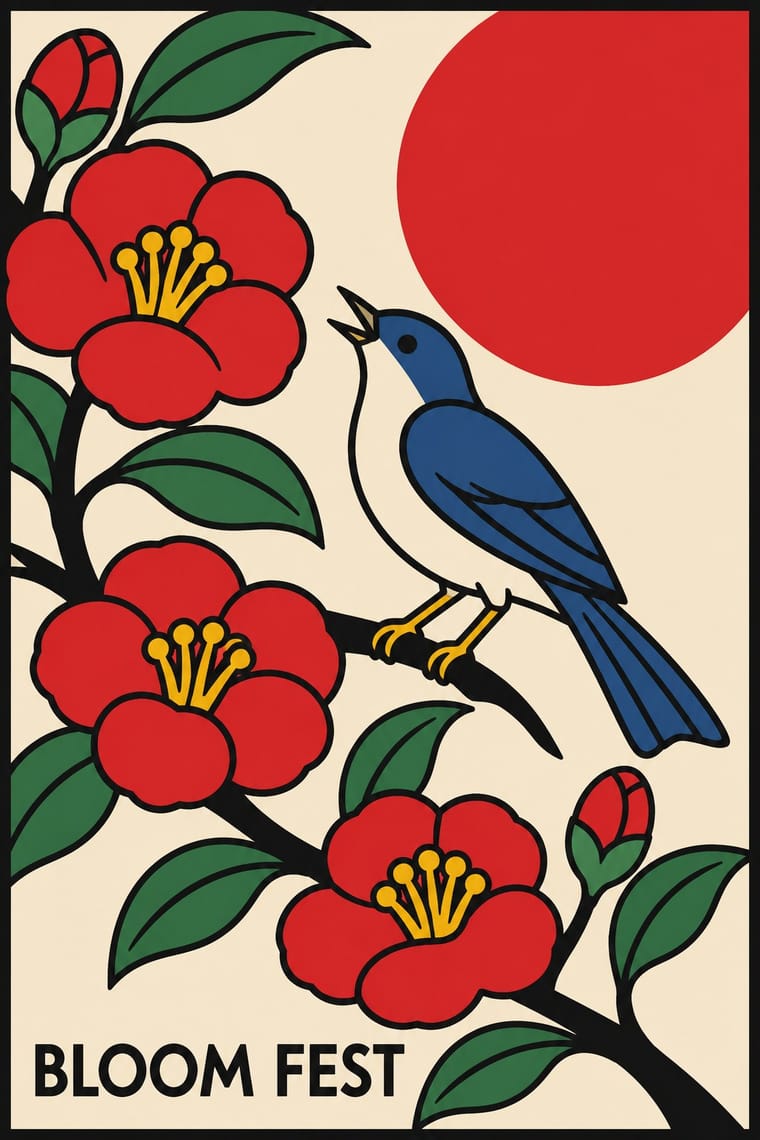
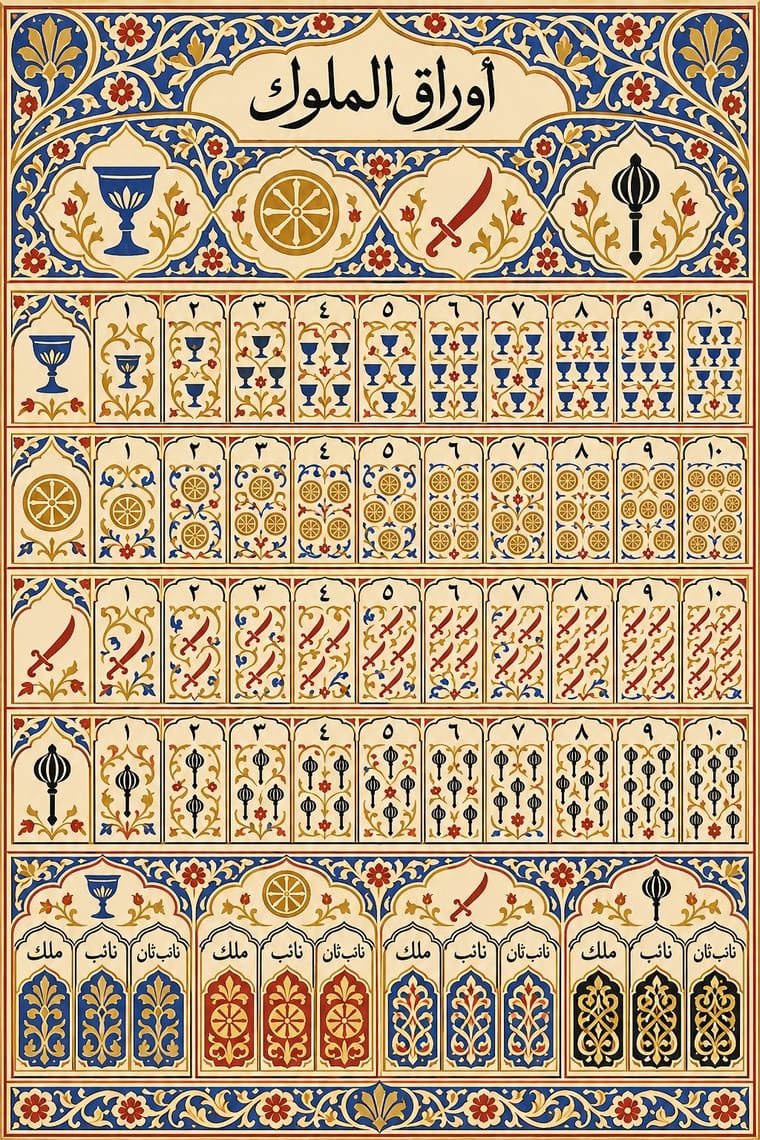
05
More combinations
With Hanafuda Card Design
- Ukiyo-e Woodblock Prints Pairs well · Both use flat colour and outline; hanafuda turns the print's flower-and-bird subjects into a repeatable game system.
- Lotería Card Imagery (Mexican Lotería) Contrasts · Lotería gives each card a number and a printed name; hanafuda uses pictures only.
- Tarot de Marseille Woodcut Cards Contrasts · A card deck built on allegory and numbered arcana, against hanafuda's seasonal plant logic with no numerals.
- Kamon (Japanese Family Crests) Pairs well · Plant motifs reduced to compact, emblem-like shapes that read at small size.
With Mamluk Playing-Card Design
- Islamic Geometric & Calligraphic Tradition Pairs well · Borrow its arabesque and calligraphic bands, but confine them to fixed rank panels instead of letting a tiling run on without limit.
- French-Pattern Playing Cards (Court Cards and Indices) Contrasts · Same job of ranking suit and court at a glance, but this one names courts in script and emblem where the French pattern draws double-headed figures with corner indices.