Style combination · Contrasts
Hanafuda Card Design × Tarot de Marseille Woodcut Cards
A card deck built on allegory and numbered arcana, against hanafuda's seasonal plant logic with no numerals.
Mix them and make something Hanafuda Card Design Tarot de Marseille Woodcut Cards
01
What each style brings
Each part of the design comes from the style with the stronger say in it, and each style gives at least two.
Hanafuda Card Design (Japanese Flower Cards) Tarot de Marseille Woodcut Cards
- Type from Tarot de Marseille Woodcut Cards
- Colour from Hanafuda Card Design
- Form from Hanafuda Card Design
- Composition from Tarot de Marseille Woodcut Cards
- Surface from Tarot de Marseille Woodcut Cards
02
The type
Open fonts standing in for each style’s own type, which is often hand-drawn or commercial.
Display · Tarot de Marseille Woodcut Cards
Wow
Cinzel, standing in for Roman capitals cut into the woodblock with the picture, in a band at the foot of each trump and court card, often with interpuncts and the copyists' spellings ('LE CHARIOR' and 'LA PANCES' on Dodal's cards, 'LE BATELEVR' with V for U)
Text · Hanafuda Card Design
A 48-card Japanese deck of twelve suits, one per month, each tied to a plant such as pine, plum, cherry, peony, maple or willow. Japanese cards carry no numbers or letters (Korean hwatu mark Bright cards with the character 光): flat, outlined flora, animals, ribbons and objects tell bright, animal, ribbon and chaff cards apart by picture alone, on a plain red or black back.
Shippori Mincho; Hanafuda Card Design used Calligraphic poem strips (tanzaku) in kana and kanji and Maker marks and brand names in Japanese brush lettering
03
The colours
The ground and leading colours come from Hanafuda Card Design, with a counter-accent from Tarot de Marseille Woodcut Cards. The ink reads on the ground at 4.5:1 or more.
Hanafuda Card Design (Japanese Flower Cards) Tarot de Marseille Woodcut Cards
-
#f2e8cfground · 36% -
#111111ink · 14% -
#e8b923accent · 18% -
#d7282faccent · 14% -
#2b4c8caccent · 10% -
#2f7d4faccent · 8%
As CSS
:root {
  --ground: #f2e8cf;
  --ink: #111111;
  --accent-1: #e8b923;
  --accent-2: #d7282f;
  --accent-3: #2b4c8c;
  --accent-4: #2f7d4f;
  --font-display: "Cinzel", serif;
  --font-text: "Shippori Mincho", serif;
}
Use it with care
Tarot de Marseille Woodcut Cards: Trace decks cut before 1800 (Noblet, Dodal and Conver in the BnF; Dodal cards and early 19th-century Conver printings at the Met) rather than recent redrawings such as Grimaud's 1930 'Ancien Tarot de Marseille' or the 1998 Camoin–Jodorowsky restoration, which are modern works; and do not present the occultists' story of an Egyptian origin, launched by Court de Gébelin in 1781, as history: the pattern descends from Milanese tarot and was made for the card game of tarot, which French and Swiss players used it for until the early 20th century.
04
The two styles
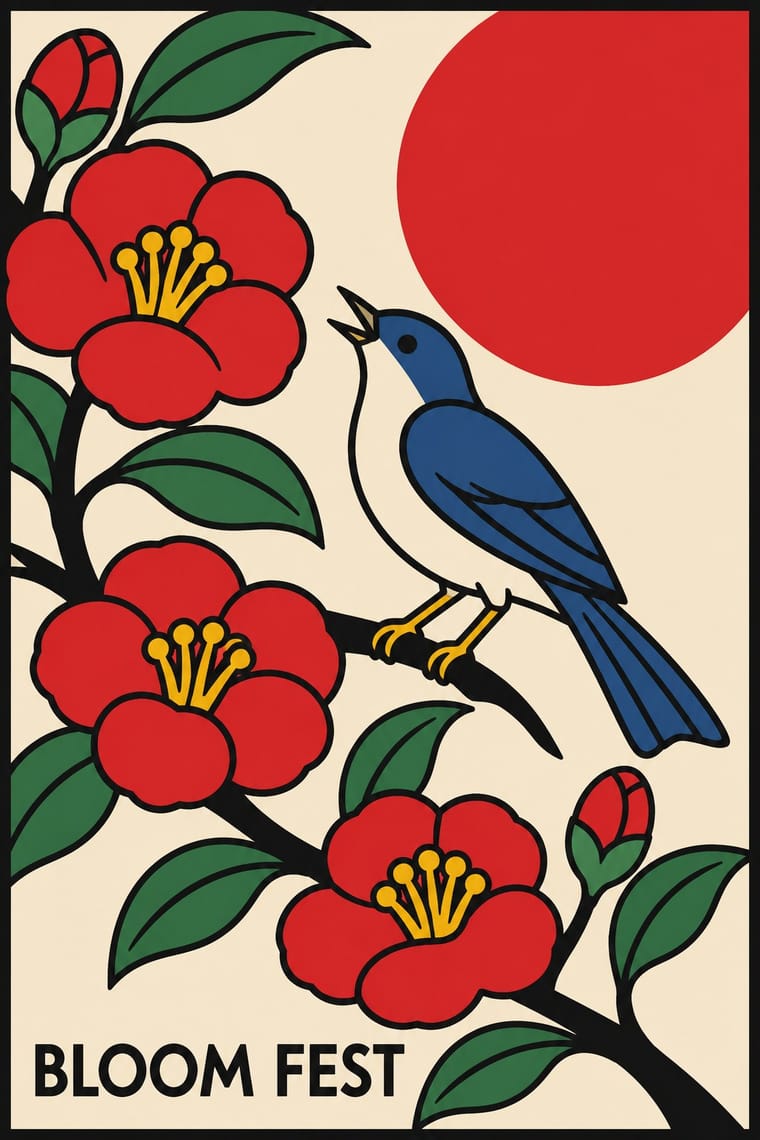
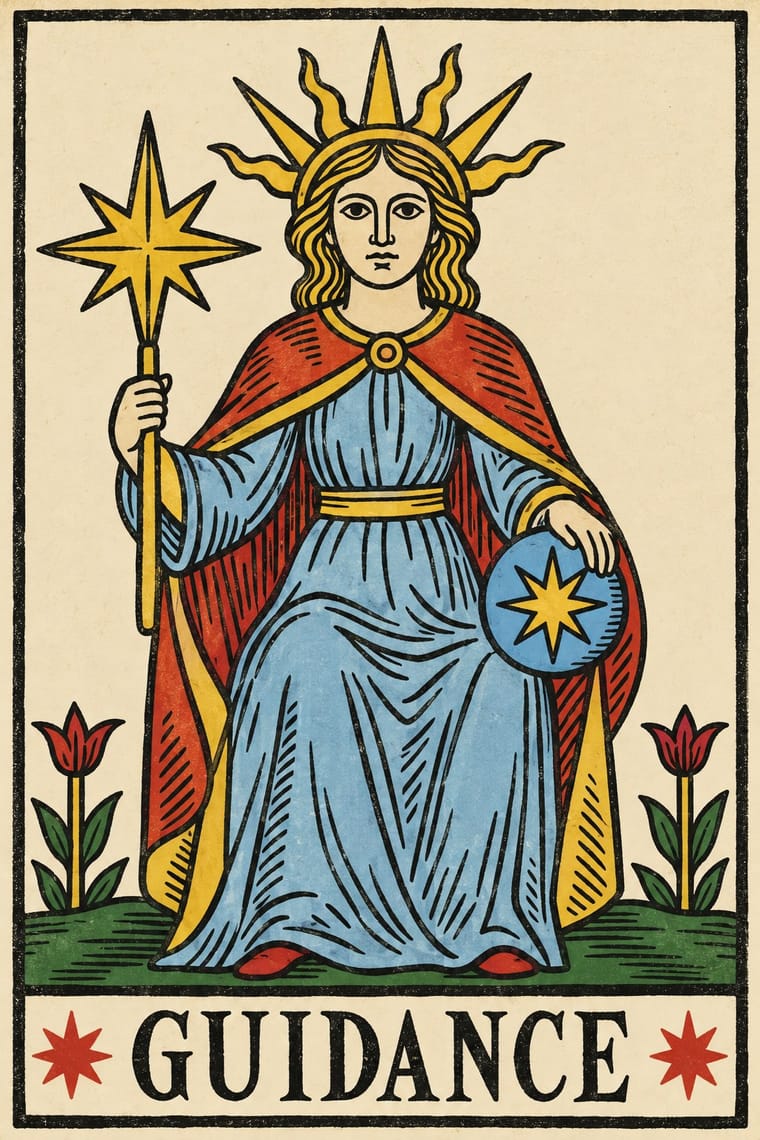
05
More combinations
With Hanafuda Card Design
- Ukiyo-e Woodblock Prints Pairs well · Both use flat colour and outline; hanafuda turns the print's flower-and-bird subjects into a repeatable game system.
- Lotería Card Imagery (Mexican Lotería) Contrasts · Lotería gives each card a number and a printed name; hanafuda uses pictures only.
- Kamon (Japanese Family Crests) Pairs well · Plant motifs reduced to compact, emblem-like shapes that read at small size.
- Mamluk Playing-Card Design (Mulūk wa-Nuwwāb) Pairs well · Another non-European card system where emblem, rank and seasonal or suit identity are carried by flat painted signs.
With Tarot de Marseille Woodcut Cards
- Literatura de Cordel Woodcut Contrasts · Both cut stiff figures in wood with no perspective or modelling, but the cordel cover is printed in black only, with solid blacks and gouged white lines, above a plain letterpress title, while the tarot card colours an outline key through stencils and cuts its numeral and title into the same block; choose cordel for a stark one-colour cover, tarot for a coloured emblem in a numbered set.
- European Heraldry Pairs well · The Emperor's and Empress's eagle shields and the maker's escutcheon on the 2 of Coupes come from armory; pair heraldic tinctures and charges with a tarot figure for a crest-like card or label.
- Nianhua & Chinese Folk Print Pairs well · Door gods and many tarot trumps are single frontal figures cut in wood and brightly coloured by hand; set them side by side for a cross-cultural series of guardian or allegorical figures.
- Lotería Card Imagery (Mexican Lotería) Contrasts · Lotería also gives each card one figure with its name at the foot, but in letterspaced sans capitals and soft offset colour; borrow the tarot's carved roman title band, ruled frame and stencil drift to make a lotería-type card set look older and graver.
- Imagerie d'Épinal & European Bilderbogen Contrasts · Both stencil-colour a black woodcut key in a few drifting colours, but the Épinal sheet tells a story in grids of captioned cases and marches rows of soldiers, while the tarot card isolates one emblematic subject under a numeral and a title; choose tarot for a single symbol, Épinal for a sequence.
- Risograph & Indie Print Culture Pairs well · Riso's few flat inks and loose registration reproduce the stencil drift of an old tarot; print a black woodcut-style key with red, yellow and pale blue for a contemporary deck or poster.
- Emblem Book (Motto, Picture & Epigram) Contrasts · The emblem book explains its picture with a printed motto and epigram on the page, while the tarot gives only a carved title and a numeral and leaves the meaning to play or reading; choose the emblem book when the text must carry the argument.
- Collectible Card Game Design (Magic and Pokémon Frames) Contrasts · Another card system with a shared back and fixed frame, but its pips and trumps carry no rules text; use it when the card should be symbolic rather than data-bearing.