Pictorial & machine age · 1969–present · North America, Western Europe, Global / networked
Automotive Hero Advertising ( Car Photography to CGI )
Also known as Car advertising photography, Hero car shot, Car brochure look, Automotive CGI
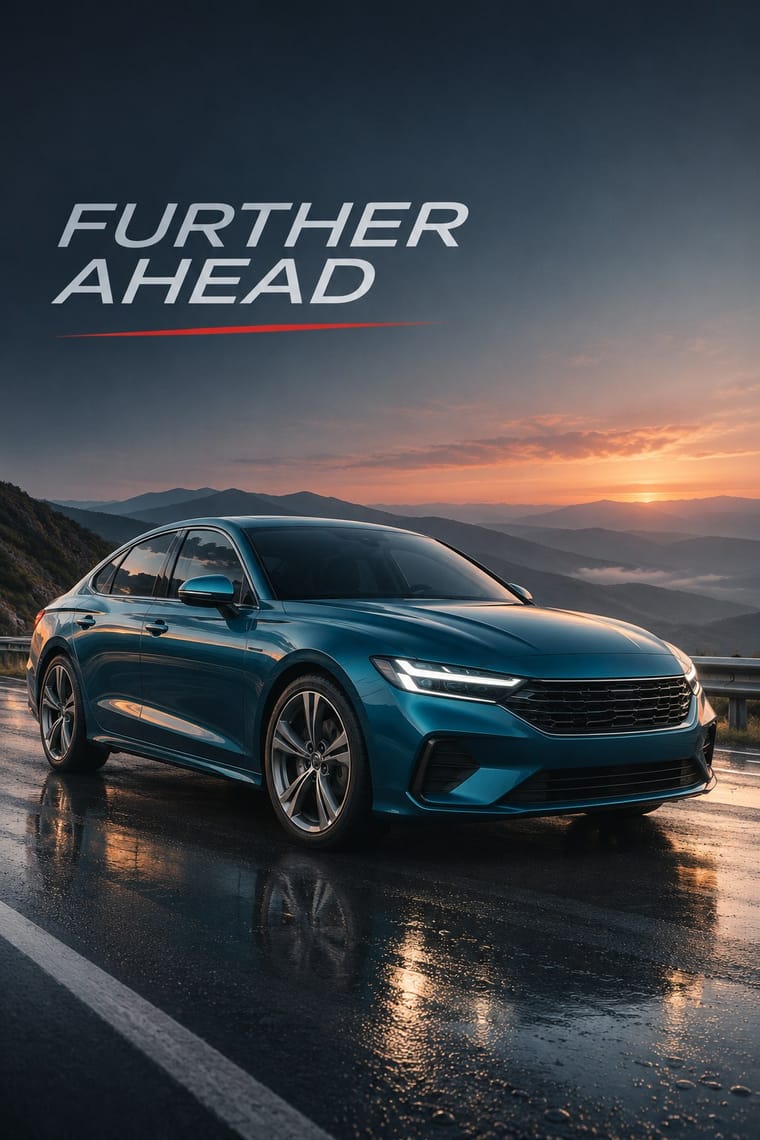
A commercial image-led register that presents a car as a desirable sculptural object: controlled reflections describe the body, modelled surfaces or a receding setting give it presence, and the model name or short claim remains subordinate. Studio photographs and photoreal CGI can serve the same hero role. Unlike classic long-copy advertising, the argument is the vehicle's appearance, material finish and atmosphere rather than a headline developed in prose.
Make something in this style Get advice in this style Mix it with another style
Use it with care
This is a recurring commercial register, not a self-declared movement and not all automotive advertising. The inspected corpus supports a 1969 photographic lower bound but does not establish the scout's proposed 1965 start, a universal replacement of painting by photography, or when CGI became prevalent. The Fractal public-launch context is 2015, documented by Peugeot's 1 September 2015 release; Wallace's shoot and exact portfolio-file dates remain unverified, as do the McLaren and CGI project years. No motor-show attribution is adopted from the photographer's account. Asset-upload dates and a website's generated publication timestamp are not campaign dates. The September 1993 Mustang cover supplies a dated intervening finished layout, not proof of uninterrupted continuity or an independently identified photographic team. Its close crop supports depth through body modelling rather than a compulsory receding floor; the original four defining traits remain appropriate, with surface.glossy describing highlights rather than uniformly glossy paint. The CGI portfolio example is not established as a commissioned ad. Typography is intentionally occasional because most contemporary evidence consists of campaign image assets, not finished layouts; no exact commercial font or universal wide-tracked-capitals rule is asserted. The palette is a visual synthesis, not manufacturer colour specifications. Photograph and render are alternative production routes: neither alone defines the register. No open-file image licence was verified; future specimens must be link-only unless a qualifying exact-file licence is established. Keep claims about performance, safety and environmental benefits separate from pictorial mood, and do not reproduce historical gender objectification as a necessary stylistic feature. Vocabulary gap: controlled long reflections that articulate automotive bodywork; stand-in: surface.glossy. Vocabulary gap: camera angle and apparent focal-length treatment of the hero vehicle; stand-in: space.depth-illusion, with viewpoints described in the principles rather than falsely encoded as layout.diagonal.
01
Its picture in other colours
Change a colour and every picture on this page follows. It happens in your browser, from the same pictures: nothing new is made or saved.
Choose a colour to change it
-
#111419 -
#545B60 -
#D5DCDD -
#F2F1E9 -
#087C96 -
#9B3026
A faded colour isn’t in these pictures, so changing it changes nothing.
Light and dark stay where they are; greys hardly move.
More colours: any style’s, or your own
The pictures show the style’s own colours.
02
Make something in this style
Say what you need, and Stylogeny’s image studio draws it from Automotive Hero Advertising (Car Photography to CGI)’s design choices and checks it against them. It takes about a minute, and you get a link to share.
03
How it works
Palette
-
#111419ground · 45% -
#545B60accent · 20% -
#D5DCDDink · 1% -
#F2F1E9not in its pictures -
#087C96not in its pictures -
#9B3026not in its pictures
Shares measured from its picture. The ground is what the pictures sit on (of the colours covering most, the most neutral), the ink stands out from it most, the rest are accents.
Typefaces
-
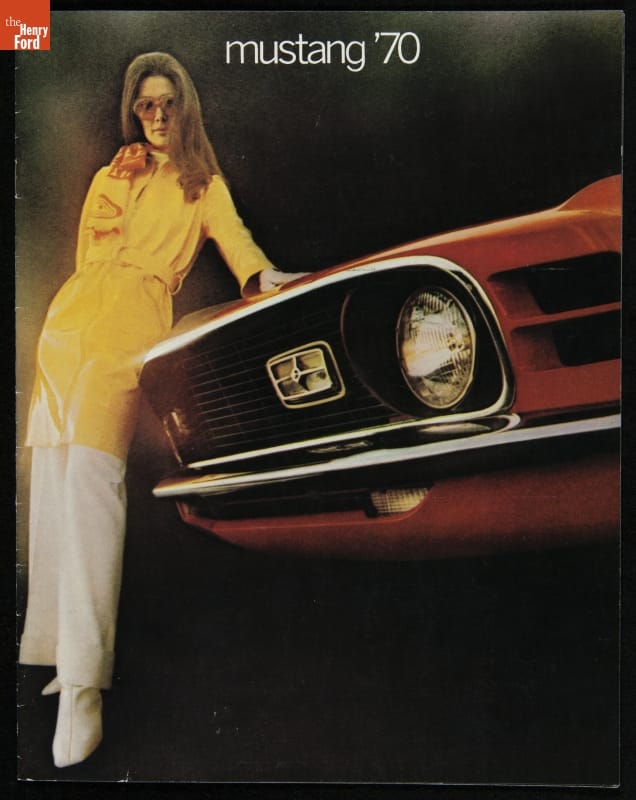
Light, close-set lowercase sans-serif model-title lettering, as visible on the Mustang '70 cover; exact face not verified
-
Condensed sans-serif model-title capitals paired with small widely spaced serif capitals, visible on the September 1993 Mustang brochure cover; exact faces unverified
-
Custom automotive model-name and marque logotype lettering, visible on the McLaren 720S identification and Peugeot Fractal body marks; these identify the product rather than establish a universal advertising font
- Make one vehicle or a close body detail the focal subject, using a three-quarter view, profile or assertive crop rather than treating a low front view as compulsory.
- Shape reflections and highlights to reveal body lines, paint, glass and trim while preserving the vehicle's believable proportions.
- Give a complete car spatial presence through perspective, grounding shadows and a coherent setting; in close body details, use overlapping surfaces and modelled highlights instead of requiring a visible floor.
- Keep the hero field free of competing products and extended explanatory copy; place the model identification or short claim in a quieter area and reserve specifications for another reading level or page.
- Control the background's tonal range so the vehicle separates clearly, whether on a dark studio ground or within a pale architectural environment.
- When rendering or compositing, maintain consistent light, perspective and material response so the image retains the persuasive credibility of a photographed vehicle.
Where and when Manufacturers' automotive publicity and brochure production, documented here in Ford's Dearborn-made Mustang '70 brochure of August 1969, Ford Motor Company of Canada's Mustang brochure of September 1993, and British photographer Tim Wallace's McLaren and Peugeot work.
Manufacturers' automotive publicity and brochure production, documented here in Ford's Dearborn-made Mustang '70 brochure of August 1969, Ford Motor Company of Canada's Mustang brochure of September 1993, and British photographer Tim Wallace's McLaren and Peugeot work. Recom Farmhouse's Porsche / Full CGI portfolio documents the rendered counterpart. These separated examples establish recurrence, not an unbroken history or an industry-wide changeover. The start is the earliest inspected photographic object, not the invention of car photography. No founding school, exclusive national origin or direct descent from Creative Revolution advertising has been established.
Change it with an idea. Any of the 73 moves that make a design say something can go on this style.
04
Its design choices
From Stylogeny’s vocabulary of design choices: defining choices make the style, characteristic ones are usual, occasional ones turn up now and then.
- Layout & composition
- Space & hierarchy
- Colour
- Form & shape
- Surface & texture
- Medium & production
- Tone & intent
- Avoids
- Flat hierarchy, Horror vacui, All-over field, Type as image, Eclectic mixing, Typography only, Flat vector illustration, Photocopy & distress, Glitch, Abundant decoration
How its pictures are made Photographic, Synthetic & found
Kind of picture: Photographic · Synthetic & found
Known for
-
Ford Motor Company, Sales Brochure for 1970 Ford Mustang
Mustang '70, August 1969, Dearborn; The Henry Ford, object 64.167.175.60, artifact 383695. Inspected cover THF232079: an enlarged, oblique red grille and chrome bumper dominate a dark photographic field beside a fashion model, with a small light lowercase model title. The interior montage and copy on THF232080 are contextual comparison, not the hero layout being classified
-
Tim Wallace / AmbientLife
McLaren Super Series accessory-brochure photography, undated on the photographer's automotive-clients case study. The account explicitly identifies full-body and overhead car images for a digital accessory brochure. Inspected the linked blue 720S rear-three-quarter image: a single glossy car sits in a pool of light against dark concrete, with broad body reflections and grounded shadow. Also inspected the closely cropped dark rear-body image and interior/accessory montage. These are supplied image assets, not proof of a particular finished page's typography
-
Tim Wallace / AmbientLife with Cream Production
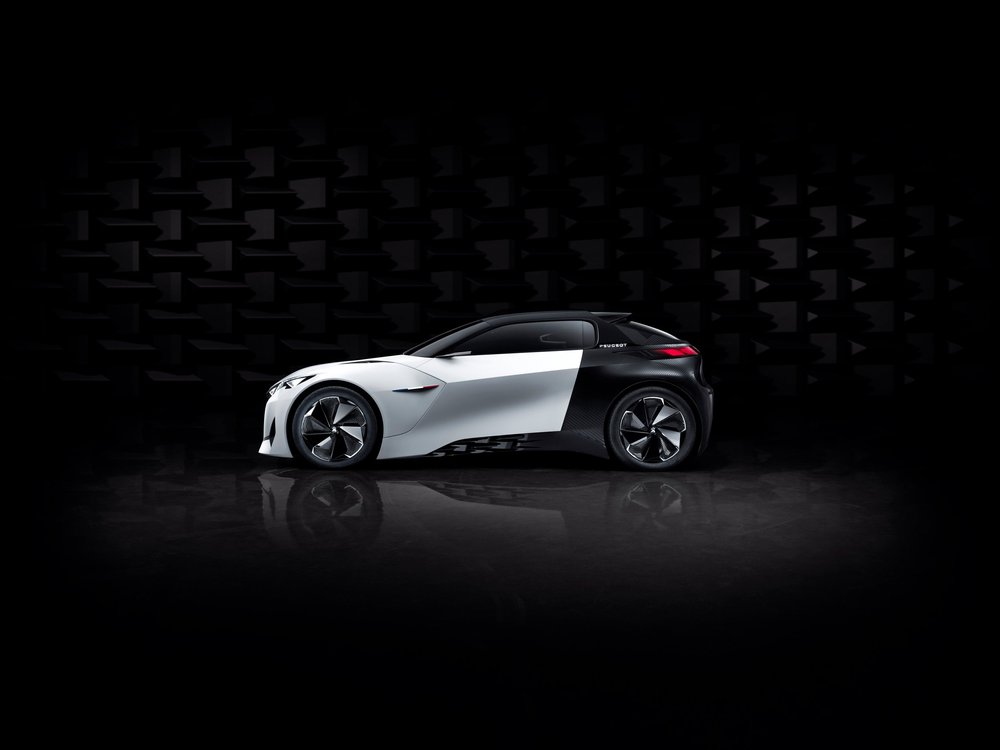
Peugeot Fractal concept-car publicity, shot at the Peugeot Design Centre in Paris. Fractal public-launch context: 2015, documented by Peugeot's 1 September 2015 release; Wallace shoot and exact portfolio-file dates unverified. The photographer identifies worldwide publicity and advertising/digital uses. Inspected the side-profile and elevated front-three-quarter images linked from automotive-clients: white and black bodywork, controlled highlights, dark acoustic-block surroundings and a reflective floor. The pale technical cutaway is a separate informational register, not a defining hero exemplar
-
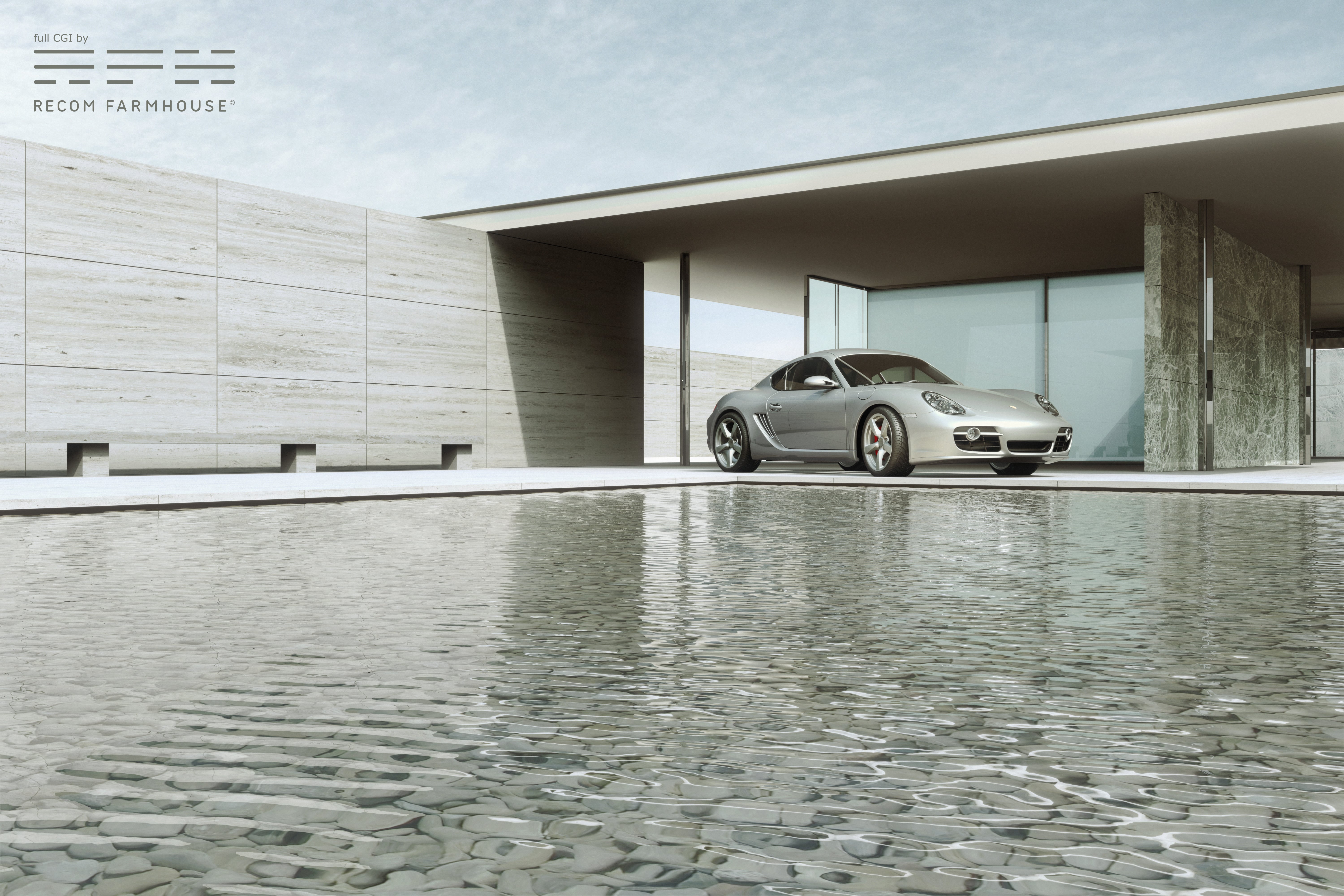
Recom Farmhouse, Porsche / Full CGI, undated studio portfolio project. Inspected 14-11_MIES_WithLogo.jpg
a silver coupe in a low three-quarter view beside a modern pavilion and reflecting pool, with photographic material modelling and a restrained pale environment. The image and page explicitly identify full CGI. This is evidence of the rendered automotive-hero idiom, not a verified Porsche advertising commission or a dated campaign; the studio watermark is not a manufacturer advertisement layout
-
Ford Motor Company of Canada, Sales Brochure, 1994 Ford Mustang, September 1993
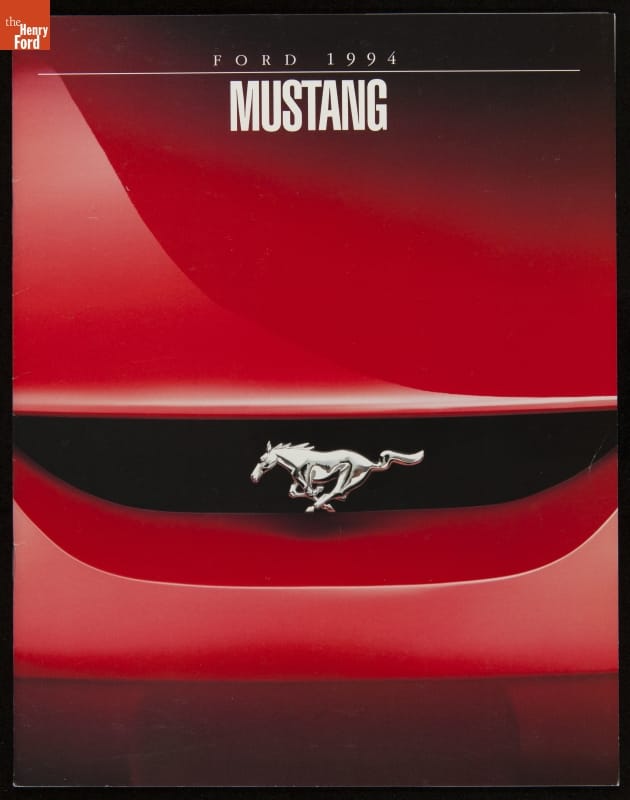
The Henry Ford, object 64.167.175.74, artifact 383757. Inspected finished cover THF232623: a red hood and recessed black grille fill the page, with bright reflected bands and a chrome horse badge as the focal accent. Small widely spaced serif capitals FORD 1994 sit above a thin rule and condensed sans-serif MUSTANG. Curved body planes, overlap and shaded recesses supply depth without a visible floor or complete vehicle. This dated intervening cover supports the close-detail, highlight-led branch of the register, not a universal three-quarter shot. The museum attributes the brochure to Ford Motor Company of Canada; its photographer and designer are unverified
05
Where it comes from, and what it’s close to
Nothing earlier is recorded: in the atlas it is a starting point.
Automotive Hero Advertising (Car Photography to CGI) 1969–present
No later style in the atlas grew out of it yet.
Alike in its design choices


06
Combine it with
Styles Automotive Hero Advertising (Car Photography to CGI) pairs well with or plays against, from the research. Each is worked out as a combination: which style gives the type, the colours and the forms.
- CGI Product Visualisation (Photoreal Product Renders) Pairs well · Borrow convincing rendered materials and consistent product identity, but stage one vehicle in a depth-bearing hero scene rather than a retailer's pale-ground comparison grid.
- Hyperreal Photo-Composite Advertising (Photoshop Era) Contrasts · Use seamless light and perspective to make the vehicle desirable without requiring an impossible event or scale joke; a polished car image is not by itself evidence of compositing.
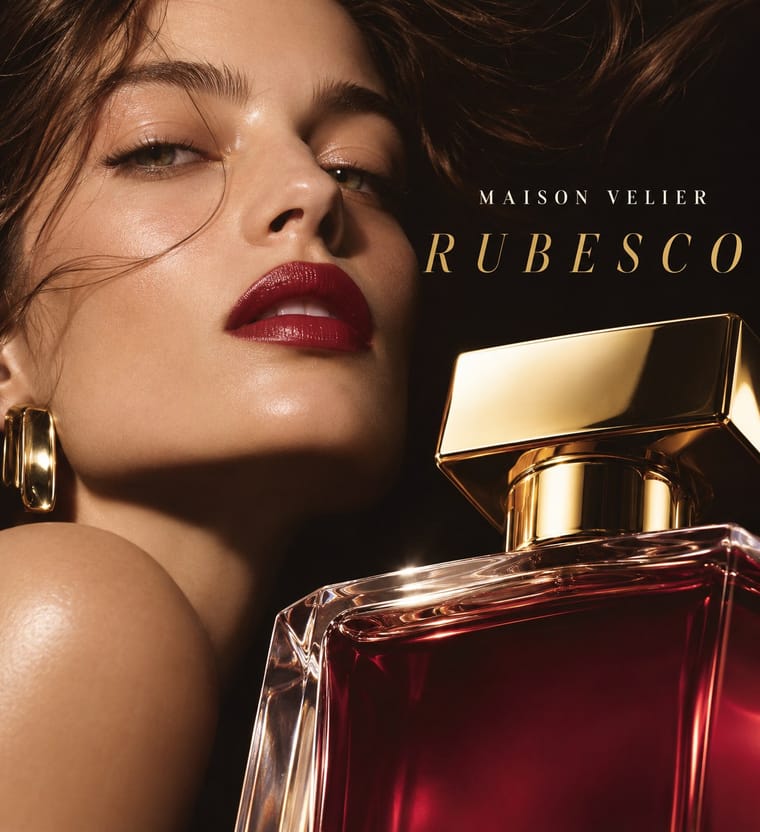
- Luxury Fragrance and Beauty Campaign Contrasts · Let the vehicle's body and material finish carry desire rather than making a celebrity portrait primary and adding a secondary bottle pack shot.
- Creative Revolution Print Advertising (Classic Long-Copy Ads) Contrasts · Replace the photograph-headline-long-copy argument with a spatially modelled, reflective vehicle portrait; a car subject alone does not turn a DDB-style copy-led page into a hero advertisement.
07
Often taken for
Automotive Hero Advertising has no real works recorded yet, so these are its nearest styles by its choices alone, with the choices that tell them apart.
-
Luxury Fragrance and Beauty Campaign
Luxury Fragrance and Beauty Campaign is one of Automotive Hero Advertising’s nearest styles by choices; no real work of either fits the other better.
Choices that tell Automotive Hero Advertising and Luxury Fragrance and Beauty Campaign apart Choice Automotive Hero Advertising Luxury Fragrance and Beauty Campaign Illusion of depth defining occasional Didone — characteristic Web & CSS characteristic — Wide letterspacing — characteristic Technological & futurist characteristic — No shared descent in the atlas: they reached these choices separately.
-
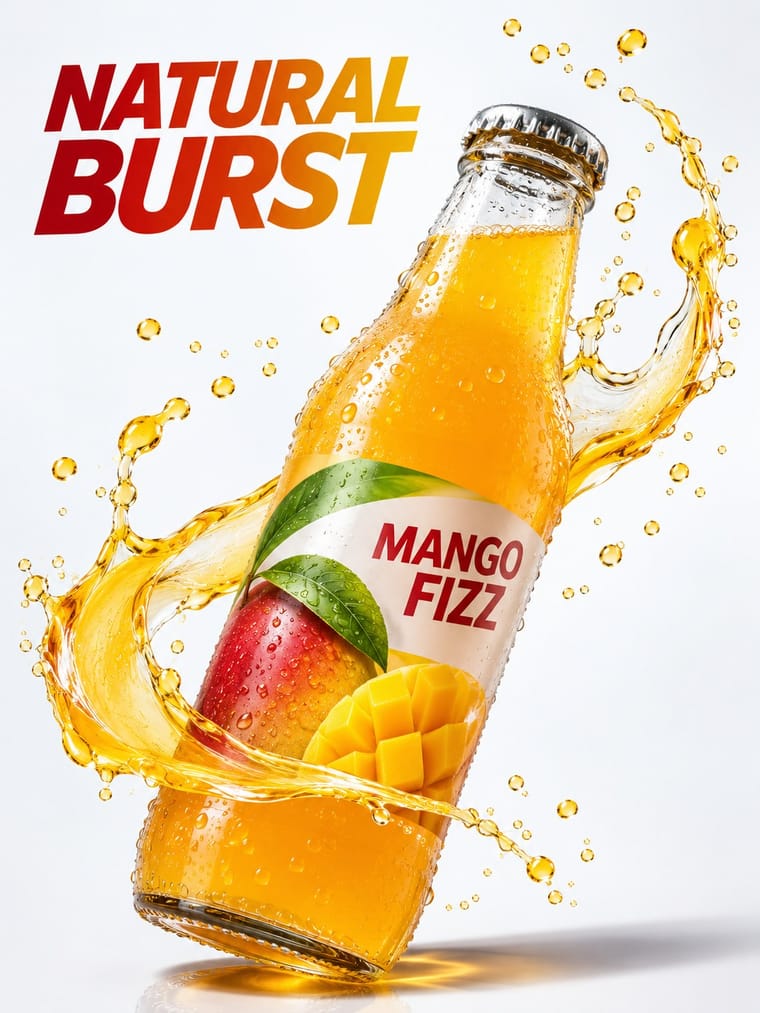
Splash and High-Speed Product Photography in Advertising
Splash and High-Speed Product Photography in Advertising is one of Automotive Hero Advertising’s nearest styles by choices; no real work of either fits the other better.
Choices that tell Automotive Hero Advertising and Splash and High-Speed Product Photography in Advertising apart Choice Automotive Hero Advertising Splash and High-Speed Product Photography in Advertising 3D render characteristic — Biomorphic curves — defining Restrained accents characteristic — Visual tension — characteristic Technological & futurist characteristic — No shared descent in the atlas: they reached these choices separately.
-
Hyperreal Photo-Composite Advertising (Photoshop Era)
Hyperreal Photo-Composite Advertising is one of Automotive Hero Advertising’s nearest styles by choices; no real work of either fits the other better.
Choices that tell Automotive Hero Advertising and Hyperreal Photo-Composite Advertising apart Choice Automotive Hero Advertising Hyperreal Photo-Composite Advertising Restrained accents characteristic — Photomontage — defining Luxurious & glamorous characteristic — Treated photography — defining Full polychrome — characteristic No shared descent in the atlas: they reached these choices separately.
-
Property-Marketing Architectural Visualisation (Photoreal Archviz Renders)
Property-Marketing Architectural Visualisation is one of Automotive Hero Advertising’s nearest styles by choices; no real work of either fits the other better.
Choices that tell Automotive Hero Advertising and Property-Marketing Architectural Visualisation apart Choice Automotive Hero Advertising Property-Marketing Architectural Visualisation Dark ground characteristic — Rectilinear — characteristic Straight photography characteristic — Photomontage — characteristic Dynamic asymmetry characteristic — No shared descent in the atlas: they reached these choices separately.
— means the choice isn’t among the style’s recorded choices. Critics recorded each work’s choices with the styles’ descriptions in view, so this shows whether the descriptions hold together, not proof that they are right.
08
Sources
- The Henry Ford, Sales Brochure for 1970 Ford Mustang, Mustang '70', https://www.thehenryford.org/collections/explore/artifact/383695 — primary holding-institution record: Ford Motor Company, August 1969 manufacture, 1970 subject date, Dearborn, object 64.167.175.60, paper, multicoloured. Inspected cover https://collections-media.thehenryford.org/CollectionImages/_detail/photos/thf232079.jpg and following pages thf232080.jpg and thf232081.jpg. Within this brochure only the cover supplies the completed hero-page typography; the later pages show how long copy and interior detail coexist elsewhere in the brochure.
- The Henry Ford, Sales Brochure, 1994 Ford Mustang, https://www.thehenryford.org/collections/explore/artifact/383757 — independently retrieved primary record confirms September 1993 manufacture, 1994 subject date, Ford Motor Company of Canada, trade catalogue, paper and object 64.167.175.74. Visually inspected the finished cover https://collections-media.thehenryford.org/CollectionImages/_detail/photos/thf232623.jpg : red body close-up, shaded grille recess, bright reflected bands, chrome horse badge, small serif capitals above condensed sans-serif model lettering. This bridges the inspected historical examples and tests the principles: depth can come from body curvature and overlap without a complete vehicle or visible floor. Photographer, designer and printing process are not established; it is not evidence of a separately identified creative team or uninterrupted historical continuity. No qualifying exact-file image licence established.
- Peugeot, FRACTAL amplifies the PEUGEOT i-Cockpit with sound, 1 September 2015, https://www.media.stellantis.com/em-en/peugeot/press/fractal-amplifies-the-peugeot-i-cockpit-with-sound — independently checked primary release dates the concept's public-launch context, not Wallace's shoot or exact files, and describes intense-white and matt-black bodywork. Peugeot's 23 November 2015 retrospective https://www.media.stellantis.com/em-en/peugeot/press/peugeot-fractal-and-artoyz-leoz-s-move-into-peugeot-avenue-for-christmas identifies its first presentation as Frankfurt. The photographer's conflicting Geneva wording is not adopted; no show name is needed to classify the images.
6 more sources
- Tim Wallace / AmbientLife, Automotive Clients, https://www.ambientlife.co.uk/automotive-clients — primary account of McLaren Super Series and MSO brochure commissions and Peugeot work. Explicitly describes full-body and overhead captures, UK specialist studios, controlled lighting, consistent brand guidelines, web and print advertising uses, and the 570S-based Genuine Accessories Catalogue. No date is inferred for the pictured 720S from model year or upload paths.
- Tim Wallace / AmbientLife, McLaren Super Series images linked from automotive-clients: https://images.squarespace-cdn.com/content/v1/66275a93fb4c9266bedc801b/33b940be-1c06-4af0-afd1-b18f8be333a2/McLaren+720s+super+car?format=1000w — inspected blue rear-three-quarter hero. Also inspected https://images.squarespace-cdn.com/content/v1/66275a93fb4c9266bedc801b/2f53a13e-fb46-443c-8001-862ce76000e7/Car+Photography+of+McLaren+by+Tim+Wallace?format=1000w — dark rear-body crop; and the linked a89a4119-f082-4e49-82bb-7db312b682b0 accessory montage. A portfolio montage is not presumed to be a finished brochure spread.
- Tim Wallace / AmbientLife, Peugeot - The Concept, https://www.ambientlife.co.uk/news/peugeot-shooting-a-concept — primary account confirms Fractal, Peugeot Design Centre Paris, Cream Production, worldwide campaign/publicity uses, reflection control and emotional rather than purely documentary presentation. This account alone does not establish the shoot year; Peugeot's separate 1 September 2015 release dates the concept's public-launch context, not these exact portfolio files. Inspected the automotive-clients assets https://images.squarespace-cdn.com/content/v1/66275a93fb4c9266bedc801b/c427b2ca-e497-484d-8694-5bc28fcd2704/Peugeot+Car+Photography+Tim+Wallace+13.jpg?format=1000w and https://images.squarespace-cdn.com/content/v1/66275a93fb4c9266bedc801b/e9e591d4-4540-4566-abff-4bb216850953/Prototype+car+FRACTAL.jpg?format=1000w . The separately inspected pale technical cutaway is excluded from hero-trait weighting.
- Tim Wallace / AmbientLife, Car Photography, https://www.ambientlife.co.uk/car-photography — primary explanation of studio and location production, reflections, lighting, brand consistency and dynamic motion images for brochures. Motion is documented as a possible production variant, but no motion-blur requirement is encoded because the selected hero pictures are static. Site footer expressly reserves image copyright.
- Recom Farmhouse, Porsche / Full CGI, https://recomfarmhouse.com/project/porsche-full-cgi — studio project page and image explicitly identify full CGI; inspected https://recomfarmhouse.com/admin/wp-content/uploads/2023/12/14-11_MIES_WithLogo.jpg . Neither campaign date nor client commission is established; the 2023 upload directory is not a production date. Its restrained, pale architecture and water counter the assumption that all automotive heroes require black grounds or wet tarmac.
- Calibration: read atlas entries creative-revolution-print-advertising, cgi-product-visualisation, luxury-fragrance-campaign, hyperreal-photo-composite-ad and splash-product-photography before weighting. Shared commercial subject matter is not treated as proof of descent. No universal low-angle, motion-blur, photomontage or glossy-magazine printing attribution is inferred from a polished finished image; medium.offset remains occasional because the museum identifies a printed brochure but not its press process. Wider historical and geographic sampling remains a useful subsequent specimen task.

How Stylogeny researches and checks a style: where the facts come from.