Style combination · Contrasts
Automotive Hero Advertising × Hyperreal Photo-Composite Advertising
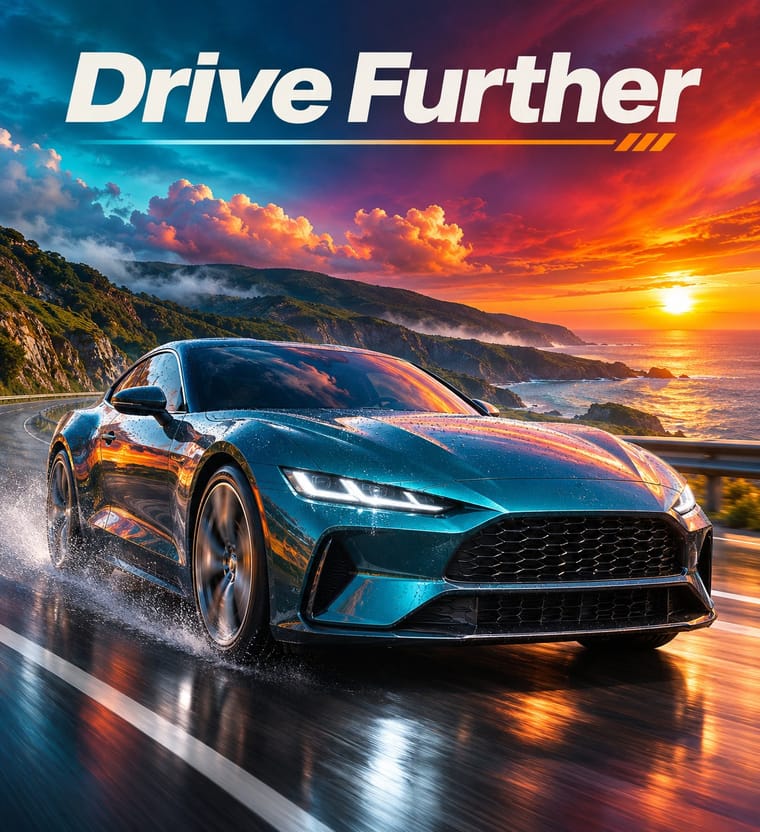
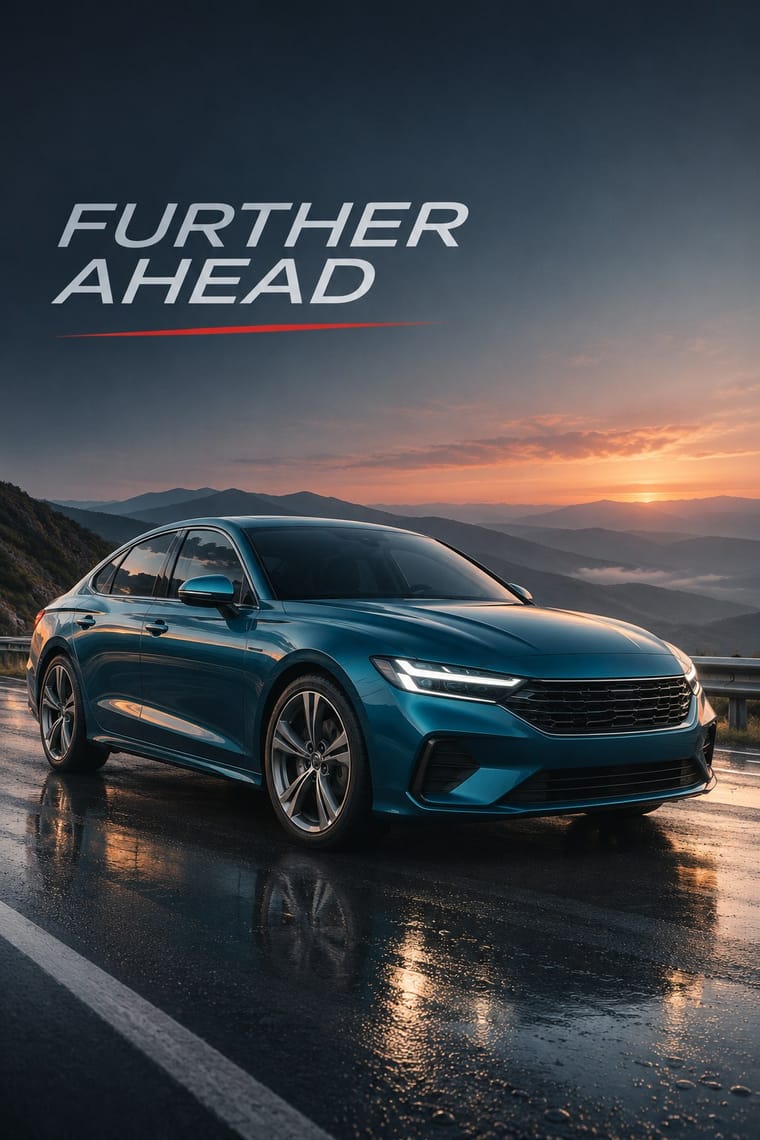
Use seamless light and perspective to make the vehicle desirable without requiring an impossible event or scale joke; a polished car image is not by itself evidence of compositing.
Mix them and make something Automotive Hero Advertising Hyperreal Photo-Composite Advertising
01
What each style brings
Each part of the design comes from the style with the stronger say in it, and each style gives at least two.
Automotive Hero Advertising (Car Photography to CGI) Hyperreal Photo-Composite Advertising (Photoshop Era)
- Type from Hyperreal Photo-Composite Advertising
-
- Colour from Hyperreal Photo-Composite Advertising
- Form from Automotive Hero Advertising
- Composition from Automotive Hero Advertising
- Surface from Automotive Hero Advertising
02
The type
Open fonts standing in for each style’s own type, which is often hand-drawn or commercial.
Text · Automotive Hero Advertising
A commercial image-led register that presents a car as a desirable sculptural object: controlled reflections describe the body, modelled surfaces or a receding setting give it presence, and the model name or short claim remains subordinate. Studio photographs and photoreal CGI can serve the same hero role. Unlike classic long-copy advertising, the argument is the vehicle's appearance, material finish and atmosphere rather than a headline developed in prose.
Jost; Automotive Hero Advertising used Light, close-set lowercase sans-serif model-title lettering, as visible on the Mustang '70 cover; exact face not verified and Condensed sans-serif model-title capitals paired with small widely spaced serif capitals, visible on the September 1993 Mustang brochure cover; exact faces unverified
03
The colours
The ground and leading colours come from Hyperreal Photo-Composite Advertising, with a counter-accent from Automotive Hero Advertising. The ink reads on the ground at 4.5:1 or more.
Automotive Hero Advertising (Car Photography to CGI) Hyperreal Photo-Composite Advertising (Photoshop Era)
-
#0b1d33ground · 36% -
#e9e4d8ink · 14% -
#f2a43aaccent · 18% -
#087c96accent · 14% -
#d9482baccent · 10% -
#9b3026accent · 8%
As CSS
:root {
  --ground: #0b1d33;
  --ink: #e9e4d8;
  --accent-1: #f2a43a;
  --accent-2: #087c96;
  --accent-3: #d9482b;
  --accent-4: #9b3026;
  --font-display: "Inter Tight", sans-serif;
  --font-text: "Jost", sans-serif;
}
Use it with care
Automotive Hero Advertising (Car Photography to CGI): This is a recurring commercial register, not a self-declared movement and not all automotive advertising. The inspected corpus supports a 1969 photographic lower bound but does not establish the scout's proposed 1965 start, a universal replacement of painting by photography, or when CGI became prevalent. The Fractal public-launch context is 2015, documented by Peugeot's 1 September 2015 release; Wallace's shoot and exact portfolio-file dates remain unverified, as do the McLaren and CGI project years. No motor-show attribution is adopted from the photographer's account. Asset-upload dates and a website's generated publication timestamp are not campaign dates. The September 1993 Mustang cover supplies a dated intervening finished layout, not proof of uninterrupted continuity or an independently identified photographic team. Its close crop supports depth through body modelling rather than a compulsory receding floor; the original four defining traits remain appropriate, with surface.glossy describing highlights rather than uniformly glossy paint. The CGI portfolio example is not established as a commissioned ad. Typography is intentionally occasional because most contemporary evidence consists of campaign image assets, not finished layouts; no exact commercial font or universal wide-tracked-capitals rule is asserted. The palette is a visual synthesis, not manufacturer colour specifications. Photograph and render are alternative production routes: neither alone defines the register. No open-file image licence was verified; future specimens must be link-only unless a qualifying exact-file licence is established. Keep claims about performance, safety and environmental benefits separate from pictorial mood, and do not reproduce historical gender objectification as a necessary stylistic feature. Vocabulary gap: controlled long reflections that articulate automotive bodywork; stand-in: surface.glossy. Vocabulary gap: camera angle and apparent focal-length treatment of the hero vehicle; stand-in: space.depth-illusion, with viewpoints described in the principles rather than falsely encoded as layout.diagonal.
04
The two styles

05
More combinations
With Automotive Hero Advertising
- CGI Product Visualisation (Photoreal Product Renders) Pairs well · Borrow convincing rendered materials and consistent product identity, but stage one vehicle in a depth-bearing hero scene rather than a retailer's pale-ground comparison grid.
- Luxury Fragrance and Beauty Campaign Contrasts · Let the vehicle's body and material finish carry desire rather than making a celebrity portrait primary and adding a secondary bottle pack shot.
- Creative Revolution Print Advertising (Classic Long-Copy Ads) Contrasts · Replace the photograph-headline-long-copy argument with a spatially modelled, reflective vehicle portrait; a car subject alone does not turn a DDB-style copy-led page into a hero advertisement.
With Hyperreal Photo-Composite Advertising
- YouTube Thumbnail Style (the 'YouTube Face') Contrasts · Thumbnails composite with visible cut-outs and shouted type; this style hides every join.
- Luxury Fragrance and Beauty Campaign Contrasts · Fragrance campaigns keep the product hidden or implied and stage no impossible event; here the seamless impossible scene is the idea.
- Airbrush Surrealism (1970s–80s Illustration) Pairs well · Same impossible, glossy single image, but built from photographs rather than painted.
- Hipgnosis Photographic Concept Sleeve Pairs well · Borrow the staged impossible photograph; hide the seams digitally instead of showing darkroom craft.
- AIZ Political Photomontage (Heartfield) Contrasts · Heartfield exposed the cuts for argument; here the cuts are erased for credibility. The technique descends from photomontage.
- Splash and High-Speed Product Photography in Advertising Contrasts · Splash work is one real studio shot of the product; this style fuses many photographs into an impossible scene.
- Property-Marketing Architectural Visualisation (Photoreal Archviz Renders) Pairs well · Shares the seamless, photographic finish of composited elements; here the composite sells a sited building and a way of life.