Pictorial & machine age · 1930–present · Oceania, North America
Aloha Shirt Print ( Hawaiian Pictorial Textile )
Also known as Aloha shirt, Hawaiian shirt prints, Alohawear, Shaheen prints
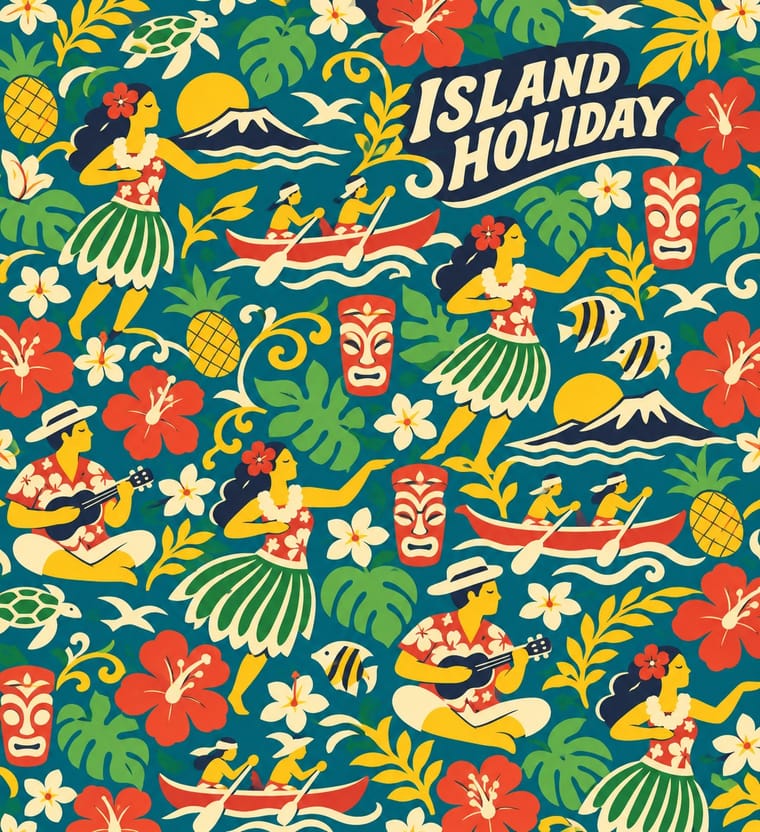
A Honolulu tradition of large-scale, all-over pictorial prints on shirt cloth, begun in the 1930s with Japanese kimono fabric and developed by local makers into hand-printed scenes of palms, florals, surfboards, drinks and Hawaiian quilt and tapa-derived patterns. It is a wearable commercial textile and local-identity dress, not bar kitsch.
Make something in this style Get advice in this style Mix it with another style
Use it with care
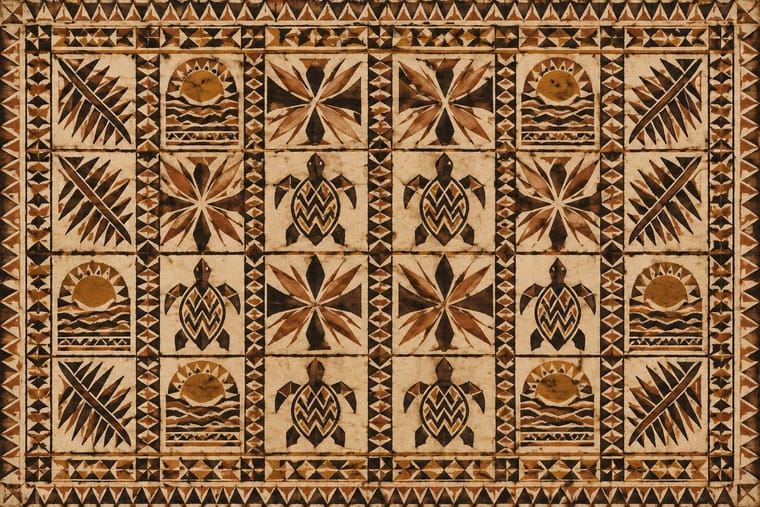
The Hawaiian quilt (kapa lau) and kapa (tapa) patterns that aloha shirts borrow belong to Native Hawaiian craft and carry family, genealogical and place meanings, and the tradition itself was shaped by Japanese, Chinese, Portuguese and Native Hawaiian makers in a tourist economy. Use motifs as quoted commercial design rather than as Native Hawaiian art: do not copy a named quilt or kapa pattern without the maker's or community's permission, avoid generic 'Polynesian' mixes of Hawaiian, Maori and Marquesan symbols, and commission Native Hawaiian designers when the subject is Hawai'i itself. Vocabulary gap: garment-engineered pattern placement (matching across pocket and placket, cut-to-pattern); stand-in: layout.all-over. Vocabulary gap: tourist or leisure souvenir mood (resort, holiday, local-identity dress); stand-in: tone.playful. Many aloha prints are placed or engineered rather than repeating.
01
Its picture in other colours
Change a colour and every picture on this page follows. It happens in your browser, from the same pictures: nothing new is made or saved.
Choose a colour to change it
-
#0b6e8a -
#f2e8d0 -
#d6402f -
#f0b429 -
#2e7d4f -
#1c2b4a
A faded colour isn’t in these pictures, so changing it changes nothing.
Light and dark stay where they are; greys hardly move.
More colours: any style’s, or your own
The pictures show the style’s own colours.
02
Make something in this style
Say what you need, and Stylogeny’s image studio draws it from Aloha Shirt Print (Hawaiian Pictorial Textile)’s design choices and checks it against them. It takes about a minute, and you get a link to share.
03
How it works
Palette
-
#0b6e8aground · 25% -
#f2e8d0ink · 8% -
#d6402faccent · 10% -
#f0b429accent · 16% -
#2e7d4faccent · 19% -
#1c2b4aaccent · 3%
Shares measured from its picture. The ground is what the pictures sit on (of the colours covering most, the most neutral), the ink stands out from it most, the rest are accents.
Typefaces
-
Hand-lettered 'Hawaii' and 'Aloha' labels
-
Mid-century brush-script and show-card lettering on garment labels
- Cover the whole shirt panel with one continuous all-over print instead of a single central picture.
- Draw tropical motifs (hibiscus, palms, surf, outrigger canoes, drinks) as flat, stylised shapes in saturated, separate colours.
- Match the pattern across the pocket and front placket so the print reads as one cloth.
- Scale the motifs large enough to read as scenes from across a room, then repeat them in a rhythm that suits the cut of the garment.
- Choose motifs from Hawaiian life and landscape, and credit the source when a quilt or tapa pattern is borrowed.
Where and when Honolulu, Hawai'i: from the 1930s local shops such as Musa-Shiya (Koichiro Miyamoto) made shirts from Japanese kimono cloth, followed by Ellery Chun's King-Smith Clothiers (Chun's 1936 'aloha sportswear' trademark is real, but the story that he invented the shirt is a myth), Kamehameha and Branfleet (both 1936), Alfred Shaheen (1948), and Tori Richard and Reyn Spooner (1956, as its precursor Spooner's of Waikiki)
Honolulu, Hawai'i: from the 1930s local shops such as Musa-Shiya (Koichiro Miyamoto) made shirts from Japanese kimono cloth, followed by Ellery Chun's King-Smith Clothiers (Chun's 1936 'aloha sportswear' trademark is real, but the story that he invented the shirt is a myth), Kamehameha and Branfleet (both 1936), Alfred Shaheen (1948), and Tori Richard and Reyn Spooner (1956, as its precursor Spooner's of Waikiki)
Change it with an idea. Any of the 73 moves that make a design say something can go on this style.
04
Its design choices
From Stylogeny’s vocabulary of design choices: defining choices make the style, characteristic ones are usual, occasional ones turn up now and then.
- Layout & composition
- Space & hierarchy
- Typography
- Colour
- Form & shape
- Surface & texture
- Ornament
- Imagery
- Medium & production
- Tone & intent
- Avoids
- Ornament-free, Generous white space, Modular grid, Grotesque & neo-grotesque, Rational & objective, Technological & futurist, Monochrome, Gloss & highlights
How its pictures are made Systematic
Kind of picture: Systematic
Known for
-
Musa-Shiya Shoten
first known use of the name 'aloha shirt', Honolulu Advertiser advertisement, 28 June 1935
-
Ellery Chun, King-Smith Clothiers
'aloha sportswear' trademark, 1936
-
Alfred Shaheen (from 1948), including the Shaheen shirt Elvis Presley wore on the Blue Hawaii soundtrack cover
1961
-
Hawaiian Fashion Guild's Aloha Friday campaign
1962; official from 1966
-
Tori Richard (1956) and Reyn Spooner
1956, as Spooner's of Waikiki
05
Where it comes from, and what it’s close to
Borrowed from
Aloha Shirt Print (Hawaiian Pictorial Textile) 1930–present
Led to
Alike in its design choices
06
Combine it with
Styles Aloha Shirt Print (Hawaiian Pictorial Textile) pairs well with or plays against, from the research. Each is worked out as a combination: which style gives the type, the colours and the forms.
- Pacific Barkcloth (Tapa) Design Contrasts · Borrows tapa patterns as decoration, whereas tapa itself is ritual and gift cloth; keep the distinction.
- African Wax & Fancy Print Pairs well · Another commercial all-over textile print that became a marker of regional identity.
- Serizawa Katazome and Mingei Stencil-Dye Graphics Pairs well · Japanese textile ties: the early shirts were cut from Japanese kasuri and kimono cloth; katazome stencil dyeing is a related Japanese cloth-printing tradition, not a documented source of aloha prints.
- Tiki Pop (Polynesian Pop) Pairs well · Shares the tropical motifs and mid-century leisure mood, but moves them from bar and restaurant kitsch onto wearable cloth.
07
Often taken for
Aloha Shirt Print has no real works recorded yet, so these are its nearest styles by its choices alone, with the choices that tell them apart.
-
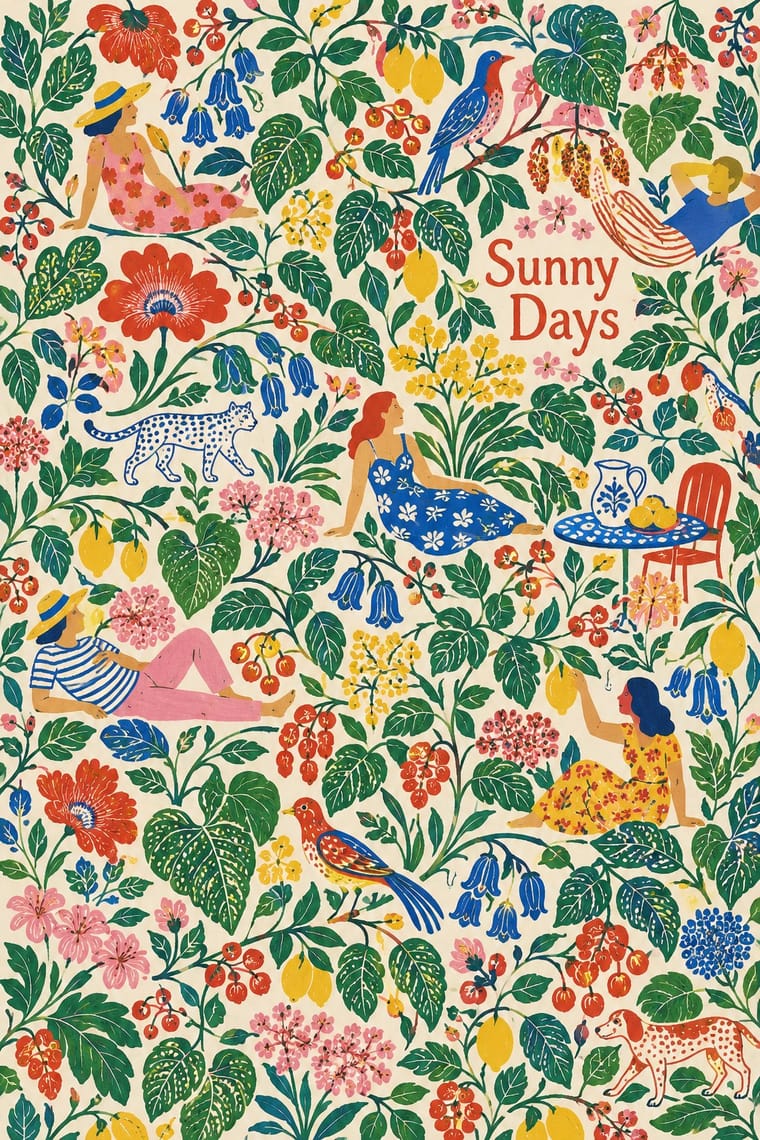
Josef Frank and Svenskt Tenn Botanical Prints
Josef Frank and Svenskt Tenn Botanical Prints is one of Aloha Shirt Print’s nearest styles by choices; no real work of either fits the other better.
Choices that tell Aloha Shirt Print and Josef Frank and Svenskt Tenn Botanical Prints apart Choice Aloha Shirt Print Josef Frank and Svenskt Tenn Botanical Prints Complementary clash characteristic — Light ground occasional defining Folk & sacred symbols characteristic — Line illustration — characteristic Full bleed — characteristic No shared descent in the atlas: they reached these choices separately.
-
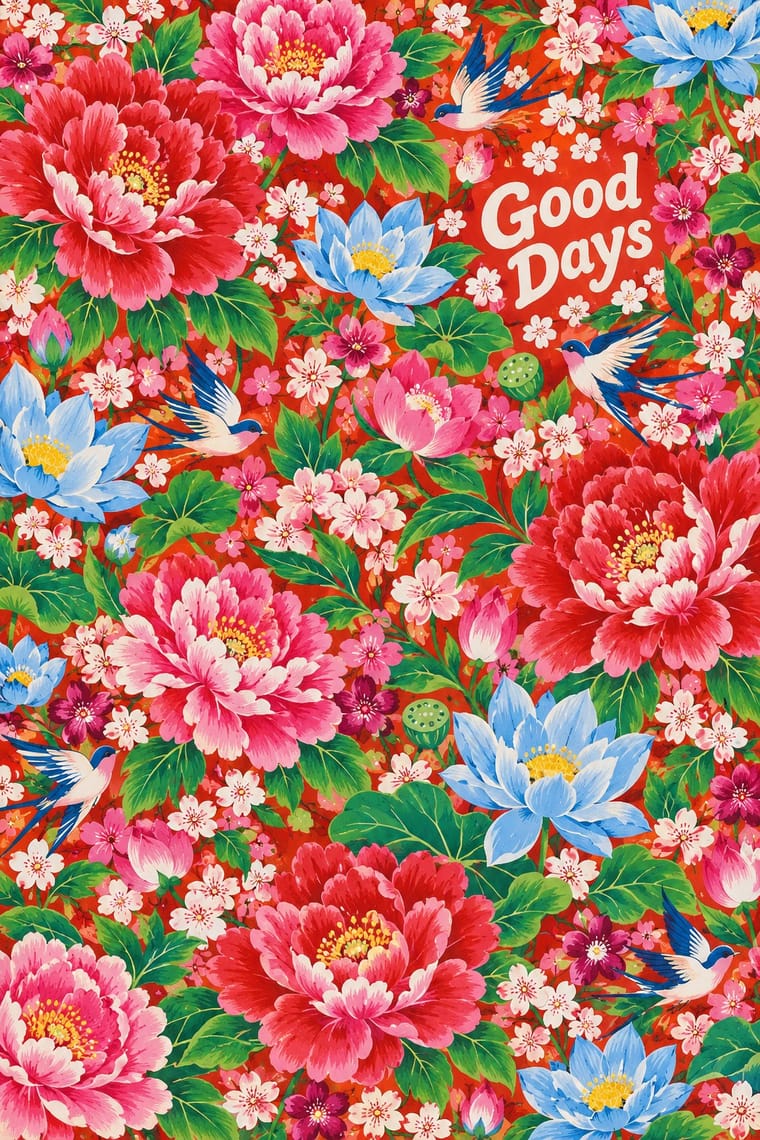
Taiwan Floral Cloth (Huabu)
Taiwan Floral Cloth is one of Aloha Shirt Print’s nearest styles by choices; no real work of either fits the other better.
Choices that tell Aloha Shirt Print and Taiwan Floral Cloth apart Choice Aloha Shirt Print Taiwan Floral Cloth Stylised figuration defining occasional Full bleed — characteristic Playful & witty defining occasional Architecture & signage — characteristic Screen printing characteristic — No shared descent in the atlas: they reached these choices separately.
-
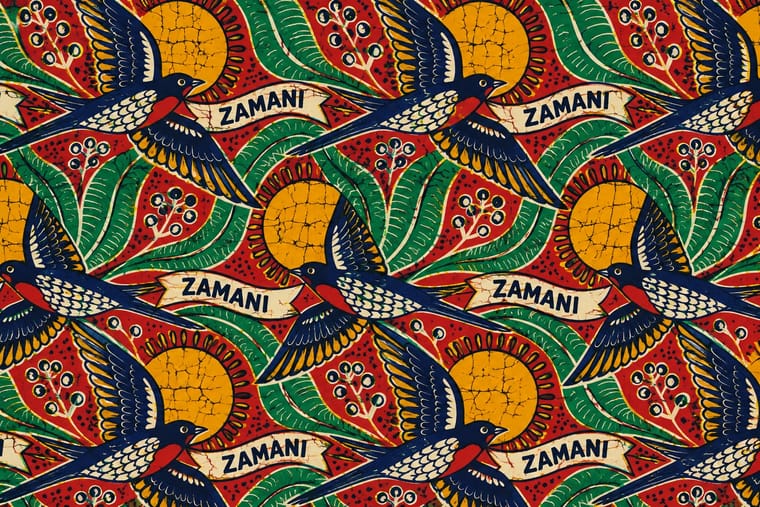
African Wax & Fancy Print
African Wax & Fancy Print is one of Aloha Shirt Print’s nearest styles by choices; no real work of either fits the other better.
Choices that tell Aloha Shirt Print and African Wax apart Choice Aloha Shirt Print African Wax Floral & vegetal defining occasional Misregistration & overprint — defining Flat hierarchy characteristic — Limited spot colours — characteristic Nostalgic & retro characteristic — No shared descent in the atlas: they reached these choices separately.
-
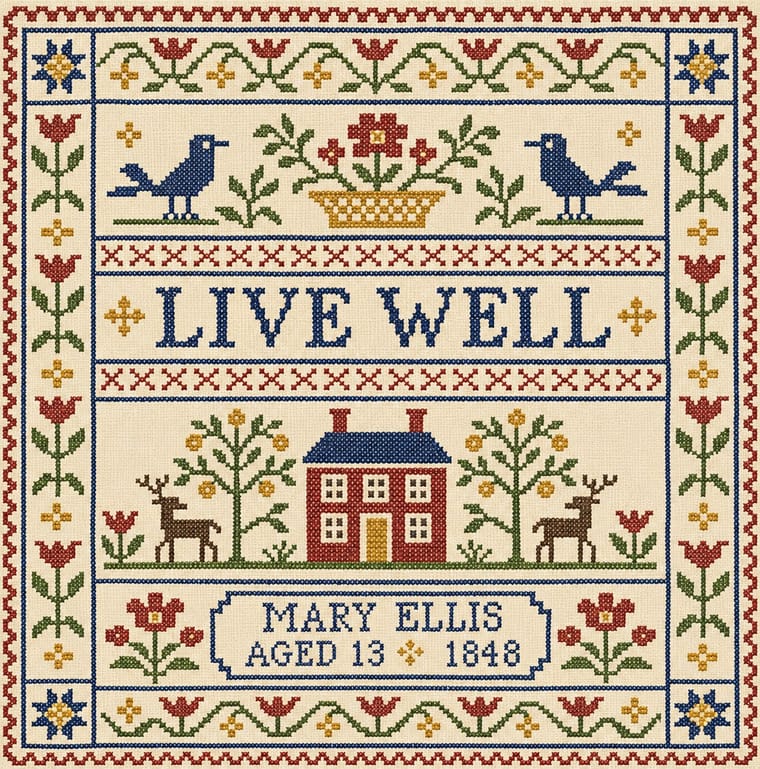
Needlework Sampler Lettering
Needlework Sampler Lettering is one of Aloha Shirt Print’s nearest styles by choices; no real work of either fits the other better.
Choices that tell Aloha Shirt Print and Needlework Sampler Lettering apart Choice Aloha Shirt Print Needlework Sampler Lettering Full polychrome defining occasional Rectilinear — defining All-over field defining occasional Framed panels — defining Flat defining occasional No shared descent in the atlas: they reached these choices separately.
— means the choice isn’t among the style’s recorded choices. Critics recorded each work’s choices with the styles’ descriptions in view, so this shows whether the descriptions hold together, not proof that they are right.
08
Sources
- Wikipedia, 'Aloha shirt' (https://en.wikipedia.org/wiki/Aloha_shirt)
- Wikipedia, 'Alfred Shaheen' (https://en.wikipedia.org/wiki/Alfred_Shaheen): founded 1948; 'Surf 'n Sand Hand Prints' brand and 'Antique Tapa' handprints; Tiare Tapa shirt on the Blue Hawaii cover. It does not state screen printing, hence 'hand-printed' and medium.screenprint at 0.6.
How Stylogeny researches and checks a style: where the facts come from.