Style combination · Pairs well
Aloha Shirt Print × Serizawa Katazome and Mingei Stencil-Dye Graphics
Japanese textile ties: the early shirts were cut from Japanese kasuri and kimono cloth; katazome stencil dyeing is a related Japanese cloth-printing tradition, not a documented source of aloha prints.
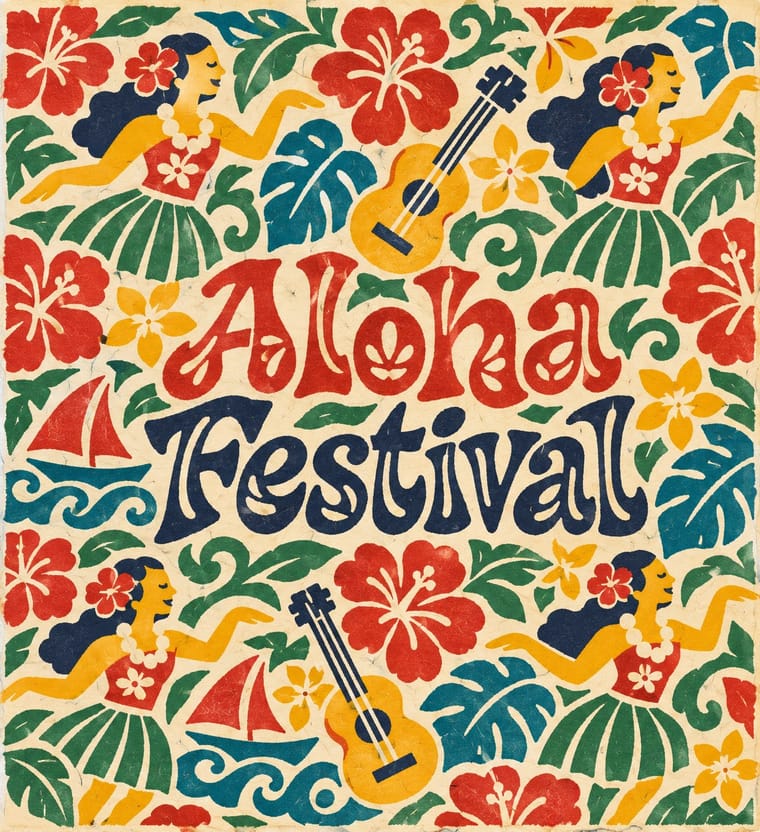
Mix them and make something Aloha Shirt Print Serizawa Katazome and Mingei Stencil-Dye Graphics
01
What each style brings
Each part of the design comes from the style with the stronger say in it, and each style gives at least two.
Aloha Shirt Print (Hawaiian Pictorial Textile) Serizawa Katazome and Mingei Stencil-Dye Graphics
- Type from Serizawa Katazome and Mingei Stencil-Dye Graphics
- Colour from Aloha Shirt Print
- Form from Aloha Shirt Print
- Composition from Aloha Shirt Print
- Surface from Serizawa Katazome and Mingei Stencil-Dye Graphics
02
The type
Open fonts standing in for each style’s own type, which is often hand-drawn or commercial.
Display · Serizawa Katazome and Mingei Stencil-Dye Graphics
Kin
Shippori Mincho, standing in for Hand-cut stencil kana and kanji, dyed together with the picture, for calendar month names, book titles and inscriptions
Text · Aloha Shirt Print
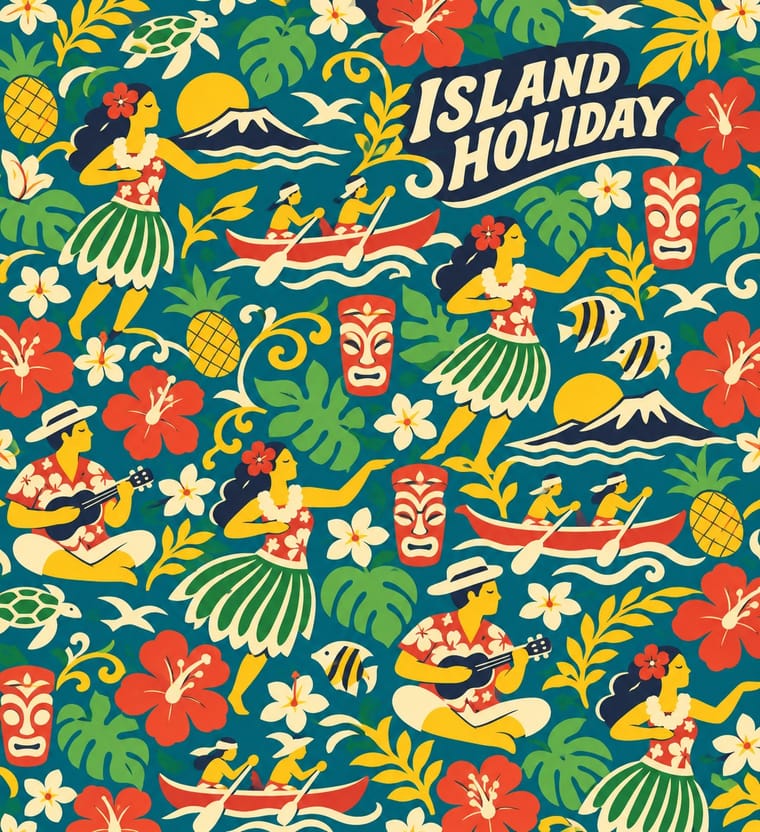
A Honolulu tradition of large-scale, all-over pictorial prints on shirt cloth, begun in the 1930s with Japanese kimono fabric and developed by local makers into hand-printed scenes of palms, florals, surfboards, drinks and Hawaiian quilt and tapa-derived patterns. It is a wearable commercial textile and local-identity dress, not bar kitsch.
Space Grotesk; Aloha Shirt Print used Hand-lettered 'Hawaii' and 'Aloha' labels and Mid-century brush-script and show-card lettering on garment labels
03
The colours
The ground and leading colours come from Aloha Shirt Print, with a counter-accent from Serizawa Katazome and Mingei Stencil-Dye Graphics. The ink reads on the ground at 4.5:1 or more.
Aloha Shirt Print (Hawaiian Pictorial Textile) Serizawa Katazome and Mingei Stencil-Dye Graphics
-
#f2e8d0ground · 36% -
#1c2b4aink · 14% -
#f0b429accent · 18% -
#d6402faccent · 14% -
#0b6e8aaccent · 10% -
#2e7d4faccent · 8%
As CSS
:root {
  --ground: #f2e8d0;
  --ink: #1c2b4a;
  --accent-1: #f0b429;
  --accent-2: #d6402f;
  --accent-3: #0b6e8a;
  --accent-4: #2e7d4f;
  --font-display: "Shippori Mincho", serif;
  --font-text: "Space Grotesk", sans-serif;
}
Use it with care
Aloha Shirt Print (Hawaiian Pictorial Textile): The Hawaiian quilt (kapa lau) and kapa (tapa) patterns that aloha shirts borrow belong to Native Hawaiian craft and carry family, genealogical and place meanings, and the tradition itself was shaped by Japanese, Chinese, Portuguese and Native Hawaiian makers in a tourist economy. Use motifs as quoted commercial design rather than as Native Hawaiian art: do not copy a named quilt or kapa pattern without the maker's or community's permission, avoid generic 'Polynesian' mixes of Hawaiian, Maori and Marquesan symbols, and commission Native Hawaiian designers when the subject is Hawai'i itself. Vocabulary gap: garment-engineered pattern placement (matching across pocket and placket, cut-to-pattern); stand-in: layout.all-over. Vocabulary gap: tourist or leisure souvenir mood (resort, holiday, local-identity dress); stand-in: tone.playful. Many aloha prints are placed or engineered rather than repeating.
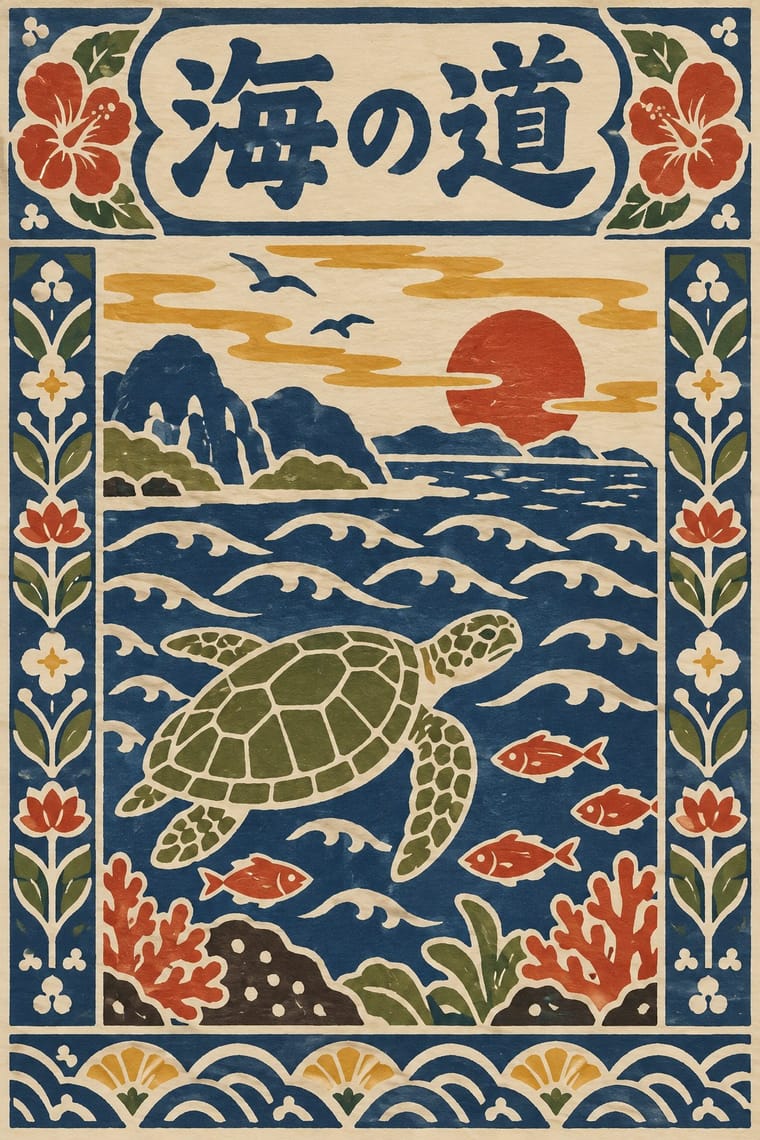
Serizawa Katazome and Mingei Stencil-Dye Graphics: Katazome and Okinawan bingata are living crafts: bingata is an Okinawan (Ryukyuan) tradition, carried on by dye houses such as the Shiroma family, and is protected as an intangible cultural property, so credit Okinawa and its makers when borrowing its colours and motifs, and do not sell printed or generated imitations as hand-dyed katazome or bingata. Mainland mingei collecting of Okinawan and Korean crafts in the 1930s and 1940s is now read critically against Japan's colonial rule over Korea and its treatment of annexed Okinawa, which is one more reason to name Okinawan makers rather than present bingata as Serizawa's invention. Serizawa's and Yunoki's designs are authored works held by their museums: work in the manner rather than copying a calendar or screen. His Buddhist subjects, such as the 1939 scroll of the priest Hōnen, are devotional images, not decoration. Kana and kanji must be real, correct text checked by a fluent reader, never pseudo-script used as texture.
04
The two styles
05
More combinations
With Aloha Shirt Print
- Pacific Barkcloth (Tapa) Design Contrasts · Borrows tapa patterns as decoration, whereas tapa itself is ritual and gift cloth; keep the distinction.
- African Wax & Fancy Print Pairs well · Another commercial all-over textile print that became a marker of regional identity.
- Tiki Pop (Polynesian Pop) Pairs well · Shares the tropical motifs and mid-century leisure mood, but moves them from bar and restaurant kitsch onto wearable cloth.
With Serizawa Katazome and Mingei Stencil-Dye Graphics
- Ukiyo-e Woodblock Prints Contrasts · Ukiyo-e is carved line, urban pleasure and diagonal drama; Serizawa is a stencil edge, rural work and calm panel grids.
- Edo-moji Commercial Lettering (Kanteiryū, Yose-moji, Sumō-ji) Contrasts · Edo-moji crams heavy brush letters for the theatre and the street; Serizawa cuts open, airy letters that share the cloth with pictures.
- Finnish Bold Print (Marimekko Modernism) Pairs well · Both make everyday design from hand-cut shapes in few flat colours; Marimekko's large abstract repeats can carry Serizawa's small figurative panels and stencil letters.
- Kamon (Japanese Family Crests) Pairs well · Crest-like roundels sit naturally beside stencil-dyed panels; draw new crests by the tradition's rules rather than borrowing real family mon.
- Japanese Postwar Modernism Contrasts · Postwar modernism reduces to emblem and white space with set type; Serizawa fills the sheet with hand-cut figures and letters.
- Đông Hồ & Hàng Trống Folk Prints Pairs well · Another East Asian folk picture on handmade paper in earth colours; compare the woodblock's carved line with the stencil's cut field.