Style combination · Pairs well
Aloha Shirt Print × African Wax
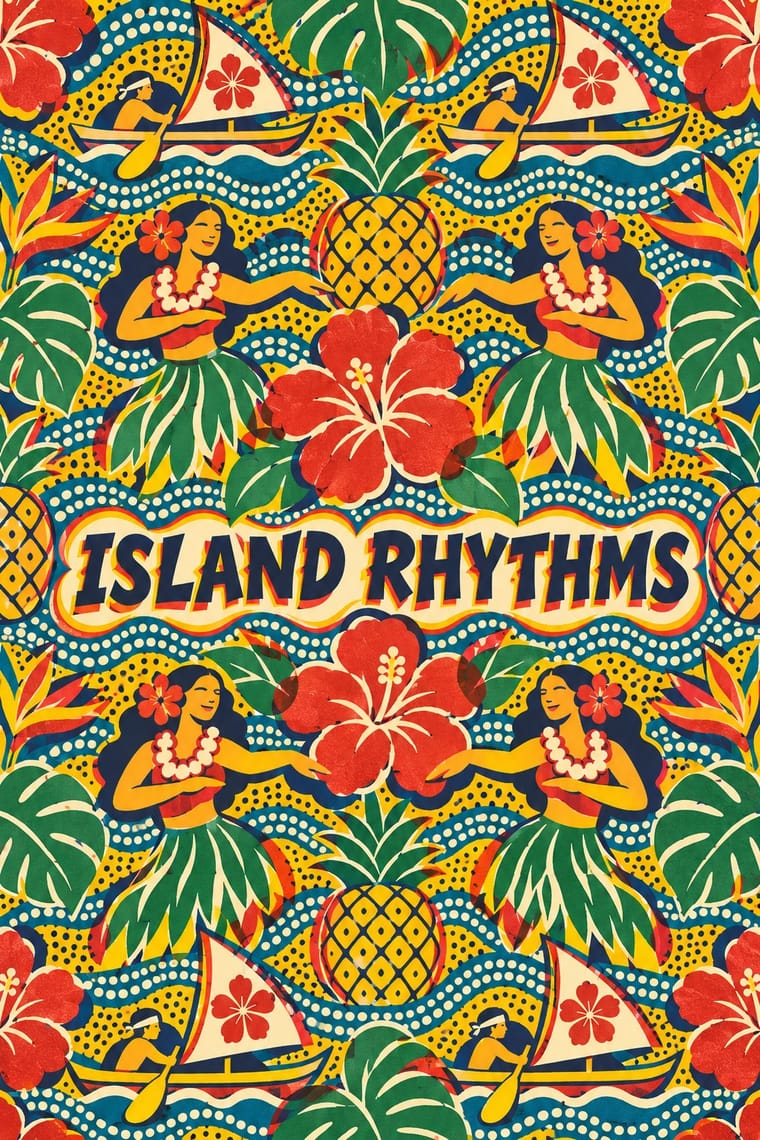
Another commercial all-over textile print that became a marker of regional identity.
01
What each style brings
Each part of the design comes from the style with the stronger say in it, and each style gives at least two.
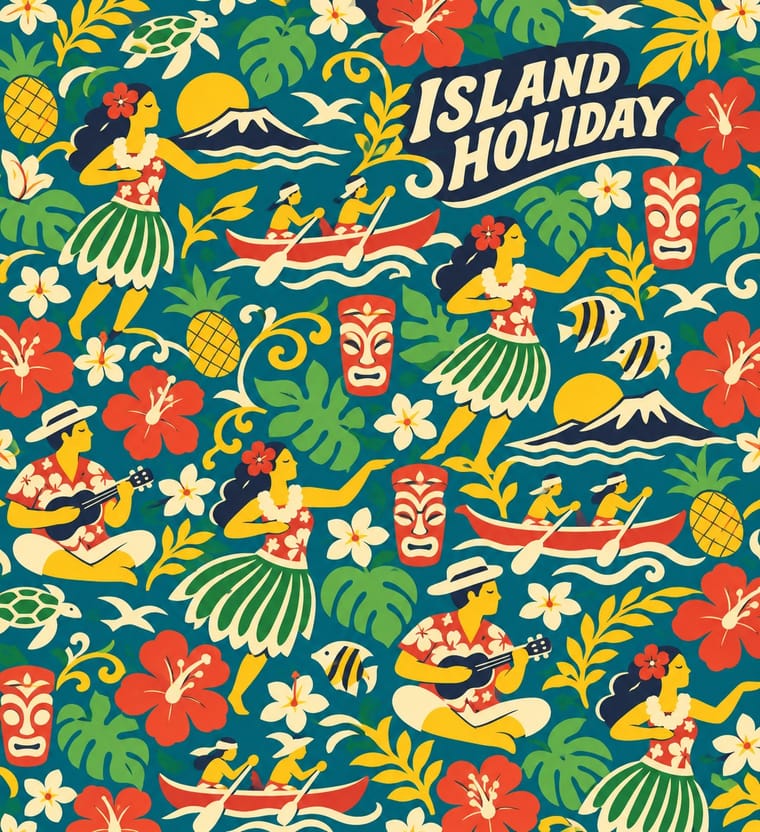
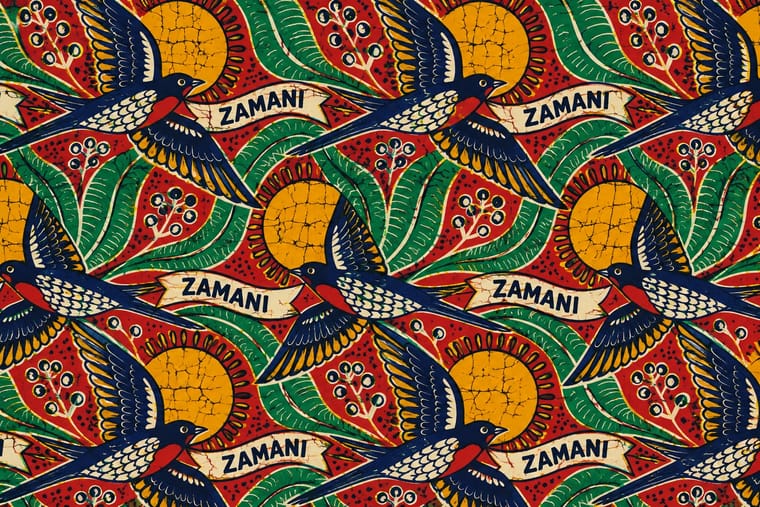
Aloha Shirt Print (Hawaiian Pictorial Textile) African Wax & Fancy Print
- Type from Aloha Shirt Print
-
- Colour from Aloha Shirt Print
- Form from Aloha Shirt Print
- Composition from African Wax
- Surface from African Wax
02
The type
Open fonts standing in for each style’s own type, which is often hand-drawn or commercial.
Display · Aloha Shirt Print
Yay!
Yellowtail; Aloha Shirt Print used Hand-lettered 'Hawaii' and 'Aloha' labels and Mid-century brush-script and show-card lettering on garment labels
Text · African Wax
Industrially printed cotton made for West and Central African markets, first by Dutch and British mills that imitated Javanese batik with resin resist, and later by African mills. Giant emblematic motifs, an indigo key with offset colours and crackle veining repeat across the cloth, and traders name designs after proverbs and events. Cheaper one-sided fancy prints turn the cloth into commemorative media with portraits, emblems and slogans.
Bodoni Moda; African Wax used Selvedge captions and Bold capitals in ribbon banners for slogans and dates on commemorative fancy cloth
03
The colours
The ground and leading colours come from Aloha Shirt Print, with a counter-accent from African Wax. The ink reads on the ground at 4.5:1 or more.
Aloha Shirt Print (Hawaiian Pictorial Textile) African Wax & Fancy Print
-
#f2e8d0ground · 36% -
#1c2b4aink · 14% -
#f0b429accent · 18% -
#d6402faccent · 14% -
#0b6e8aaccent · 10% -
#2e7d4faccent · 8%
As CSS
:root {
  --ground: #f2e8d0;
  --ink: #1c2b4a;
  --accent-1: #f0b429;
  --accent-2: #d6402f;
  --accent-3: #0b6e8a;
  --accent-4: #2e7d4f;
  --font-display: "Yellowtail", cursive;
  --font-text: "Bodoni Moda", serif;
}
Use it with care
Aloha Shirt Print (Hawaiian Pictorial Textile): The Hawaiian quilt (kapa lau) and kapa (tapa) patterns that aloha shirts borrow belong to Native Hawaiian craft and carry family, genealogical and place meanings, and the tradition itself was shaped by Japanese, Chinese, Portuguese and Native Hawaiian makers in a tourist economy. Use motifs as quoted commercial design rather than as Native Hawaiian art: do not copy a named quilt or kapa pattern without the maker's or community's permission, avoid generic 'Polynesian' mixes of Hawaiian, Maori and Marquesan symbols, and commission Native Hawaiian designers when the subject is Hawai'i itself. Vocabulary gap: garment-engineered pattern placement (matching across pocket and placket, cut-to-pattern); stand-in: layout.all-over. Vocabulary gap: tourist or leisure souvenir mood (resort, holiday, local-identity dress); stand-in: tone.playful. Many aloha prints are placed or engineered rather than repeating.
African Wax & Fancy Print: Wax print is shared popular culture, but its designs carry names and messages given by African traders and wearers, and commemorative cloths carry political and religious portraits. Learn a design's name and meaning before reusing it, do not use commemorative portraits or party emblems out of context, and credit African designers, mills and traders rather than presenting a European brand or a generic 'African print' as the source.
04
The two styles
05
More combinations
With Aloha Shirt Print
- Pacific Barkcloth (Tapa) Design Contrasts · Borrows tapa patterns as decoration, whereas tapa itself is ritual and gift cloth; keep the distinction.
- Serizawa Katazome and Mingei Stencil-Dye Graphics Pairs well · Japanese textile ties: the early shirts were cut from Japanese kasuri and kimono cloth; katazome stencil dyeing is a related Japanese cloth-printing tradition, not a documented source of aloha prints.
- Tiki Pop (Polynesian Pop) Pairs well · Shares the tropical motifs and mid-century leisure mood, but moves them from bar and restaurant kitsch onto wearable cloth.
With African Wax
- Adinkra & Kente Symbol Systems Pairs well · Ghanaian wax and fancy prints already carry adinkra signs; pair the two to combine factory repeat with named Akan symbols, used for what they mean.
- Minimalist Graphic Design Contrasts · A single giant wax motif against a minimal white layout gives maximum impact; the full repeat is the opposite of minimal restraint.
- Batik Pattern Tradition Pairs well · Set hand-drawn Javanese batik beside its industrial descendant to show resist turning into mass repeat, crackle and giant scale.
- Pop Art Graphics Pairs well · Commemorative portrait medallions and off-register colour meet pop's serial portraits; combine them for celebratory, mass-produced portraiture.
- Finnish Bold Print (Marimekko Modernism) Contrasts · Both are industrially printed cotton that dresses bodies and rooms, but wax print crowds the cloth with misregistered emblems that traders and wearers name after proverbs and events, while Marimekko enlarges one shape on open white under a title its designer gives; compare them when a pattern must speak or simply be bold.
- Taiwan Floral Cloth (Huabu) Contrasts · Both are cheap industrial cotton that became a people's emblem, but wax print enlarges named emblems in an indigo key with offset colour, while Taiwan floral cloth crowds lush, nearly real peonies on a vermilion or sky-blue ground and carries nostalgia rather than proverbs.
- Kanga (Swahili Message Cloth) Contrasts · Both are factory-printed cotton wrappers, and the atlas's wax and fancy print already includes commemorative fancy cloth with portrait medallions, flags and ribbon slogans. But wax and fancy print is yardage repeated along the bolt and named by traders by word of mouth, carrying a slogan only on commemorative designs, while every kanga, commemorative or not, is one bordered, symmetrical piece sold in pairs that prints its own sentence in a box at the foot.
- Ghanaian Funeral Poster & Banner Pairs well · Bredenbröker lists commemorative T-shirts, mugs and handkerchiefs beside the posters and banners as popular items that commemorate the dead in public, and wax print's one-sided fancy prints already serve as commemorative cloth with portraits; pair a funeral poster's photograph, name and age badge with a fancy-print repeat for a commemorative textile, keeping real people's faces and names out of new work.