Traditions & vernacular · c. 1300–present · Middle East & North Africa, Southern Europe
Ottoman Tezhip & Saz Illumination
Also known as Tezhip, Ottoman illumination, Saz style, Hatayi and rumi ornament, Halic work
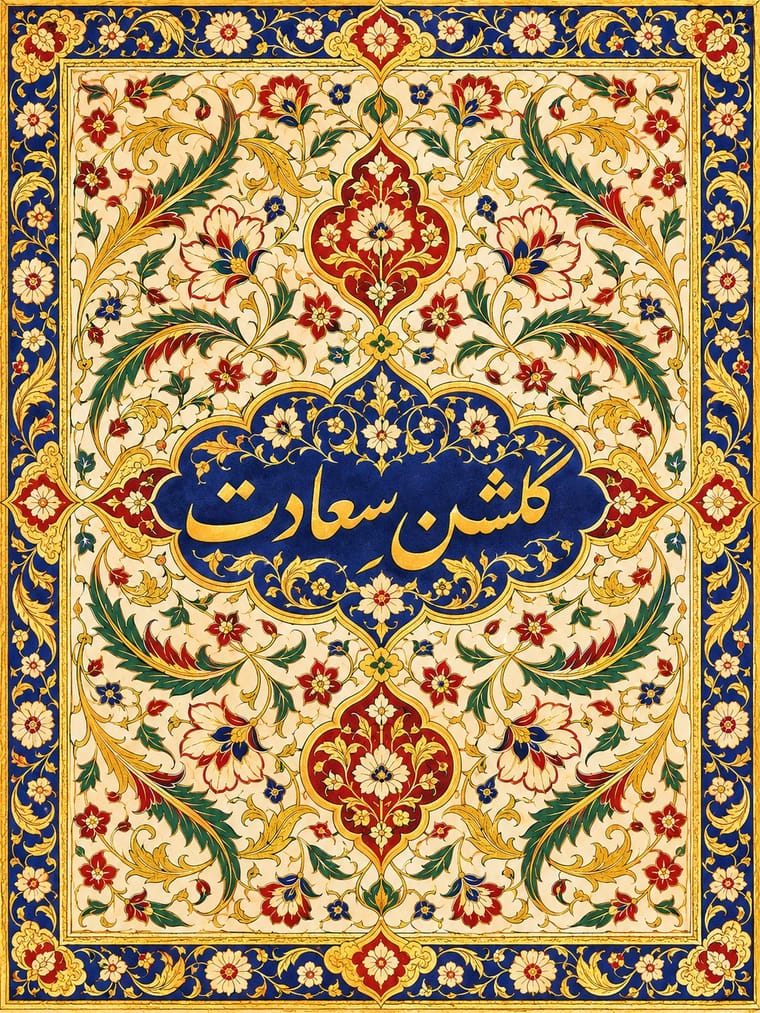
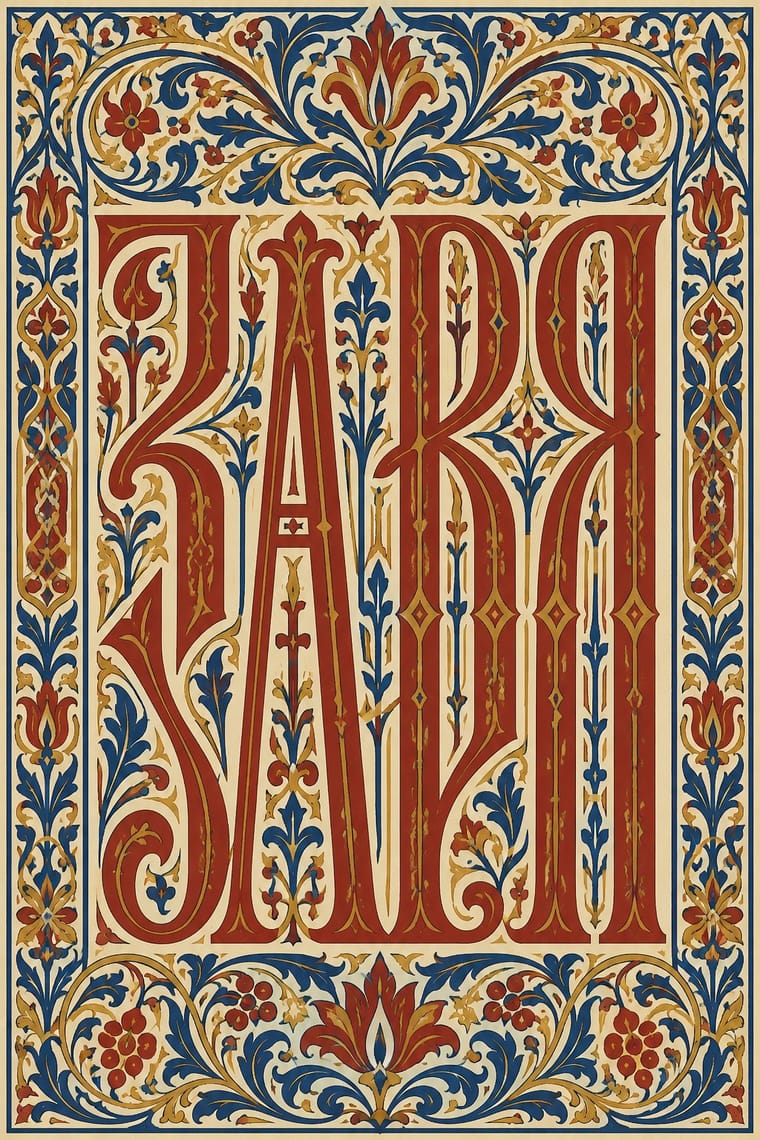
Largely non-narrative gold-and-colour ornament of Ottoman manuscripts, edicts and album pages: hatayi flowers and rumi split-leaf scrolls, then the saz style (mainly 16th century) of serrated leaves, composite blossoms and some mythical beasts, filling borders and medallions in gold and deep blue. Saz is one phase of tezhip; the Tulip Period added naturalistic bouquets under French Rococo influence. It grew from Persian illumination (Şahkulu came from Tabriz) but has its own vocabulary.
Make something in this style Get advice in this style Mix it with another style
Use it with care
Tezhip is a living craft taught by master-apprentice lineages and at institutions in Turkey, and it frames Qur'ans, hilye panels and other sacred texts: never crop, flip or distort illuminated sacred pages, keep them off throwaway surfaces, and commission a trained müzehhip for work that claims to belong to the tradition rather than imitating it as a generic 'oriental' pattern. Because it also adorned imperial edicts, it can read as a claim to Ottoman rule where that rule is remembered as conquest, so consider how the audience will read it.
01
Its picture in other colours
Change a colour and every picture on this page follows. It happens in your browser, from the same pictures: nothing new is made or saved.
Choose a colour to change it
-
#c9a227 -
#1c2f6b -
#a8201a -
#2f6b4a -
#f1e8d2
A faded colour isn’t in these pictures, so changing it changes nothing.
Light and dark stay where they are; greys hardly move.
More colours: any style’s, or your own
The pictures show the style’s own colours.
02
Make something in this style
Say what you need, and Stylogeny’s image studio draws it from Ottoman Tezhip & Saz Illumination’s design choices and checks it against them. It takes about a minute, and you get a link to share.
03
How it works
Palette
-
#c9a227ground · 31% -
#1c2f6bink · 9% -
#a8201aaccent · 6% -
#2f6b4anot in its pictures -
#f1e8d2accent · 21%
Shares measured from its picture. The ground is what the pictures sit on (of the colours covering most, the most neutral), the ink stands out from it most, the rest are accents.
Typefaces
-
Sülüs and nesih Qur'anic hands
-
Dîvânî chancery script
-
Ta'lik and nastaʿlīq album hands
- Ornament the page, not a picture: frame the text with gold borders, headpieces and medallions, with no human figures or narrative scenes in the main field.
- Build each motif from vegetal scrolls, with hatayi flowers and rumi leaves flipped on a vertical axis.
- Let long serrated saz leaves and composite blossoms sweep across the field in curving, interlocking lines.
- Ground the palette in gold and deep blue, with red, green and white as small accents in flat fields.
- Leave calligraphy its own reserved panel and let the illumination frame it, never compete with it.
Ottoman palace workshops, above all the ornamentation workshop of Topkapı Palace founded under Mehmed II.
Change it with an idea. Any of the 73 moves that make a design say something can go on this style.
04
Its design choices
From Stylogeny’s vocabulary of design choices: defining choices make the style, characteristic ones are usual, occasional ones turn up now and then.
- Layout & composition
- Space & hierarchy
- Colour
- Form & shape
- Surface & texture
- Medium & production
- Tone & intent
- Avoids
- Ornament-free, Rectilinear, Generous white space, Grain & noise, Grotesque & neo-grotesque
How its pictures are made Systematic
Kind of picture: Systematic
Known for
-
Baba Nakkaş, head of Mehmed II's Topkapı ornamentation workshop
-
Şahkulu, from Tabriz, pioneer of the saz style
-
Karamemi, chief illuminator of Suleiman's workshop, who introduced Halic work
-
Illuminated edicts and tughras of Suleiman the Magnificent
reigned 1520-1566
-
Tulip Period bouquets (1718-1730), under French Rococo influence
05
Where it comes from, and what it’s close to
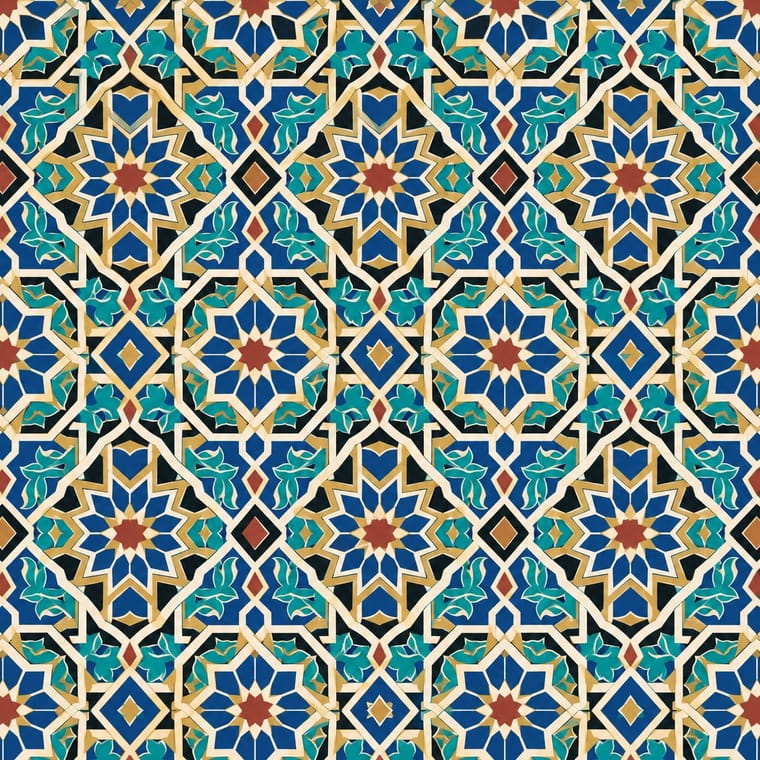
Borrowed from
Ottoman Tezhip & Saz Illumination c. 1300–present
No later style in the atlas grew out of it yet.
Alike in its design choices
06
Combine it with
Styles Ottoman Tezhip & Saz Illumination pairs well with or plays against, from the research. Each is worked out as a combination: which style gives the type, the colours and the forms.
- Ottoman Tughra & Dîvânî Chancery Calligraphy Pairs well · The tughra is the calligraphic sign that illumination frames; pair a tezhip headpiece with a calligraphic panel.
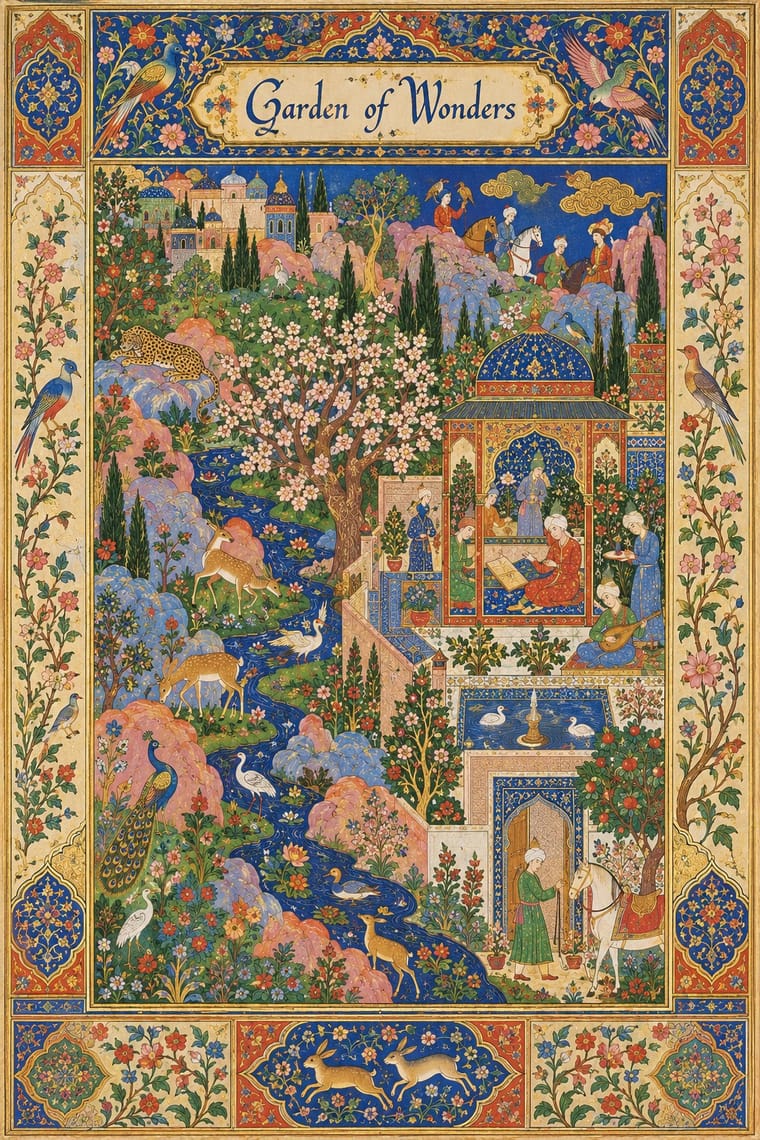
- Persian Miniature (Ilkhanid, Timurid and Safavid Book Painting) Contrasts · Miniatures tell scenes with figures; tezhip frames text with ornament and, in the saz style, mythical beasts rather than narrative scenes. Ottoman illumination grew from Persian practice (Şahkulu trained with Persian artists), so pair them when a book needs both image and frame.
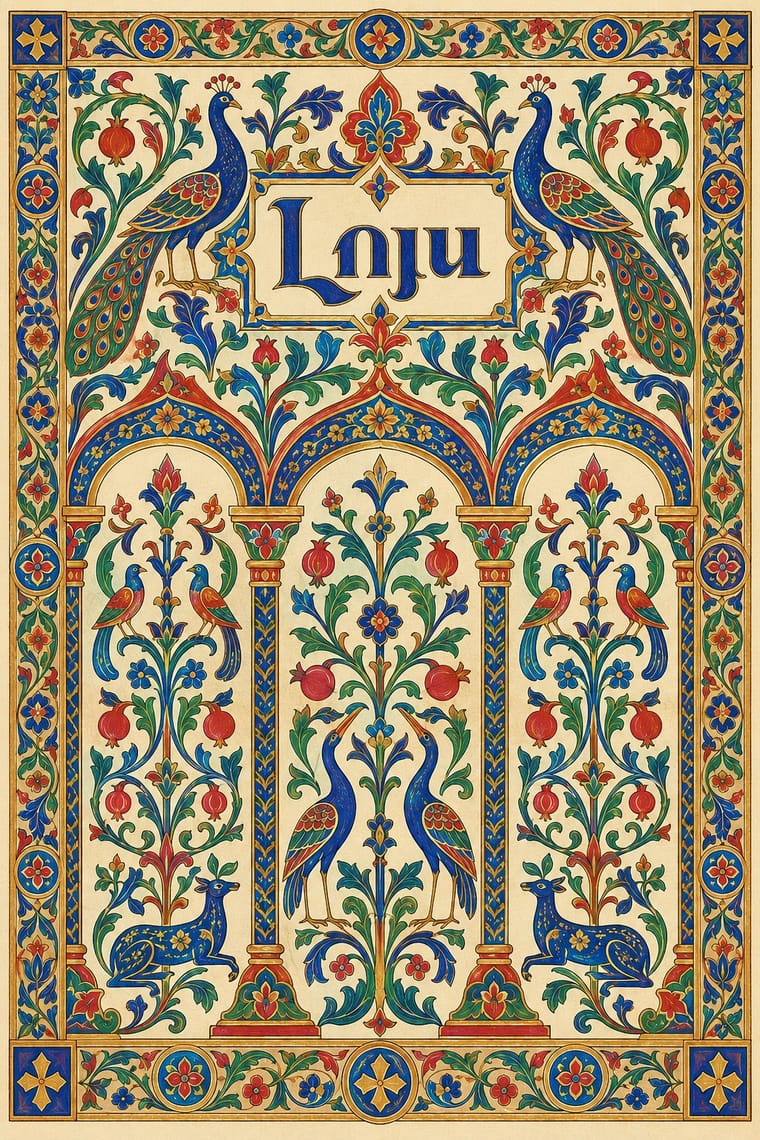
- Armenian Manuscript Illumination Contrasts · Armenian manuscripts mix human figures and ornament in polychrome; tezhip keeps human figures and narrative scenes out of the main field, so choose it when the page should carry mainly ornament.
- Ebru and Ottoman Marbled Paper Pairs well · Marbled end papers and borders sit beside gold illumination in the same book; use ebru for fluid colour and tezhip for fine line.
- Islamic Geometric & Calligraphic Tradition Contrasts · The parent builds on girih and calligraphic geometry; tezhip uses curving vegetal scrolls. Use geometry for rigid structure and tezhip for flowing, floral richness.
- Art Nouveau Pairs well · Both turn plant stems into sinuous lines; borrow saz curves for a floral Art Nouveau frame, but keep tezhip's gold and flipped symmetry.
07
Often taken for
Stylogeny checks the choices recorded in each of Ottoman Tezhip & Saz Illumination’s 3 real works against all 702 styles. All 3 fit its own choices best, so these are its nearest styles by choices, with the choices that tell them apart.
-
Armenian Manuscript Illumination
Armenian Manuscript Illumination is one of Ottoman Tezhip & Saz Illumination’s nearest styles by choices; no real work of either fits the other better.
Choices that tell Ottoman Tezhip and Armenian Manuscript Illumination apart Choice Ottoman Tezhip Armenian Manuscript Illumination Biomorphic curves defining occasional Ornamented display — defining Limited spot colours characteristic — Light ground — characteristic Stylised figuration — characteristic No shared descent in the atlas: they reached these choices separately.
-
Persian Miniature (Ilkhanid, Timurid and Safavid Book Painting)
Persian Miniature is one of Ottoman Tezhip & Saz Illumination’s nearest styles by choices; no real work of either fits the other better.
Choices that tell Ottoman Tezhip and Persian Miniature apart Choice Ottoman Tezhip Persian Miniature Limited spot colours characteristic — Stylised figuration — defining Non-representational characteristic — Full polychrome occasional defining Central symmetry characteristic — No shared descent in the atlas: they reached these choices separately.
-
Mamluk Qur'an Page Design and Illumination
Mamluk Qur'an Page Design and Illumination is one of Ottoman Tezhip & Saz Illumination’s nearest styles by choices; no real work of either fits the other better.
Choices that tell Ottoman Tezhip and Mamluk Qur'an Page Design and Illumination apart Choice Ottoman Tezhip Mamluk Qur'an Page Design and Illumination Abundant decoration defining — Classical text block — defining Naturalistic depiction occasional avoids Light ground — characteristic Biomorphic curves defining occasional Both descend from Islamic Geometric & Calligraphic Tradition in the family tree.
-
Vyaz (Ornamental Slavonic Lettering)
Vyaz is one of Ottoman Tezhip & Saz Illumination’s nearest styles by choices; no real work of either fits the other better.
Choices that tell Ottoman Tezhip and Vyaz apart Choice Ottoman Tezhip Vyaz Luxurious & glamorous defining occasional Rectilinear avoids characteristic Typography only — defining Condensed display — defining Ornamented display — defining No shared descent in the atlas: they reached these choices separately.
— means the choice isn’t among the style’s recorded choices. Critics recorded each work’s choices with the styles’ descriptions in view, so this shows whether the descriptions hold together, not proof that they are right.
08
Real works
Artefacts in museums, libraries and archives that show the style, linked at their source.
- Qur'an Manuscript dated 1268 AH/1851–52 CE · The Metropolitan Museum of Art
- 'Saz'-Style Drawing of a Dragon Amid Foliage Ascribed to Shah Quli · ca. 1540–50 · The Metropolitan Museum of Art
- Dragon in foliage with lion and phoenix heads Attributed to Sahkulu · mid-1500s · The Cleveland Museum of Art
09
Sources
- https://en.wikipedia.org/wiki/Ottoman_illumination
- https://en.wikipedia.org/wiki/Saz_style
- https://www.clevelandart.org/art/1944.492
How Stylogeny researches and checks a style: where the facts come from.