Traditions & vernacular · c. 1250–1400 · Middle East & North Africa
Mamluk Qur'an Page Design and Illumination
Also known as Mamluk Qur'an illumination, Mamluk illuminated Quran, Cairene Mamluk manuscript page
Page design of luxury Qur'an manuscripts made for Mamluk sultans and officials in Cairo and Syria. In the volumes checked, a few lines of large script (black muhaqqaq in Walters W.561, gold thuluth in the Baybars Qur'an) sit in a ruled block, verses carry coloured rosettes, and blue, gold and polychrome title panels open each volume. Dates bound the checked core. The islamic-geometric parent is the wider ornament tradition, not shared geometry.
Use it with care
These are copies of the Qur'an, a sacred text that must not be cropped, distorted, repeated as texture or used on trivial products, and no verse may ever be invented or retyped from memory. Use only openly published institutional images for study, keep the museum attribution and check each file's licence (the Digital Walters description is non-commercial). Do not offer devotional-page imitations; have any Arabic text read by a fluent reader or calligrapher.
01
How it works
Palette
-
#f0e6d0 -
#1b1b1b -
#1f3a7a -
#c9a24a -
#a63d2f -
#2f6b5e
Typefaces
-
Muhaqqaq
-
Thuluth
including gold thuluth
- In the luxury volumes checked, set the text in a single ruled block of a few large lines, so each page reads as one monumental band of script.
- Write the text in a proportioned curvilinear script, muhaqqaq or thuluth, and decide the ink deliberately: black muhaqqaq with red prolongation alifs (Walters W.561), or gold thuluth throughout (the Baybars Qur'an, an exceptional choice).
- Mark every verse with a rosette and every fifth and tenth verse and each division with an inscribed polychrome marker.
- Open each volume with an illuminated title panel: inscription reserved on blue with gold arabesques inside a bordered rectangle.
- Keep the ornament in the frames, rosettes and markers and leave the text field clear, so that illumination serves reading.
Cairo and Syria under Mamluk patronage; luxury Qur'an manuscripts made for sultans and officials. The dates bound the checked core (the Baybars Qur'an and Digital Walters W.561 were read; the Louvre Abu Dhabi juz' 30 is listed but could not be opened); fifteenth-century works are unchecked.
02
Its design choices
From Stylogeny’s vocabulary of design choices: defining choices make the style, characteristic ones are usual, occasional ones turn up now and then.
- Layout & composition
- Space & hierarchy
- Colour
- Surface & texture
- Ornament
- Medium & production
- Tone & intent
- Avoids
- Naturalistic depiction, Distortion & exaggeration, Illusion of depth, Dynamic asymmetry, Straight photography, Eclectic mixing, Stylised figuration, Playful & witty
How its pictures are made Without pictures
Kind of picture: Without pictures
Known for
-
Sultan Baybars' Qur'an (Cairo, 1304-06, British Library Add MS 22406-22412)
gold thuluth throughout, calligrapher Muhammad ibn al-Wahid, illuminators led by Abu Bakr Sandal
-
Qur'an endowed by Aytimish al-Bajasi (Cairo, last quarter of the 14th century, Walters Art Museum W.561)
five lines of muhaqqaq, illuminated titlepiece
-
Section (juz' 30) of a Qur'an, Syria, possibly Damascus, 1250-1300
Louvre Abu Dhabi, LAD 2009.011
03
Where it comes from, and what it’s close to
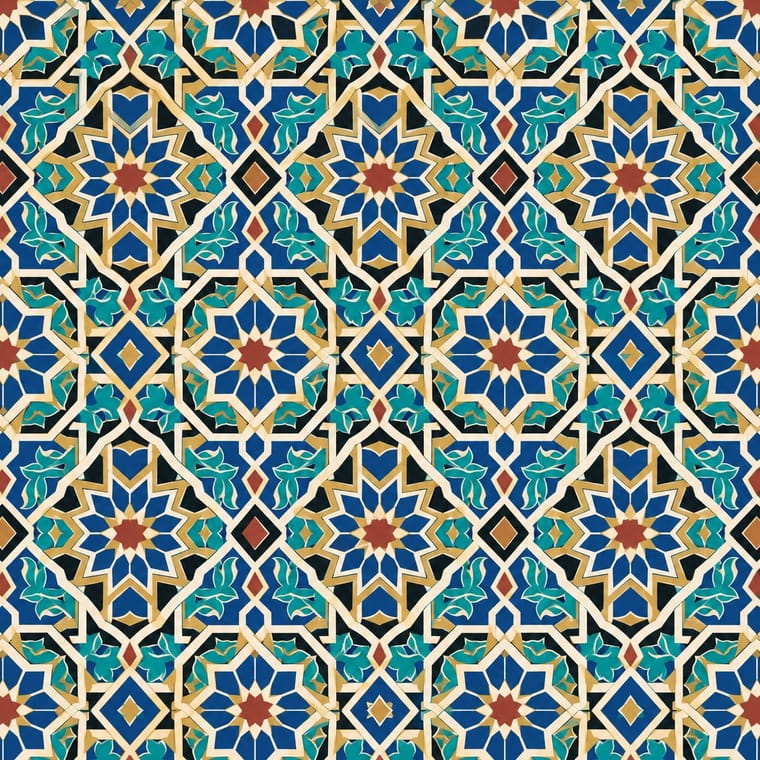
Mamluk Qur'an Page Design and Illumination c. 1250–1400
No later style in the atlas grew out of it yet.
Alike in its design choices
04
Often taken for
Stylogeny checks the choices recorded in each of Mamluk Qur'an Page Design and Illumination’s 2 real works against all 702 styles. All 2 fit its own choices best, so these are its nearest styles by choices, with the choices that tell them apart.
-
Maghrebi Script (Maghribi Calligraphy of al-Andalus and North Africa)
Maghrebi Script is one of Mamluk Qur'an Page Design and Illumination’s nearest styles by choices; no real work of either fits the other better.
Choices that tell Mamluk Qur'an Page Design and Illumination and Maghrebi Script apart Choice Mamluk Qur'an Page Design and Illumination Maghrebi Script Framed panels defining occasional Hand-lettering — defining Borders & frames defining occasional Earth & mineral — characteristic Floral & vegetal defining occasional Both descend from Islamic Geometric & Calligraphic Tradition in the family tree.
-
Madinah Mushaf (King Fahd Complex Qur'an Page)
Madinah Mushaf is one of Mamluk Qur'an Page Design and Illumination’s nearest styles by choices; no real work of either fits the other better.
Choices that tell Mamluk Qur'an Page Design and Illumination and Madinah Mushaf apart Choice Mamluk Qur'an Page Design and Illumination Madinah Mushaf Jewel & metallic defining — Hand-lettering — defining Paper & letterpress bite occasional avoids Offset printing — defining Full polychrome characteristic — Both descend from Islamic Geometric & Calligraphic Tradition in the family tree.
-
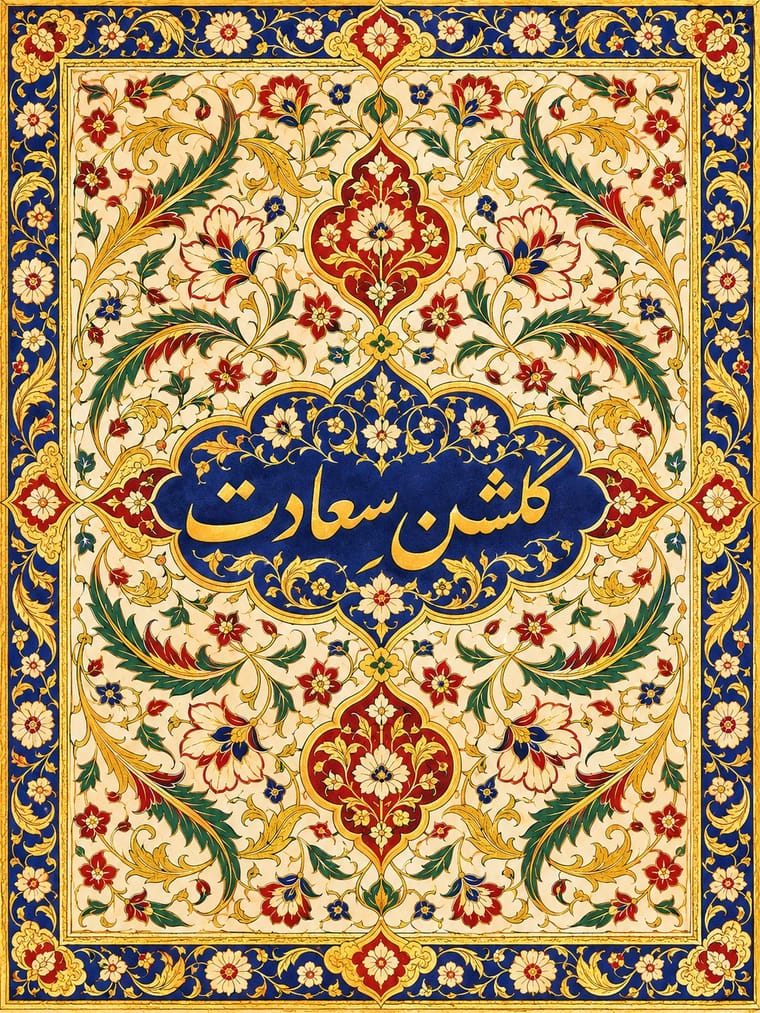
Islamic Geometric & Calligraphic Tradition
Islamic Geometric & Calligraphic Tradition is one of Mamluk Qur'an Page Design and Illumination’s nearest styles by choices; no real work of either fits the other better.
Choices that tell Mamluk Qur'an Page Design and Illumination and Islamic Geometric apart Choice Mamluk Qur'an Page Design and Illumination Islamic Geometric Classical text block defining — All-over field — defining Light ground characteristic — Pattern & repeat occasional defining Measured density characteristic — Mamluk Qur'an Page Design and Illumination descends from Islamic Geometric & Calligraphic Tradition: a shared line, so the likeness is inherited.
-
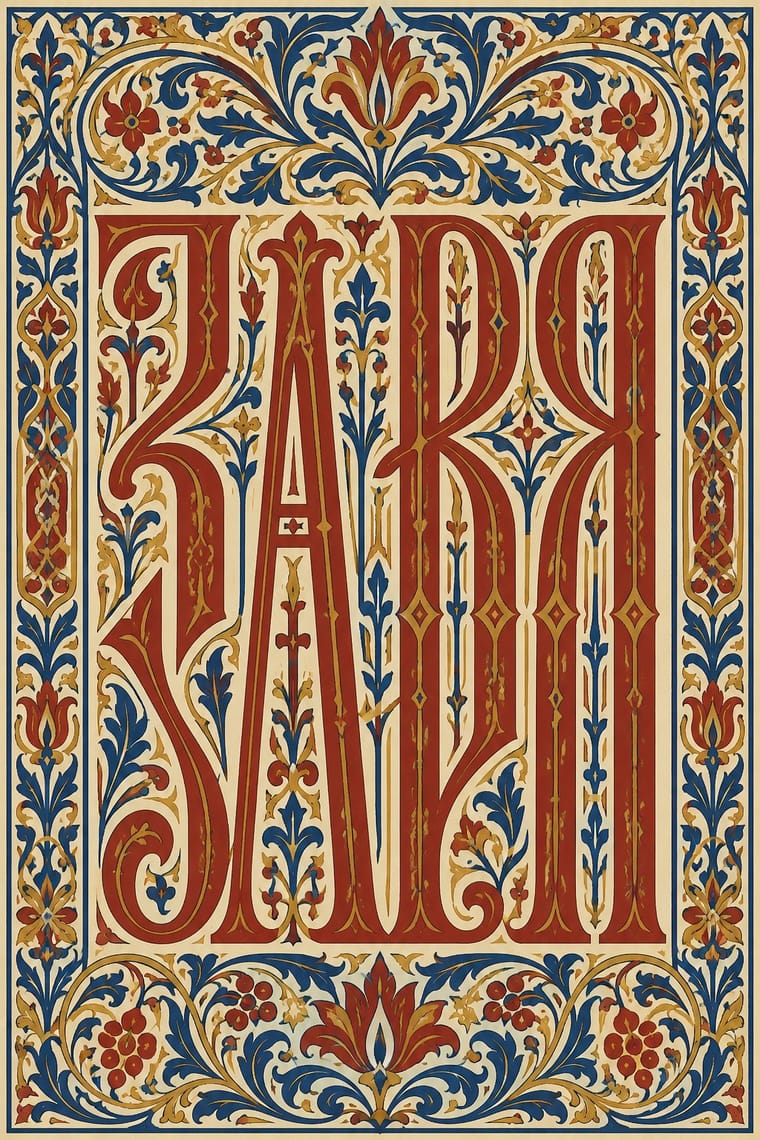
Vyaz (Ornamental Slavonic Lettering)
Vyaz is one of Mamluk Qur'an Page Design and Illumination’s nearest styles by choices; no real work of either fits the other better.
Choices that tell Mamluk Qur'an Page Design and Illumination and Vyaz apart Choice Mamluk Qur'an Page Design and Illumination Vyaz Emblems & badges characteristic — Horror vacui — defining Measured density characteristic — Condensed display — defining Type as image characteristic — No shared descent in the atlas: they reached these choices separately.
— means the choice isn’t among the style’s recorded choices. Critics recorded each work’s choices with the styles’ descriptions in view, so this shows whether the descriptions hold together, not proof that they are right.
05
Real works
Artefacts in museums, libraries and archives that show the style, linked at their source.
- Folio from a Qur'an Manuscript with Verses from the Surat al-Maryam 14th century · The Metropolitan Museum of Art
- Folio from a Qur'an Manuscript 14th century · The Metropolitan Museum of Art
06
Sources
- https://www.thedigitalwalters.org/Data/WaltersManuscripts/html/W561/description.html
- https://www.nylearns.org/module/content/search/item/18582/viewdetail.ashx
- https://www.louvreabudhabi.ae/en/whats-online/art-from-home/quran
1 more source
How Stylogeny researches and checks a style: where the facts come from.