Style combination · Contrasts
Armenian Manuscript Illumination × Ottoman Tezhip
Armenian manuscripts mix human figures and ornament in polychrome; tezhip keeps human figures and narrative scenes out of the main field, so choose it when the page should carry mainly ornament.
Mix them and make something Armenian Manuscript Illumination Ottoman Tezhip
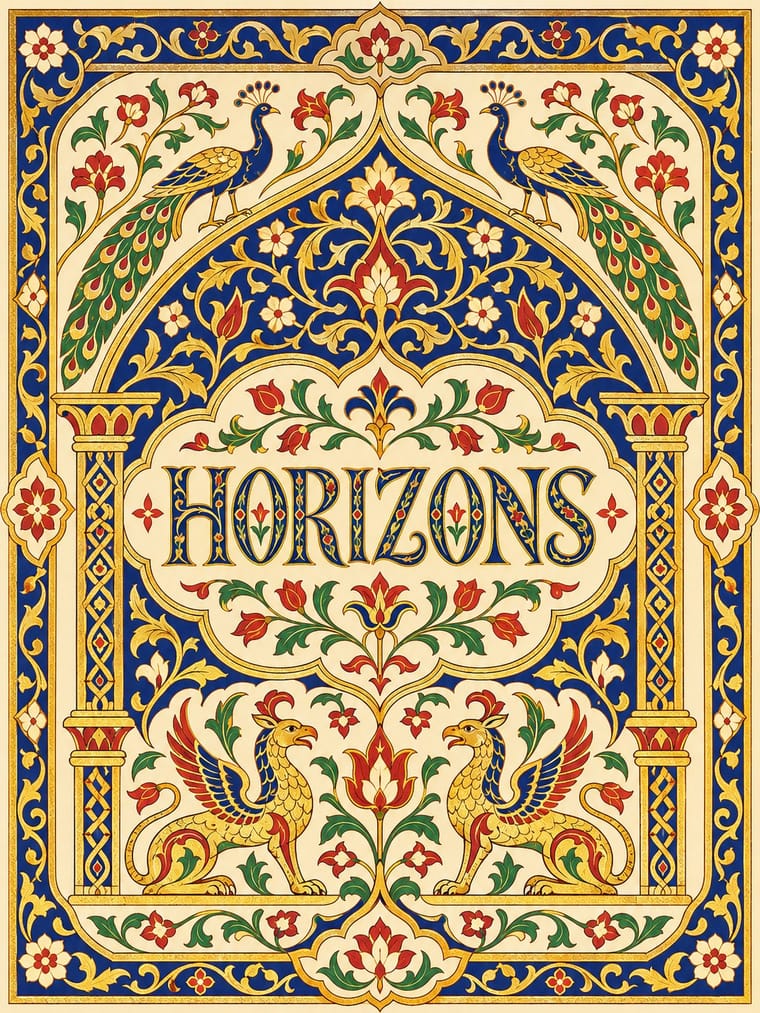
01
What each style brings
Each part of the design comes from the style with the stronger say in it, and each style gives at least two.
Armenian Manuscript Illumination Ottoman Tezhip & Saz Illumination
- Type from Armenian Manuscript Illumination
- Colour from Ottoman Tezhip
- Form from Ottoman Tezhip
- Composition from Armenian Manuscript Illumination
- Surface from Armenian Manuscript Illumination
02
The type
Open fonts standing in for each style’s own type, which is often hand-drawn or commercial.
Display · Armenian Manuscript Illumination
Velvet
Uncial Antiqua, standing in for Erkatagir ('iron letters'), the uncial held to be Mesrop Mashtots's original form of the alphabet of 405, used for manuscript text from the 5th to the 13th century and still preferred for inscriptions
Text · Ottoman Tezhip
Largely non-narrative gold-and-colour ornament of Ottoman manuscripts, edicts and album pages: hatayi flowers and rumi split-leaf scrolls, then the saz style (mainly 16th century) of serrated leaves, composite blossoms and some mythical beasts, filling borders and medallions in gold and deep blue. Saz is one phase of tezhip; the Tulip Period added naturalistic bouquets under French Rococo influence. It grew from Persian illumination (Şahkulu came from Tabriz) but has its own vocabulary.
Bodoni Moda; Ottoman Tezhip used Sülüs and nesih Qur'anic hands and Dîvânî chancery script
03
The colours
The ground and leading colours come from Ottoman Tezhip, with a counter-accent from Armenian Manuscript Illumination. The ink reads on the ground at 4.5:1 or more.
Armenian Manuscript Illumination Ottoman Tezhip & Saz Illumination
-
#f1e8d2ground · 39% -
#1c2f6bink · 15% -
#c9a227accent · 20% -
#c0392baccent · 15% -
#2f6b4aaccent · 11%
As CSS
:root {
  --ground: #f1e8d2;
  --ink: #1c2f6b;
  --accent-1: #c9a227;
  --accent-2: #c0392b;
  --accent-3: #2f6b4a;
  --font-display: "Uncial Antiqua", sans-serif;
  --font-text: "Bodoni Moda", serif;
}
Use it with care
Armenian Manuscript Illumination: These are Gospel books, lectionaries and Bibles of the Armenian Apostolic Church, and their crosses, evangelist symbols, portraits of Christ and the saints and holy names keep their sacred meaning; do not use them as texture, logos or decoration on trivial products. Armenian letter art, including ornamental letters made of birds, animals and people, is living heritage (UNESCO Representative List, 2019) practised by calligraphers, carpet weavers, embroiderers and jewellers, so commission or collaborate with Armenian artists rather than lifting motifs, and have any Armenian text written or checked by a fluent reader instead of assembling letters as pseudo-script. Manuscripts were seized, scattered or lost in the Armenian Genocide of 1915, the Zeyt'un Gospels among them (its canon tables were removed and sold to the J. Paul Getty Museum in 1994; a 2015 agreement acknowledged the Armenian Church as their owner while the leaves stayed at the Getty), and several of the scriptoria (Vaspurakan, Cilicia) now lie outside Armenia: credit the work as Armenian, naming its Byzantine models, and the Syriac ones of the earliest books, where they matter, and do not fold it into a generic 'Byzantine' or 'Oriental' style.
Ottoman Tezhip & Saz Illumination: Tezhip is a living craft taught by master-apprentice lineages and at institutions in Turkey, and it frames Qur'ans, hilye panels and other sacred texts: never crop, flip or distort illuminated sacred pages, keep them off throwaway surfaces, and commission a trained müzehhip for work that claims to belong to the tradition rather than imitating it as a generic 'oriental' pattern. Because it also adorned imperial edicts, it can read as a claim to Ottoman rule where that rule is remembered as conquest, so consider how the audience will read it.
04
The two styles
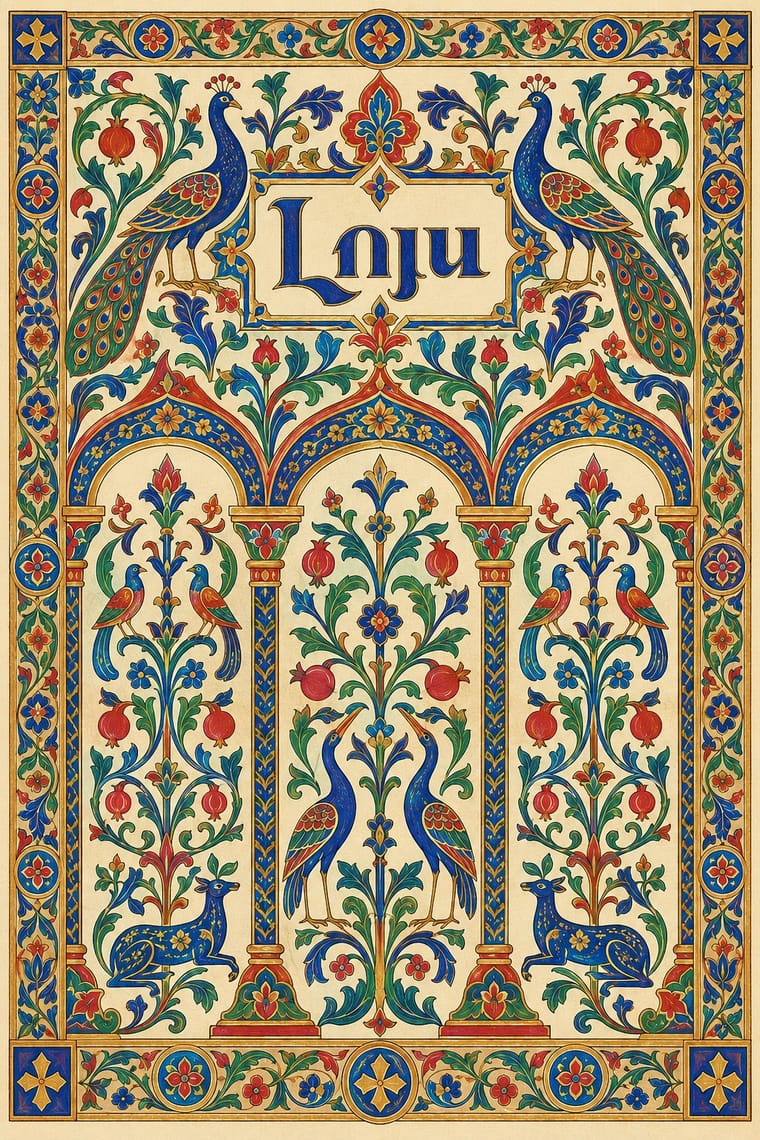
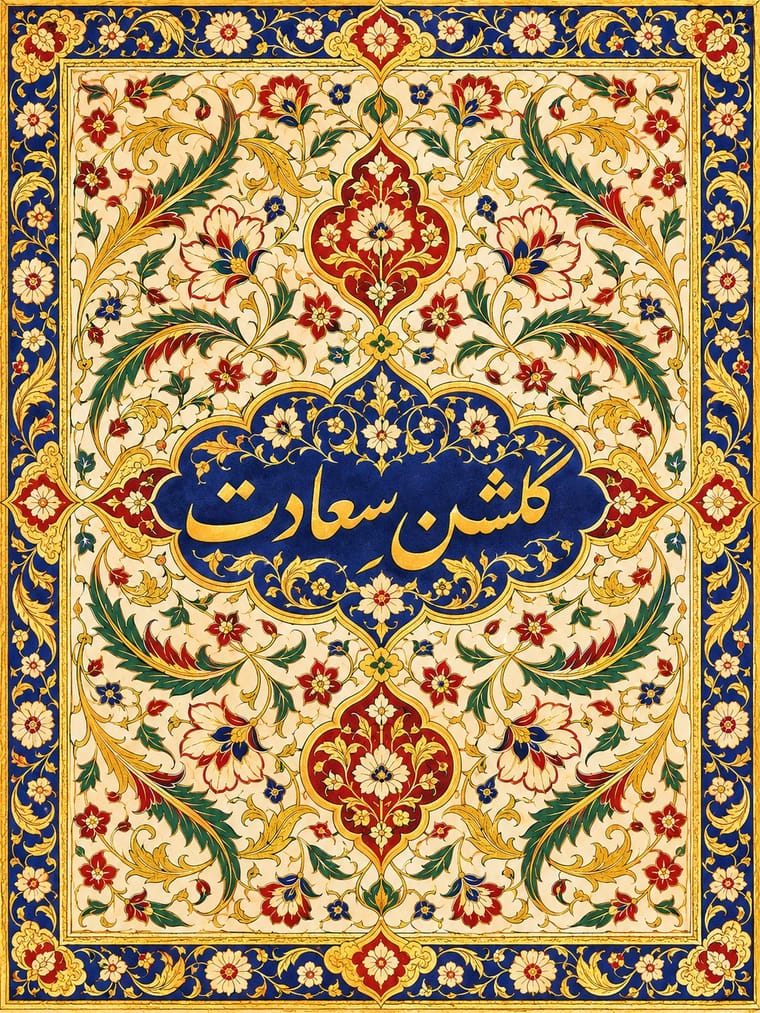
05
More combinations
With Armenian Manuscript Illumination
- Islamic Geometric & Calligraphic Tradition Contrasts · Horseshoe arches and vegetal and geometric ornament are shared, but the Islamic geometric tradition keeps its arches and fields aniconic, while Armenian books fill the same arches with birds, beasts and painted saints; choose whether a frame should carry figures or only pattern.
- Mir iskusstva Book Art Pairs well · Bilibin's circle turned medieval ornament into the borders and initials of a modern book; follow that route to use canon-table arcades as a frame for new text rather than copying a sacred page.
- Ethiopian Ge'ez Manuscript & Haräg Illumination Pairs well · Another Eastern Christian Gospel tradition in two columns of its own script that opens with Eusebian canon tables under bird-topped arches; compare the Ethiopian black-and-red page and haräg bands with Armenian gold-and-ultramarine canon arcades when building a framed headpiece system.
- Celtic Revival Illumination & Lettering Pairs well · Both build letters out of animals and interlace; set a bird-letter initial beside a knotted Celtic one to compare an initial made of whole birds with one made of interlaced beasts.
- International Typographic Style Contrasts · Its opposite: symmetrical, gilded, ornament-filled arcades against an asymmetric grid, neutral sans-serif and open white space; a single bird letter can warm a strict grid.
- Persian Miniature (Ilkhanid, Timurid and Safavid Book Painting) Contrasts · Both frame jewel-coloured paintings with gold and ornament, but Armenian Gospel books build symmetrical arcades, canon tables and bird letters for sacred text, while Persian pages crowd secular epic and lyric scenes into an asymmetric, climbing space; decide whether the frame or the story leads.
- Vyaz (Ornamental Slavonic Lettering) Pairs well · Another Eastern Christian book culture in which titles and initials carry the ornament; set a vyaz title in gold and azurite beside a canon-table arcade to compare a heading built from joined letters with an initial built from birds.
With Ottoman Tezhip
- Ottoman Tughra & Dîvânî Chancery Calligraphy Pairs well · The tughra is the calligraphic sign that illumination frames; pair a tezhip headpiece with a calligraphic panel.
- Persian Miniature (Ilkhanid, Timurid and Safavid Book Painting) Contrasts · Miniatures tell scenes with figures; tezhip frames text with ornament and, in the saz style, mythical beasts rather than narrative scenes. Ottoman illumination grew from Persian practice (Şahkulu trained with Persian artists), so pair them when a book needs both image and frame.
- Ebru and Ottoman Marbled Paper Pairs well · Marbled end papers and borders sit beside gold illumination in the same book; use ebru for fluid colour and tezhip for fine line.
- Islamic Geometric & Calligraphic Tradition Contrasts · The parent builds on girih and calligraphic geometry; tezhip uses curving vegetal scrolls. Use geometry for rigid structure and tezhip for flowing, floral richness.
- Art Nouveau Pairs well · Both turn plant stems into sinuous lines; borrow saz curves for a floral Art Nouveau frame, but keep tezhip's gold and flipped symmetry.