Style combination · Pairs well
American Traditional Tattoo Flash × Skateboard Deck Graphics
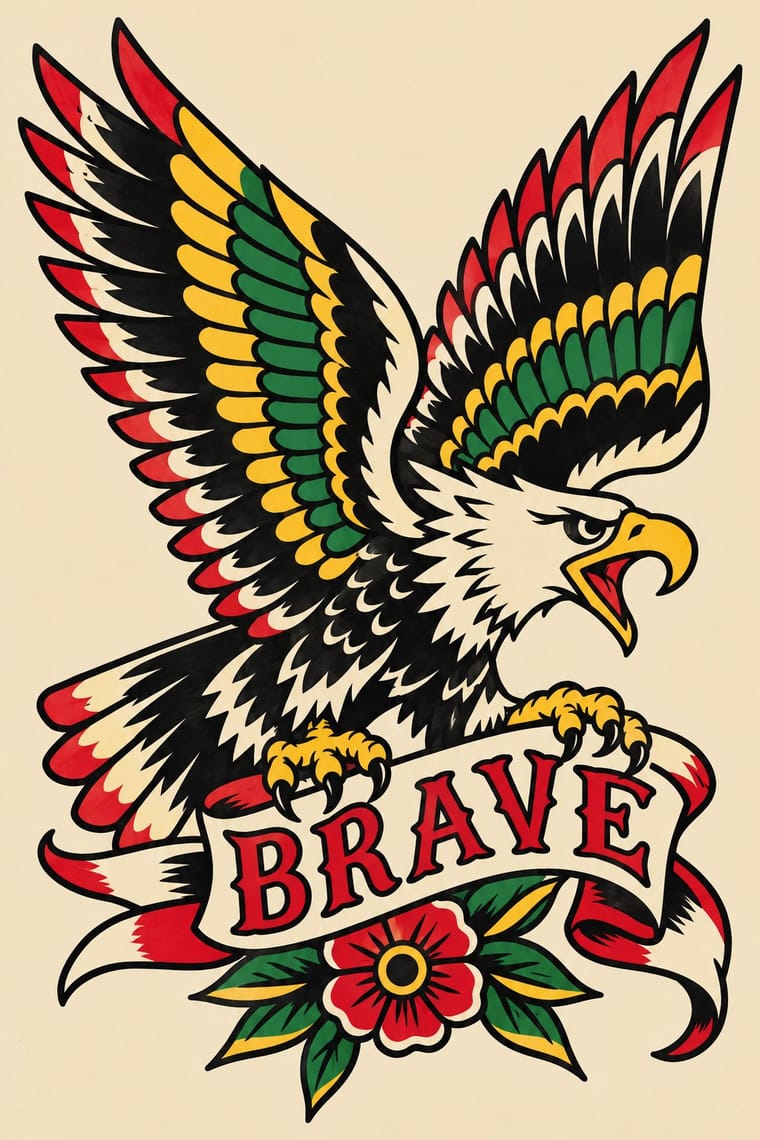
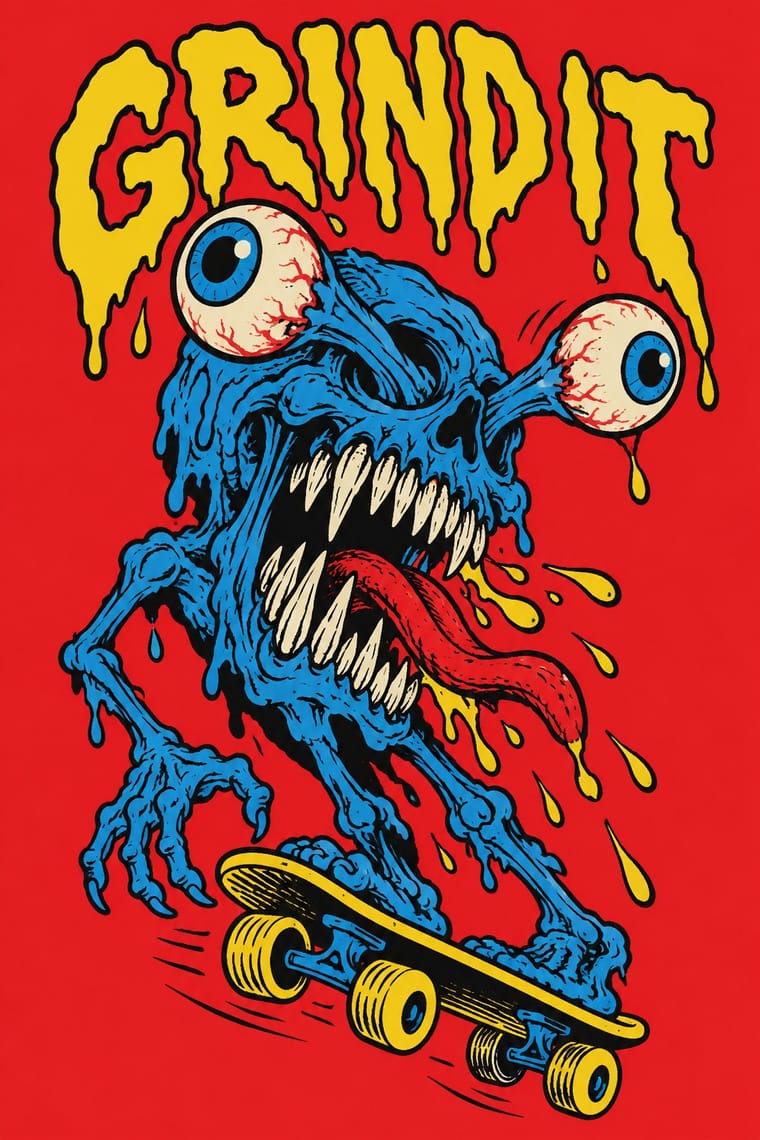
Both use bold outline and flat limited colour on a single emblem; borrow the flash sheet's emblematic symmetry, but keep the deck's comic humour.
Mix them and make something American Traditional Tattoo Flash Skateboard Deck Graphics
01
What each style brings
Each part of the design comes from the style with the stronger say in it, and each style gives at least two.
American Traditional Tattoo Flash Skateboard Deck Graphics
- Type from American Traditional Tattoo Flash
- Colour from Skateboard Deck Graphics
- Form from American Traditional Tattoo Flash
- Composition from Skateboard Deck Graphics
- Surface from American Traditional Tattoo Flash
02
The type
Open fonts standing in for each style’s own type, which is often hand-drawn or commercial.
Display · American Traditional Tattoo Flash
Loud
Bungee Shade, standing in for Shaded and drop-shadowed block capitals in the sign writer's manner
Text · Skateboard Deck Graphics
The graphics printed on the underside of skateboard decks, developed by Californian skate companies in the 1970s and 80s (the scope here; later photographic and parody decks are not covered). An artist-drawn image, usually a monster, skull, hand or cartoon figure in heavy ink outline, fills a tall vertical board in a few flat screenprinted colours, with a brand logo that repeats across a collectible series of models.
Archivo; Skateboard Deck Graphics used Santa Cruz logotype, hand-drawn by Jim Phillips and Hand-lettered brand logos in thick outline
03
The colours
The ground and leading colours come from Skateboard Deck Graphics, with a counter-accent from American Traditional Tattoo Flash. The ink reads on the ground at 4.5:1 or more.
American Traditional Tattoo Flash Skateboard Deck Graphics
-
#f2ede0ground · 36% -
#111111ink · 14% -
#f5d312accent · 18% -
#e8202aaccent · 14% -
#1e7fcbaccent · 10% -
#1f7a3aaccent · 8%
As CSS
:root {
  --ground: #f2ede0;
  --ink: #111111;
  --accent-1: #f5d312;
  --accent-2: #e8202a;
  --accent-3: #1e7fcb;
  --accent-4: #1f7a3a;
  --font-display: "Bungee Shade", sans-serif;
  --font-text: "Archivo", sans-serif;
}
Use it with care
American Traditional Tattoo Flash: Tattoo flash is the working craft of a living community of tattooers, who still trade, copy and repaint the old sheets by their own customs, and Sailor Jerry Ltd holds the commercial rights to Collins's letters, art and flash: draw new designs in the idiom rather than lifting a named artist's flash for branding or merchandise. Period sheets also include caricatures of other peoples, exoticised hula girls and geishas, and wartime jingoism; leave those out when quoting the style.
04
The two styles
05
More combinations
With American Traditional Tattoo Flash
- International Typographic Style Contrasts · Rational grid and sans-serif against sentimental, hand-lettered emblems: one flash motif on a Swiss layout makes a sharp contrast.
- Hand-Painted Signage & Vernacular Lettering Pairs well · Both are sign-painter crafts of the same shopfront streets; pair flash emblems with brushed shop lettering for a whole storefront.
- Ukiyo-e Woodblock Prints Pairs well · Japanese prints and tattoo art fed Collins and Hardy; borrow waves and dragons but keep the bold American outline.
- American Four-Colour Comic Book (Golden to Bronze Age) Pairs well · Shares heavy black line and flat primaries; comic panels add story where flash keeps one emblem.
With Skateboard Deck Graphics
- Punk & DIY Zine Pairs well · Share rebellious tone and hand lettering; swap the photocopied collage for a single inked figure to turn a punk flyer into a product graphic.
- Underground Comix Pairs well · Both draw distorted, humorous figures in ink; add a vertical single-image format and flat screenprint colours to move from comic page to deck.