Style combination · Pairs well
Light Novel Cover Illustration × VTuber Avatar and Stream Graphics
The same anime idiom moved onto live avatars; borrow its outlined name logos for a series mark, keep the cover's single still portrait.
Mix them and make something Light Novel Cover Illustration VTuber Avatar and Stream Graphics
01
What each style brings
Each part of the design comes from the style with the stronger say in it, and each style gives at least two.
Light Novel Cover Illustration VTuber Avatar and Stream Graphics
- Type from Light Novel Cover Illustration
- Colour from Light Novel Cover Illustration
- Form from VTuber Avatar and Stream Graphics
- Composition from VTuber Avatar and Stream Graphics
- Surface from Light Novel Cover Illustration
02
The type
Open fonts standing in for each style’s own type, which is often hand-drawn or commercial.
Display · Light Novel Cover Illustration
Pop
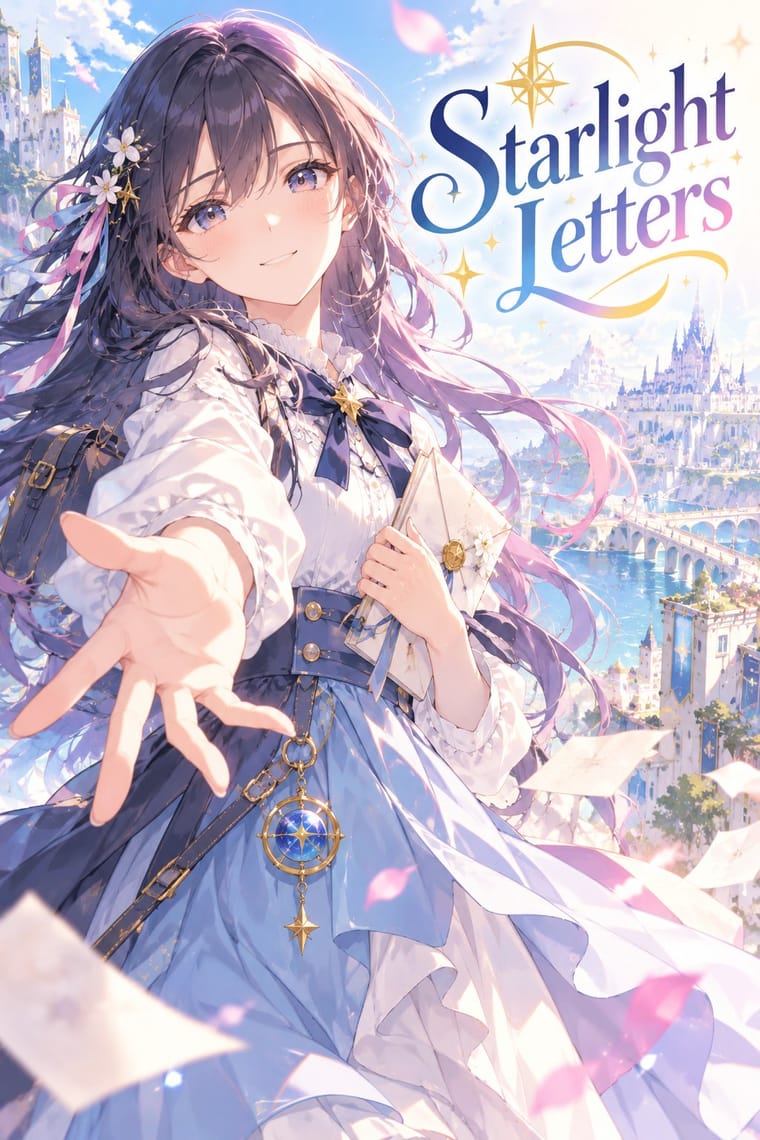
Shippori Mincho, standing in for Custom title logos drawn for each series, combining kanji and kana with a Latin or katakana subtitle, outlined or shadowed to sit over the illustration
Text · VTuber Avatar and Stream Graphics
The graphic kit of virtual YouTubers, streamers who perform behind an animated anime-style character instead of their own face. An illustrator (the 'mama') designs a persona whose costume and colours tell its story and draws it in separable layers; a rigger turns it into a Live2D or 3D model that blinks, turns and lip-syncs with the performer's tracked face. On stream the half-length figure sits over game footage or a themed backdrop among chat and alert panels, framed by a name logo, overlays and thumbnails in its colours.
Zen Maru Gothic; VTuber Avatar and Stream Graphics used Heavy, simple bold lettering for thumbnails and A custom name logo drawn for each character
03
The colours
The ground and leading colours come from Light Novel Cover Illustration, with a counter-accent from VTuber Avatar and Stream Graphics. The ink reads on the ground at 4.5:1 or more.
Light Novel Cover Illustration VTuber Avatar and Stream Graphics
-
#fbfaf7ground · 36% -
#1d2340ink · 14% -
#f2c94caccent · 18% -
#8fc8f0accent · 14% -
#5bc8f5accent · 10% -
#f6a5c0accent · 8%
As CSS
:root {
  --ground: #fbfaf7;
  --ink: #1d2340;
  --accent-1: #f2c94c;
  --accent-2: #8fc8f0;
  --accent-3: #5bc8f5;
  --accent-4: #f6a5c0;
  --font-display: "Shippori Mincho", serif;
  --font-text: "Zen Maru Gothic", sans-serif;
}
Use it with care
Light Novel Cover Illustration: Many covers sexualise heroines who look young; in generated images depict characters as clearly adult and avoid fan-service poses.
VTuber Avatar and Stream Graphics: VTuber characters are owned designs, by agencies or by the performers who commissioned them, and early contracts often gave the character's rights to the company, so performers who left had to start again as someone new: draw an original persona rather than a look-alike of Kizuna AI, Hololive or Nijisanji characters, and credit the illustrator ('mama') and the rigger ('papa'). The performer's anonymity is part of the form, so never attach a real person's face, name or photograph to an avatar or speculate about who is 'inside'. Do not default to a sexualised cute-girl type: scholars argue that avatar idols perpetuate female stereotypes and that the virtual idol industry commercialises sexism (Lu et al., CHI 2021).
04
The two styles
05
More combinations
With Light Novel Cover Illustration
- Illustrated Rom-Com Book Cover (Cartoon Couple Cover) Contrasts · Both sell prose with a drawn cover, but the rom-com flattens faceless figures on a saturated ground where the light novel paints one detailed, glossy character on a pale one.
- Superflat Contrasts · Murakami's fine-art quotation of the same otaku idiom, flattened and ironic, where the cover sells a book sincerely.
- Itasha (Anime Character Car Graphics) Pairs well · Fans put light-novel heroines and title logos on cars; the cover art is a source the car graphics quote.
- Penguin Paperback Design (Three Bands to the Marber Grid) Contrasts · A paperback sold by its series grid and typography alone; set beside it, the light novel shows how much the illustrator carries.
With VTuber Avatar and Stream Graphics
- Emoji Pictographic Language Pairs well · Reduce the character and its motifs to small square pictographs for channel emotes and membership badges, so the community can type the persona into chat.
- Lo-fi Anime Aesthetic Contrasts · Both put an anime figure on a 24/7 YouTube screen, but lofi's figure is a looping painting turned away from the viewer; a VTuber faces the camera, lip-syncs to a real performer and reads the chat, so use lofi for background calm and VTuber graphics for presence and talk.
- Kawaii Design Contrasts · Its parent in cute character culture, but kawaii fixes a static mascot on pastel goods and print; switch to VTuber graphics when the character has to move, talk and answer a live chat, with a performer's voice and a whole stream screen around it.
- Superflat Contrasts · Both draw on anime and otaku imagery, but superflat flattens it ironically into all-over, unshaded fields; VTuber graphics play one character sincerely, with cel shading, overlap and a 2.5D rig that turns the head, as a persona fans follow from week to week.
- Fantasy User Interface (FUI) & Sci-Fi HUD Pairs well · For a science-fiction or AI persona in the manner of Kizuna AI, frame the avatar with HUD-style rings, brackets and hairline panels as its overlay, keeping the warm character in front of the cold interface.
- Danmaku Bullet-Comment Overlay Pairs well · On Bilibili and Niconico, viewers' bullet comments fly across the stream over the avatar. Leave the top lanes clear of the character's face and title, so the crowd's comments and the avatar share the screen without hiding it.
- Vocaloid Fan Illustration (Hatsune Miku Culture) Pairs well · Both use a shared, character-led look; add stream overlays and avatar frames.
- YouTube Thumbnail Style (the 'YouTube Face') Pairs well · VTubers follow the same rules for their thumbnails, a big cut-out at a third of the frame, a few outlined words, warm colours; swap the photographed face for the avatar to bring the idiom to a channel whose performer stays unseen.