Style combination · Contrasts
Singapore–Malayan Social Woodcut Graphics × Ukiyo-e Woodblock Prints
Colour woodblock refinement against black-and-white social carving: a strong tension in a series of covers.
Mix them and make something Singapore–Malayan Social Woodcut Graphics Ukiyo-e Woodblock Prints
01
What each style brings
Each part of the design comes from the style with the stronger say in it, and each style gives at least two.
Singapore–Malayan Social Woodcut Graphics Ukiyo-e Woodblock Prints
- Type from Ukiyo-e Woodblock Prints
- Colour from Singapore–Malayan Social Woodcut Graphics
- Form from Singapore–Malayan Social Woodcut Graphics
- Composition from Ukiyo-e Woodblock Prints
- Surface from Singapore–Malayan Social Woodcut Graphics
02
The type
Open fonts standing in for each style’s own type, which is often hand-drawn or commercial.
Display · Ukiyo-e Woodblock Prints
Fiesta
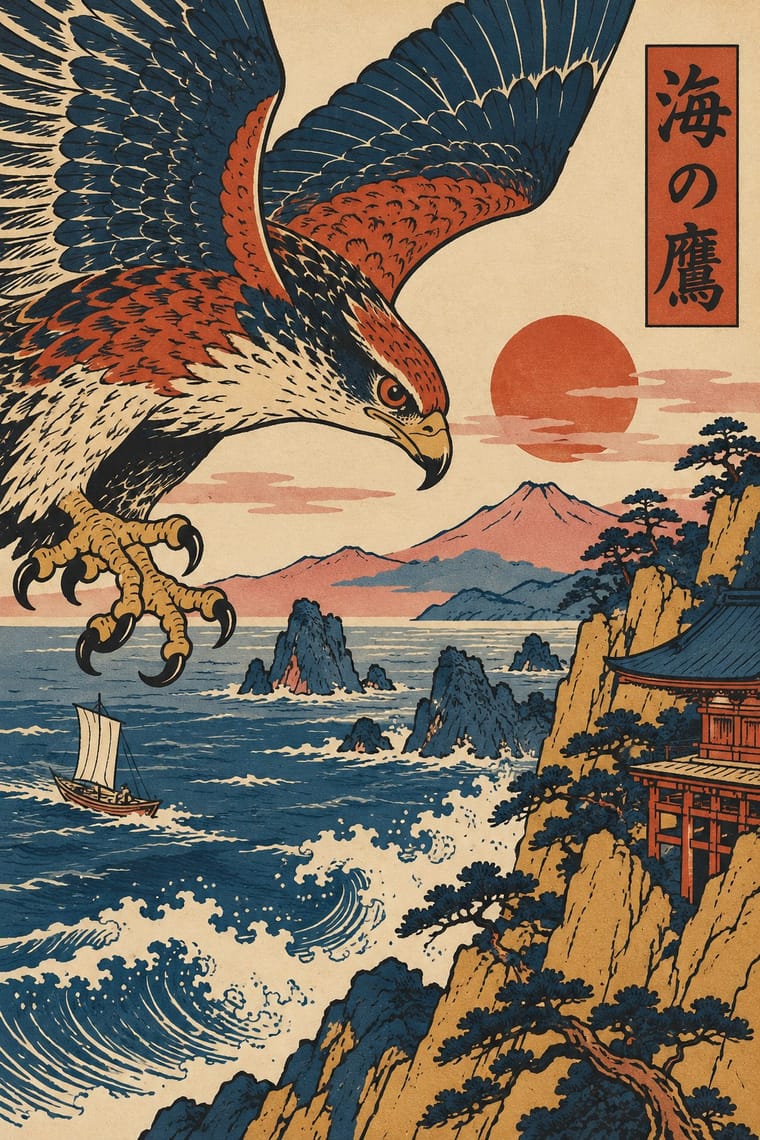
Shippori Mincho, standing in for Brush-written kana and kanji titles (gyōsho and sōsho hands)
Text · Singapore–Malayan Social Woodcut Graphics
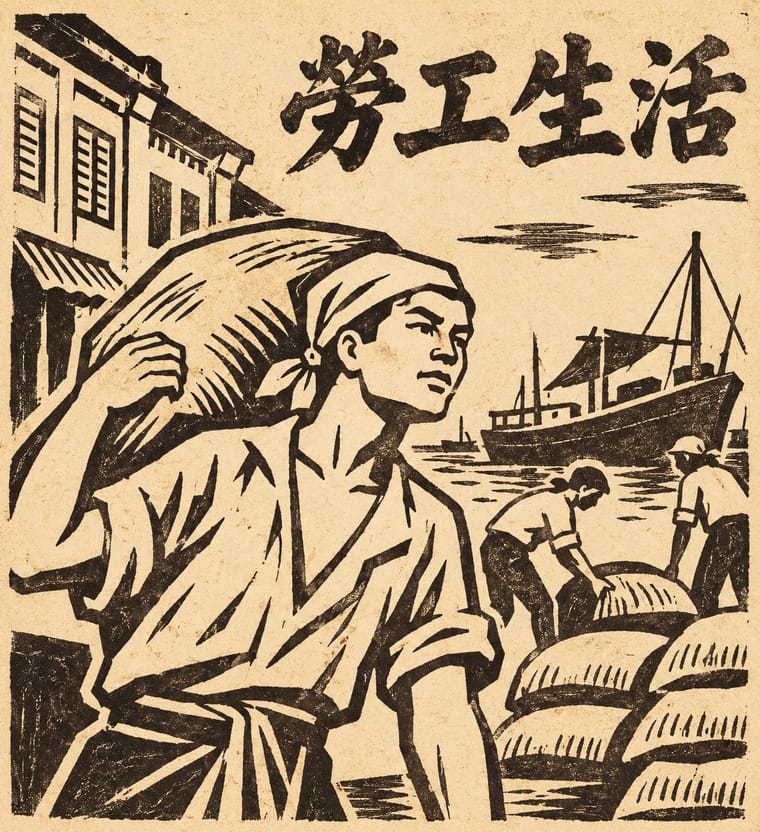
A regional sub-style of the Chinese modern woodcut: black-and-white woodcuts made by Chinese-educated artists in Singapore and Malaya from the 1930s to the 1960s, printed in Chinese-language newspaper supplements and literary magazines. They moved from war-relief fundraising and the plight of the lower classes to political satire under colonial censorship, and in the 1960s toward sea, landscape and still life. Quieter and more narrative than its agitational parent, with few figures and a story that reads at first glance.
Newsreader; Singapore–Malayan Social Woodcut Graphics used Brush-lettered Chinese titles on newspaper supplements and magazine covers and Chinese characters set within the picture, as on a seascape print
03
The colours
The ground and leading colours come from Singapore–Malayan Social Woodcut Graphics, with a counter-accent from Ukiyo-e Woodblock Prints. The ink reads on the ground at 4.5:1 or more.
Singapore–Malayan Social Woodcut Graphics Ukiyo-e Woodblock Prints
-
#efe6d2ground · 36% -
#141210ink · 14% -
#8c7b62accent · 18% -
#c64a2daccent · 14% -
#3b3228accent · 10% -
#d4a64aaccent · 8%
As CSS
:root {
  --ground: #efe6d2;
  --ink: #141210;
  --accent-1: #8c7b62;
  --accent-2: #c64a2d;
  --accent-3: #3b3228;
  --accent-4: #d4a64a;
  --font-display: "Shippori Mincho", serif;
  --font-text: "Newsreader", serif;
}
Use it with care
Singapore–Malayan Social Woodcut Graphics: Rights are uncleared. Much of the work was published under colonial censorship and some artists used pseudonyms; the artists and the 1966 show (deliberately apolitical, nation-building) differed in outlook, so do not present it as one political movement.
04
The two styles
05
More combinations
With Singapore–Malayan Social Woodcut Graphics
With Ukiyo-e Woodblock Prints
- Japonisme Pairs well · Its direct European heir: combine ukiyo-e cropping and flat colour with Western display lettering for a Japonisme poster.
- Belle Époque Lithographic Poster Pairs well · Use the flat silhouette and keyline of ukiyo-e inside a lithographic poster, as Toulouse-Lautrec did, to read at a distance.
- Japanese Postwar Modernism Pairs well · Reduce ukiyo-e motifs to flat emblems on a strict grid to get the postwar Japanese blend of tradition and modernism.
- Renaissance Book Typography Contrasts · Set an off-centre, edge-cropped print against a symmetric classical text block to stage East-West contrast deliberately.
- Hanafuda Card Design (Japanese Flower Cards) Pairs well · Both use flat colour and outline; hanafuda turns the print's flower-and-bird subjects into a repeatable game system.
- Kamon (Japanese Family Crests) Pairs well · Kabuki actors had their own mon, and actor prints show them on the costume, as on the sleeve of Ichikawa Yaozō III in a print of 1796; pair a flat crest with ukiyo-e figures to identify characters without captions.
- Serizawa Katazome and Mingei Stencil-Dye Graphics Contrasts · Ukiyo-e is carved line, urban pleasure and diagonal drama; Serizawa is a stencil edge, rural work and calm panel grids.
- Taishō Roman & Lyrical Illustration Pairs well · Yumeji's beauties continue the bijin-ga print; pair a woodblock-printed pattern ground with a lyrical modern figure.