Postmodern · 1980–1990 · Western Europe
British Style Press (The Face, i-D and Arena)
Also known as 1980s style magazines, The Face style, Neville Brody style, Style-press typography
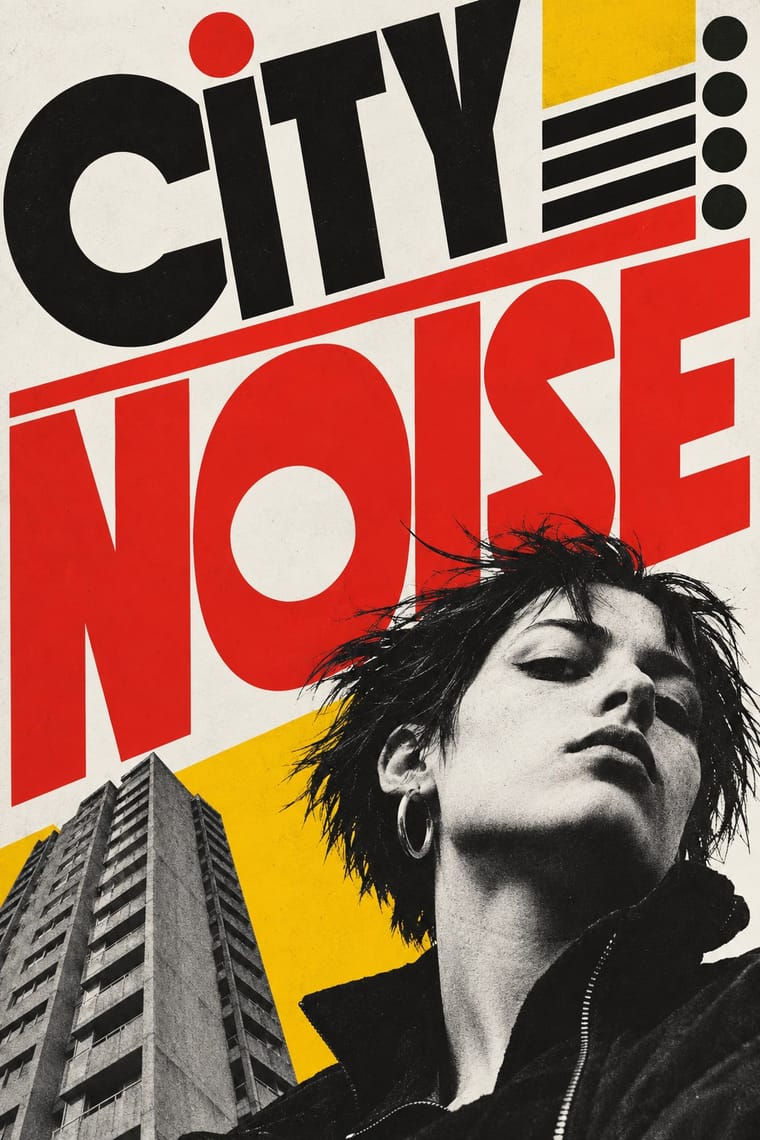
The London style magazines of the 1980s, chiefly The Face, i-D and Arena, which turned punk's do-it-yourself energy into an ordered editorial language for fashion, music and club culture. Neville Brody drew new geometric headline alphabets and graphic symbols for The Face, set them huge on Constructivist diagonals and heavy bars beside hard-cropped, bleeding photographs, while Terry Jones's i-D kept a rougher instant-design look: typewriter text, street portraits and a winking cover face.
Make something in this style Get advice in this style Mix it with another style
Use it with care
The Face, i-D and Arena mastheads, i-D's winking cover device and Brody's typefaces are trademarks or licensed fonts, and the street portraits show real, identifiable people: draw your own alphabet and symbols in the idiom rather than copying a Brody face or a masthead, and do not present a generated spread as a page from these magazines.
01
How it works
- Draw the headline type yourself: build a geometric, condensed alphabet from straight strokes, circles and bars for the magazine, and let it change as the magazine changes.
- Set display words very large against small text, rotated or stacked on Constructivist diagonals, and hold the spread together with heavy rules and blocks.
- Replace drop caps, section heads and page furniture with graphic symbols and pictograms, so the magazine reads as one system from page to page.
- Crop street, club and fashion photographs hard and bleed them and the type off the page edge, so the page feels like part of something larger.
- Keep colour to black, white and one or two flat spot colours, and let scale and structure do the shouting.
- Stay cool rather than angry: borrow the energy and cheap means of the fanzine (typewriter text, photocopies, head-to-toe portraits of people from the street) but present them as fashion.
London: Nick Logan's The Face (first issue 1 May 1980), art-directed by Neville Brody from about 1981-82 to 1986; Terry Jones's i-D (founded 1980 with Tricia Jones and Perry Haines, first issue August 1980, hand-stapled photocopies); and Logan's men's magazine Arena (1986), whose launch appearance Brody designed and which he art-directed to 1990
02
Its design choices
From Stylogeny’s vocabulary of design choices: defining choices make the style, characteristic ones are usual, occasional ones turn up now and then.
- Layout & composition
- Space & hierarchy
- Typography
- Colour
- Form & shape
- Surface & texture
- Imagery
- Medium & production
- Tone & intent
- Avoids
- Central symmetry, Floral & vegetal, Abundant decoration, Script, Painterly illustration, Skeuomorphic material, Calm & contemplative, Gradients
Palette
-
#111111 -
#f3f1ec -
#e2231a -
#f5c400 -
#8a8a8a
Typefaces
-
Industria (Neville Brody), a geometric, condensed sans-serif drawn for The Face's headlines
1984
-
Arcadia and Insignia, a banner face and a headline face Brody drew for Arena, later issued as retail typefaces
-
Brody's hand-drawn headline lettering of straight strokes, circles and bars, introduced in The Face in 1984 and redrawn as the magazine moved on
-
Text set on an IBM golfball typewriter and hand-made instant-design lettering in early i-D
Known for
-
Neville Brody, art direction of The Face (about 1981-82 to 1986)
spreads such as 'The Werk Ethic' (1982), whose arrangement of images and text recalls Constructivism, and 'The Resurrection of Chad' (1984), which introduced a hand-drawn typeface used in the magazine from then on
-
Neville Brody, Industria, a geometric, condensed sans-serif drawn for The Face (1984), later issued commercially
-
Neville Brody, launch design of Arena for Nick Logan (1986), art-directed by him to 1990
-
Terry Jones (with Tricia Jones and Perry Haines), i-D (from August 1980)
a hand-stapled photocopied fanzine that became a glossy, every cover carrying a wink and a smile as a graphic version of its logo
-
Steve Johnston's head-to-toe 'straight-up' portraits of London punks against a plain white wall, commissioned by Terry Jones (1977) and the basis of i-D's street portraits
-
Neville Brody, posters for the Royal Court Theatre, London
The Genius (1983, V&A S.3633-1994) and The Pope's Wedding and Saved (1984), lettering in white and blue on red (V&A S.3727-1994)
-
Neville Brody, Level 42, Micro-Kid 12-inch sleeve (Polydor, 1983), colour offset lithograph (V&A E.1795-1990); also sleeves for Fetish Records, Clock DVA's Thirst (1981), 23 Skidoo's Seven Songs (1982) and Cabaret Voltaire's Micro-Phonies (1984)
-
Jon Wozencroft, The Graphic Language of Neville Brody (Thames & Hudson, 1988), with an exhibition of the same name at the V&A
poster, V&A E.602-2019
03
Make something in this style
Say what you need, and Stylogeny’s image studio draws it from British Style Press (The Face, i-D and Arena)’s design choices and checks it against them. It takes about a minute, and you get a link to share.
04
Where it comes from, and what it’s close to
Before it
The style it grew out of, and the styles it borrowed from.
After it
The styles that grew out of it.
No later style in the atlas grew out of it yet.
Alike in its design choices
Styles that make many of the same choices, related or not, besides those above.
05
Sources
- Wikipedia, Neville Brody (Fetish Records 1980; Clock DVA, Thirst 1981; 23 Skidoo, Seven Songs 1982; Cabaret Voltaire, Micro-Phonies 1984; The Face 1981-1986; Arena 1987-1990; The Graphic Language of Neville Brody, 1988): https://en.wikipedia.org/wiki/Neville_Brody
- Wikipedia, The Face (magazine) (first issue 1 May 1980; Brody art director from 1982; Constructivism): https://en.wikipedia.org/wiki/The_Face_(magazine)
- Wikipedia, i-D (first issue August 1980; hand-stapled fanzine; wink cover; Straight-Up and Steve Johnston): https://en.wikipedia.org/wiki/I-D
- Wikipedia, Terry Jones (i-D) (founded with Tricia Jones and Perry Haines; hand-stapled photocopies; Instant Design): https://en.wikipedia.org/wiki/Terry_Jones_(i-D)
- Wikipedia, Arena (magazine) (founded 1986 by Nick Logan; Brody designed its launch appearance): https://en.wikipedia.org/wiki/Arena_(magazine)
- Deutsche Nationalbibliothek, Deutsches Buch- und Schriftmuseum, 'Neville Brody' (The Face 1981-1986, Arena 1987-1990, Industria for The Face 1984, punk influence): https://mediengeschichte.dnb.de/DBSMZBN/Content/EN/FontDesign/05-brody-neville-en.html
- Type Network, 'Neville Brody joins Type Network' (Industria based on headlines drawn for The Face 1980-1986; Arcadia and Insignia originated as a banner and a headline type for Arena; first retail typefaces through Linotype): https://typenetwork.com/articles/neville-brody-joins-type-network
- Eye, 'Reputations revisited: Terry Jones', 31 August 2011 (i-D launched 1980 as a stapled, home-produced fanzine; Instant Design, Phaidon 1990): https://www.eyemagazine.com/blog/post/reputations-revisited-terry-jones
- Joopiter, auction lot 'i-D issues 1-13' (first issue produced at Terry Jones's home studio on an IBM golfball typewriter; hand-stapled fanzine in an edition of about fifty copies): https://www.joopiter.com/auctions/punk50-still-making-noise/i-d-issues-1-13
- Smashing Magazine, 'Inspired Design Decisions With Neville Brody', March 2020 ('The Werk Ethic' 1982; 'The Resurrection of Chad' 1984; graphic symbols in place of drop caps; Dada, Futurism and Rodchenko): https://www.smashingmagazine.com/2020/03/inspired-design-decisions-neville-brody/
- V&A, Neville Brody, poster for The Genius, Royal Court Theatre, 1983, S.3633-1994: https://collections.vam.ac.uk/item/O1164331/
- V&A, Neville Brody, poster for The Pope's Wedding and Saved, Royal Court Theatre, 1984, S.3727-1994: https://collections.vam.ac.uk/item/O1164425/
- V&A, Neville Brody, Level 42, Micro-Kid sleeve, 1983, E.1795-1990: https://collections.vam.ac.uk/item/O190744/
- V&A, poster for the exhibition The Graphic Language of Neville Brody, 1988, E.602-2019: https://collections.vam.ac.uk/item/O1490308/
How Stylogeny researches and checks a style: where the facts come from.