Digital native · 2009–present · Global / networked
Voxel Art
Also known as Voxel graphics, Cube art, MagicaVoxel art, 3D pixel art
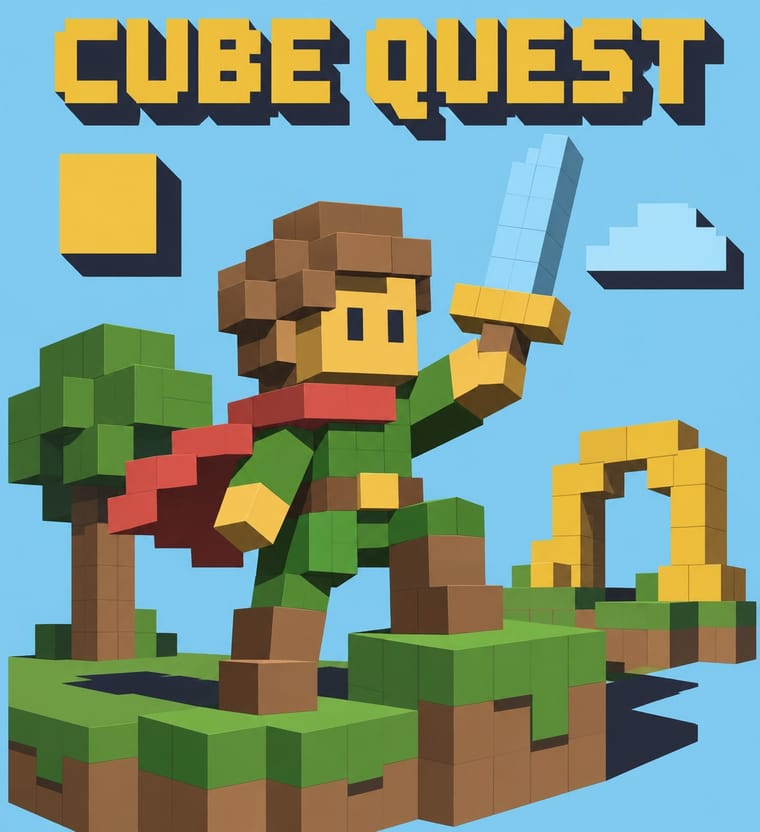
Scenes and characters built from uniform cubes on a three-dimensional grid, the pixel's volumetric cousin. Flat-coloured blocks, hard cast shadows and small palettes give a toy-like, handmade look in games, editors, icons and illustration, often shown in isometric or turntable view.
Make something in this style Get advice in this style Mix it with another style
01
Its picture in other colours
Change a colour and every picture on this page follows. It happens in your browser, from the same pictures: nothing new is made or saved.
Choose a colour to change it
-
#2b2d42 -
#4f8f3a -
#8d6e4f -
#e8c547 -
#d9534f -
#8fd3f4
A faded colour isn’t in these pictures, so changing it changes nothing.
Light and dark stay where they are; greys hardly move.
More colours: any style’s, or your own
The pictures show the style’s own colours.
02
Make something in this style
Say what you need, and Stylogeny’s image studio draws it from Voxel Art’s design choices and checks it against them. It takes about a minute, and you get a link to share.
03
How it works
Palette
-
#2b2d42ink · 11% -
#4f8f3aaccent · 14% -
#8d6e4faccent · 17% -
#e8c547accent · 10% -
#d9534faccent · 1% -
#8fd3f4ground · 37%
Shares measured from its picture. The ground is what the pictures sit on (of the colours covering most, the most neutral), the ink stands out from it most, the rest are accents.
Typefaces
-
Bitmap and pixel fonts for titles and HUD text beside the model, such as Silkscreen, echoing the block grid
a working recommendation: the style has no settled typographic canon
-
Blocky game lettering built from cubes or extruded squares, as in the logos of block-building games, with a clean geometric sans for interface and captions
- Build every object from identical cubes on one fixed 3D lattice, and never let a face, bevel or curve break the grid: the resolution of the model is the style.
- Colour each voxel as a flat swatch from a small shared palette, so a model reads as a handful of colours rather than as shading.
- Light the scene simply: one directional light with crisp hard shadows and a touch of ambient occlusion, so that the cubes' faces separate by value.
- Show the model in an isometric or slow turntable view on a plain or lightly coloured ground, so the depth of the blocks can be read from every side.
- Choose a voxel size and keep it across the whole scene; mix sizes only to signal a deliberate shift of scale.
- Abstract characters and props into the fewest cubes that still read, so a chicken, tree or house is recognised by silhouette and colour.
Where and when Games and 3D tools. 'Voxel' was coined by analogy with 'pixel' (vo for volume, el for element; Foley et al., Computer Graphics: Principles and Practice, 1990).
Games and 3D tools. 'Voxel' was coined by analogy with 'pixel' (vo for volume, el for element; Foley et al., Computer Graphics: Principles and Practice, 1990). As a deliberate look it grew from block-built game worlds (Minecraft, public alpha 17 May 2009, full release 18 November 2011), Lexaloffle's Voxatron (cited as an early voxel-art game on Wikipedia's Voxel page), the voxel editor MagicaVoxel by ephtracy (copyright 2011-2021 on its site) and mobile games such as Crossy Road (Hipster Whale, iOS 20 November 2014, art style by Ben Weatherall). Earlier 1990s 'voxel engines' such as Comanche's Voxel Space used the technique for terrain, not as a visible cube aesthetic, and are not covered here.
Change it with an idea. Any of the 73 moves that make a design say something can go on this style.
04
Its design choices
From Stylogeny’s vocabulary of design choices: defining choices make the style, characteristic ones are usual, occasional ones turn up now and then.
- Layout & composition
- Space & hierarchy
- Typography
- Colour
- Form & shape
- Surface & texture
- Ornament
- Medium & production
- Tone & intent
- Avoids
- Biomorphic curves, Rounded & pill, Whiplash line, Gloss & highlights, Soft extrusion, Painterly brushwork, Straight photography, Script, Abundant decoration
How its pictures are made Synthetic & found
Kind of picture: Synthetic & found
Known for
-
Minecraft
Mojang; public alpha May 2009, full release 18 November 2011
-
Voxatron
Lexaloffle; cited on Wikipedia's Voxel page
-
Crossy Road
Hipster Whale, 20 November 2014; art style by Ben Weatherall; Apple Design Award 2015
-
MagicaVoxel
voxel editor by ephtracy
05
Where it comes from, and what it’s close to
Grew out of
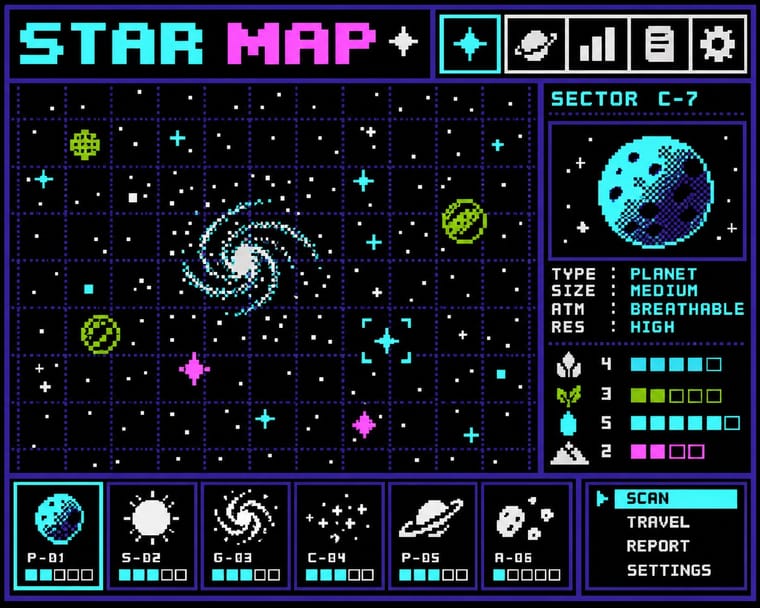
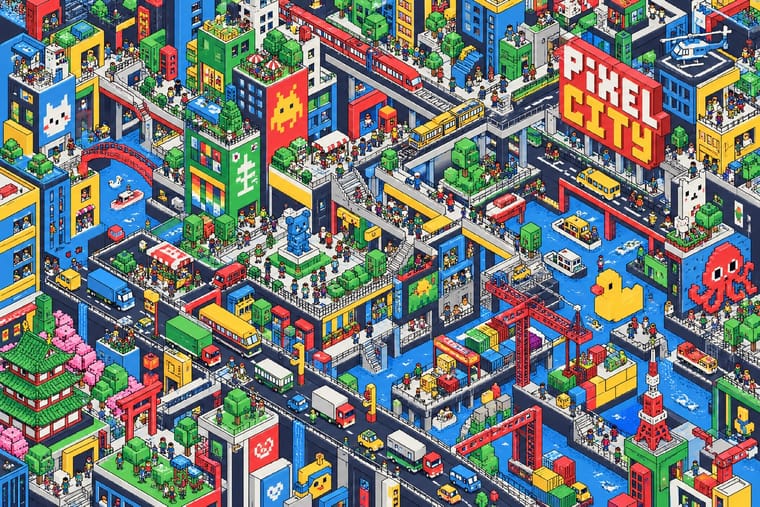
Borrowed from

Voxel Art 2009–present
No later style in the atlas grew out of it yet.
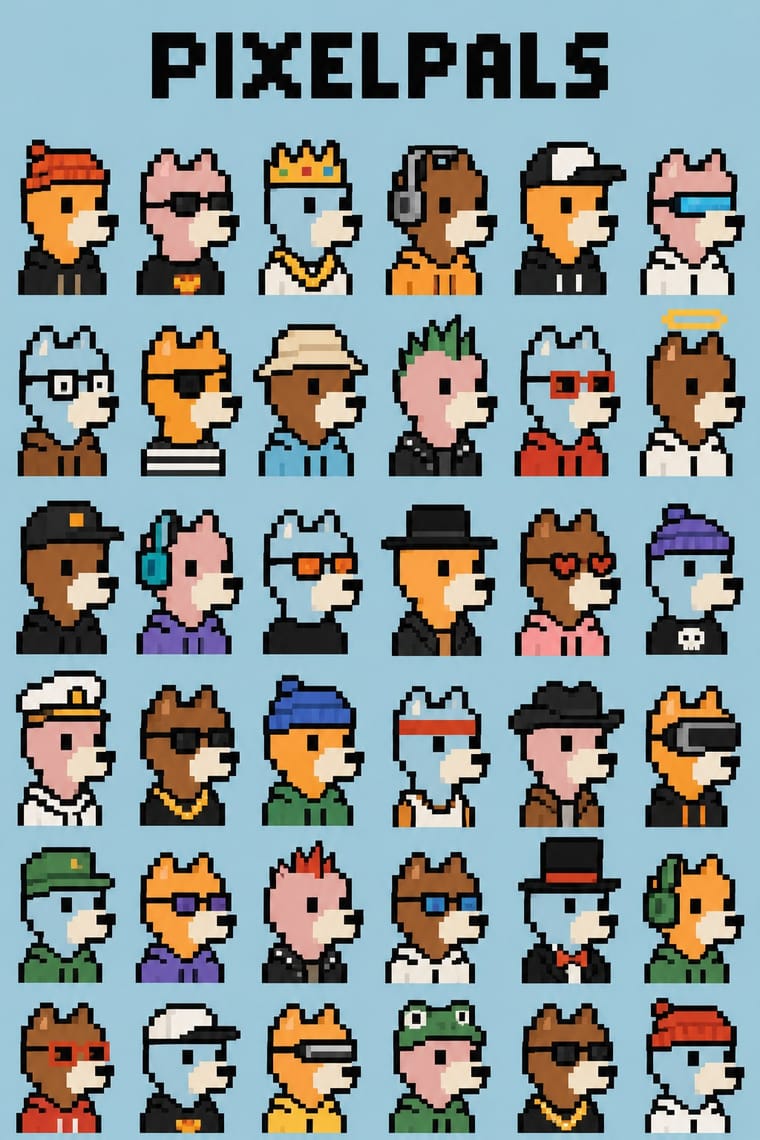
Alike in its design choices


06
Combine it with
Styles Voxel Art pairs well with or plays against, from the research. Each is worked out as a combination: which style gives the type, the colours and the forms.
- Low Poly Illustration Contrasts · Faceted triangles against a strict cube lattice: loosen the grid for a smoother mesh, or keep it for the blocky look.
- Isometric Pixel Art Pairs well · Share the isometric viewpoint and dense little worlds, but let the models turn and cast real shadows.
- Bitmap & Pixel Graphics Pairs well · Take its 2D bitmap type and sprite economy for titles and icons around the cube models.
- Claymorphism & Soft 3D Contrasts · Soft inflated 3D against hard-edged cubes; the same toy-like warmth reached by opposite surfaces.
07
Often taken for
Voxel Art has no real works recorded yet, so these are its nearest styles by its choices alone, with the choices that tell them apart.
-
Low Poly Illustration
Low Poly Illustration is one of Voxel Art’s nearest styles by choices; no real work of either fits the other better.
Choices that tell Voxel Art and Low Poly Illustration apart Choice Voxel Art Low Poly Illustration Rectilinear defining — Angular & zigzag — defining Limited spot colours characteristic — Analogous harmony — characteristic Hard offset shadow characteristic — Both descend from Bitmap & Pixel Graphics in the family tree.
-
Isometric Tech Illustration
Isometric Tech Illustration is one of Voxel Art’s nearest styles by choices; no real work of either fits the other better.
Choices that tell Voxel Art and Isometric Tech Illustration apart Choice Voxel Art Isometric Tech Illustration 3D render defining occasional Flat vector illustration — defining Limited spot colours characteristic — Analogous harmony — characteristic Hard offset shadow characteristic — Both descend from Russian Constructivism in the family tree.
-
NFT Profile-Picture Collections (CryptoPunks to Bored Apes)
NFT Profile-Picture Collections is one of Voxel Art’s nearest styles by choices; no real work of either fits the other better.
Choices that tell Voxel Art and NFT Profile-Picture Collections apart Choice Voxel Art NFT Profile-Picture Collections Geometric primitives defining — Generative imagery — defining Illusion of depth defining — Comic & cartoon — characteristic Rectilinear defining occasional Both descend from Bitmap & Pixel Graphics in the family tree.
-
Bitmap & Pixel Graphics
Bitmap & Pixel Graphics is one of Voxel Art’s nearest styles by choices; no real work of either fits the other better.
Choices that tell Voxel Art and Bitmap apart Choice Voxel Art Bitmap Geometric primitives defining — Modular grid — defining 3D render defining — Pictogram occasional defining Illusion of depth defining — Voxel Art descends from Bitmap & Pixel Graphics: a shared line, so the likeness is inherited.
— means the choice isn’t among the style’s recorded choices. Critics recorded each work’s choices with the styles’ descriptions in view, so this shows whether the descriptions hold together, not proof that they are right.
08
Sources
- Wikipedia, 'Voxel', https://en.wikipedia.org/wiki/Voxel (etymology after Foley et al. 1990; voxel art as a 3D style analogous to pixel art; Minecraft 2011, Voxatron, Crossy Road 2014)
- Wikipedia, 'Crossy Road', https://en.wikipedia.org/wiki/Crossy_Road (Hipster Whale; iOS release 20 November 2014; art style by Ben Weatherall; Apple Design Award 2015)
- Wikipedia, 'Minecraft', https://en.wikipedia.org/wiki/Minecraft (public alpha 17 May 2009; full release 18 November 2011)
1 more source
- ephtracy, MagicaVoxel, https://ephtracy.github.io/ (voxel editor; copyright ephtracy 2011-2021)
How Stylogeny researches and checks a style: where the facts come from.