Digital native · 1998–2004 · Northern Europe, Global / networked
Metalheart / Abstract 3D Techno Graphics
Also known as Metalheart / Transformer
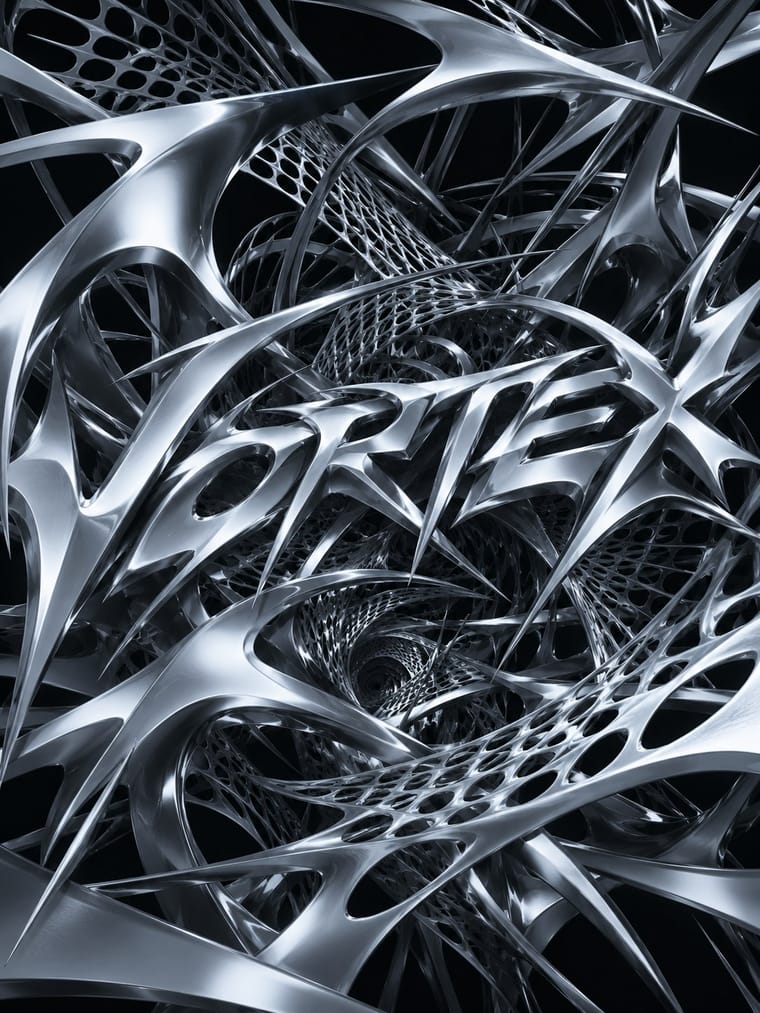
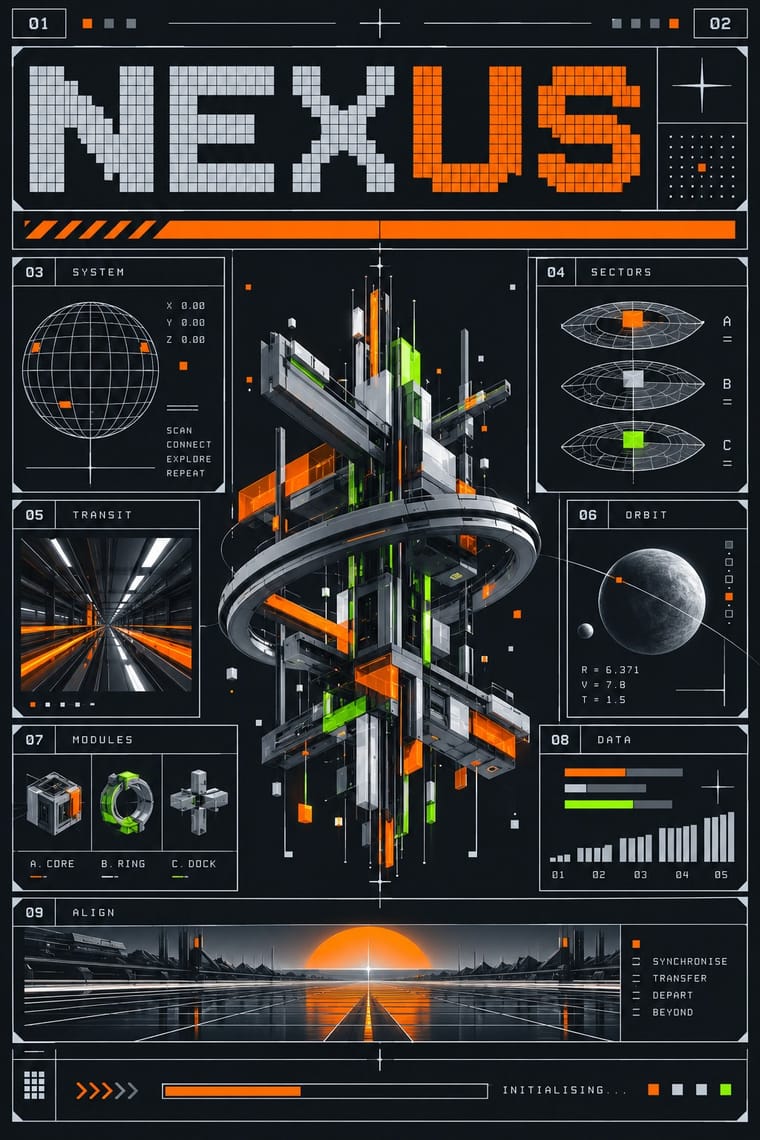
An abstract 3D graphic idiom of the late 1990s and early 2000s, spread through online design networks and the 2001 book Metalheart. Intricate chrome structures, tendrils and knots recede through rendered perspective, with dimensional lettering built into the image and, often, small technical labels as secondary text. Its place under y2k-futurism is a classification, not a documented descent. CARI, a weak aggregator, names Brainreactor and Attik among its pioneers.
Make something in this style Get advice in this style Mix it with another style
01
Its picture in other colours
Change a colour and every picture on this page follows. It happens in your browser, from the same pictures: nothing new is made or saved.
Choose a colour to change it
-
#07090d -
#2b3038 -
#aeb7c2 -
#e9eef3
A faded colour isn’t in these pictures, so changing it changes nothing.
Light and dark stay where they are; greys hardly move.
More colours: any style’s, or your own
The pictures show the style’s own colours.
02
Make something in this style
Say what you need, and Stylogeny’s image studio draws it from Metalheart / Abstract 3D Techno Graphics’s design choices and checks it against them. It takes about a minute, and you get a link to share.
03
How it works
Palette
-
#07090dground · 32% -
#2b3038accent · 30% -
#aeb7c2accent · 9% -
#e9eef3ink · 6%
Shares measured from its picture. The ground is what the pictures sit on (of the colours covering most, the most neutral), the ink stands out from it most, the rest are accents.
Typefaces
-
Brainreactor fonts
-
emBOX 3D type collection
-
Custom dimensional lettering
- Build the composition from one dense, intricate metallic structure rendered in deep perspective.
- Let curved spikes, tendrils and meshes intersect and recede to create depth and tension.
- Integrate dimensional lettering into the rendered environment instead of laying type over it.
- Often set small technical labels and grid meshes around the main object as a secondary reading layer.
- Keep the palette dark and cold, with chrome highlights.
The label comes from the 2001 book Metalheart by Swedish designers Andreas Lindholm and Anders F. Rönnblom (a Brainreactor emBOX project, with CD-ROM), and from international online digital-design networks; 'Transformer' and 'Depthcore' are CARI's wording, and Depthcore is a separate 2002 collective, not a synonym
Effects on its surface Liquid chrome, Wireframe
- Liquid chrome signature Render the intersecting tubes, spikes and central knot as reflective metal, with sharp pale streaks running along otherwise dark surfaces.
- Wireframe Set thin, see-through three-dimensional mesh lines behind and through the solid metallic structure, exposing its computer-built space.
Change it with an idea. Any of the 73 moves that make a design say something can go on this style.
04
Its design choices
From Stylogeny’s vocabulary of design choices: defining choices make the style, characteristic ones are usual, occasional ones turn up now and then.
- Layout & composition
- Space & hierarchy
- Form & shape
- Surface & texture
- Ornament
- Medium & production
- Tone & intent
- Avoids
- Rounded & pill, Pastel, Light ground, Flat, Playful & witty, Nostalgic & retro
How its pictures are made Synthetic & found
Kind of picture: Synthetic & found
Known for
-
Andreas Lindholm and Anders F. Rönnblom, Metalheart (Gingko Press, 2001, ISBN 1584230894; UK listing Laurence King, ISBN 1856692523), with CD-ROM
-
Brainreactor fonts
listed in the contents of Metalheart, 2001
-
emBOX 3D type collection
listed in the contents of Metalheart, 2001
-
Andreas Lindholm, Metalspread 02
undated; discussed by Prohm, 2004, pp. 37-38, 49-51
-
Andreas Lindholm, Silence
undated; discussed by Prohm, 2004, pp. 37-38, 49-51
05
Where it comes from, and what it’s close to
Grew out of
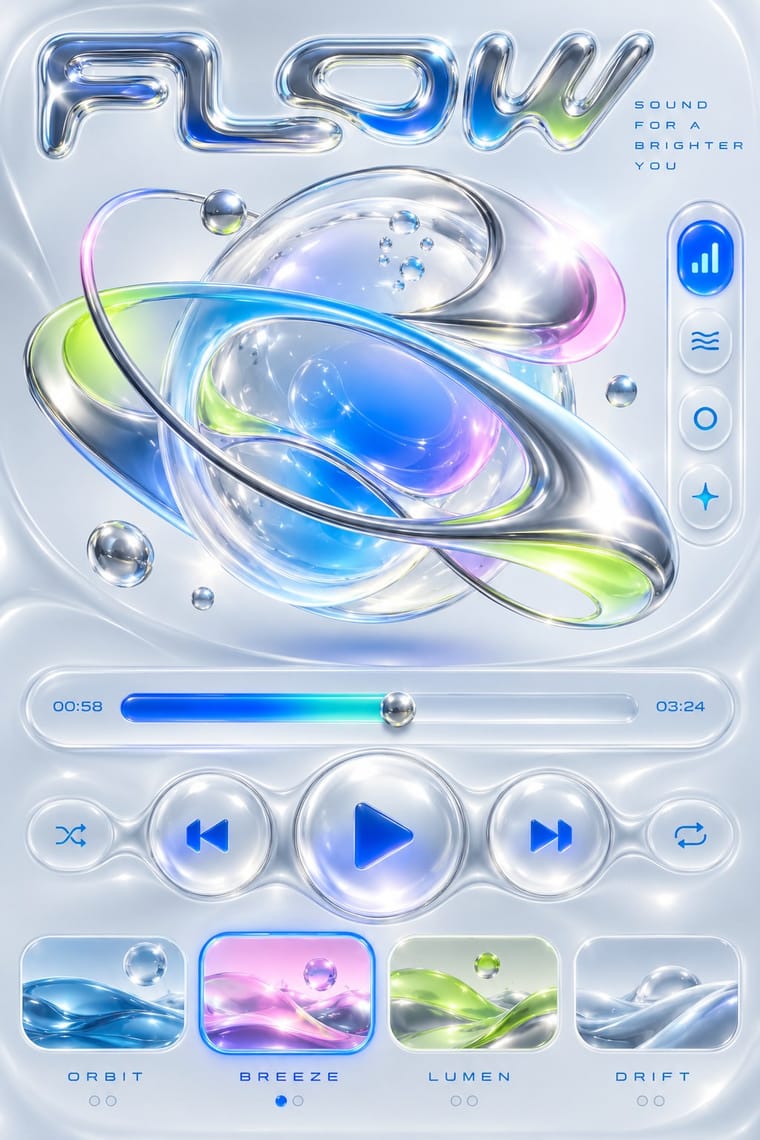
Metalheart / Abstract 3D Techno Graphics 1998–2004
No later style in the atlas grew out of it yet.
Alike in its design choices
06
Combine it with
Styles Metalheart / Abstract 3D Techno Graphics pairs well with or plays against, from the research. Each is worked out as a combination: which style gives the type, the colours and the forms.
- Techno-Futurist Graphics Contrasts · Its flat pictograms and emblems oppose Metalheart's volumetric construction; borrow its technical labels.
- Y2K Futurism Pairs well · Trade its bubble gloss for sharp metallic structure while keeping the render-driven depth.
- Cyberpunk Visual Style Pairs well · Shares dark grounds and cold technology, but Metalheart abstracts the scene into pure structure.
07
Often taken for
Metalheart / Abstract 3D Techno Graphics has no real works recorded yet, so these are its nearest styles by its choices alone, with the choices that tell them apart.
-
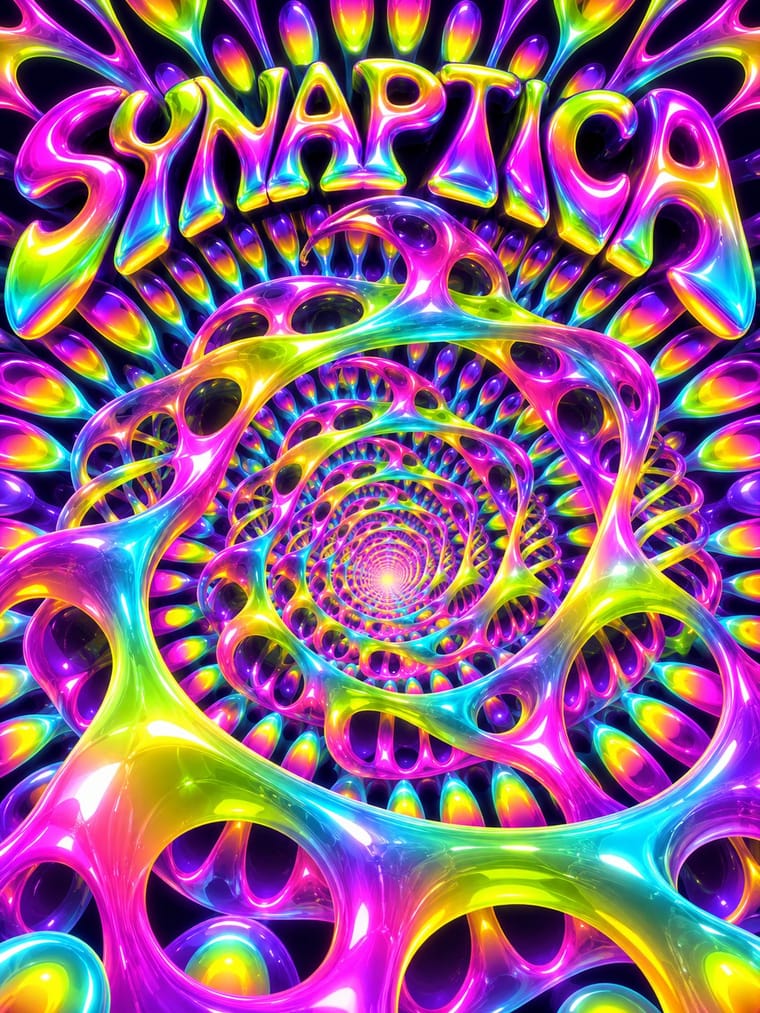
Cyberdelia (Early Digital Psychedelic Graphics)
Cyberdelia is one of Metalheart / Abstract 3D Techno Graphics’s nearest styles by choices; no real work of either fits the other better.
Choices that tell Metalheart and Cyberdelia apart Choice Metalheart Cyberdelia Ornament-free characteristic avoids Full polychrome — defining Visual tension defining — Generative imagery — defining Monochrome characteristic — No shared descent in the atlas: they reached these choices separately.
-
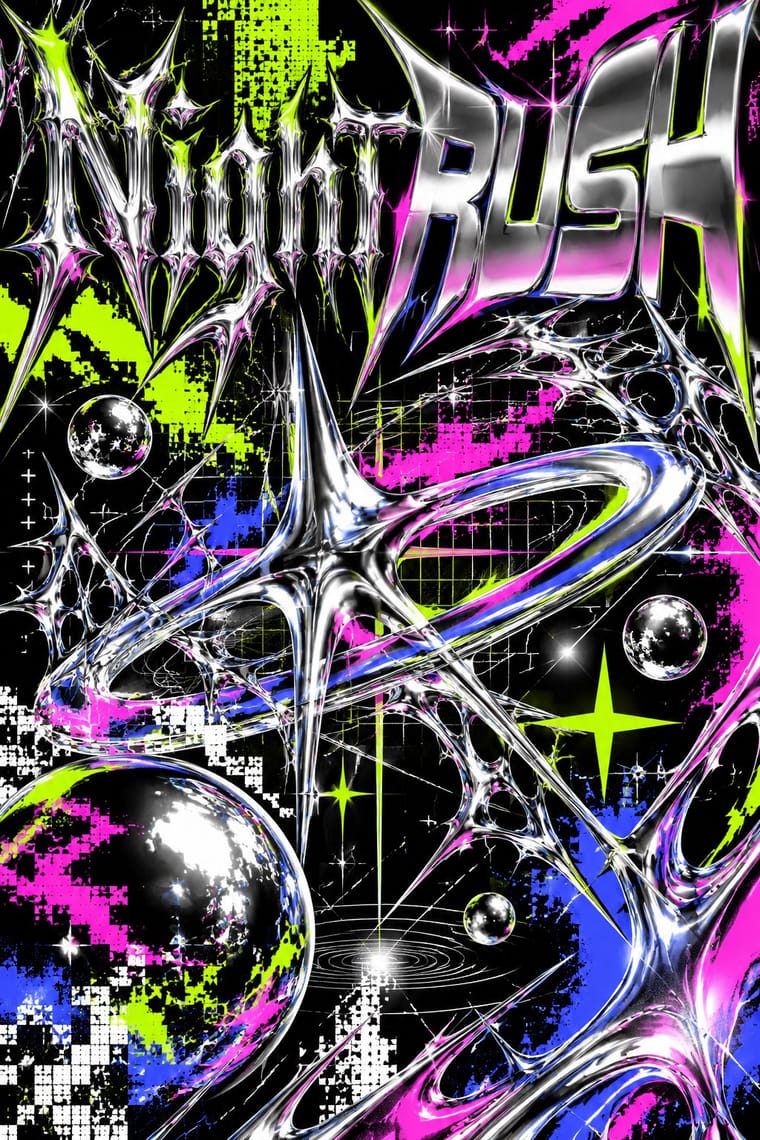
Acid Graphics / New Ugly
Acid Graphics / New Ugly is one of Metalheart / Abstract 3D Techno Graphics’s nearest styles by choices; no real work of either fits the other better.
Choices that tell Metalheart and Acid Graphics apart Choice Metalheart Acid Graphics Ornament-free characteristic avoids Fluorescent & neon — defining Illusion of depth defining occasional Iridescent & holographic — characteristic Monochrome characteristic — No shared descent in the atlas: they reached these choices separately.
-
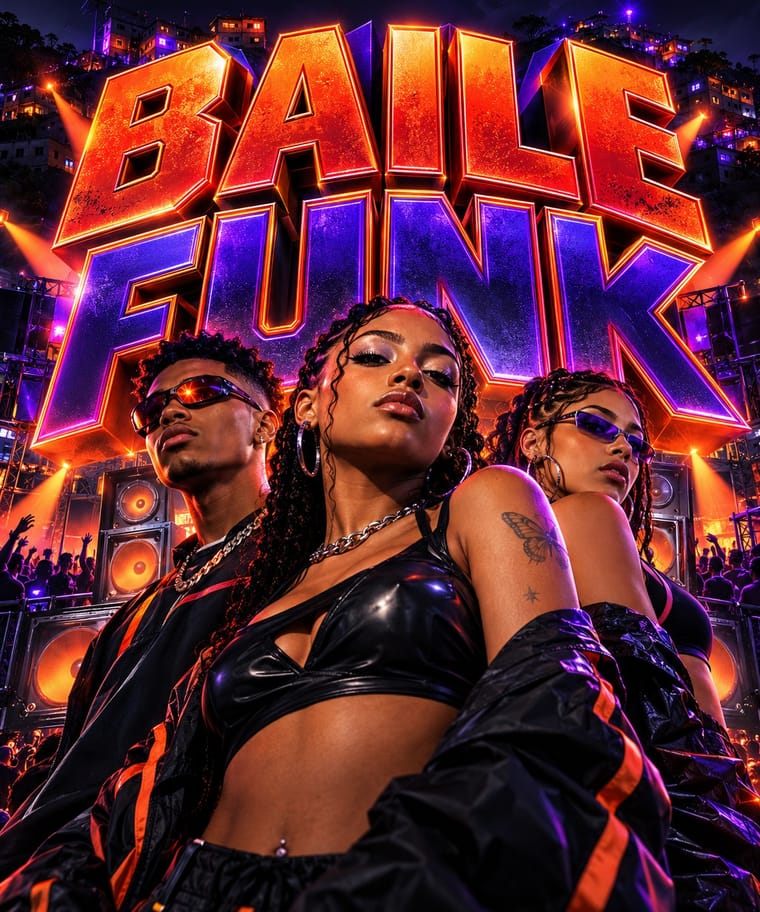
Brazilian Baile Funk Digital Flyer
Brazilian Baile Funk Digital Flyer is one of Metalheart / Abstract 3D Techno Graphics’s nearest styles by choices; no real work of either fits the other better.
Choices that tell Metalheart and Brazilian Baile Funk Digital Flyer apart Choice Metalheart Brazilian Baile Funk Digital Flyer Non-representational defining — Extreme scale contrast — defining Visual tension defining — Ornamented display — defining Experimental & distorted defining — No shared descent in the atlas: they reached these choices separately.
-
Flash-Era Web Design (Flash Portfolio Sites)
Flash-Era Web Design is one of Metalheart / Abstract 3D Techno Graphics’s nearest styles by choices; no real work of either fits the other better.
Choices that tell Metalheart and Flash-Era Web Design apart Choice Metalheart Flash-Era Web Design Visual tension defining — Framed panels — defining Experimental & distorted defining — Rules & bars — defining Non-representational defining occasional Both descend from Techno-Futurist Graphics in the family tree.
— means the choice isn’t among the style’s recorded choices. Critics recorded each work’s choices with the styles’ descriptions in view, so this shows whether the descriptions hold together, not proof that they are right.
08
Sources
- Andreas Lindholm & Anders F. Rönnblom, Metalheart (Gingko Press, 2001, ISBN 1584230894; London: Laurence King, 2001, ISBN 1856692523), with CD-ROM; TCDC library catalogue https://library.tcdc.or.th/record/view/b00000768
- Alan Prohm, Visual Poetics: Meaning Space from Mallarmé to Metalheart, Stanford dissertation, 2004, chapter 2, pp. 37-38, 49-51 (no public URL verified)
- CARI Institute, Metalheart aesthetic page, https://cari.institute/aesthetics/metalheart (popularity window c. 1998-2004)
How Stylogeny researches and checks a style: where the facts come from.