Avant-garde · 1923–1926 · Eastern Europe, Central Europe
Mechano-Faktura & Polish Constructivist Advertising
Also known as Mechanofaktura, Berlewi's Mechano-Faktura
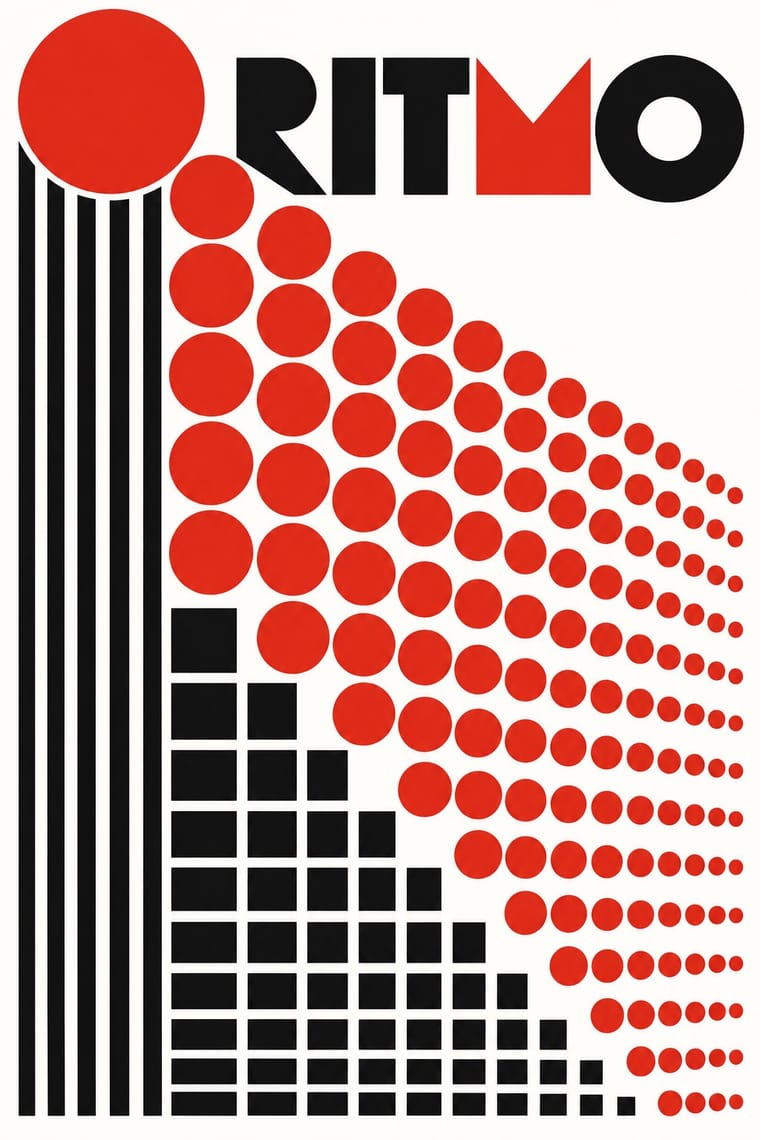
Henryk Berlewi's system of two-dimensional pictures built mechanically from rhythmic parallel lines, circles and squares in black, white and red. It rejected the illusion of space and was promptly applied to commercial advertising, brochures and packaging by the agency Reklama-Mechano. Unlike Russian Constructivism, it was a theory of mechanical surface texture sold to business, with no photomontage, diagonals or agitprop. Berlewi quit the research in 1926 and returned to figurative art.
Make something in this style Get advice in this style Mix it with another style
01
How it works
- Reject spatial illusion and keep every picture strictly two-dimensional.
- Build images from repeated parallel lines, circles and squares laid down with mechanical regularity.
- Limit colour to black, white and red.
- Treat the line field as a surface texture whose rhythm carries the message.
- Put the system to work for commerce, in brochures, packaging and advertisements.
Berlin and Warsaw: Henryk Berlewi showed his first Mechano-Faktura compositions in the Novembergruppe section of the Grosse Berliner Kunstausstellung in 1923, published the tract in March 1924 and, with Aleksander Wat and Stanislaw Brucz, founded the agency Reklama-Mechano later in 1924.
02
Its design choices
From Stylogeny’s vocabulary of design choices: defining choices make the style, characteristic ones are usual, occasional ones turn up now and then.
- Layout & composition
- Space & hierarchy
- Typography
- Colour
- Form & shape
- Surface & texture
- Medium & production
- Avoids
- Naturalistic depiction, Illusion of depth, Gradients, Abundant decoration, Floral & vegetal, Skeuomorphic material, Photomontage, Collage & layering
Palette
-
#ffffff -
#111111 -
#d62718 -
#f1ede2
Typefaces
-
Lettering not verified; no typeface attribution confirmed
-
Geometric sans-serif display lettering is an unconfirmed assumption
Known for
-
Henryk Berlewi, Mechano-Faktura tract
March 1924
-
Berlewi, first Mechano-Faktura exhibition, Austro-Daimler Automobile Salon
1924
-
Berlewi, German edition of the Mechano-Faktura manifesto
Berlin, 1924, after Herwarth Walden's invitation
-
Reklama-Mechano brochure for Plutos chocolate
1924
03
Make something in this style
Say what you need, and Stylogeny’s image studio draws it from Mechano-Faktura & Polish Constructivist Advertising’s design choices and checks it against them. It takes about a minute, and you get a link to share.
04
Where it comes from, and what it’s close to
Before it
The style it grew out of, and the styles it borrowed from.
After it
The styles that grew out of it.
No later style in the atlas grew out of it yet.
Alike in its design choices
Styles that make many of the same choices, related or not, besides those above.
05
Often taken for
Mechano-Faktura & Polish Constructivist Advertising has no real works recorded yet, so these are its nearest styles by its choices alone, with the choices that tell them apart.
-
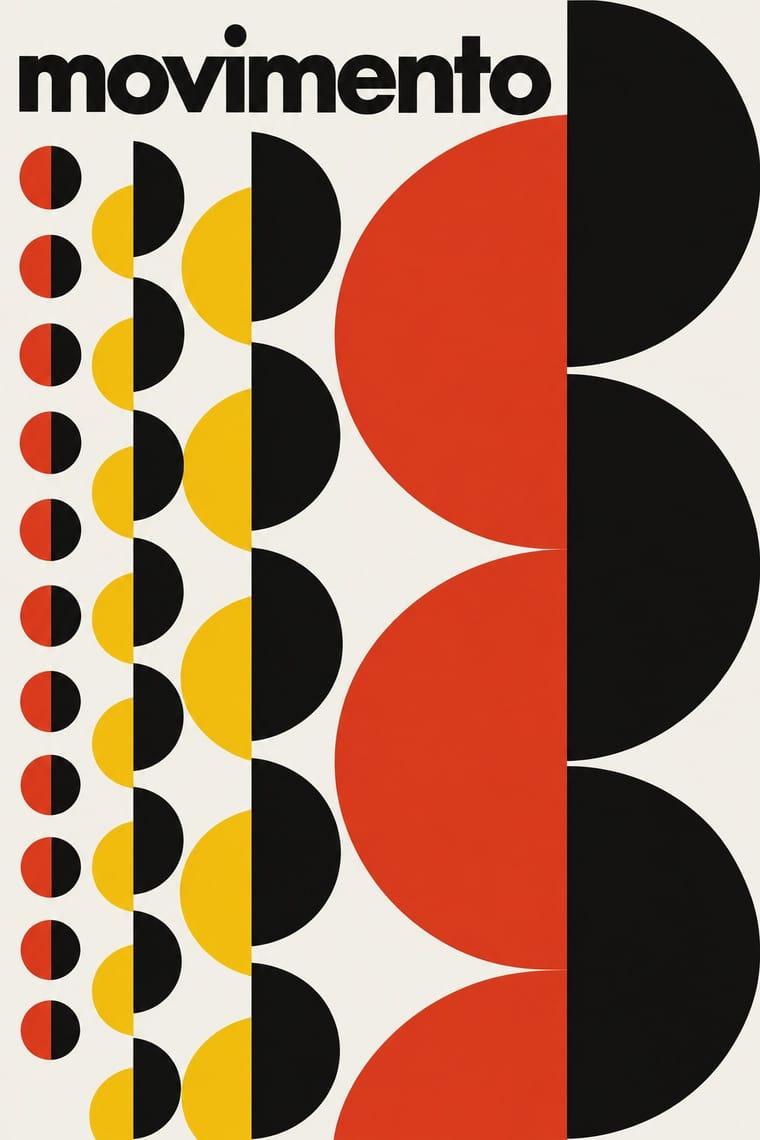
Brazilian Concrete Design
Brazilian Concrete Design is one of Mechano-Faktura & Polish Constructivist Advertising’s nearest styles by choices; no real work of either fits the other better.
Choices that tell Mechano-Faktura and Brazilian Concrete Design apart Choice Mechano-Faktura Brazilian Concrete Design Rules & bars characteristic — Primary triad — characteristic Measured density characteristic — Typography only — characteristic Technological & futurist defining — Both descend from Russian Constructivism in the family tree.
-
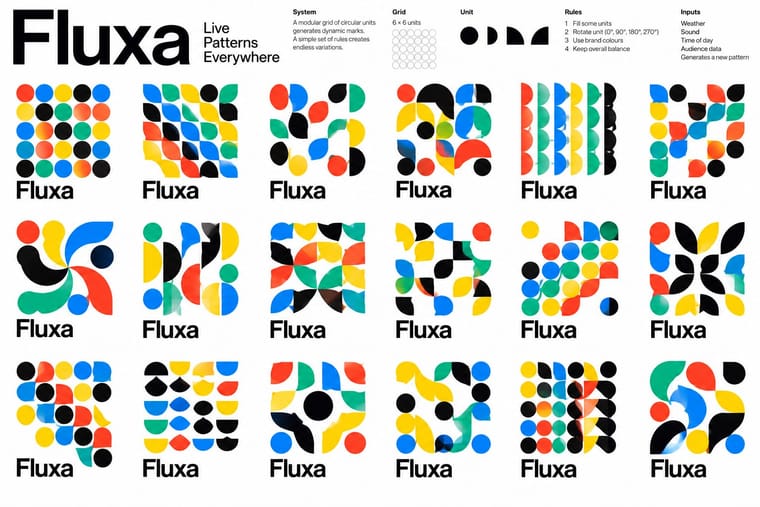
Generative & Dynamic Identities
Generative & Dynamic Identities is one of Mechano-Faktura & Polish Constructivist Advertising’s nearest styles by choices; no real work of either fits the other better.
Choices that tell Mechano-Faktura and Generative apart Choice Mechano-Faktura Generative Limited spot colours defining — Generative imagery — defining Dynamic asymmetry characteristic — Gradients avoids occasional Rules & bars characteristic — Both descend from Russian Constructivism in the family tree.
-
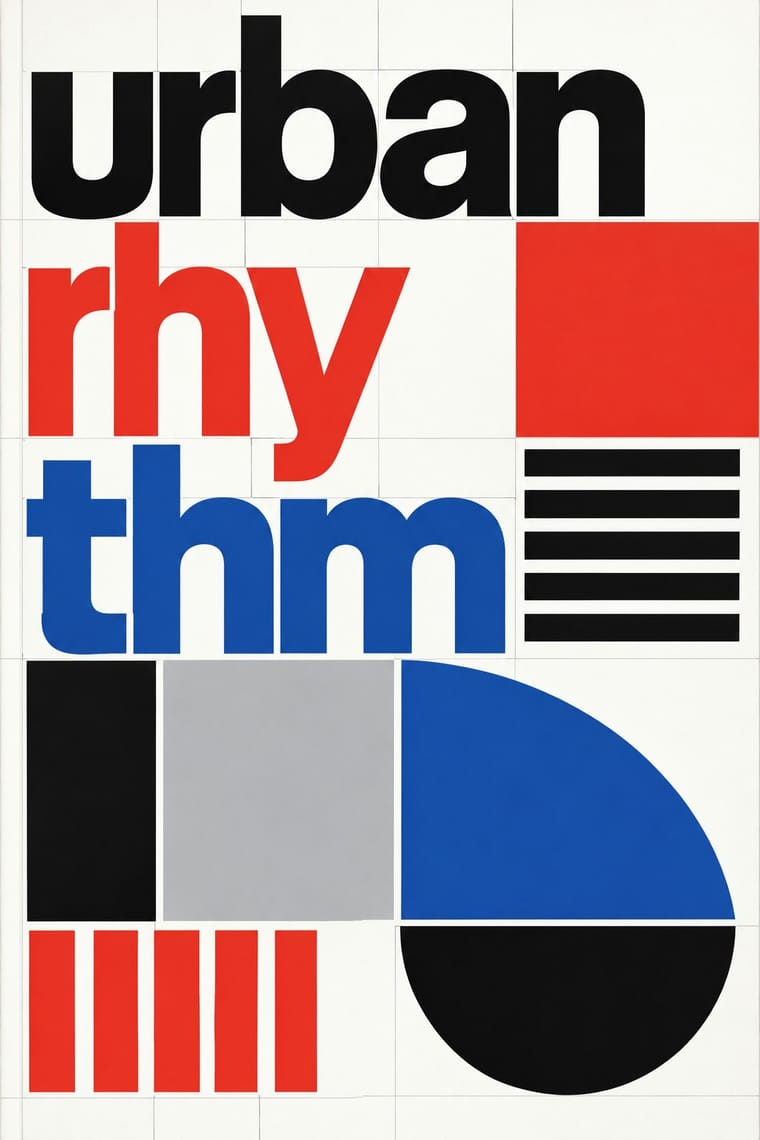
Total Design & Dutch Functionalism
Total Design & Dutch Functionalism is one of Mechano-Faktura & Polish Constructivist Advertising’s nearest styles by choices; no real work of either fits the other better.
Choices that tell Mechano-Faktura and Total Design apart Choice Mechano-Faktura Total Design Optical pattern defining — Typography only — defining Pattern & repeat defining — Grotesque & neo-grotesque — defining Measured density characteristic — Both descend from Russian Constructivism in the family tree.
-
HfG Ulm Systematic Design
HfG Ulm Systematic Design is one of Mechano-Faktura & Polish Constructivist Advertising’s nearest styles by choices; no real work of either fits the other better.
Choices that tell Mechano-Faktura and HfG Ulm Systematic Design apart Choice Mechano-Faktura HfG Ulm Systematic Design Optical pattern defining — Flush left, ragged right — defining Pattern & repeat defining — Grotesque & neo-grotesque — defining Non-representational characteristic — Both descend from Russian Constructivism in the family tree.
— means the choice isn’t among the style’s recorded choices. Critics recorded each work’s choices with the styles’ descriptions in view, so this shows whether the descriptions hold together, not proof that they are right.
06
Combine it with
Styles Mechano-Faktura & Polish Constructivist Advertising pairs well with or plays against, from the research. Each is worked out as a combination: which style gives the type, the colours and the forms.
- Die Neue Typographie Pairs well · Pair the line-field image with asymmetric sans setting for an advertising layout.
- De Stijl Pairs well · Shared flat colour and orthogonal discipline; swap the Dutch primaries for red-black-white.
- Art Nouveau Contrasts · Whiplash curves and ornament against strict mechanical lines.
- Suprematism Pairs well · Borrow its flat geometric primitives, then fill them with Berlewi's mechanical line rhythm.
07
Sources
- Wikipedia, Henryk Berlewi (https://en.wikipedia.org/wiki/Henryk_Berlewi), read; the Der Sturm manifesto edition is tagged citation-needed there. Parent, affinities and the red palette hex are editorial judgement, not sourced; influences left empty because no source states them. The paper-tone #f1ede2, type.geometric-sans 0.3 and medium.lithography 0.3 are unsourced placeholders required by the schema's facet minimums.
How Stylogeny researches and checks a style: where the facts come from.