Traditions & vernacular · 1940–present · Latin America & Caribbean
Drapo Vodou ( Haitian Sequin Flags )
Also known as Vodou flags, Drapo Vodou, Haitian sequin flags
Handmade Haitian Vodou flags in which thousands of sequins and beads are sewn into glittering fields, showing a lwa (spirit) by its emblem or a figure, typically with its name in capitals; modern flags usually add a border, though early flags had simple or no borders. Ceremonial servis flags are made in pairs for the temple, with fringe; art flags for sale add narrative and invented scenes.
Use it with care
Drapo Vodou serve a living religion: a ceremonial flag is an altar object made in consecrated pairs for a particular lwa and temple, and veve are sacred signs that call spirits, so do not use them or flag imagery as decoration, branding or costume. Buy or commission from Haitian flag artists, credit them by name, learn what the spirit means before borrowing, and keep ceremonial servis flags distinct from art flags made for sale. Vodou is a living religion often met with stereotype; prefer Haitian-run sellers.
01
How it works
Palette
-
#1b2a8c -
#c8102e -
#f2c200 -
#0a7a4b -
#111111 -
#d9d9e3
Typefaces
-
Sequin and bead capital lettering naming the lwa
-
Hand-stitched block capitals on drapo servis
- Name the spirit: put a single lwa's emblem or figure at the centre, typically with its name in capital letters.
- Fill the ground with sequins or beads, in one colour or a geometric pattern, typically so little or no cloth shows.
- Frame the field, typically with an elaborate border on modern flags (early flags had simple or none), and add a fringe on a ceremonial flag.
- Set saturated hues against each other so the light moves across the surface.
- Build outlines and lettering from rows of beads or sequins, letting the stitch direction draw the shape.
Haiti, chiefly Port-au-Prince: handmade flags of sequins and beads made by flag artists for Vodou temples (drapo servis) and, from the 1950s on, also for collectors. Earlier beaded and appliqued flags exist; 1940 marks the start of the sequin form only (c.1940, Joseph Fortine)
02
Its design choices
From Stylogeny’s vocabulary of design choices: defining choices make the style, characteristic ones are usual, occasional ones turn up now and then.
- Layout & composition
- Space & hierarchy
- Colour
- Form & shape
- Surface & texture
- Ornament
- Medium & production
- Tone & intent
- Avoids
- Ornament-free, Restrained accents, Generous white space, Monochrome, Pastel, Naturalistic depiction, Straight photography, Paper & letterpress bite
How its pictures are made Systematic
Kind of picture: Systematic
Known for
-
Antoine Oleyant, drapo for Bosou
c. 1991-92, Fowler Museum, UCLA
-
Clotaire Bazile, drapo for Bawon Kriminel
c. 1980s, Fowler Museum, UCLA
-
Yves Telemak, drapo for Ezili Danto
1996, Fowler Museum, UCLA
-
Joseph Fortine, sequin flag for Damballa
1943, on burlap
-
Myrlande Constant (b. 1968, Port-au-Prince), large beaded tableaux
03
Where it comes from, and what it’s close to
Nothing earlier is recorded: in the atlas it is a starting point.
Drapo Vodou (Haitian Sequin Flags) 1940–present
No later style in the atlas grew out of it yet.
Alike in its design choices
04
Often taken for
Drapo Vodou has no real works recorded yet, so these are its nearest styles by its choices alone, with the choices that tell them apart.
-
Guna Mola
Guna Mola is one of Drapo Vodou’s nearest styles by choices; no real work of either fits the other better.
Choices that tell Drapo Vodou and Guna Mola apart Choice Drapo Vodou Guna Mola Icons & pictograms defining — Flat fields — defining Emblems & badges defining — Angular & zigzag — characteristic Gloss & highlights defining — No shared descent in the atlas: they reached these choices separately.
-
Pakistani Truck Art
Pakistani Truck Art is one of Drapo Vodou’s nearest styles by choices; no real work of either fits the other better.
Choices that tell Drapo Vodou and Pakistani Truck Art apart Choice Drapo Vodou Pakistani Truck Art Icons & pictograms defining — Naturalistic depiction avoids characteristic Emblems & badges defining — Floral & vegetal — defining Jewel & metallic characteristic — No shared descent in the atlas: they reached these choices separately.
-
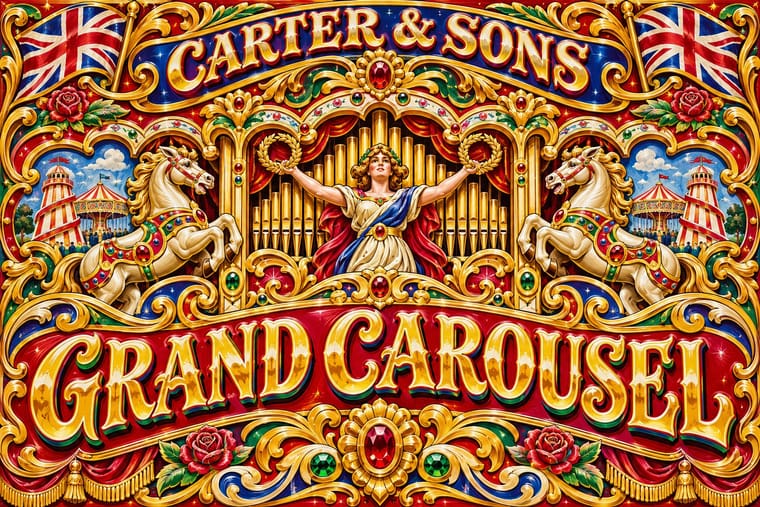
British Fairground Art
British Fairground Art is one of Drapo Vodou’s nearest styles by choices; no real work of either fits the other better.
Choices that tell Drapo Vodou and British Fairground Art apart Choice Drapo Vodou British Fairground Art Icons & pictograms defining occasional Naturalistic depiction avoids occasional Emblems & badges defining occasional Ornamented display occasional defining All-over field characteristic — No shared descent in the atlas: they reached these choices separately.
-
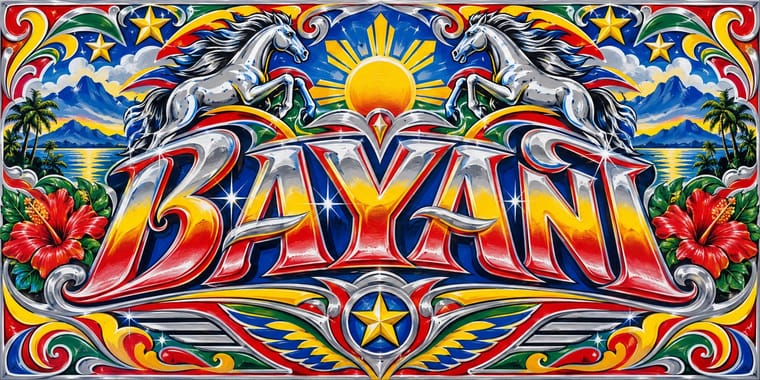
Jeepney Art
Jeepney Art is one of Drapo Vodou’s nearest styles by choices; no real work of either fits the other better.
Choices that tell Drapo Vodou and Jeepney Art apart Choice Drapo Vodou Jeepney Art Icons & pictograms defining — Naturalistic depiction avoids occasional Jewel & metallic characteristic — Gradients — characteristic All-over field characteristic — No shared descent in the atlas: they reached these choices separately.
— means the choice isn’t among the style’s recorded choices. Critics recorded each work’s choices with the styles’ descriptions in view, so this shows whether the descriptions hold together, not proof that they are right.
05
Sources
- Fowler Museum at UCLA, Voudou Petwo Altar, collection pages for drapo by Oleyant, Bazile and Telemak (https://fowler.ucla.edu/voudou-petwo-altar/)
- Wikipedia, Haitian Vodou art (https://en.wikipedia.org/wiki/Haitian_Vodou_art)
- Wikipedia, Myrlande Constant (https://en.wikipedia.org/wiki/Myrlande_Constant)
How Stylogeny researches and checks a style: where the facts come from.