Traditions & vernacular · 1850–present · Western Europe, Central Europe
Swiss Alpine Scherenschnitt ( Pays-d’Enhaut & Saanenland )
Also known as Swiss folk paper-cutting, Découpage du Pays-d’Enhaut, Alpaufzug Scherenschnitt
A regional Swiss paper-cutting tradition in which scissors turn black, and sometimes coloured, paper into finely pierced silhouettes of Alpine life: the cattle procession to the summer pasture, chalets, trees, flowers and hearts. Scenes are stacked in bands or set inside ornamental frames against a pale ground. Mid-nineteenth-century in origin, it is still practised and applied to cards and print campaigns.
Use it with care
A living regional craft with named practitioners and a national association; commission or credit named cutters and do not trace or imitate the designs of living cutters. Scherenschnitt is practised across Europe and Hauswirth's work is long out of copyright, but avoid generic 'Swiss folk' pastiche. The red accent #8c1c13 in the palette is illustrative, not sourced.
01
How it works
Palette
-
#f4efe3 -
#111111 -
#ffffff -
#8c1c13
Typefaces
-
Hand-drawn lettering
marginal in the tradition; cut work is mostly pictorial
-
Akzidenz-Grotesk
suggested neutral pairing for captions, not from the sources
- Cut the whole image from paper with scissors, so every form is a silhouette joined to its neighbours.
- Narrate the Alpine year, above all the cattle procession, as a row of repeated figures in stacked scenic bands.
- Frame the scene with a border of leaves, flowers or berries, as in Esther Gerber's Christmas village for DROPA.
- Mount black paper on a pale ground and keep colour to a few pasted pieces.
- Fold the sheet for axial symmetry where the motif suits it, and cut freely asymmetric scenes where it does not.
Where and when Pays-d’Enhaut in Vaud and the adjoining Saanenland and Simmental in the Bernese Oberland, Switzerland; the regional Alpine style is associated with Johann Jakob Hauswirth (1809–1871), born in Saanen and died near L’Etivaz, who made an Alpaufzug (cattle procession) in the Simmental in the mid-nineteenth century.
Pays-d’Enhaut in Vaud and the adjoining Saanenland and Simmental in the Bernese Oberland, Switzerland; the regional Alpine style is associated with Johann Jakob Hauswirth (1809–1871), born in Saanen and died near L’Etivaz, who made an Alpaufzug (cattle procession) in the Simmental in the mid-nineteenth century. It belongs to the wider European Scherenschnitt craft, known in central Europe since about 1600; no matching parent entry exists in the atlas yet.
02
Its design choices
From Stylogeny’s vocabulary of design choices: defining choices make the style, characteristic ones are usual, occasional ones turn up now and then.
- Layout & composition
- Space & hierarchy
- Typography
- Colour
- Surface & texture
- Ornament
- Medium & production
- Tone & intent
- Avoids
- Illusion of depth, Straight photography, Gloss & highlights, Full polychrome, Radial & concentric, Experimental & distorted
How its pictures are made Systematic
Kind of picture: Systematic
Known for
-
Johann Jakob Hauswirth, Alpaufzug (Simmental, mid-nineteenth century), described by Verein Scherenschnitt Schweiz; Hauswirth's work is held at the Musée du Pays-d’Enhaut, Château-d’Œx
-
Louis Saugy (1871–1953), cutter of the Pays-d’Enhaut, displayed at the Musée du Pays-d’Enhaut, Château-d’Œx
-
Esther Gerber, commissioned Christmas village scene for Dr. Bähler DROPA, framed by botanical motifs
-
David Regez (1916–1984) and Christian Schwizgebel (1914–1993), Saanenland cutters named in the Bern inventory
03
Where it comes from, and what it’s close to
Nothing earlier is recorded: in the atlas it is a starting point.
Swiss Alpine Scherenschnitt (Pays-d’Enhaut & Saanenland) 1850–present
No later style in the atlas grew out of it yet.
Alike in its design choices
04
Often taken for
Swiss Alpine Scherenschnitt has no real works recorded yet, so these are its nearest styles by its choices alone, with the choices that tell them apart.
-
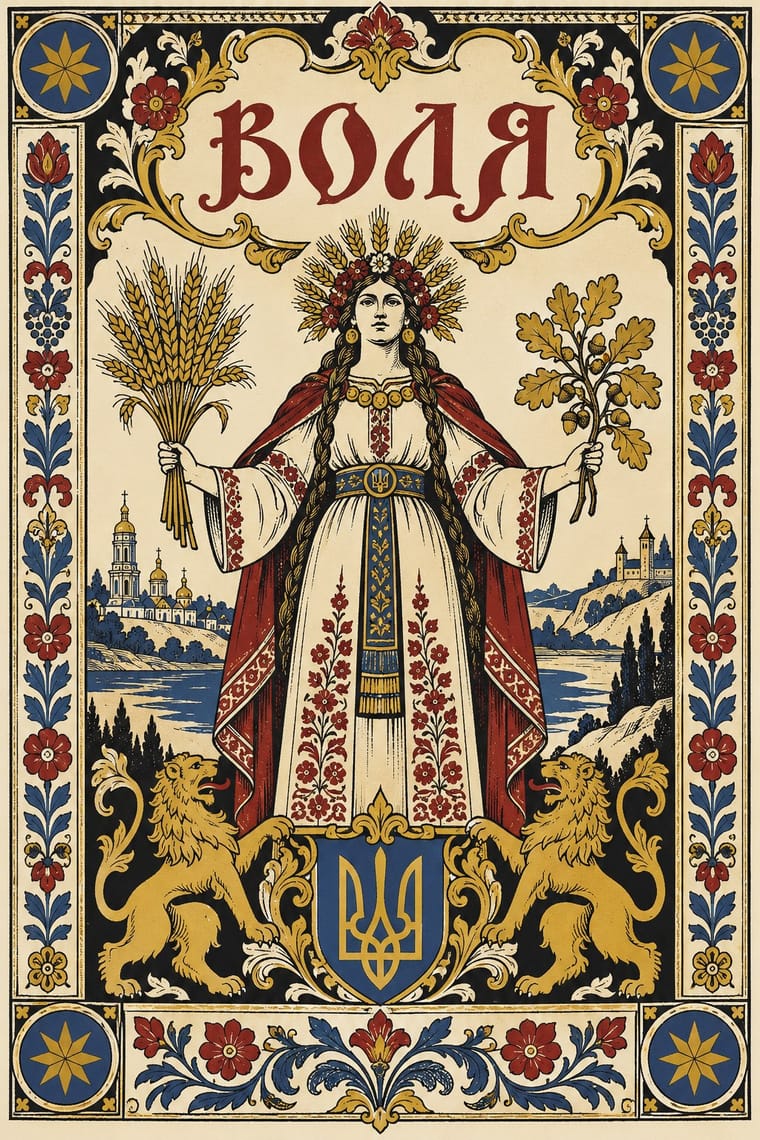
Seiz Breur (Breton Modernised Folk Design)
Seiz Breur is one of Swiss Alpine Scherenschnitt’s nearest styles by choices; no real work of either fits the other better.
Choices that tell Swiss Alpine Scherenschnitt and Seiz Breur apart Choice Swiss Alpine Scherenschnitt Seiz Breur Monochrome characteristic — Line illustration — defining Biomorphic curves characteristic — Carved line — defining Floral & vegetal characteristic — No shared descent in the atlas: they reached these choices separately.
-
Narbut School (Ukrainian Baroque Revival Graphics)
Narbut School is one of Swiss Alpine Scherenschnitt’s nearest styles by choices; no real work of either fits the other better.
Choices that tell Swiss Alpine Scherenschnitt and Narbut School apart Choice Swiss Alpine Scherenschnitt Narbut School Flat fields defining occasional Line illustration — defining Icons & pictograms characteristic — Emblems & badges — defining Sequential narrative characteristic — No shared descent in the atlas: they reached these choices separately.
-
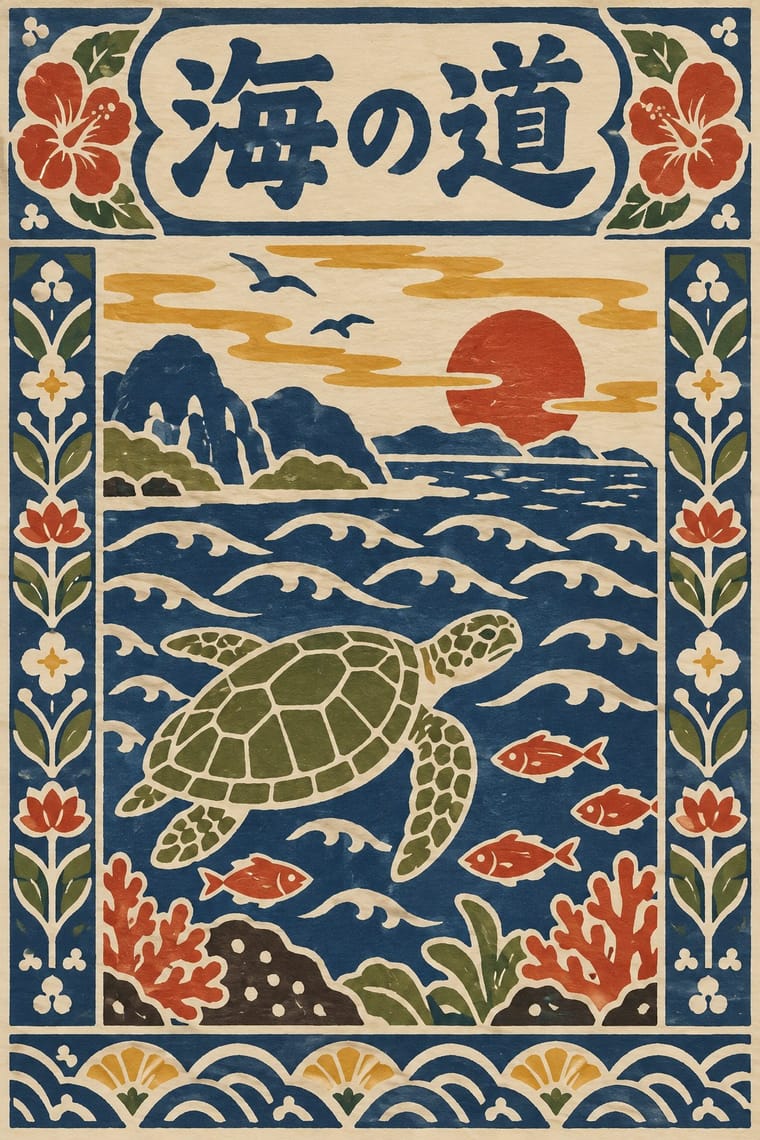
Serizawa Katazome and Mingei Stencil-Dye Graphics
Serizawa Katazome and Mingei Stencil-Dye Graphics is one of Swiss Alpine Scherenschnitt’s nearest styles by choices; no real work of either fits the other better.
Choices that tell Swiss Alpine Scherenschnitt and Serizawa Katazome and Mingei Stencil-Dye Graphics apart Choice Swiss Alpine Scherenschnitt Serizawa Katazome and Mingei Stencil-Dye Graphics Icons & pictograms characteristic — Earth & mineral — defining Nostalgic & retro characteristic — Pattern & repeat — defining Full polychrome avoids occasional No shared descent in the atlas: they reached these choices separately.
-
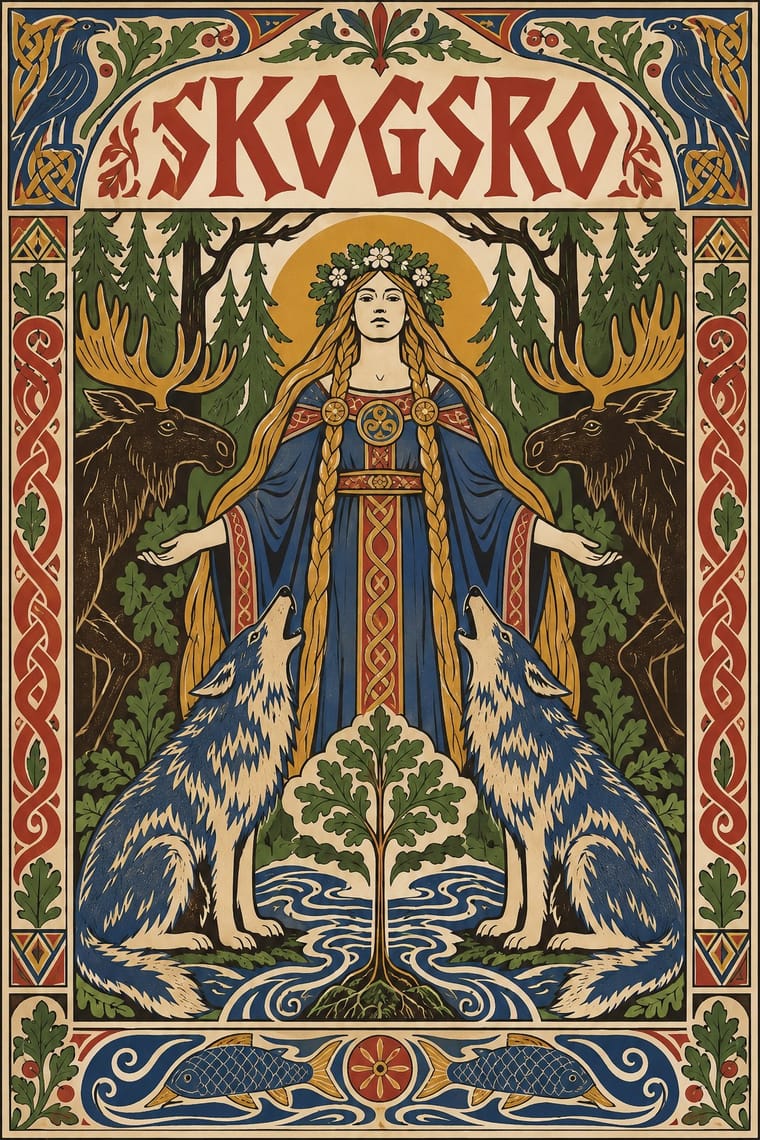
Norwegian and Finnish National Romantic Graphics (Munthe & Karelianism)
Norwegian and Finnish National Romantic Graphics is one of Swiss Alpine Scherenschnitt’s nearest styles by choices; no real work of either fits the other better.
Choices that tell Swiss Alpine Scherenschnitt and Norwegian and Finnish National Romantic Graphics apart Choice Swiss Alpine Scherenschnitt Norwegian and Finnish National Romantic Graphics Icons & pictograms characteristic — Line illustration — defining Floral & vegetal characteristic — Hand-lettering occasional defining Communal & popular characteristic — No shared descent in the atlas: they reached these choices separately.
— means the choice isn’t among the style’s recorded choices. Critics recorded each work’s choices with the styles’ descriptions in view, so this shows whether the descriptions hold together, not proof that they are right.
05
Sources
- Canton of Bern, living traditions inventory, Scherenschnitt: https://www.lt.bkd.be.ch/de/start/traditionen/scherenschnitt.html
- Swiss National Museum, Scherenschnitte exhibition school materials (2015): https://www.landesmuseum.ch/landesmuseum/ihr-besuch/schulen/2015/scherenschnitte.pdf
- Verein Scherenschnitt Schweiz, history: https://scherenschnitt.ch/de/scheren-und-papierschnitt/geschichte
1 more source
- Dr. Bähler DROPA AG, Kunst aus Papier (interview with Esther Gerber): https://dropa.ch/scherenschnitt
How Stylogeny researches and checks a style: where the facts come from.