Digital native · 2006–present · Global / networked, Northern Europe
CGI Product Visualisation ( Photoreal Product Renders )
Also known as CGI pack shot, Product rendering, Photoreal product renders, Computer-generated product photography, 3D product visualisation
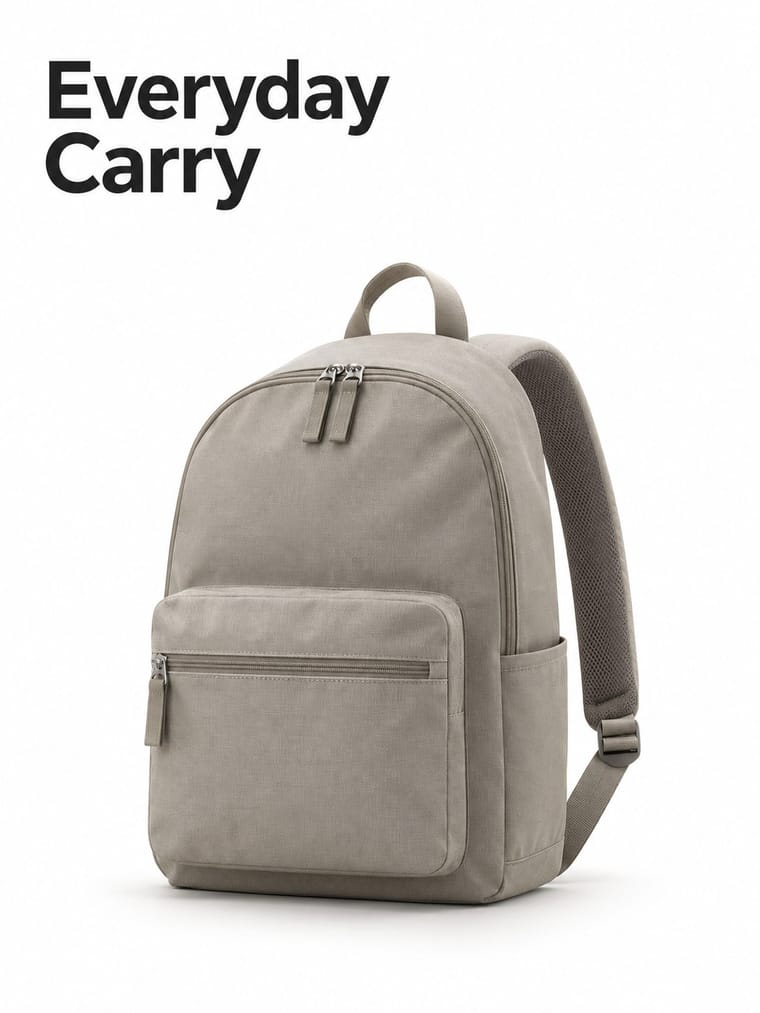
Catalogue pages, web-shop tiles and adverts in which a computer render stands in for a photograph and is meant to pass as one. Products sit on seamless pale grounds or in whole rendered rooms, lit identically across a range, flawless and dust-free, with type kept outside the picture in the retailer's grid.
Make something in this style Get advice in this style Mix it with another style
01
Its picture in other colours
Change a colour and every picture on this page follows. It happens in your browser, from the same pictures: nothing new is made or saved.
Choose a colour to change it
-
#ffffff -
#f2f1ee -
#d8d4cc -
#8a8478 -
#222222
A faded colour isn’t in these pictures, so changing it changes nothing.
Light and dark stay where they are; greys hardly move.
More colours: any style’s, or your own
The pictures show the style’s own colours.
02
Make something in this style
Say what you need, and Stylogeny’s image studio draws it from CGI Product Visualisation (Photoreal Product Renders)’s design choices and checks it against them. It takes about a minute, and you get a link to share.
03
How it works
Palette
-
#ffffffground · 62% -
#f2f1eeaccent · 3% -
#d8d4ccaccent · 4% -
#8a8478accent · 23% -
#222222ink · 1%
Shares measured from its picture. The ground is what the pictures sit on (of the colours covering most, the most neutral), the ink stands out from it most, the rest are accents.
Typefaces
-
Noto Sans
-
Verdana
- Render the object so it passes as a photograph: no stylised forms, no impossible materials.
- Isolate each product on a seamless white or pale ground, or build a complete lived-in room around it.
- Light every item in a range identically and shoot all of them from the same angles.
- Keep surfaces perfect and even, and let gloss, glass or fabric read true to the real material.
- Keep type out of the picture, in a neutral grid of name, price and detail.
Retail and advertising image production, moving from the studio pack shot to computer renders; IKEA is the best-documented case
Change it with an idea. Any of the 73 moves that make a design say something can go on this style.
04
Its design choices
From Stylogeny’s vocabulary of design choices: defining choices make the style, characteristic ones are usual, occasional ones turn up now and then.
- Layout & composition
- Space & hierarchy
- Typography
- Form & shape
- Surface & texture
- Ornament
- Medium & production
- Avoids
- Abundant decoration, Horror vacui, Grain & noise, Photocopy & distress, Fluorescent & neon, Ornamented display, Distortion & exaggeration, Glitch, Found & vernacular imagery, Flat, Flat vector illustration, Painterly illustration
How its pictures are made Synthetic & found, Photographic, light, viewpoint, lens, finish, made with
Kind of picture: Synthetic & found · Photographic How they are made, from the questions Stylogeny asks of that kind:
- Light
-
- Rounded, modelled form defining
- Soft studio light characteristic
- Window light characteristic
- Soft-edged shadows characteristic
- Open, filled shadows characteristic
- Shaped reflections occasional
- Viewpoint
-
- Eye level characteristic
- Middle distance characteristic
- Layered depth characteristic
- Close & intimate occasional
- Lens
-
- Deep focus characteristic
- Corrected perspective characteristic
- Wide angle characteristic
- Shallow depth of field occasional
- Finish
-
- Clean & noiseless defining
- Made with
-
- 3D modelling & render defining
Known for
-
IKEA catalogue, 2006
one rendered wooden chair, IKEA's first computer-generated product image in print
-
IKEA catalogue, 2010
the first entirely computer-generated room image (dated by Wikipedia only)
-
IKEA catalogue and web shop white-ground single product images, about 75% computer-generated by 2014
second-hand figure from press reports of IKEA's Martin Enthed
-
Pikcells (UK), rendered advertising imagery for furniture and product makers
named by Gizmodo, 2014
05
Where it comes from, and what it’s close to
Nothing earlier is recorded: in the atlas it is a starting point.
CGI Product Visualisation (Photoreal Product Renders) 2006–present
No later style in the atlas grew out of it yet.
Alike in its design choices



06
Combine it with
Styles CGI Product Visualisation (Photoreal Product Renders) pairs well with or plays against, from the research. Each is worked out as a combination: which style gives the type, the colours and the forms.
- Biobrand (Organic Biotech CGI) Contrasts · Both isolate a rendered object on a pale ground, but the biobrand renders an impossible translucent organism while this renders a real product that will ship. Switch to it for a brand moment.
- DTC 'Blanding' / Millennial Minimalism Pairs well · The same airy white ground and quiet sans-serif type; blanding's calm packaging system suits a rendered product range.
- International Typographic Style Pairs well · Its modular grid and neutral type give a catalogue of thousands of renders a consistent frame for name, price and detail.
- Claymorphism & Soft 3D Contrasts · Clay renders are cute, candy-coloured and openly synthetic; here the render must pass as a photograph. Use clay for friendlier interface icons.
- Skeuomorphic UI Contrasts · Skeuomorphism shows a material inside an interface and wants to be seen as made; the product render imitates a photograph and hides that it was made. Borrow its tactile cues when a render looks sterile.
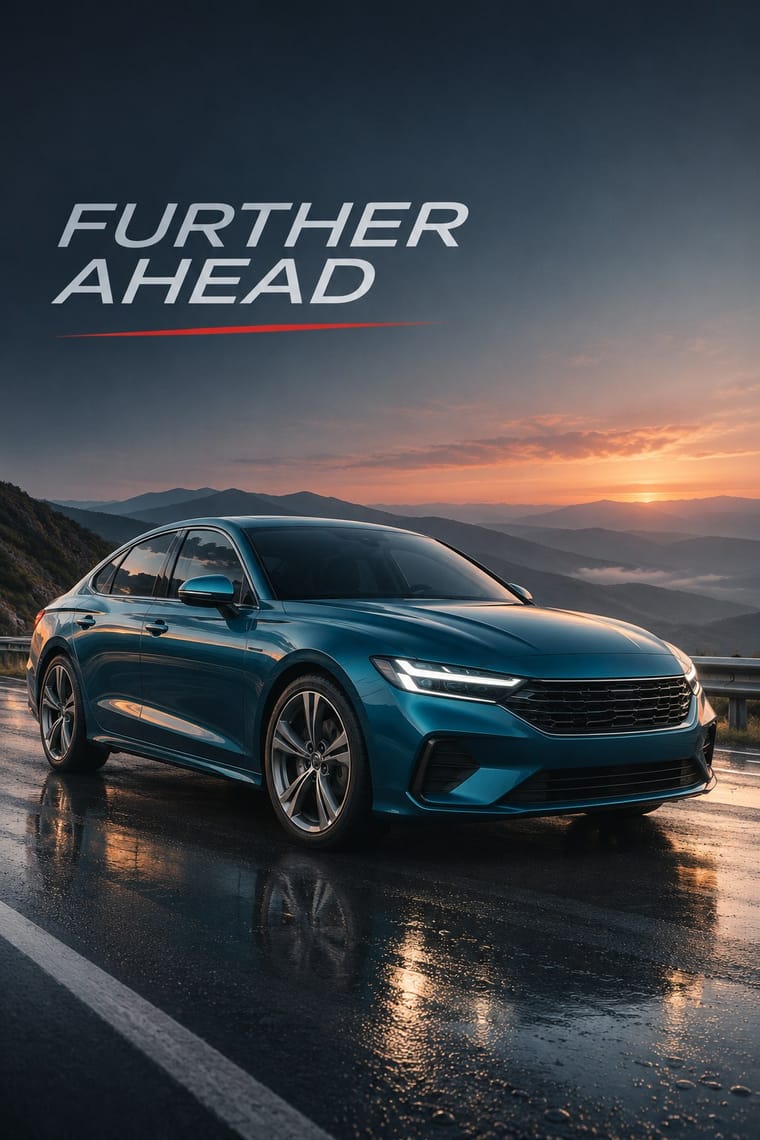
- Automotive Hero Advertising (Car Photography to CGI) Pairs well · Borrow convincing rendered materials and consistent product identity, but stage one vehicle in a depth-bearing hero scene rather than a retailer's pale-ground comparison grid.
- Property-Marketing Architectural Visualisation (Photoreal Archviz Renders) Pairs well · Same photoreal render craft; swap the isolated white-ground object for a sited building in landscape.
07
Often taken for
CGI Product Visualisation has no real works recorded yet, so these are its nearest styles by its choices alone, with the choices that tell them apart.
-
Hyperreal 3D Render Art (Cinema 4D Instagram Era)
Hyperreal 3D Render Art is one of CGI Product Visualisation’s nearest styles by choices; no real work of either fits the other better.
Choices that tell CGI Product Visualisation and Hyperreal 3D Render Art apart Choice CGI Product Visualisation Hyperreal 3D Render Art Straight photography characteristic — Pastel — defining Modular grid characteristic — Illusion of depth occasional defining Repetition & rhythm characteristic — No shared descent in the atlas: they reached these choices separately.
-
Corporate Stock-Photo Look (Royalty-Free Business Imagery)
Corporate Stock-Photo Look is one of CGI Product Visualisation’s nearest styles by choices; no real work of either fits the other better.
Choices that tell CGI Product Visualisation and Corporate Stock-Photo Look apart Choice CGI Product Visualisation Corporate Stock-Photo Look 3D render defining — Found & vernacular imagery avoids characteristic Ornament-free defining occasional Full bleed — characteristic Generous white space defining occasional No shared descent in the atlas: they reached these choices separately.
-
Automotive Hero Advertising (Car Photography to CGI)
Automotive Hero Advertising is one of CGI Product Visualisation’s nearest styles by choices; no real work of either fits the other better.
Choices that tell CGI Product Visualisation and Automotive Hero Advertising apart Choice CGI Product Visualisation Automotive Hero Advertising Light ground defining occasional Illusion of depth occasional defining Modular grid characteristic — Gloss & highlights occasional defining Repetition & rhythm characteristic — No shared descent in the atlas: they reached these choices separately.
-
Property-Marketing Architectural Visualisation (Photoreal Archviz Renders)
Property-Marketing Architectural Visualisation is one of CGI Product Visualisation’s nearest styles by choices; no real work of either fits the other better.
Choices that tell CGI Product Visualisation and Property-Marketing Architectural Visualisation apart Choice CGI Product Visualisation Property-Marketing Architectural Visualisation Isolated object defining — Full bleed — defining Generous white space defining — Illusion of depth occasional defining Light ground defining occasional No shared descent in the atlas: they reached these choices separately.
— means the choice isn’t among the style’s recorded choices. Critics recorded each work’s choices with the styles’ descriptions in view, so this shows whether the descriptions hold together, not proof that they are right.
08
Sources
- Gizmodo, 'Why IKEA's mostly computer-generated catalog will soon be indistinguishable from reality' (29 Aug 2014), https://gizmodo.com/why-ikeas-mostly-computer-generated-catalog-will-soon-b-1628512275
- Slate, 'IKEA catalog images: 75 percent are computer generated' (5 Sep 2014, corrected: 75% means single product shots), https://www.slate.com/blogs/the_eye/2014/09/05/ikea_catalog_images_75_percent_are_computer_generated.html
- Wikipedia, 'IKEA Catalogue' (2005 experiments, 2006 chair, 2013 and 2014 shares, Verdana from 2009, Noto Sans from 2019; the 2010 first CG room rests on Wikipedia alone), https://en.wikipedia.org/wiki/IKEA_Catalogue
1 more source
- CGPress, 'Building 3D with IKEA' (25 June 2014), https://cgpress.org/archives/building_3d_with_ikea.html, pointing to Kirsty Parkin's CGSociety interview with Martin Enthed (not read; the 75% figure is second-hand)
How Stylogeny researches and checks a style: where the facts come from.