Counterculture · 1950–1991 · Eastern Europe, Central Europe
Samizdat Typescript ( Typewritten Underground Press )
Also known as Samizdat, Typewritten carbon-copy publishing, Magnitizdat and roentgenizdat, Drugi obieg (Polish second circuit)
Banned texts were reproduced by typewriter, four or five carbon copies at a time, on thin paper, then retyped by each reader and passed on. The page is a dense monospace block, smudged and corrected by hand, with no layout beyond numbered pages and a plain cover. Its look was a by-product of means, not a chosen style, and it was valued because it was legible, portable and hard to trace. It has no designed ancestry: it grew from the typewriter and carbon paper, not from an earlier graphic style.
Use it with care
Samizdat was made by dissidents who risked arrest, prison and psychiatric detention, so treat it as the record of real people's risk rather than as a retro texture; do not imitate the typed-and-smudged look as a decorative effect, and credit the movement when you cite it. Name the people behind it where you can: the Chronicle's editors and typists were prosecuted.
01
How it works
Palette
-
#f1ead8 -
#1b1b1f -
#4a4d57 -
#8a8576
Typefaces
-
Typewriter monospace
machines such as the East German Erika
-
Pica and elite typewriter faces
-
Hand-drawn titles and corrections
- Type everything on one ordinary typewriter in a single monospace face; never choose a face for effect.
- Fill the sheet edge to edge with a continuous block, single-spaced, so each carbon pass yields as many copies of as much text as possible.
- Use thin onion-skin or tissue paper and carbon sheets, and accept blur, fading and strike-through corrections as the page's texture.
- Number pages and issues and give a plain title and date, so a copy retyped many times can be followed and checked.
- Keep the cover and binding minimal and improvised: a string tie, a folded sheet, a plain typed or hand-drawn title.
- Write dry and factual; let the restraint of the page carry the authority of the text.
Soviet Union (Moscow and Leningrad), with a parallel Czechoslovak tradition (Edice Petlice) and the Polish drugi obieg: censored texts retyped with carbon paper and passed hand to hand
Effects on its surface Grain and noise
- Grain and noise From its design choice “Grain & noise”.
02
Its design choices
From Stylogeny’s vocabulary of design choices: defining choices make the style, characteristic ones are usual, occasional ones turn up now and then.
- Layout & composition
- Space & hierarchy
- Typography
- Form & shape
- Surface & texture
- Ornament
- Medium & production
- Tone & intent
- Avoids
- Collage & layering, Broken grid, Generous white space, Experimental & distorted, Ornamented display, Eclectic mixing, Full polychrome, Abundant decoration, Gloss & highlights, Photomontage, Playful & witty, Luxurious & glamorous
How its pictures are made Without pictures
Kind of picture: Without pictures
Known for
-
A Chronicle of Current Events
Moscow, April 1968 to June 1982; issues 1-64 circulated, a 65th compiled but never circulated
-
Boris Pasternak, Doctor Zhivago circulated as samizdat
from 1957
-
Sintaksis, Boomerang and Phoenix
short-lived Soviet literary typescript magazines, 1959-1961
-
Edice Petlice (The Padlock Editions), Ludvik Vaculik's Czechoslovak samizdat series, 1973 to 1979
03
Where it comes from, and what it’s close to
Nothing earlier is recorded: in the atlas it is a starting point.
Samizdat Typescript (Typewritten Underground Press) 1950–1991
No later style in the atlas grew out of it yet.
Alike in its design choices
04
Often taken for
Samizdat Typescript has no real works recorded yet, so these are its nearest styles by its choices alone, with the choices that tell them apart.
-
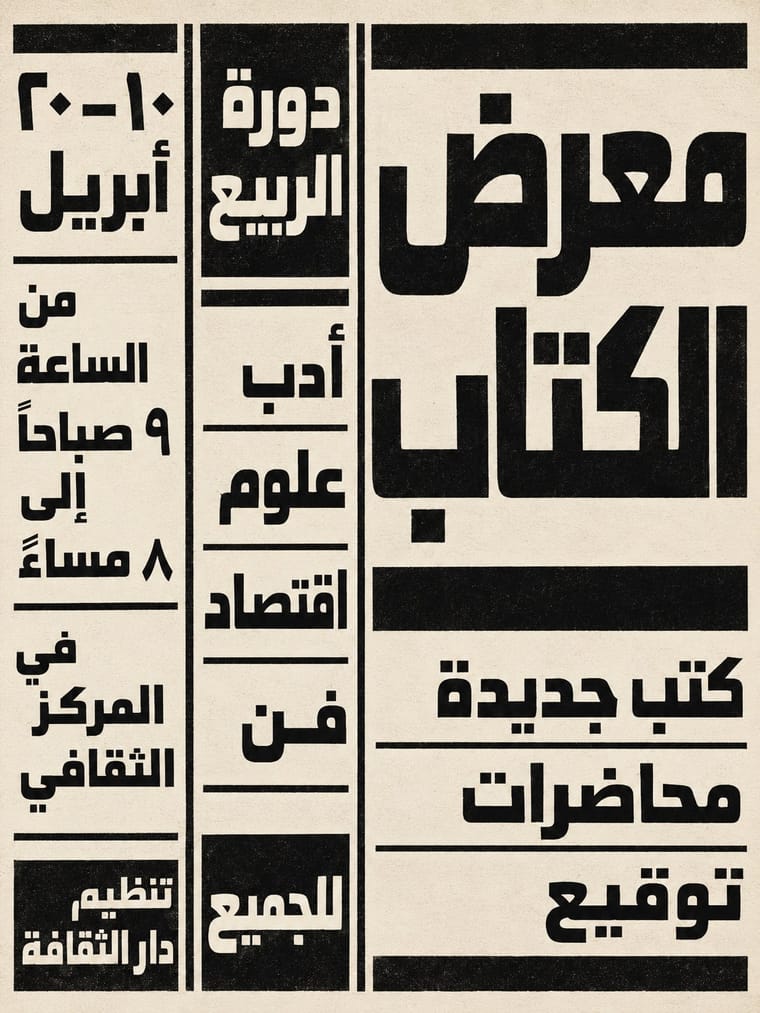
Machine-Age Simplified Arabic Type
Machine-Age Simplified Arabic Type is one of Samizdat Typescript’s nearest styles by choices; no real work of either fits the other better.
Choices that tell Samizdat Typescript and Machine-Age Simplified Arabic Type apart Choice Samizdat Typescript Machine-Age Simplified Arabic Type Classical text block defining occasional Column grid — defining Monospace defining occasional Rectilinear occasional defining Flat hierarchy characteristic — No shared descent in the atlas: they reached these choices separately.
-
Cholo Writing and Placa Roll-Call Lettering
Cholo Writing and Placa Roll-Call Lettering is one of Samizdat Typescript’s nearest styles by choices; no real work of either fits the other better.
Choices that tell Samizdat Typescript and Cholo Writing and Placa Roll-Call Lettering apart Choice Samizdat Typescript Cholo Writing and Placa Roll-Call Lettering Paper & letterpress bite defining — Blackletter — defining Monospace defining — Hand-lettering occasional defining Light ground defining occasional No shared descent in the atlas: they reached these choices separately.
-
Dazibao (Big-Character Posters)
Dazibao is one of Samizdat Typescript’s nearest styles by choices; no real work of either fits the other better.
Choices that tell Samizdat Typescript and Dazibao apart Choice Samizdat Typescript Dazibao Classical text block defining — Collage & layering avoids characteristic Monospace defining — All-over field — defining Grain & noise characteristic — No shared descent in the atlas: they reached these choices separately.
-
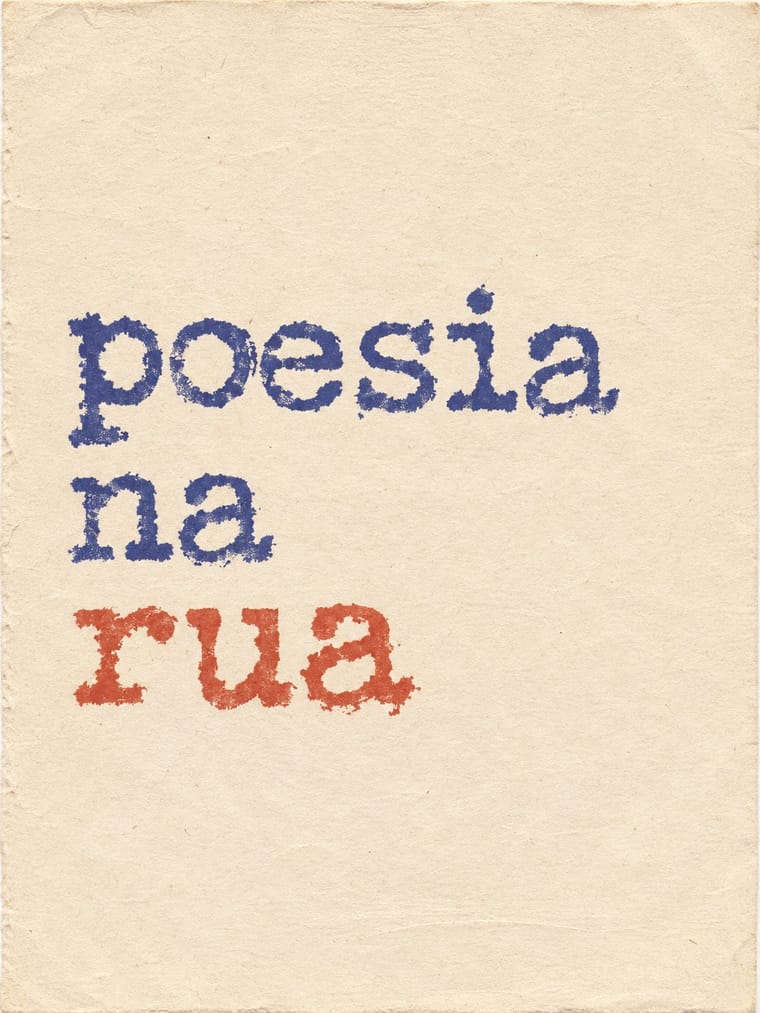
Geração Mimeógrafo Independent Book Graphics
Geração Mimeógrafo Independent Book Graphics is one of Samizdat Typescript’s nearest styles by choices; no real work of either fits the other better.
Choices that tell Samizdat Typescript and Geração Mimeógrafo Independent Book Graphics apart Choice Samizdat Typescript Geração Mimeógrafo Independent Book Graphics Horror vacui defining avoids Generous white space avoids defining Repetition & rhythm characteristic — Limited spot colours — defining Tight setting characteristic — No shared descent in the atlas: they reached these choices separately.
— means the choice isn’t among the style’s recorded choices. Critics recorded each work’s choices with the styles’ descriptions in view, so this shows whether the descriptions hold together, not proof that they are right.
05
Sources
- Wikipedia, Samizdat (https://en.wikipedia.org/wiki/Samizdat)
- Wikipedia, A Chronicle of Current Events (https://en.wikipedia.org/wiki/A_Chronicle_of_Current_Events)
- Wikipedia, Ludvik Vaculik (https://en.wikipedia.org/wiki/Ludvík_Vaculík)
How Stylogeny researches and checks a style: where the facts come from.