Counterculture · 1983–present · Latin America & Caribbean
Siluetazo ( Life-Size Silhouette Posters )
Also known as El Siluetazo, Silhouette actions, Life-size silhouette poster
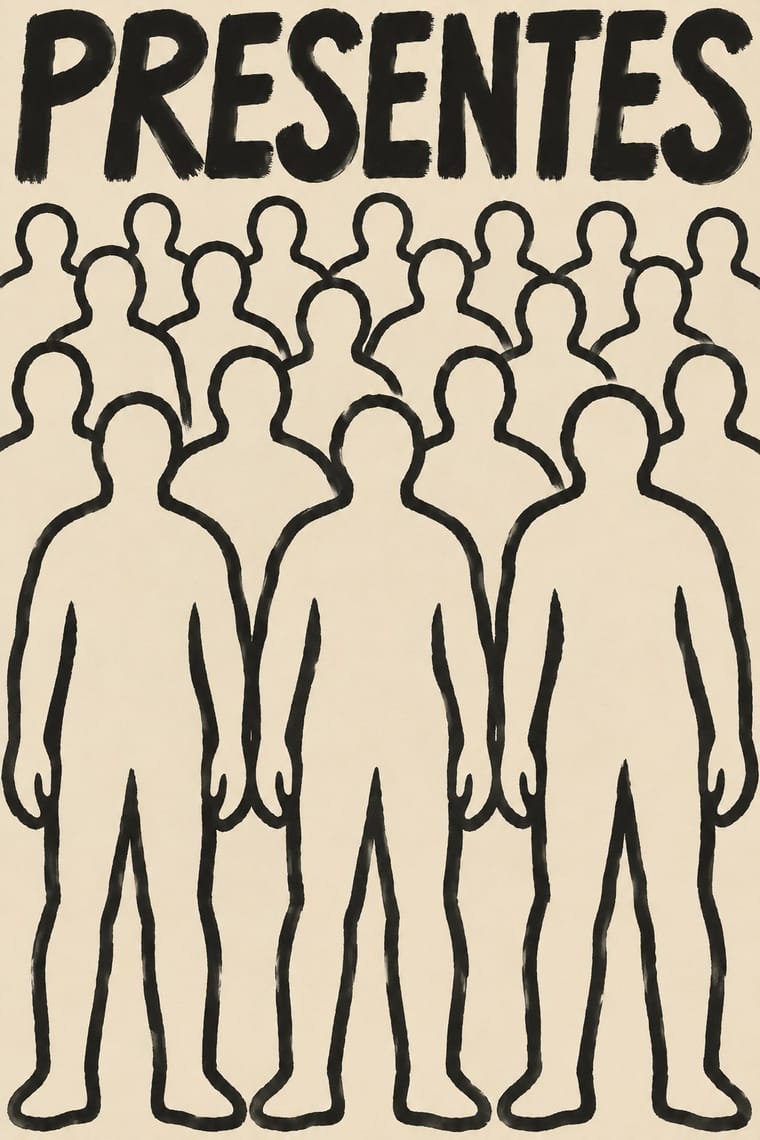
A participatory protest image in which thousands of life-size, empty human outlines, drawn freehand, from templates or by tracing participants' own bodies on paper, are pasted across walls, fences and trees. Names, dates and slogans are added by hand, and the city itself becomes the layout. Each figure stands for a real person who disappeared; the form belongs to the families and the human-rights movement (the Madres de Plaza de Mayo) and should not be borrowed as decoration or brand imagery.
Make something in this style Get advice in this style Mix it with another style
01
Its picture in other colours
Change a colour and every picture on this page follows. It happens in your browser, from the same pictures: nothing new is made or saved.
Choose a colour to change it
-
#e9e1cf -
#111111 -
#8c8c84 -
#4a4a46
A faded colour isn’t in these pictures, so changing it changes nothing.
Light and dark stay where they are; greys hardly move.
More colours: any style’s, or your own
The pictures show the style’s own colours.
02
Make something in this style
Say what you need, and Stylogeny’s image studio draws it from Siluetazo (Life-Size Silhouette Posters)’s design choices and checks it against them. It takes about a minute, and you get a link to share.
03
How it works
Palette
-
#e9e1cfground · 62% -
#111111ink · 9% -
#8c8c84accent · 12% -
#4a4a46accent · 14%
Shares measured from its picture. The ground is what the pictures sit on (of the colours covering most, the most neutral), the ink stands out from it most, the rest are accents.
Typefaces
-
Anonymous hand-lettered names and slogans
-
Hand-painted protest lettering
marker and brush capitals
- Draw one life-size human outline and repeat it until the figures read as a crowd.
- Leave the figure empty so each viewer can fill it with a name, a date or a face.
- Make the figures with many hands, by tracing bodies, so the template and not a designer gives unity.
- Write names and slogans by hand inside the figure and leave them unsigned.
- Paste the figures straight onto walls, shutters, trees and street furniture, and let the street be the layout.
- Keep to one ink on cheap paper, flat and unadorned.
Where and when Conceived in mid-1981 by Rodolfo Aguerreberry, Julio Flores and Guillermo Kexel in a workshop they shared in La Boca; presented to the Madres de Plaza de Mayo and backed by the coordinating body of the Third Marcha de la Resistencia, it was first carried out in Plaza de Mayo, Buenos Aires, from 21 September 1983, over about 24 hours, to make the disappeared of the 1976-83 dictatorship visible
Conceived in mid-1981 by Rodolfo Aguerreberry, Julio Flores and Guillermo Kexel in a workshop they shared in La Boca; presented to the Madres de Plaza de Mayo and backed by the coordinating body of the Third Marcha de la Resistencia, it was first carried out in Plaza de Mayo, Buenos Aires, from 21 September 1983, over about 24 hours, to make the disappeared of the 1976-83 dictatorship visible
How it carries an idea Silhouette, Telling absence, Accumulation, Using the setting
- Silhouette signature A life-size human outline, often traced around a marcher lying on the paper, stands for one disappeared person and is left plain, so a name, a date or a face can be read into it (first Siluetazo, Buenos Aires, 21 September 1983).
- Telling absence signature The empty figure marks the place of a person who should be there; Julio Flores said the disappeared were 'a word without an image', and the blank body gives the absence a shape the size of a body.
- Accumulation signature The one outline is repeated thousands of times until it reads as a crowd, so the count of the disappeared, not any single portrait, carries the charge.
- Using the setting The figures are pasted straight onto the Cathedral, the Cabildo and city offices around the Plaza de Mayo, so the seats of power become the wall where the missing stand; Flores: they 'dialogue with the city's architecture'.
Change it with an idea. Any of the 73 moves that make a design say something can go on this style.
04
Its design choices
From Stylogeny’s vocabulary of design choices: defining choices make the style, characteristic ones are usual, occasional ones turn up now and then.
- Layout & composition
- Space & hierarchy
- Typography
- Colour
- Form & shape
- Surface & texture
- Ornament
- Imagery
- Medium & production
- Tone & intent
- Avoids
- Abundant decoration, Gloss & highlights, Ornamented display, Full polychrome, Offset printing
How its pictures are made Systematic
Kind of picture: Systematic
Known for
-
Primer Siluetazo, Plaza de Mayo, Buenos Aires, 21 September 1983
-
Repeat actions of December 1983 and March 1984
-
Rodolfo Aguerreberry, Julio Flores and Guillermo Kexel
originators
-
Eduardo Gil, Imágenes de la ausencia. El siluetazo, Buenos Aires, 1983
2014
-
Ayotzinapa silhouette actions in Mexico City and Barcelona
2014, 2018
05
Where it comes from, and what it’s close to
Nothing earlier is recorded: in the atlas it is a starting point.
Siluetazo (Life-Size Silhouette Posters) 1983–present
No later style in the atlas grew out of it yet.
Alike in its design choices
06
Combine it with
Styles Siluetazo (Life-Size Silhouette Posters) pairs well with or plays against, from the research. Each is worked out as a combination: which style gives the type, the colours and the forms.
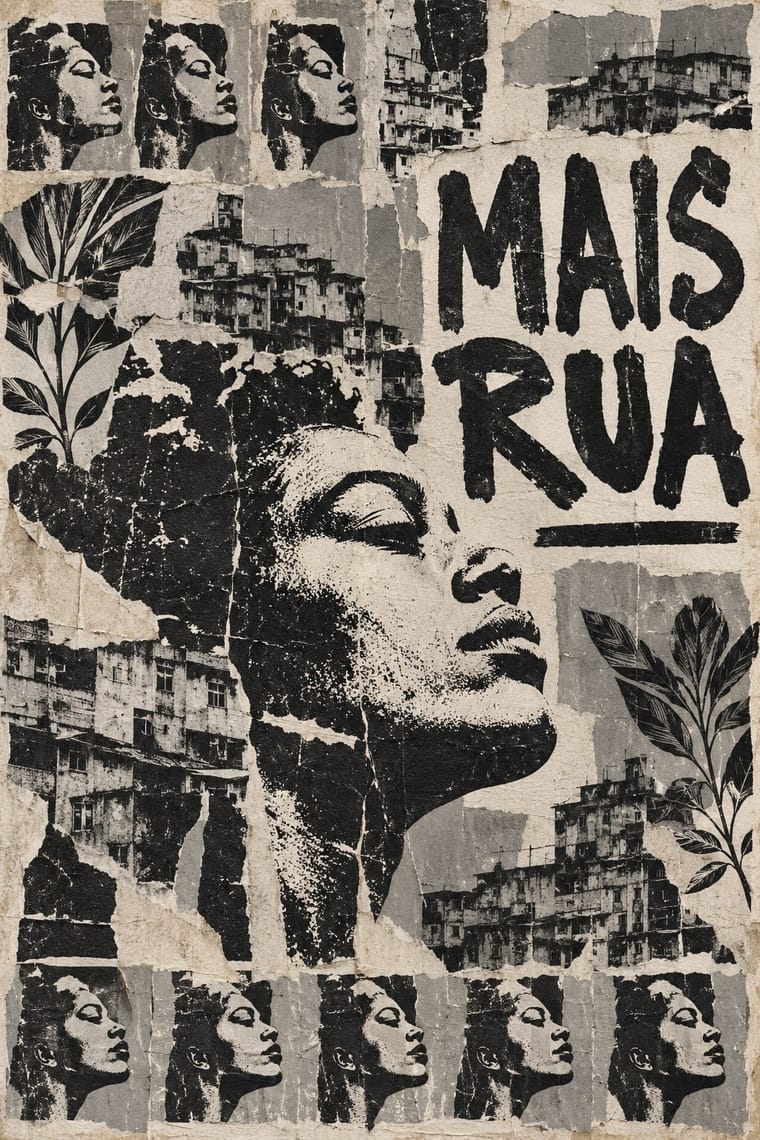
- Lambe-Lambe Posters (Brazilian Paste-Up Street Posters) Contrasts · A hand-made street poster by a single maker or workshop against an empty body-scale outline completed by many hands in one action.
- Stencil Street Art Pairs well · Both repeat one reproducible figure in public space; pair the silhouette with stencilled lettering for a lasting street campaign.
- Chilean Unidad Popular & Nueva Canción Graphics Contrasts · A designed, centrally produced poster identity against a form authored by many hands in one action.
- Latin American Feminist Protest Graphics (Ni Una Menos and the Green Wave) Pairs well · Silhouette actions recur in feminist protest in Latin America; a shared campaign colour ties the bodies to a movement.
07
Often taken for
Siluetazo has no real works recorded yet, so these are its nearest styles by its choices alone, with the choices that tell them apart.
-
Lambe-Lambe Posters (Brazilian Paste-Up Street Posters)
Lambe-Lambe Posters is one of Siluetazo’s nearest styles by choices; no real work of either fits the other better.
Choices that tell Siluetazo and Lambe-Lambe Posters apart Choice Siluetazo Lambe-Lambe Posters Pictogram defining — Collage & layering — defining Monochrome defining occasional Line illustration occasional defining Hand-lettering defining occasional No shared descent in the atlas: they reached these choices separately.
-
Kerala Political Wall Writing
Kerala Political Wall Writing is one of Siluetazo’s nearest styles by choices; no real work of either fits the other better.
Choices that tell Siluetazo and Kerala Political Wall Writing apart Choice Siluetazo Kerala Political Wall Writing Monochrome defining — Extreme scale contrast — defining Stylised figuration characteristic — Limited spot colours occasional defining Flat hierarchy characteristic — No shared descent in the atlas: they reached these choices separately.
-
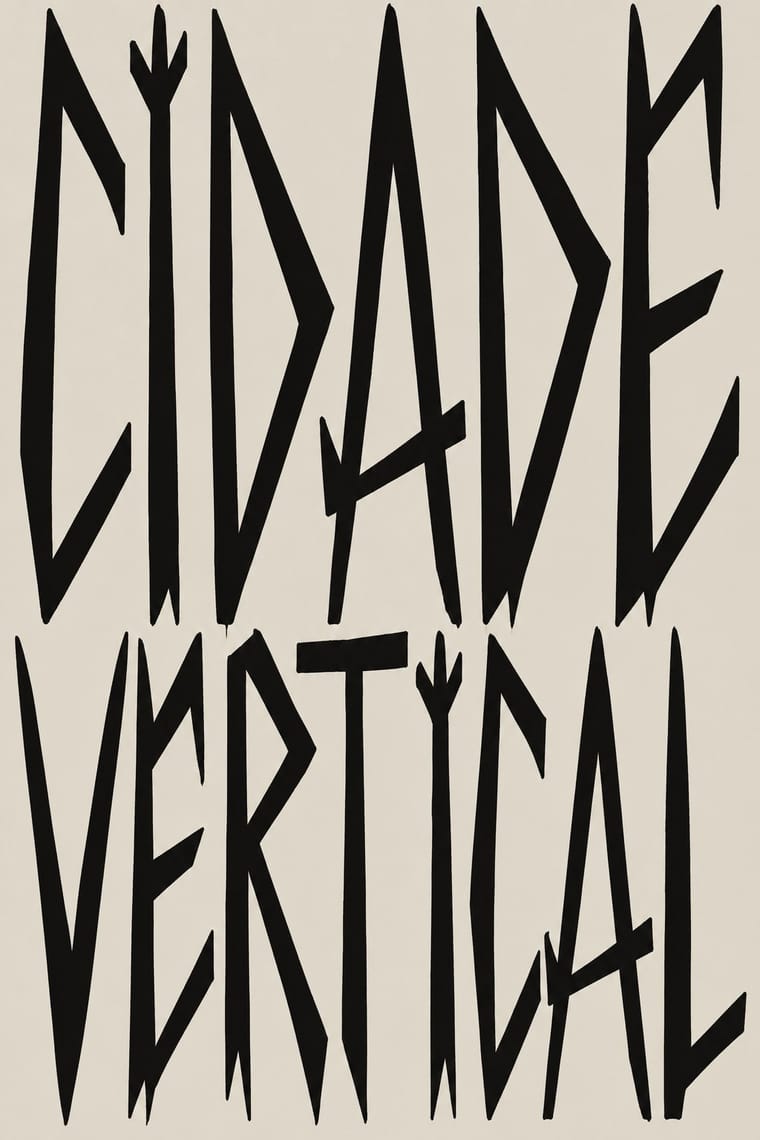
Pixação (São Paulo Tag Reto)
Pixação is one of Siluetazo’s nearest styles by choices; no real work of either fits the other better.
Choices that tell Siluetazo and Pixação apart Choice Siluetazo Pixação Pictogram defining occasional Angular & zigzag — defining Stylised figuration characteristic — Typography only — defining Icons & pictograms characteristic — No shared descent in the atlas: they reached these choices separately.
-
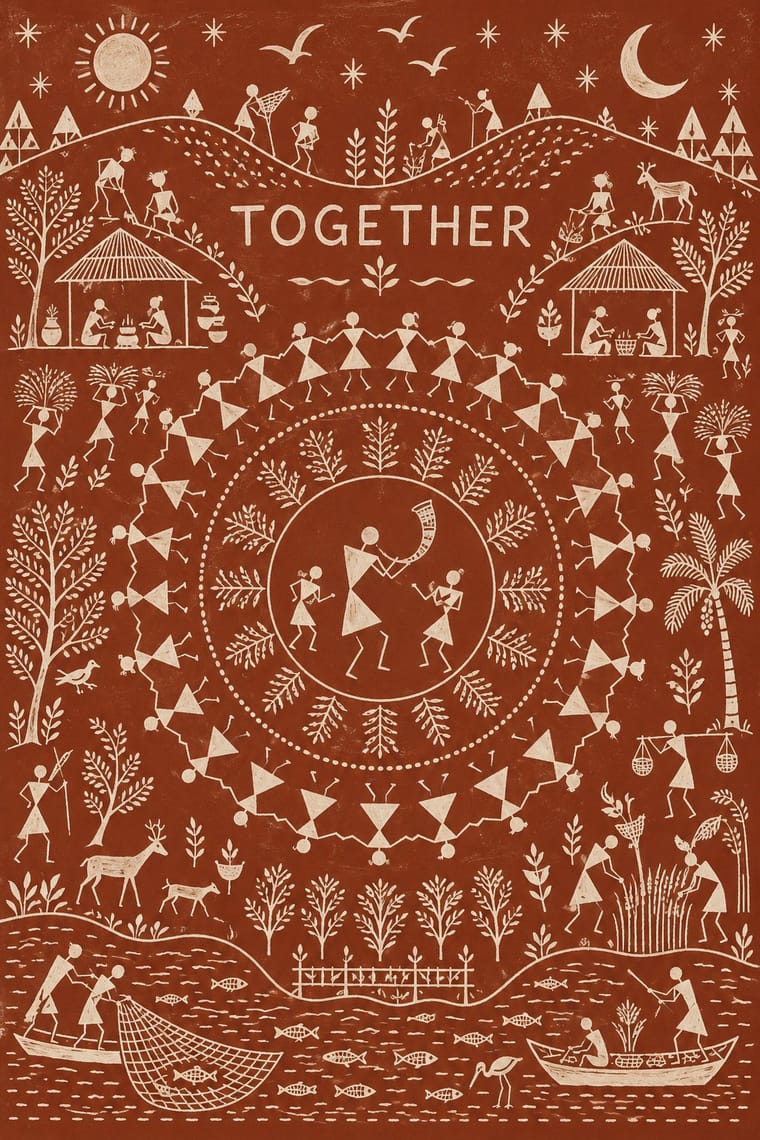
Warli Painting
Warli Painting is one of Siluetazo’s nearest styles by choices; no real work of either fits the other better.
Choices that tell Siluetazo and Warli Painting apart Choice Siluetazo Warli Painting Hand-lettering defining occasional Dark ground — defining Light ground characteristic — Earth & mineral — defining Ornament-free characteristic — No shared descent in the atlas: they reached these choices separately.
— means the choice isn’t among the style’s recorded choices. Critics recorded each work’s choices with the styles’ descriptions in view, so this shows whether the descriptions hold together, not proof that they are right.
08
Sources
- https://es.wikipedia.org/wiki/Siluetazo
- Ana Longoni, El Siluetazo (2008)
- Eduardo Gil, Imágenes de la ausencia. El siluetazo, Buenos Aires, 1983 (2014)
How Stylogeny researches and checks a style: where the facts come from.