Idea · Bend reality
Accumulation
Many of one thing, where the count itself is the message.
It answers the question Which rule of the real world does the image break, and why?
Try it on any style Try it on a photo of your own See it on 5 styles
What it does
Says many, mass-produced, everywhere or too much: one shoe for each victim.
Accumulation, put on a style
Each picture is a style from the atlas with this idea put on it, beside the same style as it is. All are AI-generated: none is a real or historical work.
-
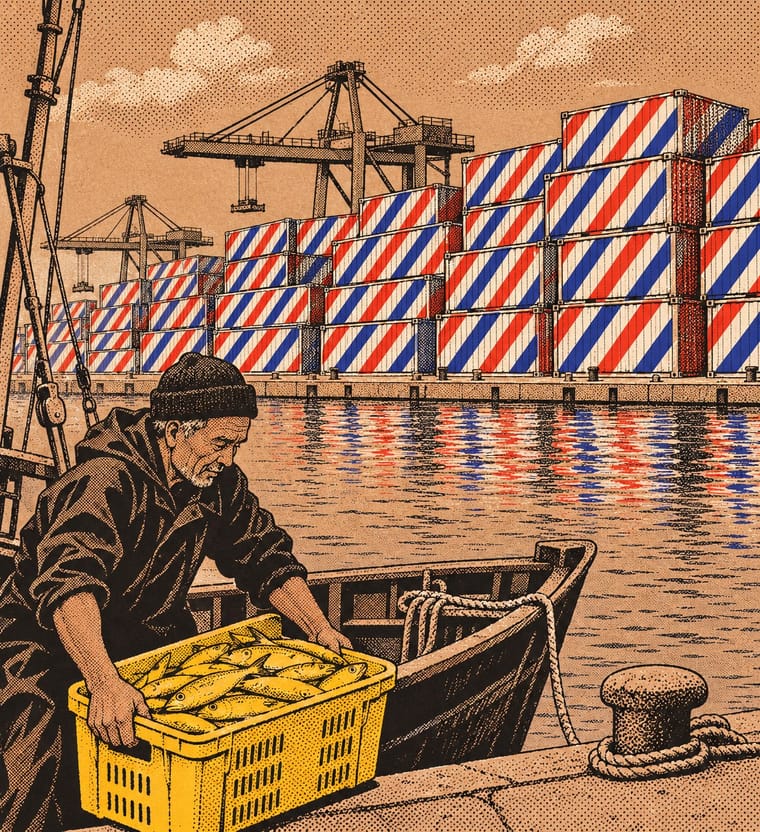
With accumulation By Airmail Walls and walls of striped containers tower across the water behind one crate of yellow fish caught just offshore, so the sheer count shows how much crossed the sea and how little came from nearby.
-
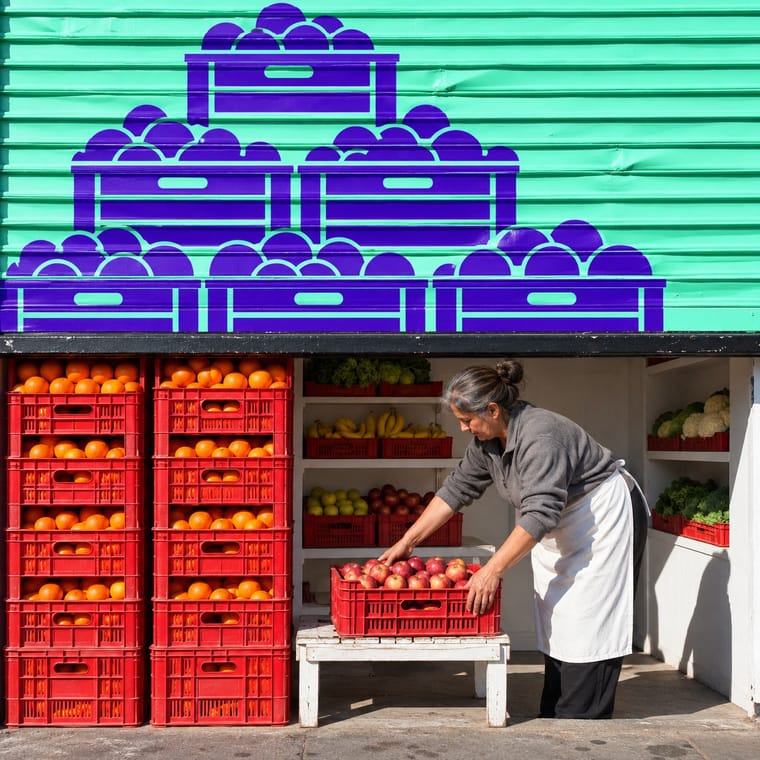
With accumulation Shutter Down The real stack of red crates of oranges reaches the bar and goes on climbing as flat violet paint, the crate at the bar half real and half painted.
-
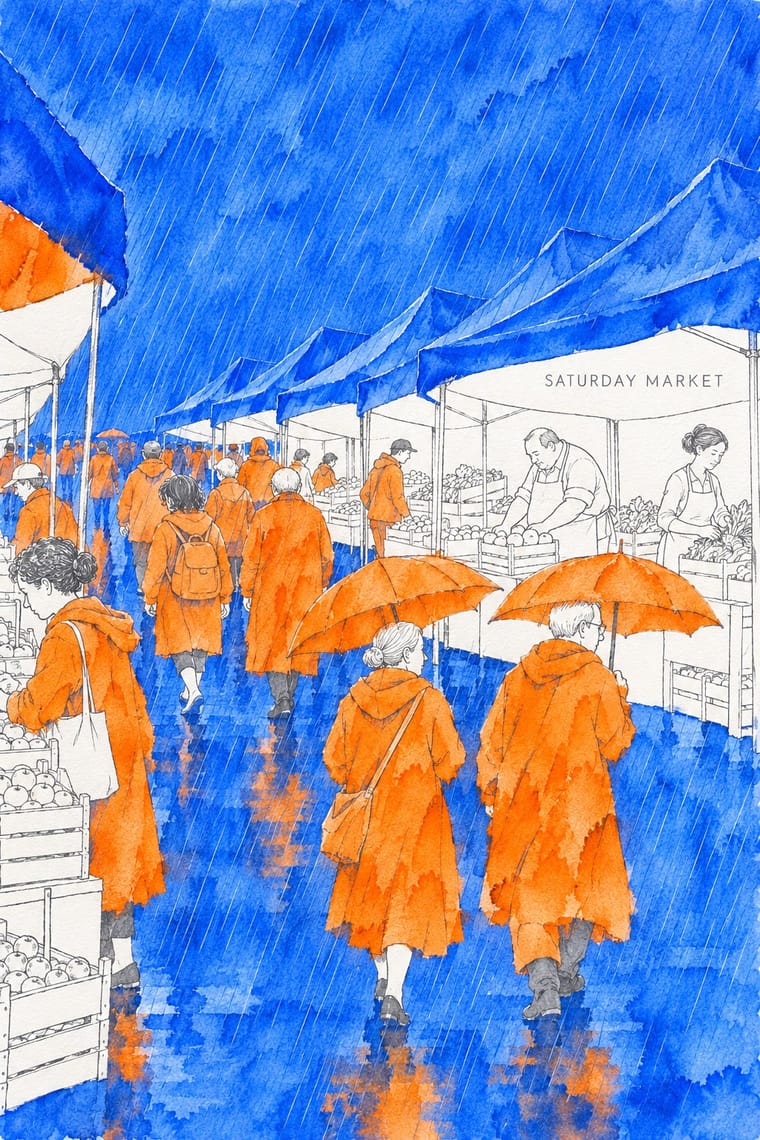
With accumulation Rain Ink Canopy after canopy leaves its own white dry island in the blue, so the row of them shows a market that stays open whatever the rain does.
-

With accumulation Black Light Hundreds of footprints all turned to the stage are the crowd, counted after it went home.
-
As it is 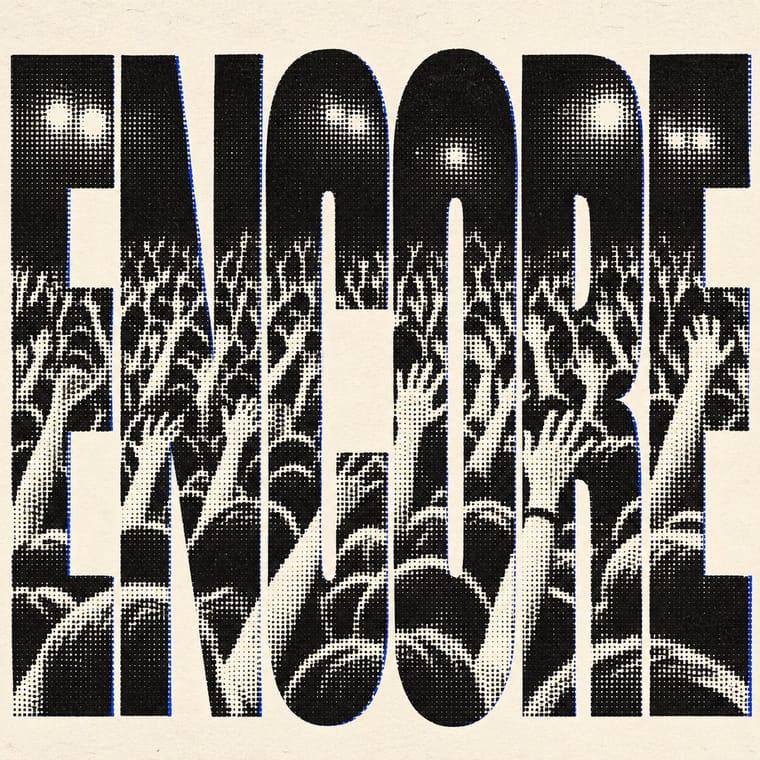
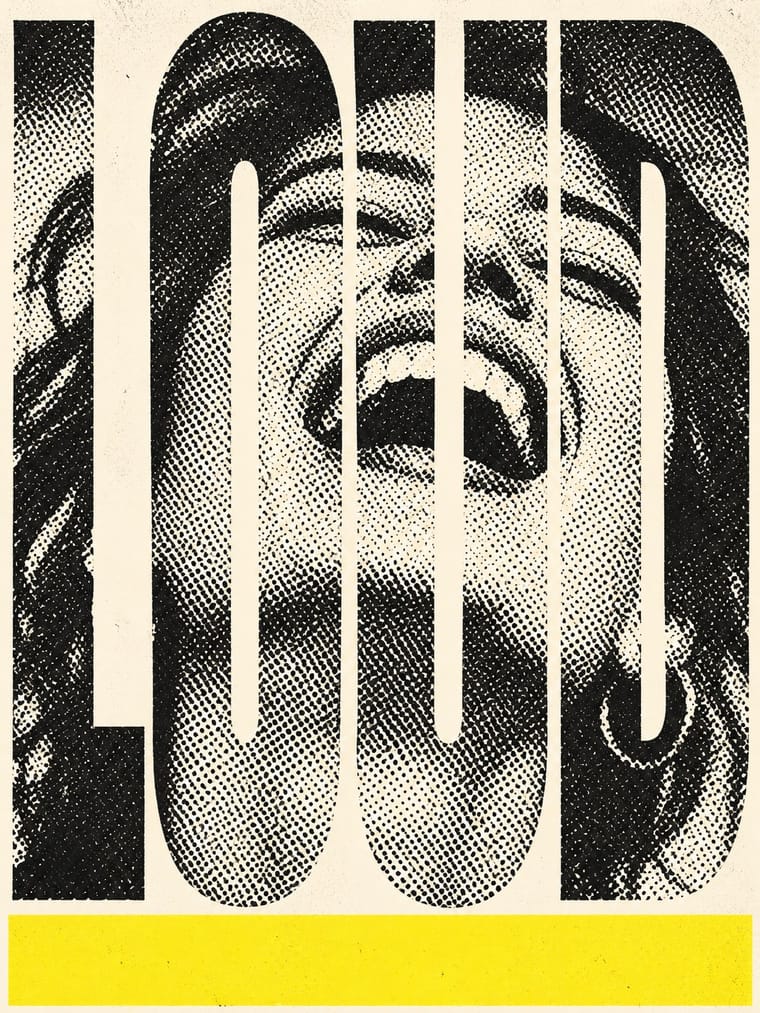
With accumulation Halftone Cut So many hands that they become a texture, and the crowd reads as one creature.
Try it on any style
Pick a style, any style, and tell the image model:
Repeat the same object or figure many times, so the sheer number is the message.
Then write the idea in one sentence, saying what the picture shows and what that gets across. If the idea leans on the words, check it against them. A tap for the O in a headline that has no O breaks the word.
Mix styles writes the rest of the prompt for any style in the atlas, or a blend of a few. Add the line above and your sentence to it.
Where it has been used
Real works that use it, named so you can look them up. Stylogeny shows no pictures of them.
- Andy Warhol’s Campbell’s Soup Cans (1962)
What it helps to say
It can argue
Styles known for it 3
These styles use it often. For those marked signature, it is part of what they are. Any other style can take it too.
- Isotype Pictorial Statistics signature Each identical pictogram stands for a fixed amount, and a larger quantity is shown by more signs, never a bigger one, so the reader counts the rows and the count is the message, as in Gesellschaft und Wirtschaft (1930).
- Pop Art Graphics signature Warhol repeats one product or face in a serial grid, the 32 near-identical Campbell's Soup Cans (1962) or the fifty Marilyns of Marilyn Diptych (1962), so the sheer number says mass production and mass fame.
- Siluetazo (Life-Size Silhouette Posters) signature The one outline is repeated thousands of times until it reads as a crowd, so the count of the disappeared, not any single portrait, carries the charge.