Digital native · 2004–present · East Asia
Martian Script (Huoxingwen) Chinese Net Writing
Also known as 火星文, Mars language, Chinese leetspeak, Non-mainstream text
A Chinese-language netizen writing play, begun in Taiwan in the early 2000s, in which standard characters are swapped for homophones, zhuyin symbols, archaic characters, Japanese and Korean glyphs, numerals and emoticons in a single line. The text itself is the graphic: hard to read for outsiders, it marked youth in-group identity on chat clients, forums and games. It spread to mainland teenagers around 2008 and later served to slip past keyword filters.
Make something in this style Get advice in this style Mix it with another style
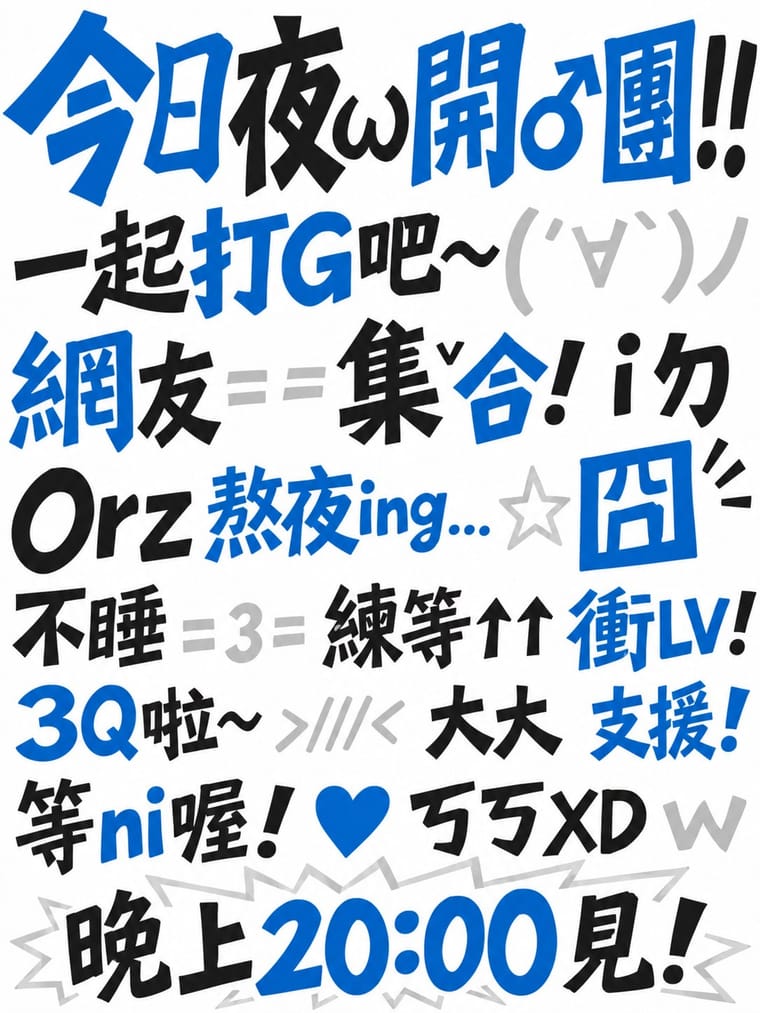
Use it with care
A youth subculture, mocked and dropped by officialdom: Taiwan's testing centre abandoned the 2006 exam item after controversy. It is not a script system and has no fixed orthography. Substitutions are hard on screen readers, search and learners, and the zhuyin, kana and hangul swaps and number codes differ among Taiwan, Hong Kong and the mainland. It was also used to evade keyword censorship (as in 2020), so do not treat it as mere decoration or mimic it for a mocking caricature of young Chinese writers.
01
Its picture in other colours
Change a colour and every picture on this page follows. It happens in your browser, from the same pictures: nothing new is made or saved.
Choose a colour to change it
-
#ffffff -
#222222 -
#0078d7 -
#e6e6e6
A faded colour isn’t in these pictures, so changing it changes nothing.
Light and dark stay where they are; greys hardly move.
More colours: any style’s, or your own
The pictures show the style’s own colours.
02
Make something in this style
Say what you need, and Stylogeny’s image studio draws it from Martian Script (Huoxingwen) Chinese Net Writing’s design choices and checks it against them. It takes about a minute, and you get a link to share.
03
How it works
Palette
-
#ffffffground · 48% -
#222222ink · 6% -
#0078d7accent · 14% -
#e6e6e6accent · 13%
Shares measured from its picture. The ground is what the pictures sit on (of the colours covering most, the most neutral), the ink stands out from it most, the rest are accents.
Typefaces
-
Zhuyin (Bopomofo) symbols used as letters
-
Archaic Chinese characters such as 囧 (an old word for a bright window) reused as emoticons
-
Mixed hanzi, kana and hangul
-
Latin-numeral shorthand
3Q and Orz (Taiwan and elsewhere), 520 (a mainland Mandarin number code)
- Replace standard characters with homophones, typo-forms, zhuyin symbols or rare characters so the line reads as a code.
- Mix scripts and symbols (Chinese, kana, hangul, Latin, numerals, punctuation) within one sentence.
- Use pictographic characters such as 囧 and Orz as emoticons so the glyph carries the expression.
- Keep the surface small and flat: set the text as a chat line, signature or profile caption rather than a composed layout.
- Make the meaning legible only to insiders and let an outsider's confusion be part of the joke.
Taiwan, from Chinese input methods, chat and online games; spread to mainland China through games and, around 2008, among teenagers
Change it with an idea. Any of the 73 moves that make a design say something can go on this style.
04
Its design choices
From Stylogeny’s vocabulary of design choices: defining choices make the style, characteristic ones are usual, occasional ones turn up now and then.
- Layout & composition
- Space & hierarchy
- Typography
- Colour
- Form & shape
- Surface & texture
- Ornament
- Imagery
- Medium & production
- Tone & intent
- Avoids
- Modular grid, Humanist & Garalde serif, Didone, Authoritative & institutional, Luxurious & glamorous
How its pictures are made Without pictures, Synthetic & found
Kind of picture: Without pictures · Synthetic & found
Known for
-
A chat line in the code, such as '3Q' (thank you) or '520' (a mainland number code for 'I love you'), mixed with zhuyin symbols and kana in ordinary Chinese sentences
-
The character 囧, with the Orz figure, typed as a face emoticon (囧rz), recorded in a Chinese article of January 2005
-
Evidence of reception, not a specimen
the 2006 Taiwanese General Scholastic Ability Test item asking candidates to interpret Martian-language text, after which the testing centre dropped the practice
05
Where it comes from, and what it’s close to
Grew out of
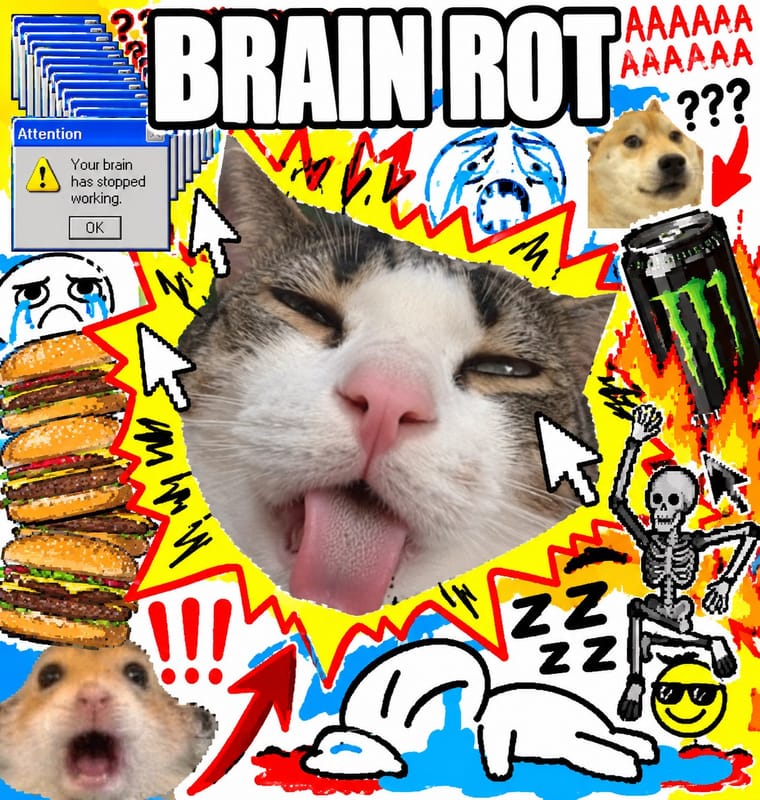
Borrowed from
Martian Script (Huoxingwen) Chinese Net Writing 2004–present
No later style in the atlas grew out of it yet.
Alike in its design choices
06
Combine it with
Styles Martian Script (Huoxingwen) Chinese Net Writing pairs well with or plays against, from the research. Each is worked out as a combination: which style gives the type, the colours and the forms.
07
Often taken for
Martian Script Chinese Net Writing has no real works recorded yet, so these are its nearest styles by its choices alone, with the choices that tell them apart.
-
N’Ko Book and Digital Typography
N’Ko Book and Digital Typography is one of Martian Script Chinese Net Writing’s nearest styles by choices; no real work of either fits the other better.
Choices that tell Martian Script Chinese Net Writing and N’Ko Book and Digital Typography apart Choice Martian Script Chinese Net Writing N’Ko Book and Digital Typography Ornamented display occasional avoids Script — defining Pictogram characteristic — Monochrome — characteristic Found & vernacular imagery characteristic — No shared descent in the atlas: they reached these choices separately.
-
Algerian Hirak Humorous Poster and Meme Graphics
Algerian Hirak Humorous Poster and Meme Graphics is one of Martian Script Chinese Net Writing’s nearest styles by choices; no real work of either fits the other better.
Choices that tell Martian Script Chinese Net Writing and Algerian Hirak Humorous Poster and Meme Graphics apart Choice Martian Script Chinese Net Writing Algerian Hirak Humorous Poster and Meme Graphics Typography only defining — Comic & cartoon — defining Pictogram characteristic — Ornament-free occasional defining Experimental & distorted characteristic — No shared descent in the atlas: they reached these choices separately.
-
Brat (Lime-Green Anti-Design Identity)
Brat is one of Martian Script Chinese Net Writing’s nearest styles by choices; no real work of either fits the other better.
Choices that tell Martian Script Chinese Net Writing and Brat apart Choice Martian Script Chinese Net Writing Brat Ornamented display occasional avoids Flat fields — defining Light ground characteristic — Limited spot colours — defining Pictogram characteristic — Both descend from Early Web Vernacular in the family tree.
-
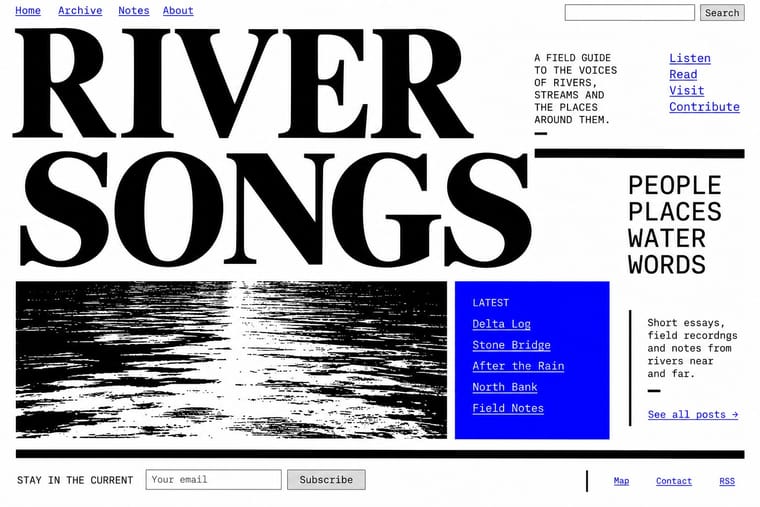
Brutalist Web Design
Brutalist Web Design is one of Martian Script Chinese Net Writing’s nearest styles by choices; no real work of either fits the other better.
Choices that tell Martian Script Chinese Net Writing and Brutalist Web Design apart Choice Martian Script Chinese Net Writing Brutalist Web Design Pictogram characteristic — Monochrome — defining Experimental & distorted characteristic — Rectilinear — defining Communal & popular defining — Both descend from Early Web Vernacular in the family tree.
— means the choice isn’t among the style’s recorded choices. Critics recorded each work’s choices with the styles’ descriptions in view, so this shows whether the descriptions hold together, not proof that they are right.
08
Sources
- English Wikipedia, Martian language (https://en.wikipedia.org/wiki/Martian_language): Taiwan origin, name from the 2001 film Shaolin Soccer, the 2006 exam, mainland popularity around 2008, keyword-filter evasion
- English Wikipedia, Jiong (https://en.wikipedia.org/wiki/Jiong): 囧 as emoticon from 2005 or earlier, original sense of a patterned or bright window, widespread from 2008
- Chinese Wikipedia, 火星文 (https://zh.wikipedia.org/wiki/火星文), flagged there for original research: Taiwan origin and zhuyin use only
How Stylogeny researches and checks a style: where the facts come from.